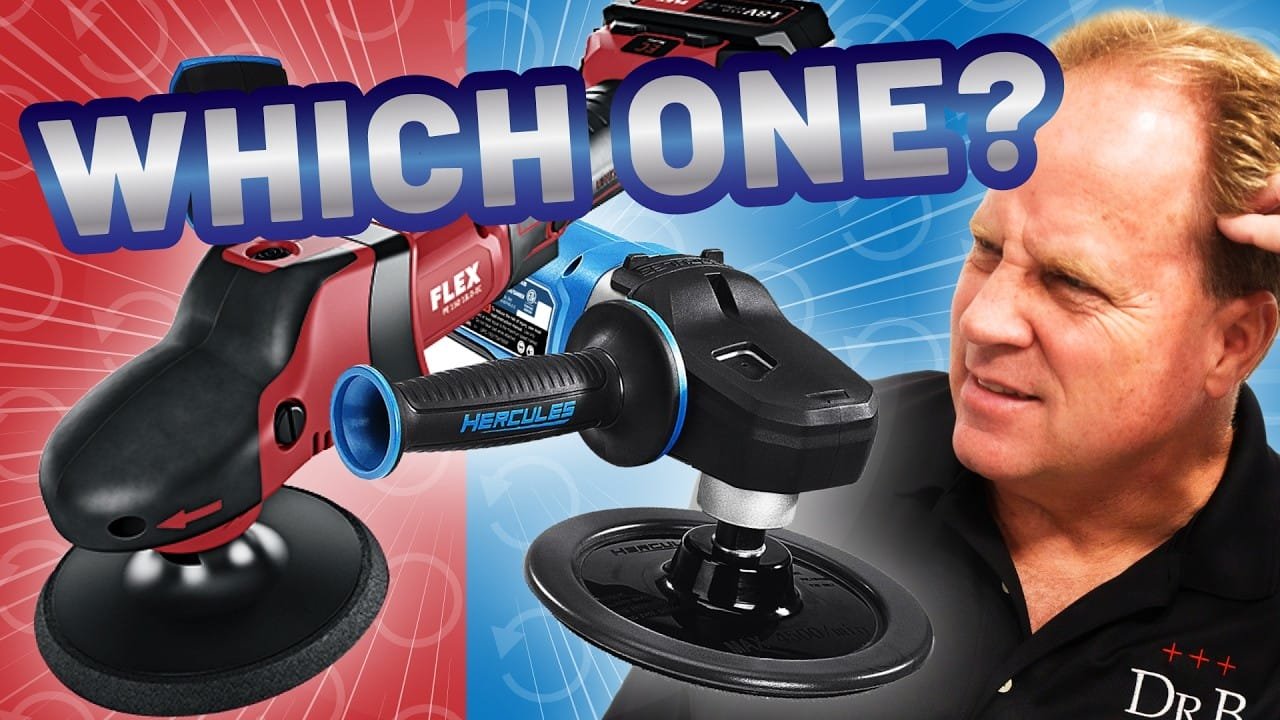
Milwaukee M18 Polisher Vs Flex: Which One Should You Buy?
Milwaukee M18 Polisher suits M18 users, while FLEX often offers smoother control and longer runtime for serious detailing.
Choosing between the Milwaukee M18 Polisher vs Flex is not as simple as comparing speed numbers. Both brands make strong cordless polishers, but they target different users, work habits, and budgets. After comparing their drive systems, battery platforms, handling, pad control, and real-world use, this guide will help you pick the right tool for paint correction, waxing, and daily shop work.
Milwaukee M18 Polisher vs Flex: Quick Comparison
The Milwaukee M18 Polisher is a strong choice for tradespeople and detailers who already own M18 batteries. It has a tough build, simple controls, and the convenience of a large cordless tool system.
FLEX polishers are often designed with paint correction in mind. Their 24V platform, smooth speed control, and balance can appeal to users who spend long hours working on cars.
Here is the short version:
| Category | Milwaukee M18 Polisher | FLEX Cordless Polisher |
|---|---|---|
| Best for | M18 users and mixed job sites | Detailers and paint correction |
| Battery platform | M18 18V | FLEX 24V |
| Main advantage | Large battery ecosystem and rugged design | Smooth control and refined handling |
| Feel in use | Solid and work-focused | Balanced and detailing-focused |
| Best value | Users who already own M18 batteries | Users starting a dedicated detailing setup |
| Ideal tasks | Polishing, waxing, spot repair, general shop work | Paint correction, finishing, and long detailing sessions |
The exact result depends on the model. Milwaukee sells both rotary and random orbital polishers, while FLEX offers several cordless designs, including random orbital and compact tools. Always compare the same type of polisher before judging either brand.

What Is the Milwaukee M18 Polisher?
The Milwaukee M18 Polisher is a cordless polishing tool powered by the company’s M18 battery system. It is built for users who want freedom from an air hose or power cord.
Milwaukee offers different polishing styles. A rotary polisher spins the pad on one fixed axis. A random orbital polisher spins and oscillates the pad at the same time.
That difference matters:
• Rotary polishers remove heavy defects faster but can create heat and holograms.
• Random orbital polishers are safer for beginners and better for general paint correction.
• Compact polishers work well around mirrors, bumpers, pillars, and tight body lines.
The M18 FUEL range uses a brushless motor. Brushless motors usually create less heat, need less maintenance, and use battery power more efficiently than brushed motors.
One common mistake is to call every Milwaukee M18 Polisher the same tool. A 7-inch rotary model feels very different from a 15 mm random orbital model. Check the drive type, backing plate size, speed range, and included accessories before buying.
What Is a FLEX Polisher?
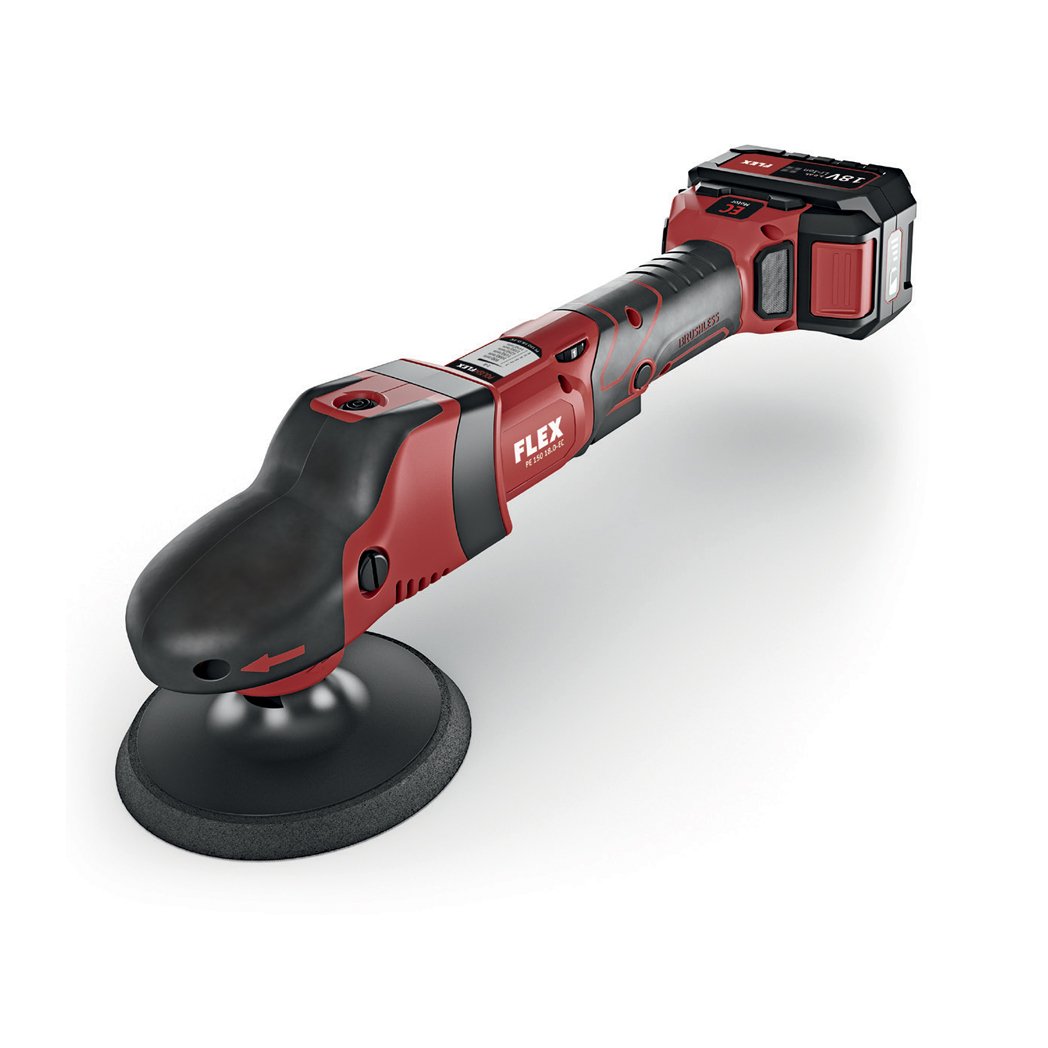
A FLEX polisher is a professional finishing tool made by FLEX Power Tools. Its cordless range uses a 24V battery system and includes tools for correction, finishing, and spot polishing.
FLEX is well known in the automotive detailing world. Many of its tools focus on controlled movement, low vibration, and smooth pad action.
A FLEX random orbital polisher may use a long-throw orbit. This design helps spread the polishing motion over a wider area. It can correct defects quickly while still producing a clean finish when used with the right pad and compound.
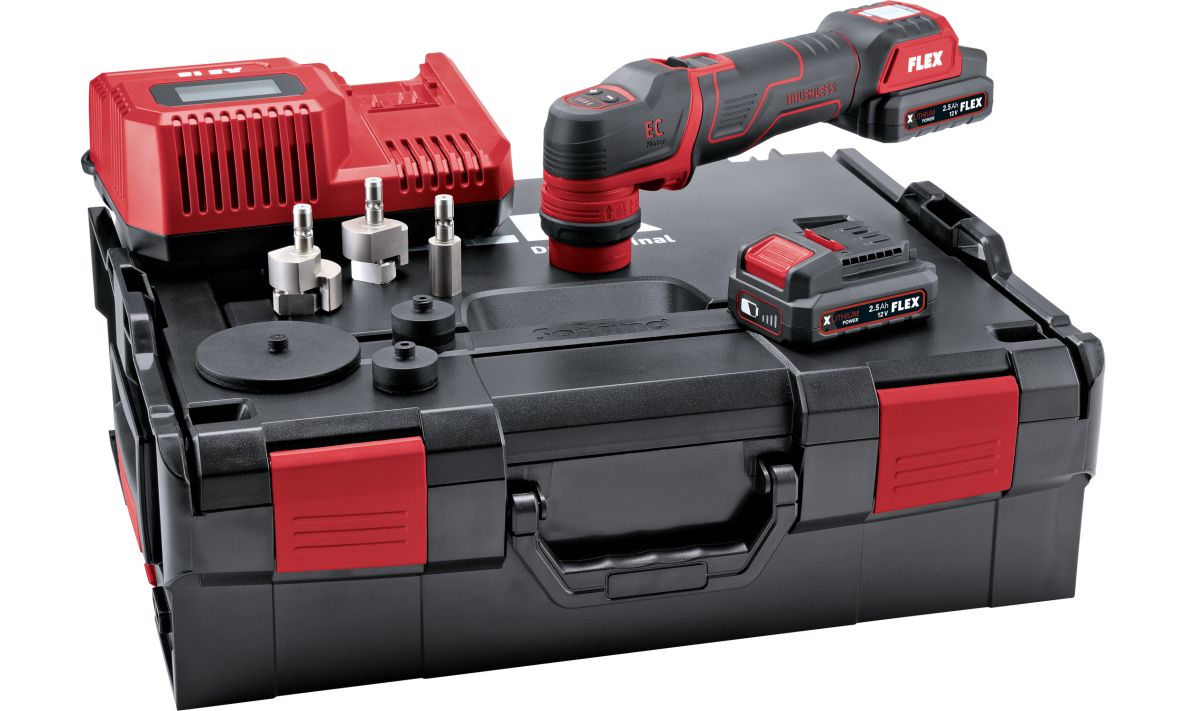
FLEX also makes compact cordless polishers. These are useful when a full-size tool feels too large. A small tool can make it easier to polish around door handles, grilles, spoilers, and curved panels.
The FLEX battery platform is smaller than Milwaukee’s M18 ecosystem. This may not matter to a dedicated detailer, but it matters to a contractor who already owns many Milwaukee tools.
Milwaukee M18 Polisher vs Flex: Performance
Performance depends on more than motor power. Pad pressure, compound choice, paint hardness, battery charge, and operator technique all affect the final result.
Cutting power
A rotary Milwaukee M18 Polisher can remove defects quickly. It is a useful option for oxidation, deep scratches that can safely be polished, and hard clear coat.
FLEX random orbital polishers can also cut well, especially with a long-throw orbit and a microfiber or firm foam pad. They may take slightly longer on severe defects, but they often feel easier to control.
Use a rotary tool with care. Keep the pad moving, watch panel heat, and avoid sharp edges. A random orbital tool gives more room for error.
Finish quality
FLEX tools often have a refined feel during finishing work. Their smooth movement can help produce a clear, glossy surface with fewer visible marks.
A Milwaukee M18 Polisher can also create an excellent finish. The result depends heavily on pad and compound pairing. A soft finishing pad with a mild polish may produce better results than an expensive tool used with the wrong product.
Speed control
Both brands offer variable-speed control on many models. This lets you use a low setting for spreading polish and a higher setting for correction.
A good speed control system should let you make small changes. Large jumps between speed levels can make it harder to match the tool to the paint.
Heat control
Cordless polishers can build heat when used at high speed with heavy pressure. A rotary tool usually creates more heat than a random orbital tool.
Check the panel often with your hand. If the surface feels too hot to touch, stop and let it cool. Never chase a deep scratch by removing too much clear coat.

Milwaukee M18 Polisher vs Flex: Battery Life
Battery life is one of the biggest differences between these tools. The Milwaukee M18 Polisher uses M18 batteries, while FLEX tools use their own 24V packs.
A larger battery can improve runtime, but it also adds weight. This creates a trade-off between fewer battery changes and easier handling.
Runtime depends on:
• Polisher type
• Battery capacity
• Speed setting
• Pad size
• Pressure on the panel
• Paint correction level
• Temperature
For short jobs, one charged battery may be enough. For a full vehicle, most users should keep at least two batteries ready.
The Milwaukee system has a major advantage for people who already own M18 packs. You may use the same batteries in drills, grinders, lights, vacuums, and saws.
FLEX batteries may offer strong performance, but they make the most sense when you plan to build a FLEX tool collection. Buying a new battery platform for one tool can increase the total cost.
A practical lesson is simple: do not compare battery voltage alone. Voltage does not tell you the full runtime. Watt-hours, motor efficiency, load, and battery age also matter.
Milwaukee M18 Polisher vs Flex: Ergonomics and Control
A polisher can correct paint well and still feel tiring after an hour. Weight, grip shape, balance, trigger design, and vibration all affect comfort.
The Milwaukee M18 Polisher often feels sturdy and work-ready. That can be helpful in a busy garage or repair shop. However, the battery may make the rear of the tool feel heavier.
FLEX polishers often feel more purpose-built for detailing. Their balance can make it easier to keep the pad flat on a large panel.
Neither design is perfect for every user. Some people prefer a heavier tool because it feels planted. Others prefer a lighter tool because it reduces arm fatigue.
Try this simple test before buying:
-
Hold the tool at chest height for two minutes.
-
Move it across an imaginary hood.
-
Switch hands and repeat.
-
Check whether your wrist bends or your shoulder rises.
If the tool makes your wrist twist, it may become uncomfortable during a full vehicle correction.
Milwaukee M18 Polisher vs Flex: Build Quality
Both brands have strong reputations for job-site durability. Still, a detailing tool needs more than a tough outer shell.
Look for:
• A protected motor housing
• A stable backing plate
• A secure trigger or switch
• Good airflow around the motor
• Replaceable backing plates
• Clear battery indicators
• Strong support and replacement parts
Milwaukee tools are made for demanding work environments. They can handle dust, movement, and regular transport.
FLEX tools are also built for professional use, but their design often focuses more on controlled detailing work. Keep any cordless polisher clean. Compound dust can enter vents and switches over time.
Do not lay the tool on its pad. This can damage the foam, bend the backing plate, or place stress on the spindle. Set it on its side or use a tool stand.
Milwaukee M18 Polisher vs Flex for Beginners
For beginners, a random orbital polisher is usually the safer starting point. It is less likely to leave rotary trails or burn an edge when used correctly.
The Milwaukee M18 Polisher may be the better beginner choice if you already own M18 batteries. You can start with a mild polish and a medium foam pad, then learn how the tool responds.
FLEX may be better for a beginner who wants a dedicated detailing tool with refined control. Its smooth operation can make long practice sessions more comfortable.
Start with these steps:
-
Wash and dry the vehicle.
-
Remove tar, iron particles, and bonded dirt.
-
Test one small area.
-
Use a mild polish first.
-
Work with light to medium pressure.
-
Wipe the panel and inspect it under strong light.
-
Increase cutting power only when needed.
Never begin with the most aggressive pad and compound. That approach can create extra work and remove more clear coat than necessary.
Milwaukee M18 Polisher vs Flex for Professional Detailers
Professional detailers care about correction speed, finish quality, comfort, and downtime. A cordless tool can save time by removing cords and air lines from the work area.
The Milwaukee M18 Polisher works well in mobile detailing. It is easy to carry, and many mobile technicians already use M18 lights and vacuums.
FLEX can be a strong choice for a dedicated detailing bay. Its smooth operation and specialized designs may help during long paint correction sessions.
For professional work, calculate the full platform cost:
• Tool
• Batteries
• Charger
• Backing plates
• Pads
• Brushes
• Replacement parts
• Warranty support
A cheaper bare tool may cost more after you add batteries and accessories. Compare complete kits instead of tool prices alone.
Which One Is Better for Paint Correction?
The best tool depends on the defect and the paint.
Choose the Milwaukee M18 Polisher when:
• You already own M18 batteries.
• You need a durable tool for mixed work.
• You want a cordless rotary option.
• You work in mobile or repair environments.
• You value a broad tool ecosystem.
Choose FLEX when:
• Paint correction is your main work.
• You want smooth random orbital movement.
• You polish cars for several hours at a time.
• Ergonomics and balance are top priorities.
• You are willing to invest in a separate battery platform.
Hard paint may need a stronger cutting setup. Soft paint may need a gentle pad and lower speed. Always test the least aggressive combination first.
A powerful tool cannot fix poor process. Clean pads, correct working speed, good lighting, and careful inspection matter just as much as brand choice.

Milwaukee M18 Polisher vs Flex: Price and Value
Tool price is only one part of value. A cordless polisher needs batteries, a charger, pads, compounds, and sometimes a second backing plate.
Milwaukee usually gives better value to existing M18 owners. The batteries can serve many tools, so the cost spreads across the workshop.
FLEX may offer better value for someone who wants a purpose-built detailing system. The tool may cost more at first, but the comfort and control can pay off for frequent users.
Consider your yearly use:
• Occasional home detailing: buy the platform you already own.
• Monthly vehicle care: choose a comfortable random orbital tool.
• Daily professional correction: prioritize balance, service, and battery rotation.
• Mixed construction and automotive work: Milwaukee often makes practical sense.
Do not buy based only on maximum speed. A tool that feels comfortable and stays consistent may finish more work than a faster tool that causes fatigue.
Common Mistakes to Avoid
The Milwaukee M18 Polisher vs Flex debate can become confusing when users compare the wrong models or focus on marketing claims.
Avoid these mistakes:
• Comparing a rotary tool with a random orbital tool.
• Treating battery voltage as a direct power rating.
• Using one pad for every paint type.
• Applying too much pressure.
• Ignoring panel temperature.
• Working without proper lighting.
• Running a dirty pad for too long.
• Buying a tool without checking battery cost.
Clean the pad after each section. A loaded pad creates more heat and reduces cutting performance.
Also, do not expect a polisher to remove every scratch. If the scratch reaches the base coat or metal, polishing will not fully repair it. At that point, paint repair may be needed.
How to Choose Between Milwaukee and FLEX
Use this decision guide before you buy.
-
Check your current batteries. If you own several M18 packs, Milwaukee has an immediate advantage.
-
Identify the work. Choose rotary power for heavy correction and random orbital control for safer general use.
-
Compare tool balance. A comfortable tool reduces mistakes and fatigue.
-
Estimate battery needs. Plan for two or more batteries for full vehicle work.
-
Review service support. Good parts and warranty help protect a professional investment.
-
Compare complete kits. Include batteries, charger, pads, and accessories.
-
Test the finish. Use a small panel and inspect it under direct light.
The best Milwaukee M18 Polisher vs Flex choice is the one that matches your workflow. Brand loyalty should come after tool type, comfort, and total cost.
Maintenance Tips for Either Polisher
Good care keeps a cordless polisher safe and consistent.
• Remove the battery before cleaning or changing the backing plate.
• Brush compound dust from the vents.
• Wash or replace pads when they become loaded.
• Check the backing plate for cracks or warping.
• Store batteries in a cool, dry place.
• Do not leave batteries in direct summer heat.
• Keep the tool away from water and wet floors.
• Inspect the power switch before each job.
Use only compatible batteries and chargers. Do not modify battery packs or use damaged packs. Stop work if you notice unusual heat, smell, noise, or vibration.
These basic habits can extend tool life and protect the paint you are working on.
Frequently Asked Questions About Milwaukee M18 Polisher vs Flex
Is the Milwaukee M18 Polisher better than FLEX?
Neither brand is best for every user. Milwaukee is often better for people who already own M18 tools, while FLEX can be better for dedicated automotive detailing and long paint correction sessions.
Is Milwaukee M18 Polisher good for car detailing?
Yes, the Milwaukee M18 Polisher can work very well for car detailing when you choose the correct model, pad, and compound. A random orbital model is usually easier for beginners, while a rotary model needs more control.
Does FLEX have more power than Milwaukee?
Power depends on the exact model, battery, drive type, and polishing load. Comparing voltage alone does not prove that FLEX has more usable power than Milwaukee.
Which polisher is easier for beginners?
A random orbital polisher from either brand is usually easier for beginners than a rotary polisher. Use low pressure, start with a mild compound, and test a small area first.
Can Milwaukee M18 batteries work in FLEX polishers?
No. Milwaukee M18 batteries and FLEX 24V batteries use different platforms and are not directly interchangeable. Use the battery and charger designed for the tool.
Which one has better battery life?
Battery life depends on battery capacity, speed, pad size, pressure, and workload. The better choice is often the platform where you already own several batteries, because you can rotate charged packs.
Can either polisher remove deep scratches?
A polisher can reduce some surface scratches, oxidation, and swirl marks. It cannot fully remove scratches that pass through the clear coat into the color layer or metal.
Conclusion
The Milwaukee M18 Polisher vs Flex decision comes down to platform, tool type, comfort, and work style. Milwaukee is a practical choice for M18 users who need a durable cordless tool for detailing and general shop work. FLEX is appealing to users who want a focused detailing system with smooth control and refined handling.
Choose the model that fits your real workload, not just the brand name. Start with a safe pad and polish combination, test one panel, and build your technique before chasing heavy defects. If this comparison helped, explore more cordless tool guides and share your own Milwaukee or FLEX experience in the comments.