How To Use Tire Traction Mats: Easy Winter Rescue Guide
Tire traction mats help your tires grip loose, slippery ground so your vehicle can drive out safely.
If you have ever watched a wheel spin in snow, mud, sand, or wet grass, you know how fast a small problem can become a stressful one. Tire traction mats are one of those simple tools that can save time, reduce risk, and get you moving again without a tow. In this guide, I’ll walk you through how to use tire traction mats the right way, what to avoid, and how to get the most out of them based on real-world use in bad weather and off-road conditions.
What tire traction mats are and why they work
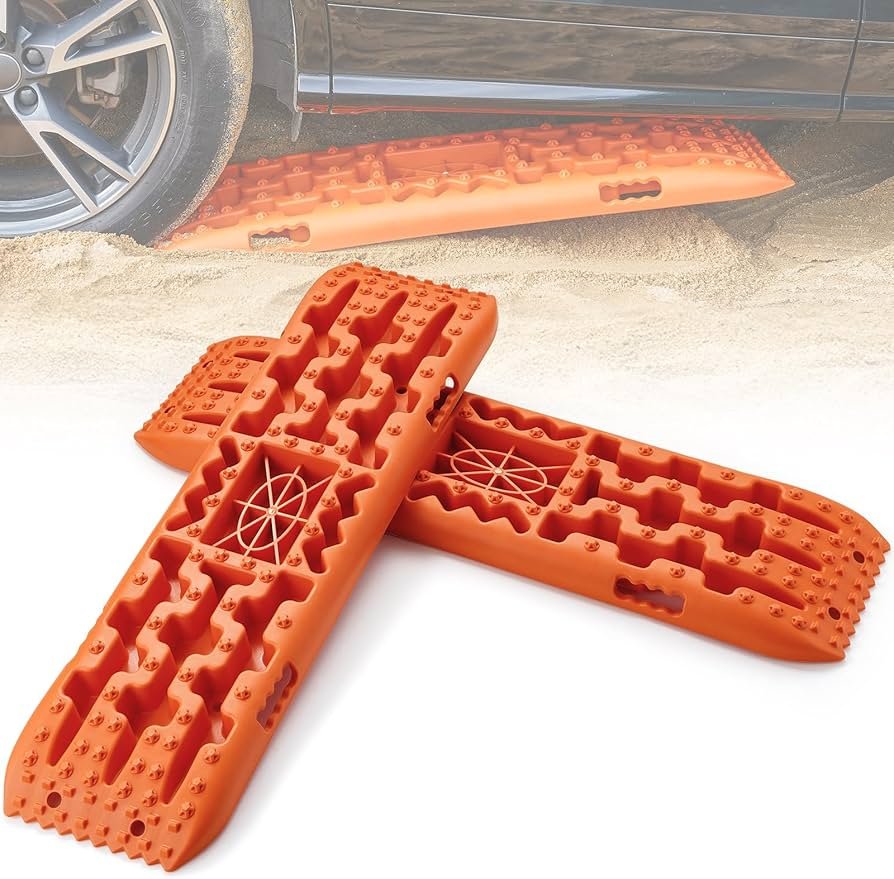
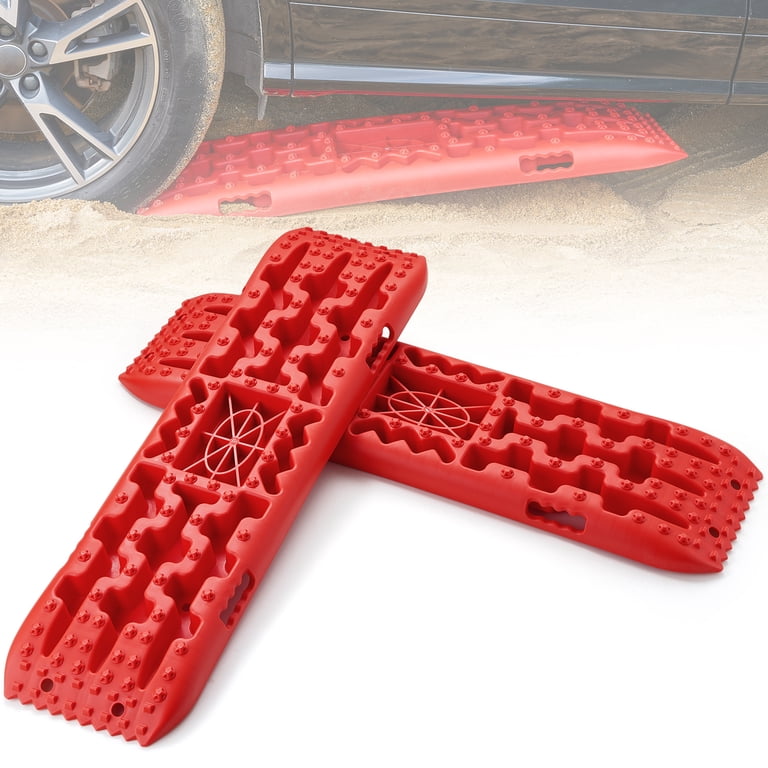
Tire traction mats are sturdy grip aids placed under drive tires to help vehicles escape low-traction situations. They are usually made from reinforced plastic, rubber, or composite materials with raised surfaces that bite into the tire tread.
They work by creating a firmer contact path between the tire and the ground. Instead of the tire spinning on mud, ice, sand, or snow, the mat gives the tire something solid to push against. Think of them like a bridge for your tires when the road turns soft or slick.
Common situations where tire traction mats help include:
- Snow-covered driveways
- Muddy fields or job sites
- Sand at beaches or dunes
- Wet grass on slopes
- Gravel patches with poor grip
In my experience, people often wait too long to use them. The best results usually come before the tires dig in too deep. Once the vehicle is buried, even the best tire traction mats have a harder job.
When to use tire traction mats
Tire traction mats are useful when your vehicle still has some mobility, but the tires cannot gain enough traction to move forward or backward. The sooner you use them, the better your odds.
Use tire traction mats when:
- The tires are spinning but the vehicle is not moving
- The vehicle is stuck on snow, sand, mud, or ice
- You need a gentle push out of a slippery parking spot
- You are driving in remote areas where a tow is not immediate
- You want a simple emergency recovery tool in the trunk or cargo area
They are not a cure-all. If the vehicle is sitting on its frame, sunk to the hubs, or stuck on a steep and unstable slope, you may need recovery straps, a winch, or professional help. That is a key safety point many drivers miss.
How to use tire traction mats step by step
Using tire traction mats is simple, but the order matters. A calm setup usually works better than pressing the gas and hoping for the best.
1. Stop wheel spin first
If the wheels are spinning hard, ease off the accelerator. Spinning tires can dig deeper and polish the surface, which makes traction worse. Take a breath and assess how stuck the vehicle really is.
2. Clear the path around the tires
Remove loose snow, mud, or sand in front of and behind the drive tires. Use a shovel, your hands with gloves, or any recovery tool you have. Even a few inches of cleared space can help the mat sit flat.
3. Place the traction mats under the drive tires
Slide the tire traction mats under the tires that power the vehicle. For front-wheel drive vehicles, place them under the front tires. For rear-wheel drive vehicles, place them under the rear tires.
Make sure the mat is centered in the tire path. If the surface is uneven, press it down so it sits as flat as possible. A crooked mat can kick out or fold when the tire rolls onto it.
4. Add a little surface grip if needed
In soft ground, you can lightly pack sand, dirt, or snow around the mat edges so it stays in place. Do not bury the mat. You want the tire to climb onto it, not fight through a wall of debris.
5. Use gentle throttle
Shift into the lowest safe gear or traction mode if your vehicle has it. Apply light, steady pressure on the accelerator. The goal is a smooth roll, not a launch.
If the vehicle starts moving, keep the steering straight and continue at a slow pace until you are on solid ground.
6. Repeat if needed
If the tires slip again, stop and reset the mats. Sometimes you need to adjust the angle or clear a bit more material. A second attempt often works better than the first if you make the setup cleaner.
7. Retrieve the mats safely
Once free, back up only if needed and only after the mats are clear. Then stop and collect them right away. Leaving them behind is easy to do when you are relieved to be unstuck, and I have seen more than one driver forget that step.
Best placement for tire traction mats
Placement is one of the biggest factors in success. Put the mats where the tire can roll onto them in a straight line.
Good placement tips:
- Align the mat with the tire path
- Place it under the drive wheels, not all wheels
- Keep it flat and stable
- Use two mats if you need one under each drive tire
- Avoid placing them too far ahead of the tire, or the tire may miss them
If the vehicle is front-wheel drive, the front tires do most of the pulling. If it is rear-wheel drive, the rear tires do the work. All-wheel drive vehicles can still benefit, but you should know which wheels are actually receiving power in your vehicle at that moment.
Common mistakes to avoid
Most traction mat failures come from technique, not the product itself. A few small errors can turn a helpful tool into a frustrating one.
Avoid these mistakes:
- Flooring the gas too hard
- Placing mats on top of loose debris without clearing space
- Using the wrong drive wheels
- Letting the mat sit at an angle
- Trying to recover a vehicle that is too deeply buried without extra help
- Forgetting to secure the area around the vehicle before moving
One mistake I have seen often is people trying to “power through” the stuck spot. That usually just cuts a deeper trench. Gentle control wins more often than brute force.
Types of tire traction mats
Not all tire traction mats are the same. The best choice depends on how and where you drive.
Plastic traction mats
These are common, lightweight, and easy to carry. They usually have molded teeth or ridges for grip. They are a strong choice for everyday emergency use, especially in snow and light mud.
Rubber traction mats
Rubber models tend to grip well and resist slipping on hard surfaces. They can be heavier, but they often feel more stable under the tire. They are useful for drivers who want more durability.
Foldable or flexible mats
These are easier to store in smaller vehicles. They are convenient for road trips and winter kits, though some may not be as rugged as heavier models.
Heavy-duty recovery boards
These are more advanced and often used off-road. They are larger, stronger, and built for repeated use in harsh conditions. If you drive in remote terrain, they are often worth the extra space.
How to choose the right tire traction mats
A good set of traction mats should match your vehicle and your driving conditions. The wrong size or material can make recovery harder.
Look for these features:
- Strong load rating for your vehicle weight
- Aggressive surface texture for grip
- Easy carry handles
- Durable material that resists cracking
- Good length for your tire size
- Compatibility with snow, mud, and sand
For SUVs, trucks, and heavier crossovers, check the load capacity carefully. A mat that works for a small car may flex too much under a full-size truck. If you drive in winter often, cold-weather durability matters too, since some plastics get brittle in low temperatures.
Safety tips for using tire traction mats
Safety matters just as much as traction. A recovery tool only helps if you can use it without creating a new problem.
Keep these safety tips in mind:
- Stay outside the tire path when the vehicle starts moving
- Keep bystanders away from the front and rear of the vehicle
- Use gloves if the ground is icy, muddy, or sharp
- Never crawl under a stuck vehicle unless it is properly supported
- Use hazard lights if you are stopped on or near a road
- Work slowly and reassess after each attempt
If you are on a roadway, your first priority is traffic safety. Move the vehicle only when it is safe to do so, and use warning triangles or flares if required by local rules.
Real-world tips from experience
After using tire traction mats in snow and slushy mud, I learned a few things that made a big difference. The first is that preparation matters more than strength. A well-placed mat under a lightly cleared tire path beats a fast, aggressive attempt every time.
I also learned to keep a small folding shovel with the mats. The shovel helps clear a space fast, and that makes the mats far more effective. Another practical lesson: keep the mats where you can reach them quickly, not buried under luggage or tools in the cargo area.
A final tip is to practice before you actually need them. Even one dry run in your driveway can teach you where the mats fit, how to handle them, and how much throttle your vehicle needs. That small practice can save a lot of stress later.
Benefits of tire traction mats
Tire traction mats offer several clear advantages for drivers who want a simple recovery option.
Main benefits include:
- Fast deployment in emergencies
- No need for power or batteries
- Useful in many terrain types
- Compact enough for trunk or cargo storage
- Lower cost than many recovery systems
- Helpful for solo drivers who may not have immediate assistance
They are especially valuable because they reduce dependence on outside help for mild to moderate stuck situations. For many drivers, that peace of mind is the real payoff.
Limitations of tire traction mats
Tire traction mats are useful, but they do have limits. They are best for short recovery attempts, not extreme recoveries.
Limitations include:
- They may not work if the vehicle is deeply buried
- They need enough space to place them under the tires
- They can struggle on very steep or unstable terrain
- Very heavy vehicles may require more robust gear
- Ice can still be challenging without careful placement and control
It is smart to treat them as one tool in a larger recovery kit. For serious off-road use, many drivers pair them with a shovel, air compressor, tire deflator, and recovery straps.
How tire traction mats compare with other recovery tools
Tire traction mats are often the simplest recovery aid, but they are not the only one.
Here is how they compare:
- Against sand ladders: traction mats are usually lighter and easier to store, but sand ladders may offer more surface area for tough off-road situations
- Against tow straps: traction mats let you self-recover, while tow straps require another vehicle
- Against chains: chains help with ongoing winter driving, while mats help you get unstuck in the moment
- Against winches: winches are powerful, but they require equipment, setup, and often more time
For everyday drivers, traction mats are often the best first purchase because they are practical, affordable, and easy to use.
Frequently Asked Questions of How to use tire traction mats
How do I place tire traction mats correctly?
Place them directly in front of or behind the drive tires, depending on the direction you want to move. Keep them centered and flat so the tire rolls onto the mat instead of sliding off.
Can tire traction mats work on ice?
Yes, but they work best when you use them carefully and keep wheel spin low. Ice can still be slippery, so a gentle throttle and correct placement are important.
Do I need two tire traction mats?
Most of the time, yes, if both drive tires need help. Using one mat can work in a pinch, but two gives the vehicle a more balanced path.
Are tire traction mats better than sand?
For many drivers, yes, because mats are cleaner, reusable, and easier to store. Sand can help in some cases, but mats are usually faster and more dependable for emergency use.
How much weight can tire traction mats handle?
It depends on the product, so always check the manufacturer’s load rating. A mat that works for a sedan may not be strong enough for a full-size truck or loaded SUV.
Conclusion
Tire traction mats are one of the easiest recovery tools to understand, but using them well takes a little patience and the right setup. Clear the path, place the mats under the drive tires, apply gentle throttle, and let the tires climb instead of spin. When used correctly, tire traction mats can turn a stressful stuck moment into a quick, manageable fix.
If you drive in snow, mud, sand, or wet grass, this is one tool worth keeping in your vehicle. Learn how it works now, practice before you need it, and you will be far better prepared when the ground gets tricky. If this guide helped, explore more winter driving tips, share it with another driver, or leave a comment with your own recovery experience.