How Does a Treadmill Work
Hit the start button on any treadmill and the whole thing feels almost effortless. But if you've ever wondered how does a treadmill work, there's more going on under the deck than you might expect. A motor spins a roller.
That roller moves a looped belt. And that belt moves you.
Most home units run on a continuous-duty DC motor rated between 2.0 and 3.0 CHP, or continuous horsepower. As of 2026, that's the standard for serious home equipment. The motor pulls anywhere from 600 to 1,500 watts depending on your speed and incline.
Once you understand how these components talk to each other, the machine makes complete sense.
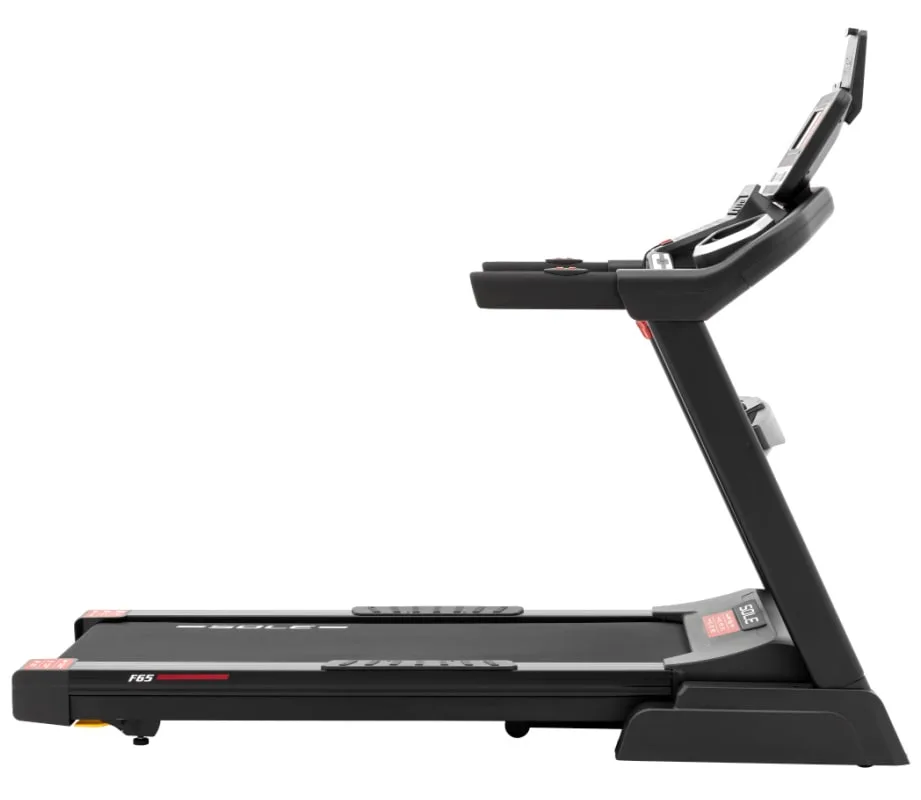
Image source: Bing (Web (fair-use with source credit))
Quick Answer
A treadmill works by turning electricity into motion. The motor spins the front roller. The front roller drives the belt over a deck.
Speed and incline settings change how hard you work. A safety key stops everything if needed.
The Parts You Can Actually See (and What Each One Does)
A treadmill looks like a simple machine because the moving parts are right in front of you. But the visible pieces are only half the story. The hidden electronics handle the brain work.
Rolling Right Under Your Feet
The walking belt is the looped surface you step on. It wraps around two cylinders called rollers. The front roller does the pulling.
The rear roller keeps tension on the belt and spins freely.
The deck sits directly under the belt. It's a flat board that supports your weight. On modern machines, the deck floats on cushioning pads or springs.
That's why treadmill running feels softer than hitting pavement.
Under the Hood
Open the motor cover and you'll find the drive motor. It's connected to the front roller by a separate drive belt and pulley system. A PWM controller, or pulse width modulation controller, regulates the voltage going to that motor.
The console sends the speed you want, and the controller holds the motor right there.
The incline motor sits near the front or rear of the frame. It tilts the whole deck up or down when you change the grade. A control board translates your console commands into signals for both the speed controller and the incline motor.
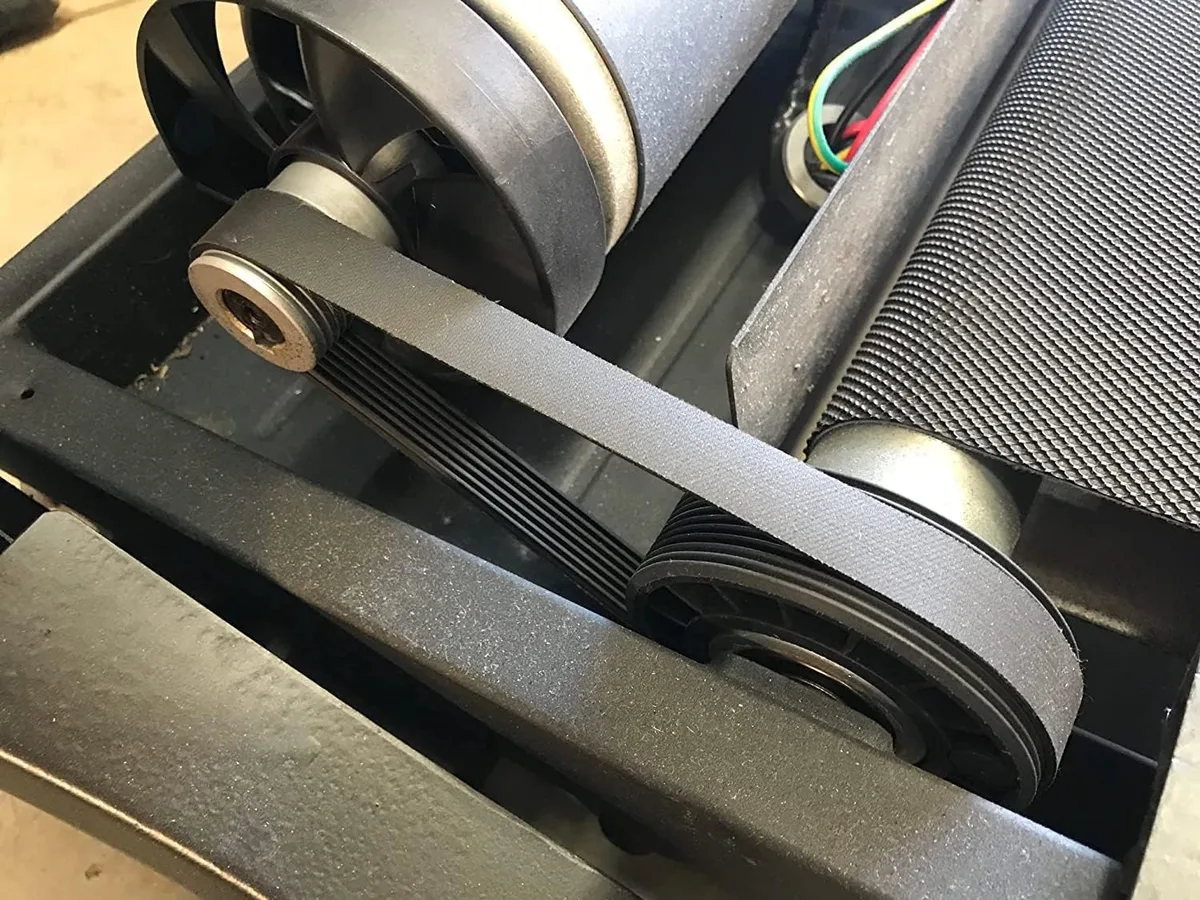
Image source: Bing (Web (fair-use with source credit))
How Speed, Incline, and Cushioning Work Together
These three features aren't separate systems. They work as one integrated loop designed to simulate outdoor running.
Why the Belt Moves at the Speed the Motor Spins
The PWM controller sends a precise voltage to the motor. More voltage means faster motor rotation. That rotation spins the front roller through the drive belt.
The roller's circumference sets how far the walking belt travels with each turn. You enter 6 mph, and the controller keeps the motor locked to that pace.
How Incline Changes Your Stride
When the incline motor extends, it raises the front of the deck. Your feet land higher than your hips. That forces your knees up and shortens your stride.
Your calves and glutes activate harder, and your heart rate climbs even at the same belt speed. A 5% incline can raise calorie burn by nearly half compared to flat walking.
What the Cushioning Absorbs
Deck shock pads compress with each footfall. They soften the vertical impact and return a little energy as rebound. A heavily cushioned deck is easier on joints but feels less like pavement.
Most manufacturers aim for a middle ground between plush and responsive.
Step-by-Step: What Happens When You Press "Start"
The whole startup sequence takes about three seconds. Here's what happens inside, from your first button press to a smooth stride.
- Attach the safety key to your clothing. This tether connects to a magnetic switch on the console. If you fall or drift too far back, the key pulls out and cuts power.
- Press the start button. The console sends a command to the control board.
- The control board checks that the safety circuit is closed. Then it signals the PWM controller.
- The controller ramps voltage to the motor gradually. That prevents a sudden lurch.
- The motor rotates, the drive belt turns the front roller, and the walking belt starts feeding across the deck.
- The belt speeds up to your selected pace. The console monitors motor feedback and adjusts voltage continuously.
- If you set an incline, the lift motor tilts the deck slowly to the correct angle.
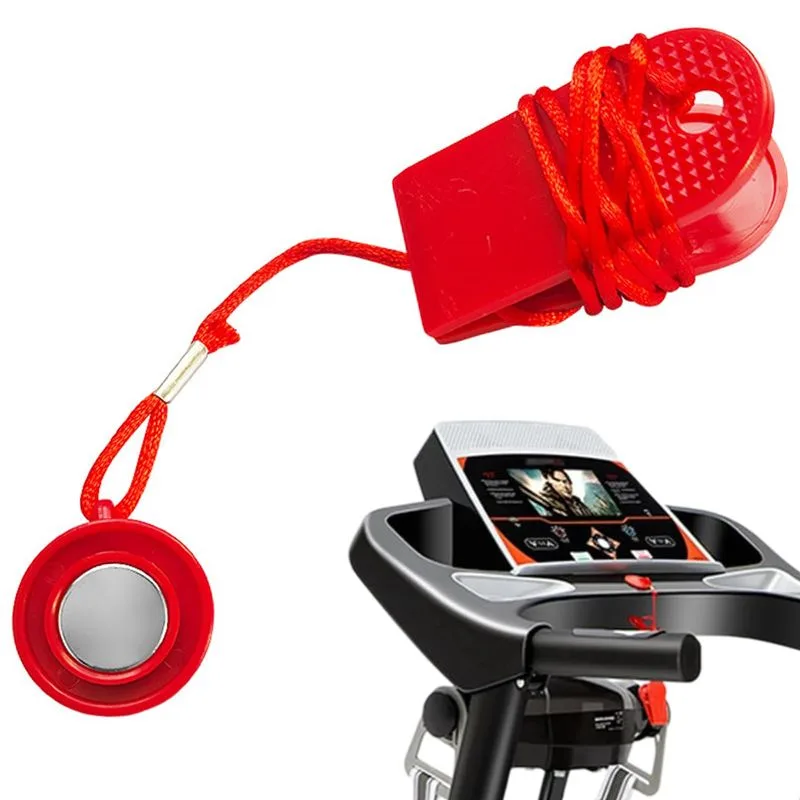
Image source: Bing (Web (fair-use with source credit))
The console also tracks distance, speed, heart rate, and calories burned using sensor data from the controller. Every metric on the screen traces back to those few components working together. If you're curious how another popular cardio machine compares, the mechanics of an elliptical involve a completely different motion and drive system.
Common Visual Problems: What to Look For and Fix Yourself
Most treadmill issues are mechanical and visible. Here are the common signs to watch for, along with straightforward fixes.
| Problem | What You'll See | Likely Cause | Quick Fix |
|---|---|---|---|
| Belt slipping | Belt stutters or hesitates under foot strike | Loose tension | Tighten rear roller bolts |
| Belt drifting | Belt moves left or right | Misalignment | Adjust rear roller tension |
| Squeaking noise | High-pitched sound from front or rear | Dry rollers | Lubricate rollers |
| Burning smell | Rubber odor after use | Excessive friction | Lubricate deck |
| Motor hesitation | Belt slows when you push off | Worn drive belt | Replace drive belt |
Belt Slipping or Stuttering
A loose belt slips the moment you plant your foot. You'll feel a sudden hesitation beneath your stride. Tighten both rear roller bolts a quarter turn at a time, then test at a low speed.
Over-tightening creates excessive drag and can damage the deck. Remember that proper maintenance on any home machine keeps small issues from becoming expensive repairs.
Belt Drifting Left or Right
The belt should stay centered while it spins. If it creeps toward one edge, the rear roller isn't level. Turn the roller bolt on the affected side by about half a turn.
Walk on the belt, check the track, and repeat in small increments until it runs true.
Weird Noises and Friction
Squeaks and burning smells both point to friction. If the belt feels sticky or the deck looks glazed, it needs lubrication. Use the silicone-based lubricant recommended in the owner's manual.
Spray it under the belt while it runs slowly, then wipe away any excess. These symptoms also show up on other machines, and a squeaky belt or roller sounds a lot like a noisy elliptical when the moving parts aren't cared for.
Safety Checks Before Every Run
Clip the safety key to your clothing every single time. Without it, the motor won't run. That's a protective feature, not an inconvenience.
It's the only thing that stops the belt instantly if you lose your footing.
Give the treadmill clearance. Keep at least six feet behind it and two feet on each side. A stray dumbbell, a rug edge, or a pet's toy can cause a fall.
Standing room around the machine is just as important for safety as the machine itself.
Outlet and Electrical Safety
Most home treadmills require a dedicated, grounded 120V or 240V outlet. Don't use an extension cord. Don't plug it into a power strip.
A tripped breaker mid-run creates an unexpected stop, which is a fall risk. If you're unsure about your circuit, have a licensed electrician check it.
The Consumer Product Safety Commission recommends inspecting exercise equipment regularly for worn parts. The ASTM F2115 standard, published by ASTM International, covers treadmill stability and brake performance. These are solid references when you're setting up or buying a machine.
The Right Way to Stop Fast
Don't rely on the slow-stop button in an emergency. Grab the handrails and pull the safety key. That cuts power to the motor, and the belt stops within about a second.
Practice this a few times with the treadmill off so your body knows the motion without thinking.
Never step off while the belt is still moving. Wait for a full stop, then exit one foot at a time. If you fall, let the belt push you back rather than trying to stand up while it's running.
This is especially important for seniors or anyone with balance concerns.
Frequently Asked Questions
How much electricity does a treadmill use?
A typical home treadmill draws 600 to 700 watts at a steady 3 mph. That climbs to roughly 1,500 watts during sprints or incline work. In terms of your electric bill, a few hours per week costs just a couple of dollars per month.
Why does the belt smell or heat up?
Heat comes from friction between the belt and the deck. A rubbery or burning smell usually means the deck lubrication has worn off. The deck may also feel hot to the touch.
Lubricating with the manufacturer-recommended silicone product fixes both symptoms in most cases.
Can I use a treadmill without waking up the whole house?
Impact and vibration travel through the deck into the floor below. A rubber treadmill mat helps absorb that shock. Concrete slabs and ground-level rooms work best.
On a second floor or in an apartment, the noise may still carry through the structure. If that's a problem, a quieter, low-impact option like an elliptical might suit you better.
Do I need to lubricate the belt, and how often?
Most manufacturers recommend lubricating every three to six months for home use. Check the owner's manual for the exact interval and lubricant type. Squeaks, burning smells, or a sluggish belt are signs it's overdue.
Skipping this step forces the drive motor to work harder, and it can lead to premature failure.
Why does my treadmill say "00" when I'm running?
A stuck speed reading usually means the sensor under the motor cover isn't detecting the front roller's rotation. Check the magnetic pickup and the sensor gap. The magnet on the flywheel may be loose or missing.
The belt will still run, but distance and pace tracking will stay at zero until the sensor is fixed.