Is Garmin Forerunner 965 Worth It: Honest Buy Guide
Yes, the Garmin Forerunner 965 is worth it for serious runners who want maps, training tools, and long battery life.
The Garmin Forerunner 965 remains one of the strongest running watches for athletes who want advanced data without moving to a bulky outdoor watch. Its bright AMOLED screen, accurate GPS, detailed maps, recovery tools, and broad sports support make it more than a simple step tracker. Still, its value depends on your goals, budget, and whether you need the newest Garmin features.
What Is the Garmin Forerunner 965?
The Garmin Forerunner 965 is a premium GPS running watch made for runners, cyclists, triathletes, and endurance athletes. It sits above the Forerunner 265 and offers more advanced navigation, longer battery life, and a larger display.
Garmin launched the Forerunner 965 in 2023. It combines a lightweight design with a 1.4-inch AMOLED touchscreen, physical buttons, full-color maps, and detailed training analysis.
Key specifications include:
• 1.4-inch AMOLED display with a 454 × 454-pixel resolution
• 47mm case with a titanium bezel
• About 53 grams with the standard strap
• Up to 23 days of smartwatch battery life
• Up to 31 hours in GPS-only mode
• Multi-band GPS for improved accuracy in difficult areas
• 32GB of storage for music and maps
• Built-in Wi-Fi, Bluetooth, and ANT+ support
• Water resistance up to 5 ATM
• Support for running, cycling, swimming, golf, skiing, hiking, and many other activities
The watch also includes Garmin features such as Training Readiness, Training Status, HRV Status, Body Battery, race preparation tools, suggested workouts, and recovery time.
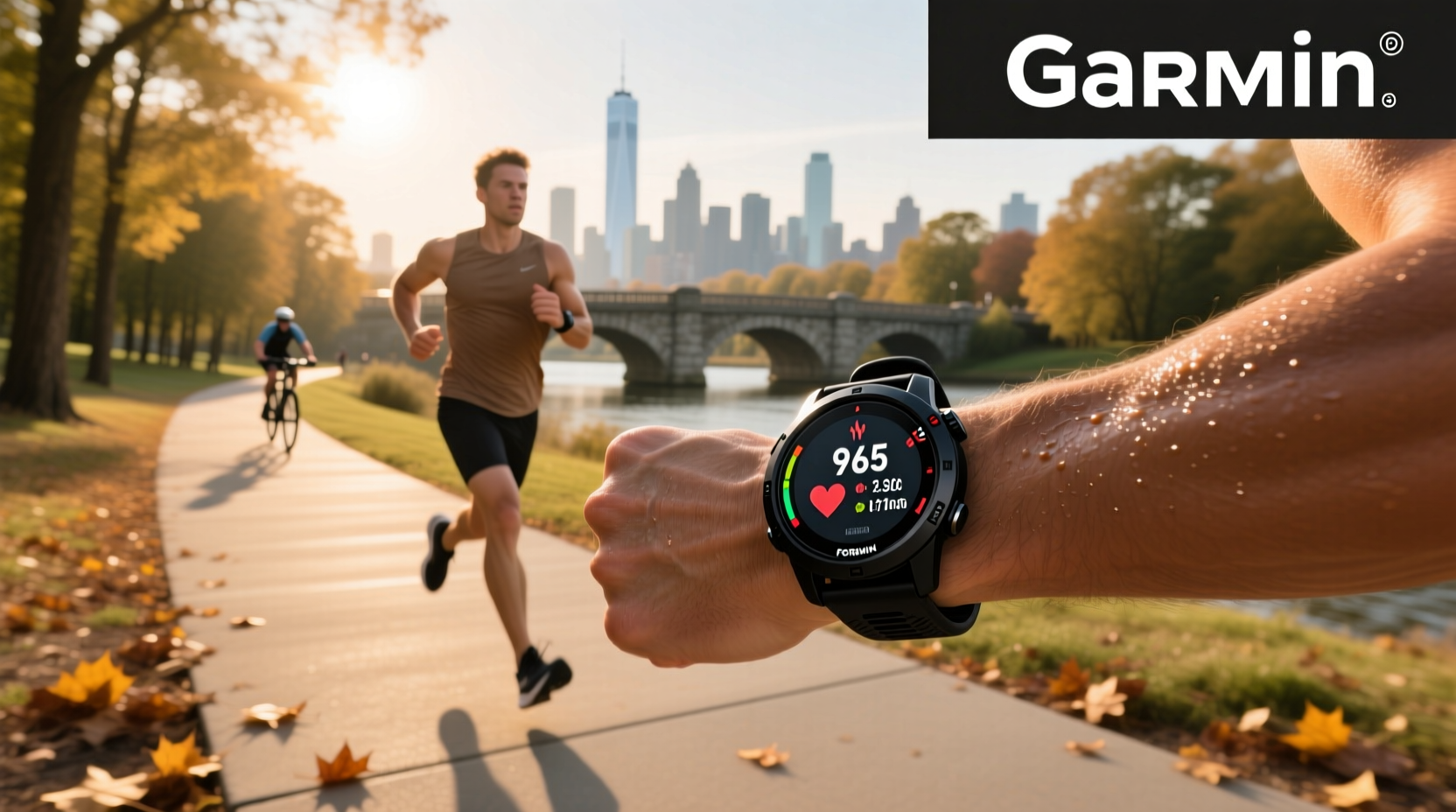
Garmin Forerunner 965 Price and Value
The Garmin Forerunner 965 launched at $599.99 in the United States. Its price has stayed high because Garmin continues to position it as a premium running watch.
The Garmin Forerunner 965 becomes more attractive when retailers offer discounts. A sale price can make it a better buy than a newer model with only small day-to-day improvements.
Before buying, compare these points:
• Buy the Forerunner 965 at a discount if you want premium features at a lower cost.
• Consider the Forerunner 265 if you do not need maps or long battery life.
• Consider the newer Forerunner 970 if you want Garmin’s latest hardware and health features.
• Choose the Forerunner 955 Solar if battery life matters more than an AMOLED screen.
• Look at the Fenix line if you need a stronger outdoor build and more rugged materials.
The Garmin Forerunner 965 is not cheap. However, it can replace a running watch, bike computer for basic rides, music player, and navigation tool. That wider role improves its value for athletes who train often.
Garmin Forerunner 965 Display and Design
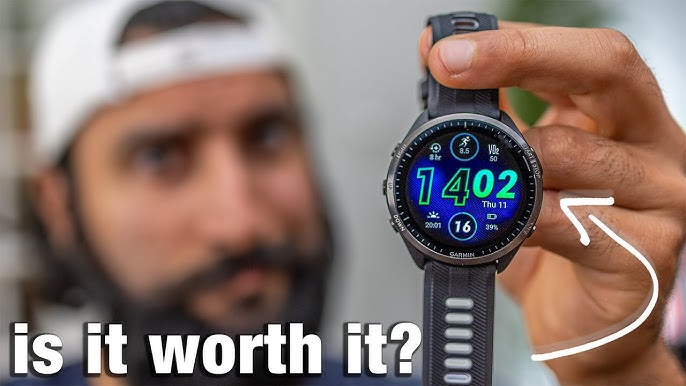
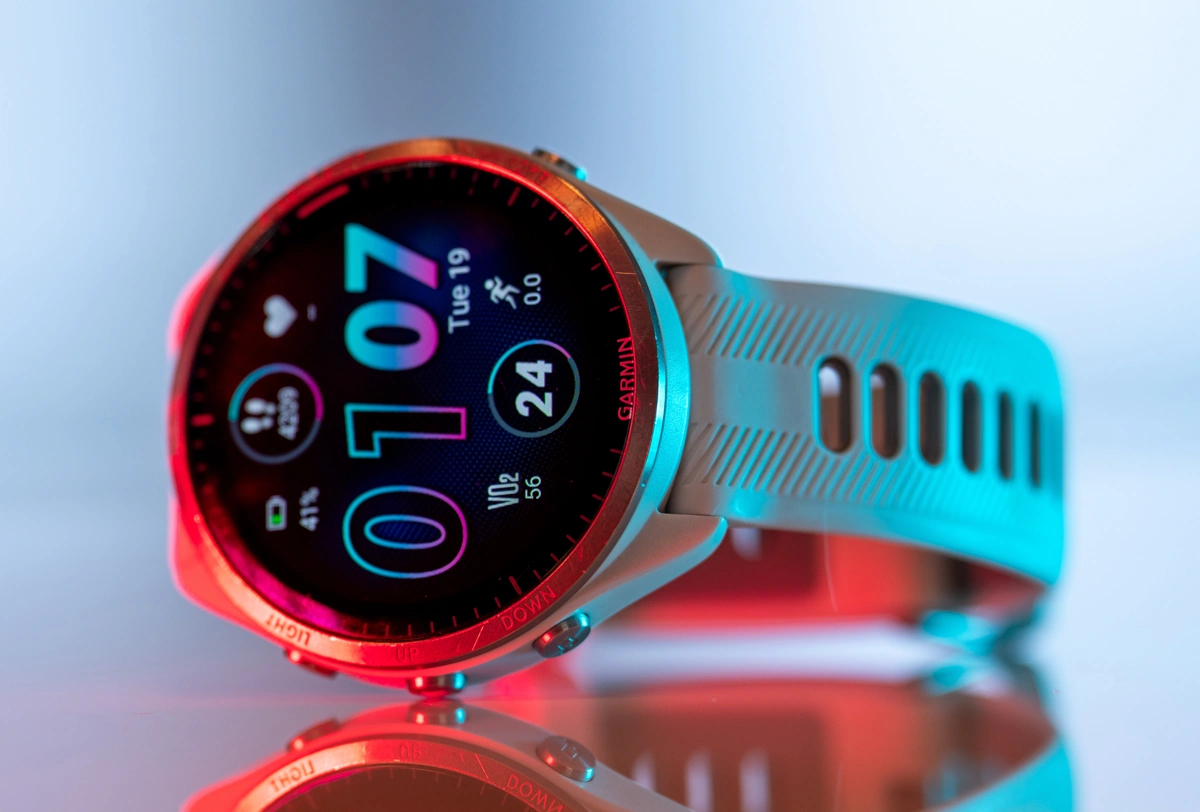
The AMOLED display is one of the biggest reasons to choose the Garmin Forerunner 965. It has rich colors, sharp text, and strong contrast. Maps and workout screens are easier to read than on older memory-in-pixel Garmin watches.
The screen is bright indoors and outdoors. Garmin also lets you use an always-on display, although this reduces battery life. In bright sunlight, the display remains readable, but the battery-saving mode may appeal to runners who train for long hours.
The watch uses a round 47mm case. It looks sporty but does not feel as large as many Fenix models. The titanium bezel adds a premium touch without making the watch too heavy.
There are five physical buttons. This matters during workouts because buttons are easier to use with sweaty hands, gloves, or wet fingers. You can also use the touchscreen for maps, menus, and everyday navigation.
The main design limits are simple:
• The large case may feel too wide on a small wrist.
• The AMOLED screen can use more power than a traditional Garmin display.
• The touchscreen may respond poorly when covered in rain or sweat.
• The lens can collect scratches if you do not use care during outdoor work.
A practical lesson from long-distance watch testing is clear: physical buttons matter more than many buyers expect. Touch controls look modern, but reliable buttons are often faster when your heart rate is high.
GPS Accuracy and Navigation
The Garmin Forerunner 965 supports multi-band GPS and several satellite systems. This helps it track distance and pace in cities, forests, valleys, and areas with tall buildings.
GPS accuracy depends on the environment. No watch can create a perfect signal under heavy tree cover or between tall buildings. Still, the Forerunner 965 performs well when you select the right satellite mode and allow the watch time to connect before starting.
The navigation system is a major strength. You can load routes, follow turn guidance, view elevation data, and use color maps directly on the watch. This is useful for trail runs, road trips, bike rides, and races in unfamiliar places.
Helpful navigation features include:
• Full-color topographic maps
• Turn-by-turn course guidance
• ClimbPro for upcoming climbs
• Elevation profiles
• Back-to-start navigation
• TracBack for following your route back
• Saved locations and points of interest
• Route planning through Garmin Connect
For normal road running, maps may feel unnecessary. For trail runners and travelers, they can prevent wrong turns and reduce the need to check a phone.

Training and Recovery Features
The Garmin Forerunner 965 is strongest when you use it as a training partner rather than a basic fitness tracker. It collects workout data and turns that information into guidance about load, recovery, and readiness.
Training Readiness combines factors such as sleep, recovery time, HRV status, acute load, and recent stress. It does not tell you exactly what to do, but it gives useful context before a hard workout.
Training Status helps show whether your current training is productive, maintaining, strained, or unproductive. These labels are not medical advice. They are best viewed as trends that support your own judgment.
Important training tools include:
• Daily suggested workouts
• Race calendar and race widget
• Training effect
• Training load and acute load
• Recovery time
• HRV Status
• Training Status
• Performance condition
• Course and pace guidance
• Running power support
• ClimbPro and elevation data
• Endurance Score and Hill Score on supported software versions
The watch can also estimate running dynamics when used with compatible accessories or sensors. Some metrics work from the wrist, while others need a chest strap or additional Garmin device.
One mistake to avoid is treating every score as a command. If the watch says you are ready for a hard session but your legs hurt, rest may still be the better choice. Data should guide your training, not replace body awareness or professional coaching.

Heart Rate, Sleep, and Health Tracking
The Forerunner 965 uses an optical heart-rate sensor for daily tracking and workouts. Wrist-based heart rate works well for steady runs, walks, and general trends. It can be less reliable during intervals, strength training, cold weather, or activities with rapid heart-rate changes.
For serious training, a compatible chest strap is still the better choice. A chest strap usually reacts faster and gives more stable readings during hard efforts.
Daily health features include:
• Resting heart rate
• Stress tracking
• Body Battery
• Pulse ox readings in supported regions
• Sleep tracking
• Sleep score
• Nap tracking
• Respiration data
• HRV Status
• Menstrual cycle and pregnancy tracking
These features can help you notice patterns. For example, several nights of poor sleep and a higher resting heart rate may suggest that you need more recovery.
The watch is not a medical device. Its health readings can be useful for personal awareness, but they should not diagnose a condition or replace medical care.
Battery Life in Real-World Use
Battery life is a major reason the Garmin Forerunner 965 is worth it for many athletes. Garmin rates it for up to 23 days in smartwatch mode and up to 31 hours in GPS-only mode.
Actual battery life varies. Always-on display use, GPS settings, music, notifications, pulse ox tracking, and frequent workouts can reduce the numbers.
A typical user may see:
• Around one to two weeks with regular workouts and a bright display
• Several days of GPS use before charging
• Less battery life with always-on display and multi-band GPS
• About 10.5 hours of GPS use with music, depending on settings
The Forerunner 965 charges with Garmin’s proprietary cable. It does not use wireless charging, which may disappoint some buyers.
Even so, the battery is strong enough for most training plans. You can track a marathon, long bike ride, or several days of normal activity without worrying about daily charging.
Smartwatch Features and Daily Use
The Forerunner 965 is a capable smartwatch, but it is still designed around sports. You can receive phone notifications, control music, check weather, store music, and use Garmin Connect IQ apps.
It supports Garmin Pay in supported regions and with compatible banks. You can also download songs from services such as Spotify, Amazon Music, and Deezer when supported by the service and your account.
Daily features include:
• Smartphone notifications
• Music storage and playback
• Garmin Pay
• Weather information
• Calendar and alarms
• Find My Phone
• Safety and tracking features
• Connect IQ apps and watch faces
• Wi-Fi syncing
The watch does not have cellular service. You need a paired phone for live tracking, phone calls, and some connected safety features. It also lacks the deep app ecosystem found on an Apple Watch.
Choose the Forerunner 965 if fitness comes first and smart features come second. Choose an Apple Watch or Samsung Galaxy Watch if calls, apps, and messaging are your top priorities.

Forerunner 965 Compared With Other Garmin Watches
The best alternative depends on your training style. The Garmin Forerunner 965 is not automatically the right choice for every athlete.
Garmin Forerunner 965 vs. Forerunner 265
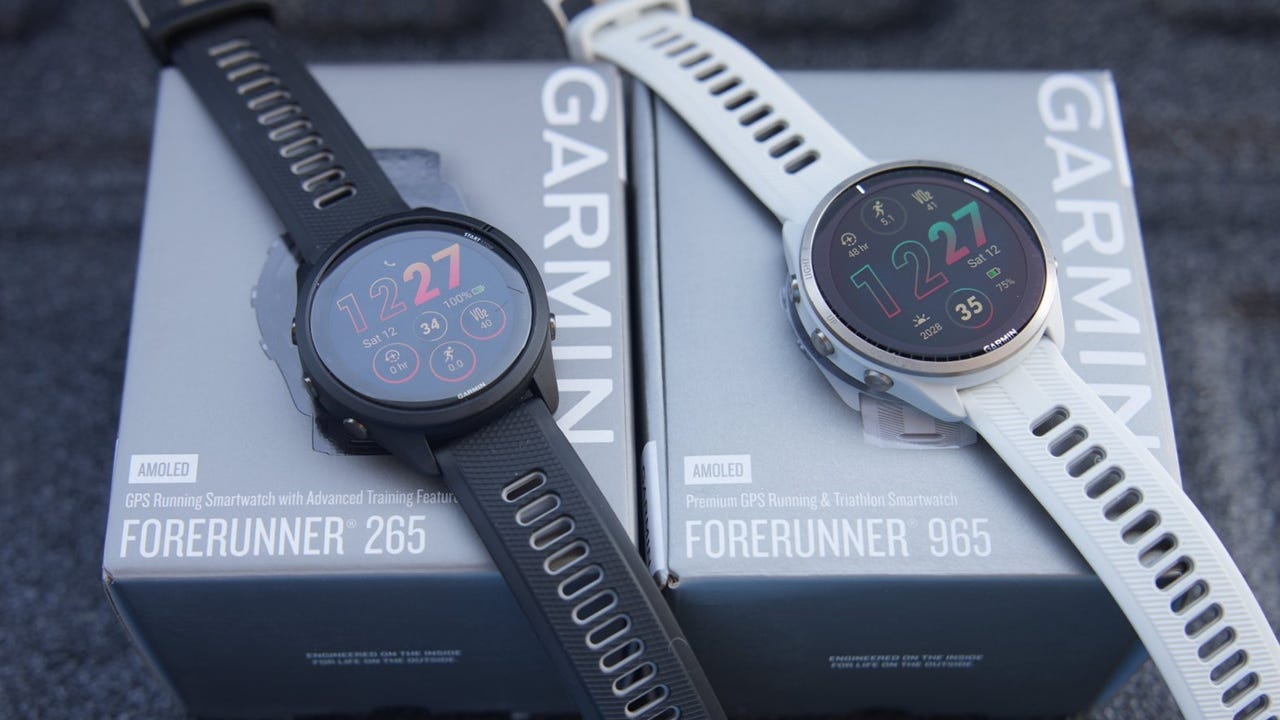
The Forerunner 265 costs less and also has an AMOLED display. It offers strong training tools and accurate GPS, but it lacks the 965’s full maps and has a smaller feature set.
Choose the Forerunner 265 for road running and general fitness. Choose the Forerunner 965 for navigation, longer battery life, triathlon training, and a larger display.
Garmin Forerunner 965 vs. Forerunner 955
The Forerunner 955 has a memory-in-pixel display and a more traditional Garmin look. It may offer longer battery life in some modes, especially in the Solar version.
Choose the 955 if you prefer maximum battery life and a screen that is easy to view in direct sun. Choose the 965 if you want AMOLED colors and a more modern display.
Garmin Forerunner 965 vs. Fenix 8
The Fenix 8 offers a more rugged design, stronger materials, and broader outdoor features. It is heavier and often more expensive.
The Garmin Forerunner 965 is lighter and usually more comfortable for daily running. The Fenix 8 suits hikers, climbers, and outdoor users who need a tougher case.
Garmin Forerunner 965 vs. Forerunner 970
The Forerunner 970 is the newer premium running model. It adds newer hardware and features, but the improvement may not justify the higher price for every user.
The Garmin Forerunner 965 can be the smarter value when discounted. The 970 makes more sense if you want the newest sensors, updated health tools, and longer software support.
Who Should Buy the Garmin Forerunner 965?
The Garmin Forerunner 965 is worth considering if you fit one or more of these groups:
• Marathon and half-marathon runners
• Trail runners who need maps
• Triathletes and multisport athletes
• Cyclists who want route guidance on the wrist
• Runners who want detailed recovery data
• Athletes who dislike daily charging
• Users who want a large AMOLED display
• People upgrading from an older Forerunner model
• Travelers who explore new running routes
It is especially useful for someone moving from a basic fitness tracker. You gain structured training, navigation, better workout data, and more control over your goals.
The watch may be more than you need if you only track steps, casual walks, gym sessions, or occasional jogs. In that case, the Forerunner 165, Forerunner 265, Fitbit, or Apple Watch may offer better value.
Who Should Skip the Garmin Forerunner 965?
The Garmin Forerunner 965 may not suit you if you want a small watch, phone-free communication, or a simple user experience.
Consider another device if:
• You need LTE calling and messaging.
• You want a medical ECG feature.
• You prefer wireless charging.
• You dislike large watches.
• You want a rugged metal case for outdoor work.
• You mainly use smartwatch apps.
• You do not plan to use maps or advanced training tools.
• You want the lowest possible price.
Some users also find Garmin’s menus complex. The watch has many settings, profiles, and data fields. That depth is helpful for experienced athletes but can feel like opening a toolbox when you only need a stopwatch.
How to Get the Most From the Forerunner 965
A few setup changes can improve the experience from the first week.
- Update the watch and Garmin Connect app before serious training.
- Set your heart-rate zones correctly instead of relying only on automatic values.
- Turn on multi-band GPS for cities, forests, and difficult terrain.
- Use GPS-only mode in open areas when battery life matters more.
- Add only the data fields you can understand during a workout.
- Wear the watch snugly, especially during intervals.
- Review weekly trends instead of reacting to one poor score.
- Use a chest strap for precise interval and race heart-rate data.
- Download maps and music before leaving home.
- Test navigation on a short route before using it on a long trail run.
A common mistake is adding too many data fields. A clean screen with pace, distance, and heart rate is often more useful than a crowded screen with ten numbers.
Is the Garmin Forerunner 965 Worth It for Running?
For serious running, the Garmin Forerunner 965 is worth it because it combines accurate GPS, advanced training tools, strong battery life, and useful navigation in a light case.
It is particularly valuable for runners who follow structured plans. Training Readiness, recovery time, race predictions, suggested workouts, and course guidance can make training feel more organized.
The value is lower for casual runners. If you run once or twice each week and mainly need pace and distance, a less expensive watch can handle the job.
The best buying strategy is simple: buy the Garmin Forerunner 965 when its price is clearly below newer premium models, unless you specifically need the newest features in the Forerunner 970.
Frequently Asked Questions About Is Garmin Forerunner 965 Worth It?
Is the Garmin Forerunner 965 still worth buying?
Yes, it remains a strong choice for runners, cyclists, and triathletes who want maps, long battery life, and advanced training data. It offers better value when sold at a discount compared with newer premium Garmin watches.
Is the Garmin Forerunner 965 good for beginners?
It can be good for beginners, but it may include more features than they need. New runners may prefer a simpler model first, while beginners who plan to train for a marathon can benefit from its detailed guidance.
How long does the Garmin Forerunner 965 battery last?
Garmin rates it for up to 23 days in smartwatch mode and up to 31 hours in GPS-only mode. Always-on display use, music, multi-band GPS, and frequent workouts can lower real-world battery life.
Does the Garmin Forerunner 965 have maps?
Yes, it includes full-color maps and turn-by-turn navigation. You can load routes and follow course guidance without carrying your phone for map viewing.
Can the Garmin Forerunner 965 make phone calls?
No, the watch does not have cellular calling. It can show notifications and support some safety features when connected to a compatible smartphone.
Is the Forerunner 965 better than the Apple Watch for running?
The Forerunner 965 is usually better for battery life, training analysis, GPS tools, and structured endurance training. The Apple Watch is stronger for apps, calls, messaging, and general smartwatch use.
Does the Garmin Forerunner 965 track sleep accurately?
It can provide useful sleep trends, including sleep duration, stages, and sleep score. Sleep tracking is not perfect, so treat it as a helpful guide rather than a medical measurement.
Conclusion
The Garmin Forerunner 965 is worth it for athletes who want a lightweight premium watch with AMOLED visuals, full maps, accurate GPS, long battery life, and detailed training features. It is less appealing for casual users, small-wristed buyers, or anyone who needs cellular calling and a large smartwatch app library.
Its strongest value now comes from discounts. Compare it with the Forerunner 265, Forerunner 970, and Fenix 8 before buying, then choose the model that matches your training needs rather than simply choosing the most expensive watch.
If you want serious running tools without a heavy outdoor watch, the Forerunner 965 remains an excellent option. Check current prices, review the feature differences, and share your experience with the watch in the comments.