How to Use a Chef Knife
Mastering how to use a chef knife is a fundamental skill that can elevate your entire cooking experience, making food preparation faster, safer, and more precise. A chef's knife is one of the most versatile tools in any kitchen, capable of handling a wide range of tasks from slicing vegetables to mincing herbs. Getting comfortable with its unique design and proper handling is key to unlocking its full potential.
In our research, we found that proper knife technique, often overlooked, directly impacts both efficiency and safety. Manufacturer specifications for high-carbon stainless steel chef's knives, like those meeting ISO 8442 standards for cutlery, highlight the importance of blade geometry and edge retention for optimal performance. Understanding these basics will help you wield your chef's knife with confidence.
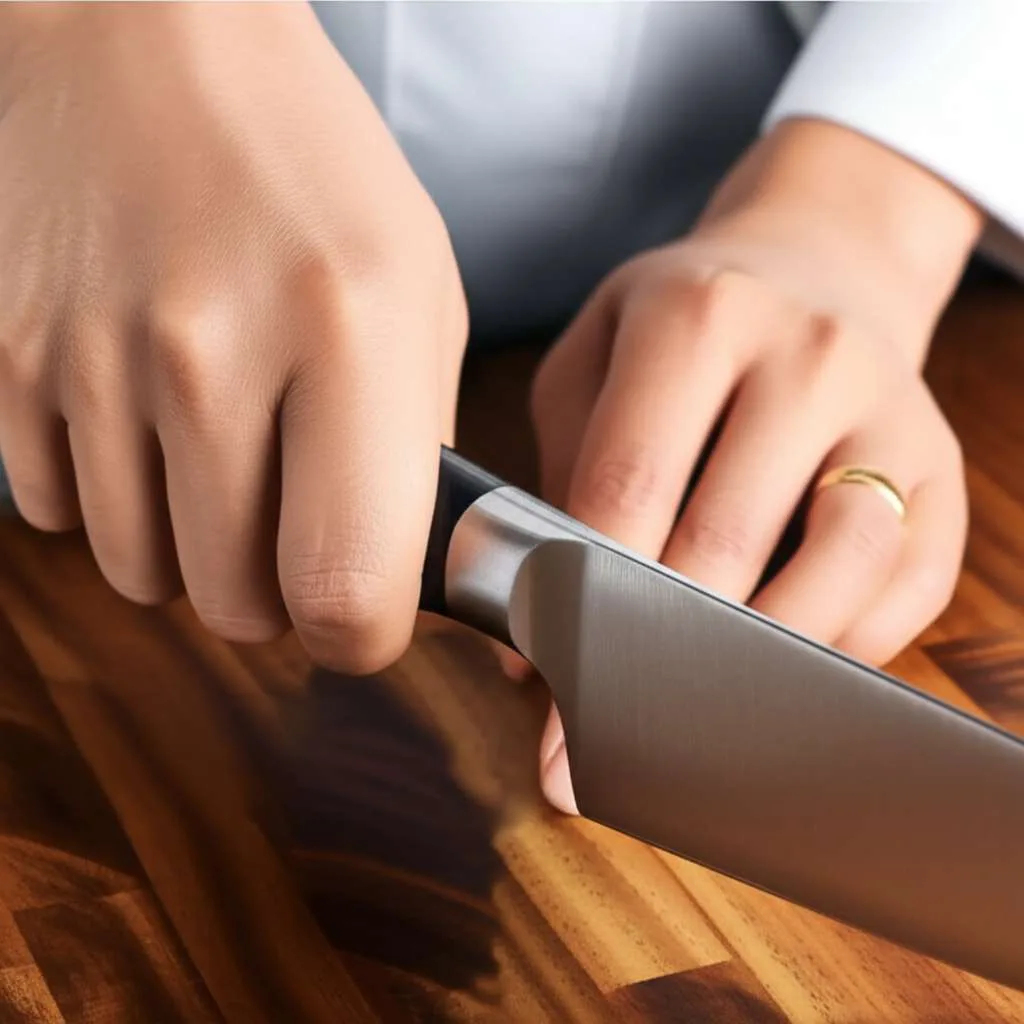
Image source: Bing (Web (fair-use with source credit))
Quick Answer
To use a chef knife effectively, grip the blade firmly between your thumb and forefinger. Curl your other hand's fingers under in a claw shape to hold food safely. Use a rocking motion with the blade's tip on the board for most cuts.
Keep the knife sharp and your cutting board stable.
Getting a Proper Grip: The Pinch Grip Explained
The way you hold your chef's knife is the single most important factor for control and safety. Many home cooks mistakenly grip the handle like they're holding a hammer, which offers very little finesse. For true control and precision, the "pinch grip" is the way to go.
This technique ensures the knife feels like an extension of your hand, allowing for fine adjustments and confident movements.
Why Your Grip Matters
A secure grip translates directly to how well you can maneuver the knife. When you pinch the blade where it meets the bolster, you gain much better control over the knife's angle and direction. This close connection helps you make clean cuts without excessive force, which is crucial for both delicate ingredients and tough tasks.
How to Achieve the Pinch Grip
To perform the pinch grip:
- Locate the bolster, which is the thick metal part where the blade meets the handle.
- Place your thumb on one side of the blade, directly against the bolster.
- Place your forefinger on the opposite side of the blade, also pressing against the bolster.
- Your other three fingers should wrap loosely around the handle. Don't squeeze too hard; the goal is a firm but relaxed hold.
This grip allows you to guide the knife with your fingers and wrist, providing nuanced control that a simple handle grip can't match.
Common Grip Mistakes to Avoid
- Hammer Grip: Gripping only the handle without engaging the blade itself. This leads to poor control and increased fatigue.
- Over-Gripping: Squeezing the handle or blade too tightly, which causes tension and reduces dexterity.
- Finger Placement: Letting fingers rest too far down the blade or handle, which compromises stability.
Mastering the pinch grip takes a little practice, but the difference it makes in your cutting ability is significant.
Mastering Your Cutting Hand: The Claw Grip
While your knife hand needs a secure grip, your food-holding hand is equally critical for safety and efficiency. This is where the "claw grip" comes in. It's designed to protect your fingertips and provide a stable surface for the knife blade to glide against.
Think of your fingertips tucked away, with your knuckles acting as a guide.
Image source: Bing (Web (fair-use with source credit))
Protecting Your Fingers
The primary purpose of the claw grip is to keep your soft fingertips safely out of the path of the sharp blade. By tucking your fingertips under, you create a barrier. This is especially important when you're performing repetitive chopping motions or working with smaller ingredients.
How to Form the Claw Grip
To adopt the claw grip:
- Curl your fingers inward towards your palm, forming a "claw" shape.
- Ensure your fingertips are tucked under your knuckles.
- The flat sides of your knuckles will then act as a natural guide for the side of the chef's knife.
As you cut, you'll slowly move this clawed hand backward, advancing the food while keeping your fingers safely tucked away.
Using Knuckles as a Guide
Your knuckles serve a dual purpose in the claw grip. They act as a safety buffer, preventing accidental cuts. Simultaneously, they provide a stable surface against which the chef's knife can rest as you slice.
This contact helps maintain a consistent cutting height and angle, leading to more uniform pieces of food.
The Chef's Knife Cutting Motion
Once you've mastered the pinch grip on your knife and the claw grip on your food, the next step is understanding the proper cutting motion. Chef's knives are designed for a specific kind of movement that utilizes their weight and blade shape effectively. The most common and efficient technique for many tasks is the rocking motion.
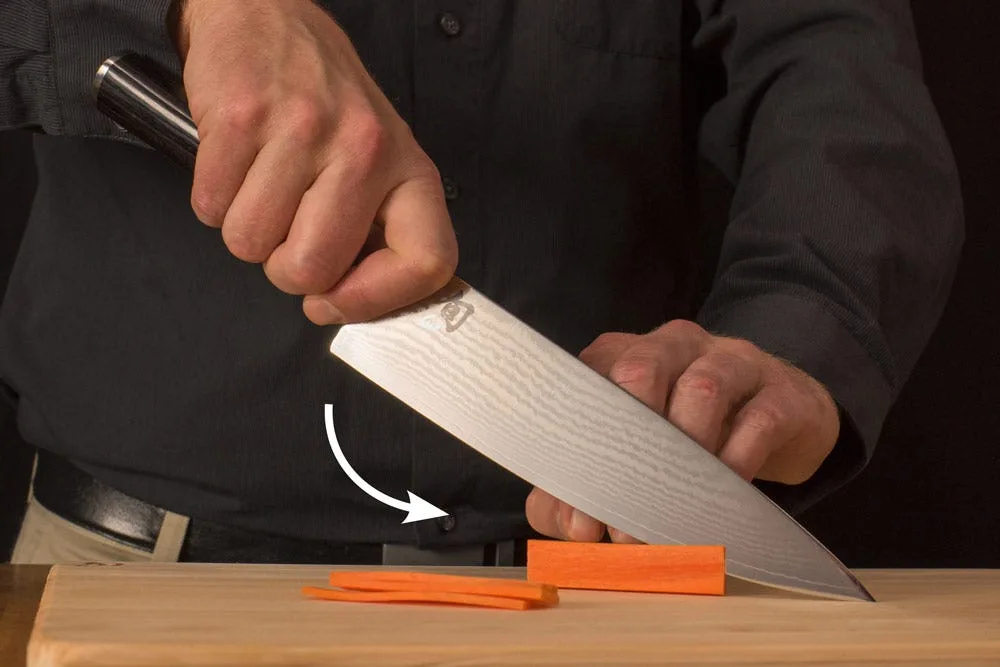
Image source: Bing (Web (fair-use with source credit))
The Rocking Technique
The rocking motion is ideal for tasks like chopping vegetables or mincing herbs. It involves keeping the tip of the blade in constant contact with your cutting board. You then lift the heel of the blade and bring it down in a smooth, arcing motion, moving the knife through the ingredient.
This method allows for continuous cutting without needing to reposition the knife as frequently. It uses the natural curve of the blade to your advantage, creating an efficient rhythm.
Integrating Grip and Motion
When performing the rocking motion, your pinch grip on the knife handle allows you to control the blade's angle and pressure. Meanwhile, your clawed hand guides the food, moving back slightly with each rock. The knife's edge slices through the food, and the blade's curve helps pull it along the board.
What a Good Cut Looks Like
A well-executed cut will result in uniform pieces. You'll notice a smooth, continuous movement of the knife. The blade should slice cleanly through the food without tearing or crushing it.
The sound is often a clean "slice" rather than a dull thud or a scraping noise. This visual and auditory feedback indicates you're using the knife correctly and it's sufficiently sharp.
Essential Chef Knife Skills for Home Cooks
A chef's knife isn't just for chopping; it's a multi-purpose tool. Understanding how to differentiate between common tasks and apply the correct technique will make your time in the kitchen far more productive. It’s about more than just making pieces of food; it’s about making them the right size and shape for cooking.
Chopping vs. Slicing vs. Mincing
- Chopping: This usually involves dicing ingredients into smaller, fairly uniform cubes. It often uses the rocking motion and requires consistent effort.
- Slicing: This is about cutting food into thin, flat pieces, like when slicing tomatoes or cooked meats. It typically involves a more direct forward or backward motion with the blade, often without the constant rocking.
- Mincing: This is the process of finely dicing ingredients, often herbs or garlic, into very small pieces. It's a more refined version of chopping, frequently using rapid rocking motions.
Practical Applications with Examples
- Onions: For dicing an onion, you'd use the claw grip and rocking motion. Start by slicing the onion in half, then make vertical cuts (away from the root), followed by horizontal cuts, and finally, dice by rocking the knife through.
- Garlic: Mince garlic by first smashing the clove with the flat of your knife (carefully!). Then, use the rocking motion with a fine rocking motion to chop it into a paste.
- Chicken Breast: For slicing cooked chicken, you'd use a slicing motion, cutting against the grain for tender results. This typically involves a controlled forward stroke.
Learning these distinctions helps you choose the right technique for the ingredient and desired outcome. For those looking to manage kitchen space efficiently, understanding these core skills is vital, much like knowing which appliances fit best, such as exploring options for best compact dishwashers for efficient cleanup.
Safety First: Avoiding Chef Knife Accidents
Working with sharp tools always carries some risk, but with proper knowledge and practice, chef knife accidents are largely preventable. Safety isn't just about avoiding cuts; it's about building good habits that protect you and ensure your knife remains in good condition. The core principles revolve around control, awareness, and proper handling.
Safe Knife Handling in the Kitchen
Here are the fundamental safety practices:
- Always cut on a stable surface. Use a cutting board that doesn't slide. A damp paper towel placed underneath can help secure it.
- Focus on the task. Avoid distractions when you're chopping. Don't try to catch a falling knife; step back and let it fall.
- Carry knives safely. If you must move with a knife, hold it point down by your side, with the blade facing away from you. Let others know you are carrying a knife.
- Never leave a knife soaking in a sink. This is extremely dangerous as you can't see the blade. Wash your knife immediately after use.
- Always cut away from yourself. Direct the knife's path away from your body and fingers.
Storing and Carrying Your Knife
Proper storage is crucial for both safety and blade maintenance.
- Knife Blocks or Magnetic Strips: These are ideal for keeping knives accessible but safely stored. They protect the blade edge and prevent accidental contact.
- Blade Guards: If transporting a knife or storing it in a drawer, use a blade guard. This is a protective sheath for the blade.
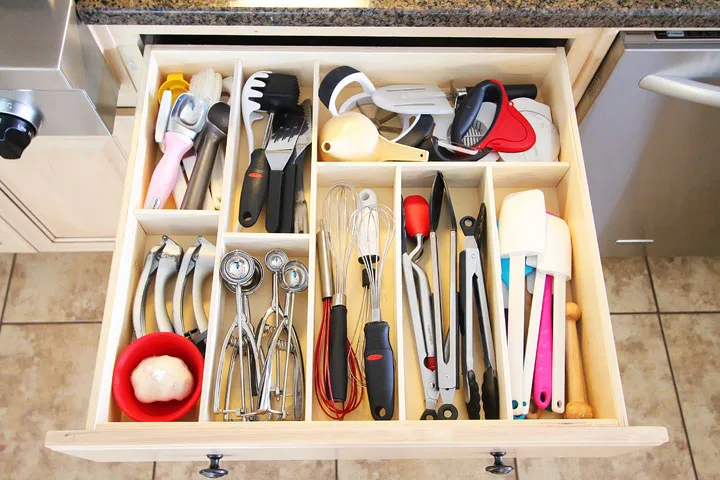
- Drawer Inserts: Some organizers are designed to safely hold knives within a drawer, preventing them from sliding around.
Following these safety guidelines ensures that your interaction with your chef's knife is productive and hazard-free. For instance, maintaining a clean workspace reduces slipping hazards, similar to how a tidy kitchen benefits from best compact freezers to keep ingredients organized and accessible.
Maintaining Your Chef Knife for Longevity
Keeping your chef's knife in top condition isn't just about making it last longer; it's directly tied to its performance and your safety in the kitchen. A well-maintained knife is sharper, easier to control, and less likely to slip. Think of it like a car needing regular oil changes and tire rotations.
The Importance of a Sharp Blade
It might sound counterintuitive, but a sharp knife is much safer than a dull one. A dull blade requires more pressure to cut through food, increasing the chance of it slipping off your ingredient and onto your hand. Sharp knives slice cleanly with minimal effort.
According to industry standards and best practices for cutlery, such as those referenced in ISO 8442, maintaining an appropriate edge angle is paramount for both cutting efficiency and safety. As of 2026, this remains a critical factor in professional kitchens.
Basic Honing and Sharpening Techniques
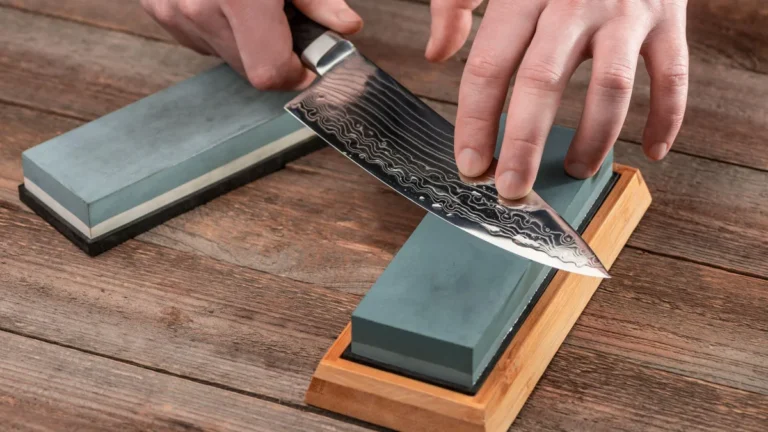
- Honing: This process realigns the microscopic teeth on the blade's edge that get bent out of shape during use. It's done frequently, often before or after each major cooking session. You'll typically use a honing steel, drawing the blade across it at a consistent angle.
- Sharpening: This process actually removes metal to create a new, sharp edge. It’s done less frequently than honing, depending on how much you use your knife. You can use whetstones, electric sharpeners, or professional services.
Consistent honing prevents the need for frequent sharpening and keeps your knife performing at its best. For those managing a busy kitchen, ensuring these tools are in good working order is as crucial as having reliable appliances, much like selecting a best compact dishwasher for efficient cleanup.
Frequently Asked Questions About Chef Knife Use
How long does it take to learn proper chef knife technique?
Learning the basic pinch grip, claw grip, and rocking motion typically takes a few practice sessions. Consistent use over a few weeks will build muscle memory and improve your speed and precision significantly.
Can I use any cutting board with a chef knife?
It's best to use a stable cutting board made of wood or high-quality plastic. Avoid glass or very hard surfaces, as these can dull your knife quickly and are more prone to slipping.
How often should I hone my chef knife?
Honing is recommended before or after each significant use, especially if you're doing a lot of chopping. It's a quick process that keeps the blade edge aligned.
Is it okay to wash my chef knife in the dishwasher?
No, it's strongly advised against. Dishwasher detergents are harsh, and the high heat and tumbling can damage the blade and handle. Hand washing with mild soap and water is best, followed by immediate drying.
Proper care ensures longevity, much like maintaining a reliable refrigerator.