How To Use Tow Mirrors: Easy Towing Tips
Tow mirrors help you see wider, safer, and clearer when towing a trailer or camper.
If you have ever tried to back up a trailer with tiny factory mirrors, you already know the struggle. Tow mirrors solve that problem by giving you a wider view of your lane, your trailer, and the traffic around you. In this guide, I’ll walk you through how to use tow mirrors the right way, based on practical experience, safe driving habits, and what really matters on the road.
What tow mirrors are and why they matter
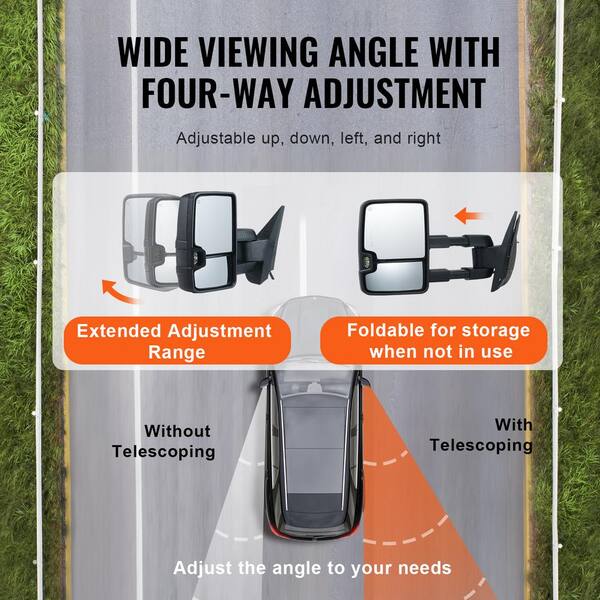
Tow mirrors are larger side mirrors made for towing. They extend farther out than regular mirrors, so you can see around a wide trailer, boat, camper, or horse trailer. That extra view helps reduce blind spots and makes lane changes, turns, and backing up much easier.
I have used tow mirrors on everything from small utility trailers to bigger travel trailers, and the difference is huge. Without them, you end up leaning, guessing, and checking over and over. With them, the road feels less stressful because you can actually see what is happening beside and behind you.
Tow mirrors matter for a few simple reasons:
- Better rear visibility when a trailer blocks your view
- Wider field of view for safer lane changes
- Easier backing and parking
- Less strain on your neck and shoulders
- More confidence in tight traffic or on the highway
Tow mirrors are not magic, though. They work best when they are set up correctly and used with good towing habits.
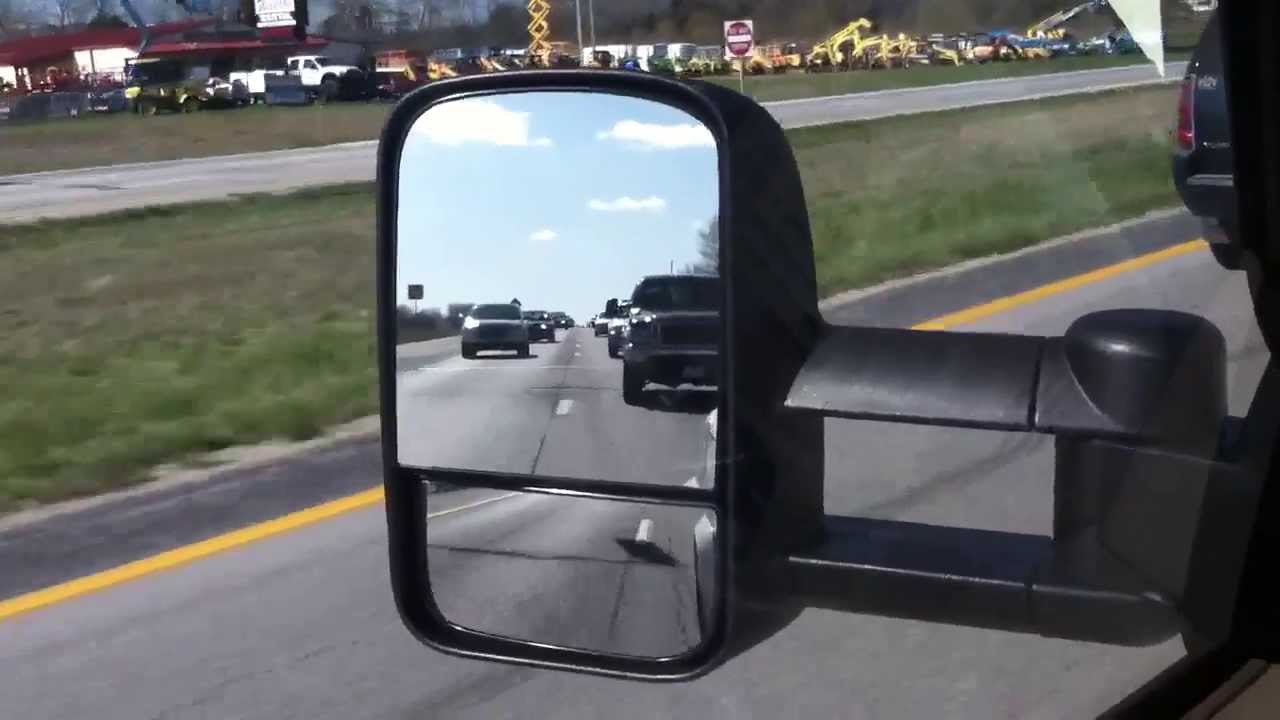
How to use tow mirrors the right way
Using tow mirrors is not hard, but the setup matters a lot. If you install them and never adjust them, you will not get the full benefit. The goal is to create a clear, balanced view of both your trailer and the road next to it.
Here is the basic process I recommend:
-
Adjust the mirrors before you start driving
Sit in your normal driving position first. Then angle each tow mirror so you can see the side of your trailer and the lane beside it. -
Set the mirrors for coverage, not just reflection
You want a mix of trailer edge, road lane, and traffic behind you. If all you see is the trailer, you are missing too much. -
Check both flat and convex sections if your mirrors have them
Many tow mirrors use a flat mirror for true distance and a convex mirror for a wider view. Use both together. -
Recheck after loading the trailer
A loaded trailer can sit differently, which changes your sight line. I have seen people forget this and wonder why the mirror view feels “off.” -
Test your setup in a safe area
Before heading into traffic, drive slowly in an empty lot or quiet road. Make sure you can see the trailer corners and nearby vehicles clearly.
A good rule I use is simple: if you cannot see the trailer well enough to judge space, or if the mirror is aimed too far outward, readjust it. Tow mirrors should help you see more, not just show a giant slice of the sky.
How to adjust tow mirrors for best visibility
The biggest mistake people make with tow mirrors is aiming them too much like regular mirrors. Tow mirrors should be adjusted with towing in mind. You are not just trying to see your own vehicle. You are trying to monitor the trailer and the lane beside it.
A practical adjustment method looks like this:
- Driver side mirror: Aim the inner part to show the trailer side and the outer edge to show the lane behind you
- Passenger side mirror: Set it wide enough to watch the trailer edge and traffic approaching from the right
- Convex mirror section: Use it for a broader view of blind spots, but do not rely on it for exact distance
When I first started towing, I made the classic mistake of setting the mirrors too wide. I could see everything except the trailer itself. That sounds good at first, but it is not. You need to know where the trailer is in relation to your truck at all times, especially when backing or changing lanes.
Try this setup trick:
- Park on level ground
- Sit in your normal driving position
- Adjust the mirrors so the trailer edge takes up a small part of the inside view
- Make sure the outer side of the mirror shows the lane beside you
- Confirm you can see vehicles approaching from behind before they enter your blind spot
This setup gives you a more useful picture of the road. It is like tuning a camera lens. You do not want it too zoomed in or too wide. You want it just right.
How to use tow mirrors while driving
Once tow mirrors are adjusted, the real skill is using them well while driving. A lot of new towers stare forward too much and forget to scan the mirrors often enough. Good towing is a rhythm. You keep checking mirrors, scanning ahead, and staying calm.
Use tow mirrors this way while driving:
- Check them every few seconds, especially on highways
- Look before changing lanes
- Use them before turning, merging, or braking hard
- Watch the trailer’s position during windy conditions
- Keep an eye on vehicles that sit beside the trailer
Tow mirrors are especially useful when traffic gets busy. They help you spot a car trying to pass, a motorcycle hiding near your blind spot, or a trailer sway issue starting to build. The earlier you catch a problem, the easier it is to fix.
In my experience, the best towing drivers are the ones who treat mirrors like a constant scan tool, not a one-time check. It is a little like watching the water when you are steering a boat. You are always reading the surface and making small corrections.
How to use tow mirrors when backing up
Backing up with a trailer is where tow mirrors really earn their keep. The key is slow, small movements. If you turn too much or move too fast, the trailer reacts quickly and can surprise you.
Here is a simple method:
- Place your hand at the bottom of the steering wheel
- Move your hand in the direction you want the trailer to go
- Use both tow mirrors to track the trailer’s path
- Pause often and correct early
- Get out and look if the angle starts to feel wrong
Tow mirrors help you see the trailer corners, but they do not replace patience. Even with great mirrors, backing up still takes practice. I have watched experienced drivers make it look easy because they stay slow and make tiny steering moves, not huge ones.
If the area is tight, use a spotter when possible. Tow mirrors are powerful, but they work even better with another set of eyes.
Tow mirror features that help most
Not all tow mirrors are the same. Some have power adjustment, heated glass, turn signals, spotter sections, or manual folding arms. These features can make towing easier, but they are not all equally important for every driver.
Useful tow mirror features include:
- Extendable arms for wider trailers
- Heated glass for rain, snow, and fog
- Convex spotter mirrors for blind spots
- Power adjustment for quick positioning
- Turn signals or marker lights for better visibility
- Folding design for parking in tight spaces
If you tow often in bad weather, heated tow mirrors can be a lifesaver. If you travel through crowded areas, turn signals and spotter mirrors add another layer of safety. Still, the most important feature is simple: the mirrors must give you a clear view without vibration.
Some cheaper mirrors shake a lot at highway speed. That can make them hard to trust. A steady image matters more than fancy looks.
Common mistakes to avoid with tow mirrors
A lot of towing problems start with small mirror mistakes. These are easy to avoid once you know what to watch for.
Common mistakes include:
- Setting the mirrors too narrow
- Relying only on the convex section
- Forgetting to adjust after loading the trailer
- Not checking mirror position before driving
- Ignoring vibration or loose mounting
- Assuming mirrors remove all blind spots
One thing I learned early is that tow mirrors improve visibility, but they do not erase blind spots completely. You still need turn signals, shoulder checks, slow lane changes, and good spacing. The mirror is a tool, not a shortcut.
Another mistake is leaving mirrors extended all the time, even when not towing. That can make parking harder and can expose them to damage. Fold them in when needed, and keep the hardware in good shape.
Safety tips for better towing visibility
Tow mirrors are part of a larger safety system. To get the most out of them, pair them with smart towing habits.
Use these safety tips:
- Keep your windows and mirrors clean
- Check mirror angle before every trip
- Drive slower in crosswinds
- Leave more following distance
- Signal earlier than normal
- Practice backing in an empty lot
- Make sure the trailer is loaded evenly
The National Highway Traffic Safety Administration and towing safety guidance from vehicle makers both stress visibility, proper trailer setup, and controlled speed. That lines up with real-world experience too. A well-adjusted mirror setup cannot make up for poor loading or aggressive driving.
I also recommend checking mirrors during fuel stops or rest breaks. Small bumps, vibrations, or weather changes can shift them just enough to reduce your view.
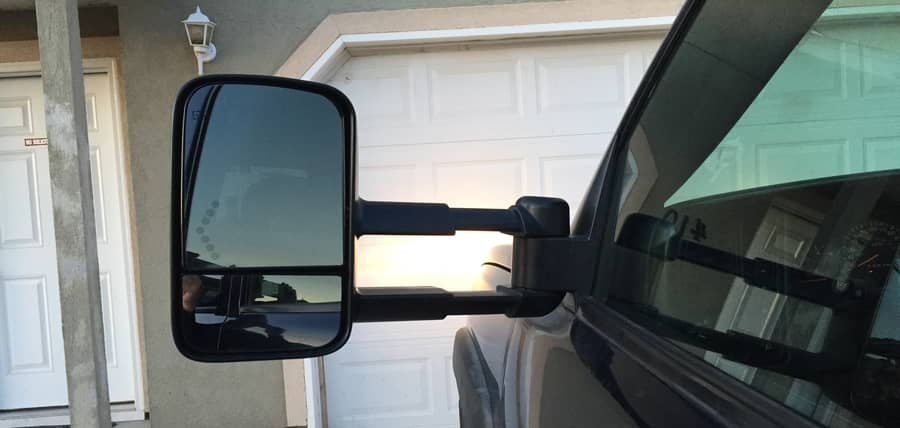
How tow mirrors help in different towing situations
Tow mirrors are useful in many towing situations, but each one has a slightly different need.
For travel trailers:
- You need to see both sides of the trailer and traffic behind you
- Wide mirrors help during lane changes and highway merges
For boat trailers:
- Water and ramp areas often have tight space
- Mirrors help when backing down a ramp or pulling out on a slope
For utility trailers:
- Smaller trailers may still block your rear view
- Tow mirrors help with turning and parking in work sites
For horse trailers or enclosed trailers:
- These are often tall and wide
- Tow mirrors become essential for safe road awareness
In every case, the purpose is the same. You want enough view to drive with confidence, without guessing where the trailer is or what is happening beside you.
Frequently Asked Questions about How to use tow mirrors
How do I know if my tow mirrors are adjusted correctly?
You should be able to see the side of your trailer and the lane next to you without leaning forward. If the mirror shows too much of your truck or too much empty space, adjust it again.
Do tow mirrors eliminate blind spots?
No, they reduce blind spots, but they do not remove them completely. You still need to use turn signals, shoulder checks, and careful lane changes.
Should I use tow mirrors all the time?
Only if they are designed to stay on your vehicle safely and do not interfere with normal driving. Many drivers extend or fold them when towing and return them to a smaller position when not towing.
Are tow mirrors better than clip-on mirrors?
Tow mirrors are usually more stable and more integrated with the vehicle. Clip-on mirrors can work for occasional use, but they may vibrate more and offer less confidence at highway speed.
Can tow mirrors help with backing into a parking space?
Yes, they are very helpful for backing because they let you track the trailer’s angle and position. They work best when paired with slow steering, small corrections, and a spotter when available.
Conclusion
Tow mirrors make towing safer, calmer, and far more manageable when they are set up and used the right way. The big idea is simple: adjust them for trailer visibility, scan them often, and combine them with smart driving habits.
If you tow even a few times a year, learning how to use tow mirrors well is one of the easiest ways to improve control and confidence on the road. Take a few minutes before your next trip to adjust them carefully, then practice in a safe space until it feels natural.
If this guide helped you, keep learning, keep practicing, and share your towing questions or tips in the comments.