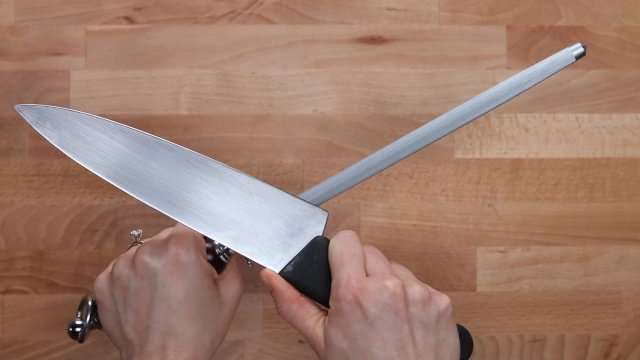
How To Sharpen Kitchen Knives
Sharpening kitchen knives reliably comes down to holding a 20-degree angle across a wet 1,000-grit whetstone for about 10 to 15 strokes per side. This process resets the cutting edge by removing dull metal, taking around 10 minutes per knife. This whetstone method suits cooks who use standard Western chef’s knives and want a durable, clean edge without removing excess steel.
Gear you need to sharpen your kitchen knives
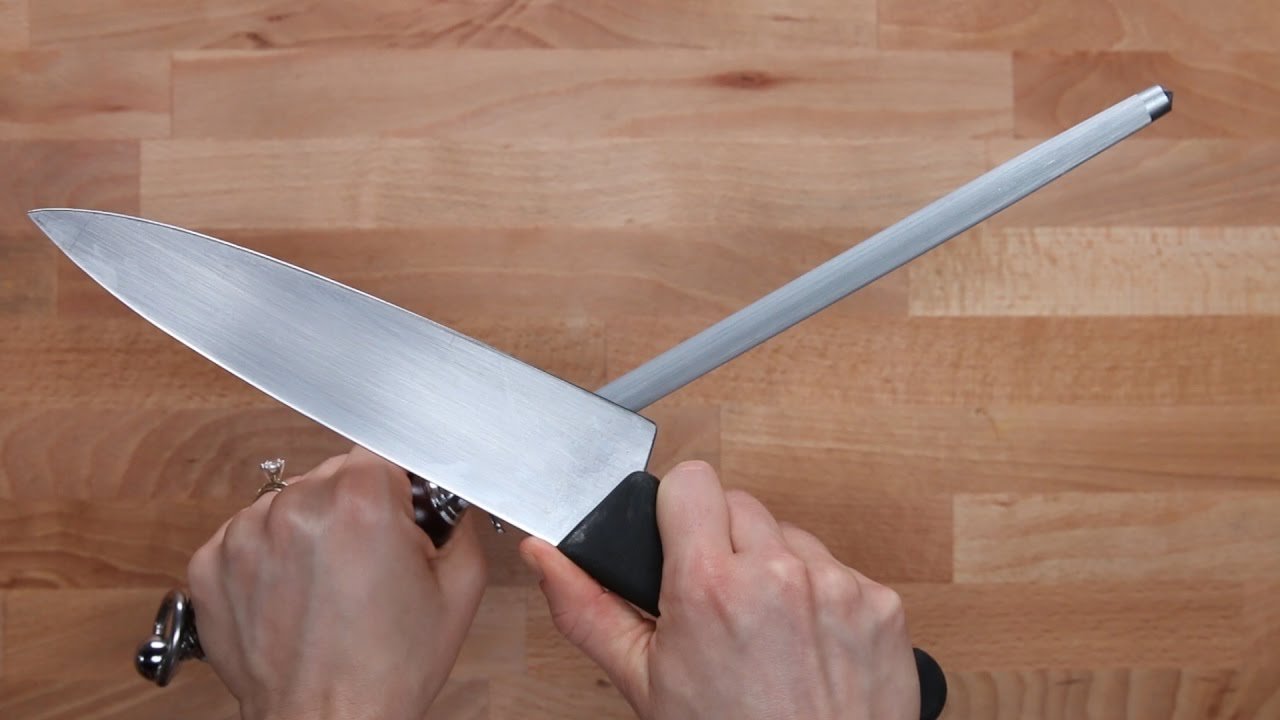 Photo: www.youtube.com on Google
- A dual-grit water stone (1,000/6,000 grit works best; coarse diamond plates cut faster but remove too much metal on thin blades).
- A stone sink bridge or a rubber base with a damp dish towel to stop slipping.
- A spray bottle filled with clean tap water to keep the stone wet.
- A black felt-tip marker (Sharpie) to check your bevel angle.
- A cut-resistant kitchen glove to protect your non-dominant hand while guiding the blade.
A ceramic honing rod works for daily edge touch-ups between stone sessions, but an unglazed ceramic mug base doesn’t give a consistent angle across a full chef’s blade. If a knife has deep chips or a bent tip, grinding that steel back safely requires specialized belt-grinding gear, so hand that job to a local professional knife service.
Step-by-step
- Submerge your water stone in a bowl of water for 10 minutes until bubbles stop rising (skip this step if you have splash-and-go stones).
- Color the knife’s factory bevel with your black felt-tip marker to see exactly where metal rubs away on the stone.
- Place the stone longways on a damp towel, set the heel of the blade across the 1,000-grit side, and raise the spine to match the factory angle. If you have a Western chef knife, hold a 20-degree angle; if you have a Japanese knife, lower it to 15 degrees.
- Draw the knife across the stone from heel to tip using moderate finger pressure, completing 10 slow strokes while checking that the marker ink wears off evenly. Careful: If your wrist wobbles up and down, you’ll round off the apex instead of sharpening it, which ruins the cutting edge and wastes your time.
- Feel the opposite side of the blade with your thumb pad moving strictly outward; stop once you feel a rough metal ridge (a burr) along the entire length.
- Flip the knife over and repeat those 10 strokes at that exact same angle until a new burr appears on the first side.
- Switch to the 6,000-grit fine stone and do 5 light, alternating single passes per side to polish off the wire edge. Tip: Clean the stone surface with fresh water every two minutes so loose grit won’t scratch the sides of your blade.
- Wash the knife thoroughly with warm soapy water and dry it immediately on a clean towel.
Blade styles and edge requirements
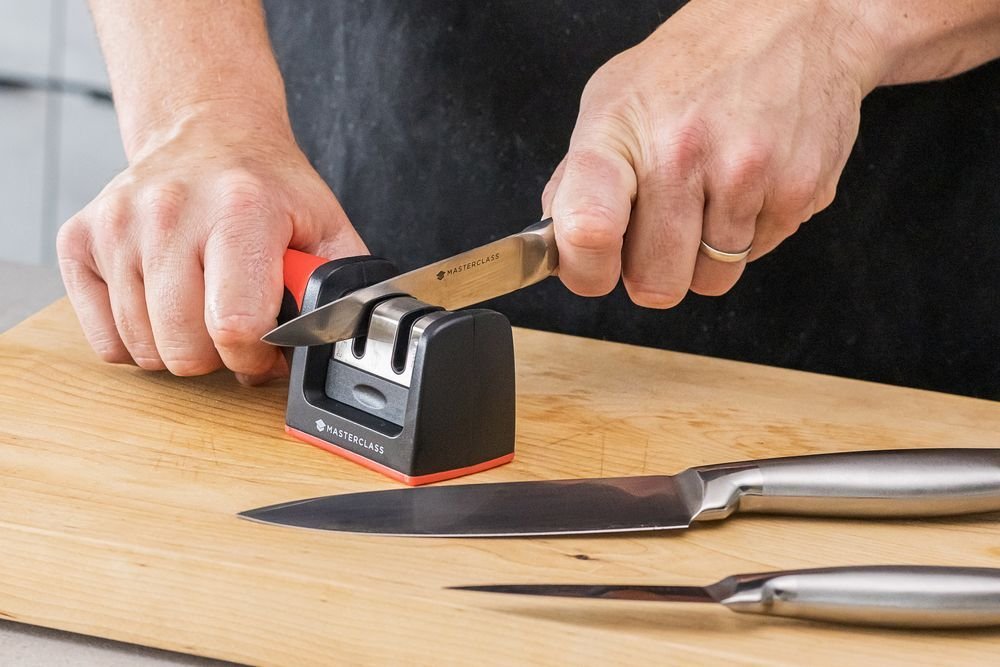 Photo: www.cookserveenjoy.com on Google
Different knives demand different angles, grit choices, and amounts of time to reach a sharp edge.
| Blade type | Time spent | Angle setting | What to watch |
|---|---|---|---|
| Western chef knife (German steel) | 10–12 minutes | 20 degrees | Burr along the whole belly |
| Japanese santoku (hard steel) | 8–10 minutes | 15 degrees | Micro-chipping on coarse grit |
| Thin paring knife (under 4 inches) | 5 minutes | 18 degrees | Angle shift near the narrow tip |
| Heavily dull carbon steel slicer | 15–20 minutes | 20 degrees | Mud buildup on the coarse stone |
It’s safer to start with light pressure and add more passes than to press hard and overshoot your edge angle on the first try.
How to tell you did it right
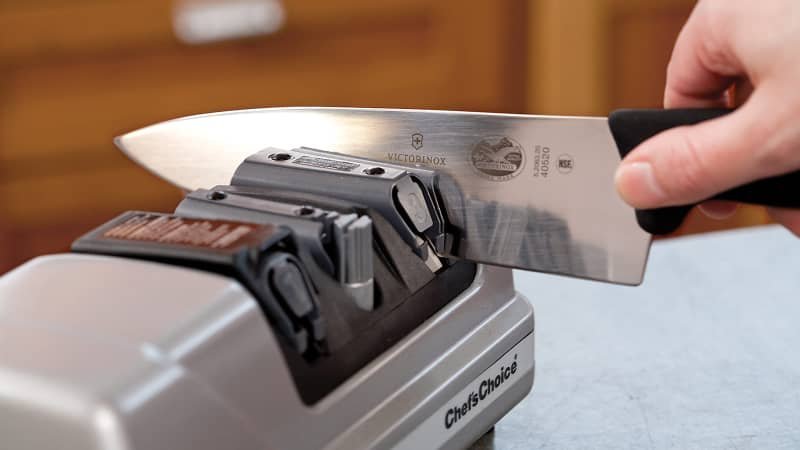 Photo: www.americastestkitchen.com on Google
A properly sharpened knife cuts cleanly through the skin of a ripe tomato with zero downward pressure. A poor edge squashes the tomato flesh, slides off the skin, or catches and tears paper during a test slice.
The most common quality defect is a foil edge, which happens when a thin flap of weakened metal stays attached to the apex instead of getting polished away. To prevent this, finish your stone work with light trailing strokes, wipe the blade clean between stones, and run the edge through a soft piece of scrap wood to strip away loose metal particles before testing.
Workplace standards and blade care
Kitchen safety relies on sharp tools.
After sharpening, rinse all stone slurry off the blade, hand-dry the metal completely, and store the knife in a wooden block, on a magnetic strip, or inside an edge guard. Never throw sharp knives into a utensil drawer or dishwasher. A good whetstone edge lasts about two to three months of regular home cooking before it needs another full sharpening session.
Alternative sharpening tools
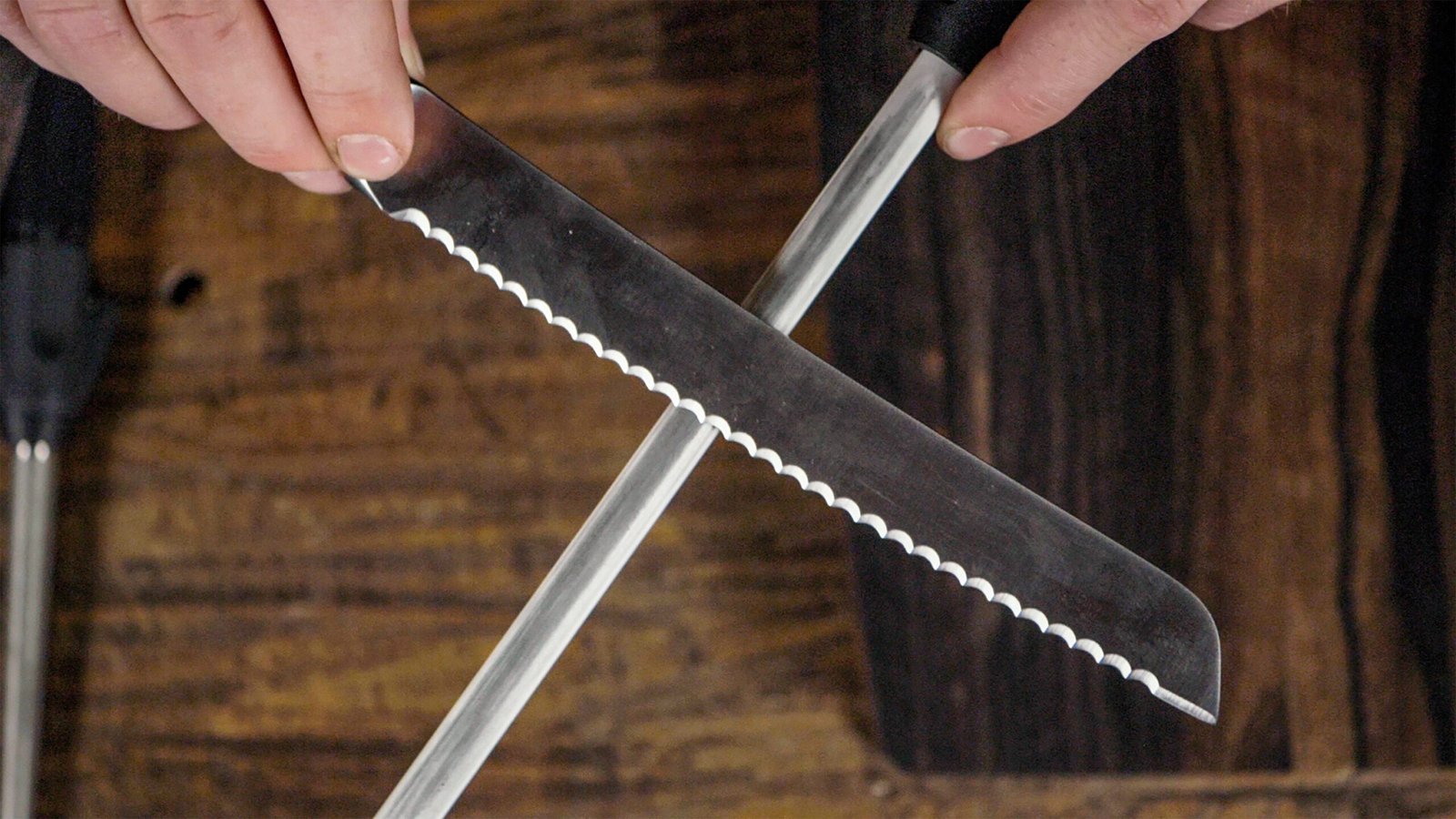 Photo: worksharptools.com on Google
Manual pull-through sharpeners
These hand tools use preset ceramic or carbide wheels that set an angle for you in 60 seconds. They remove heavy steel quickly, which shortens your knife’s total lifespan, but they work well for inexpensive utility knives.
Electric multi-stage sharpeners
These motorized units run abrasive wheels at fixed angles to restore edges in under three minutes. They cost significantly more than stones and can grind away too much steel if you press too hard, yet they save effort on hard steels.
Professional sharpening services
Mail-in or local walk-in sharpeners use water-cooled belts to fix chipped or warped knives without removing excess metal. This costs money per blade and takes a few days, but it fixes damaged knives that stones can’t easily rescue.
Frequently asked questions
Can you sharpen a serrated bread knife on a whetstone?
No, a flat whetstone can’t reach inside the rounded gullets of a serrated knife. Sharpening serrated blades requires a narrow, tapered ceramic or diamond rod that matches the size of each curved tooth.
Why won’t my knife get sharp on a whetstone?
Your angle is likely shifting with every stroke, or you haven’t ground down enough metal to form a raised burr. Without creating a burr across both sides, the stone never creates a new, pointed apex.
Is it safe to use a dull knife?
No, dull knives require heavy downward force to cut food, making them slip easily off slippery onions or squash. When a dull blade slips under hard force, it causes deeper cuts than a sharp blade.
How often should you sharpen kitchen knives?
Sharpen your main chef knife regularly on a whetstone with normal home use. Use a honing steel frequently to keep the edge aligned between stone sessions.
What happens if you use cooking oil on a water stone?
The cooking oil clogs the tiny pores of the water stone permanently, ruining its ability to absorb liquid and shed dull metal. Once oil enters a water stone, you can’t wash it out completely.
Who this isn’t for
This stone method isn’t for thin ceramic kitchen knives, which require specialized diamond abrasives to sharpen rather than standard water stones. Ceramic blades need specialized factory diamond wheels to regrind safely without snapping.



4 Comments