How To Use Reflective Warning Triangles: Safe Setup Guide
Reflective warning triangles help drivers warn others of a roadside hazard and give approaching traffic time to slow down.
If you have ever dealt with a flat tire, engine trouble, or a breakdown at night, you already know how fast a bad moment can become dangerous. Knowing how to use reflective warning triangles can make a real difference, and it is one of those simple roadside skills that can protect you, your passengers, and other drivers. In this guide, I’ll walk you through the right way to place them, when to use them, and the mistakes I have seen people make in real life.

What reflective warning triangles are and why they matter
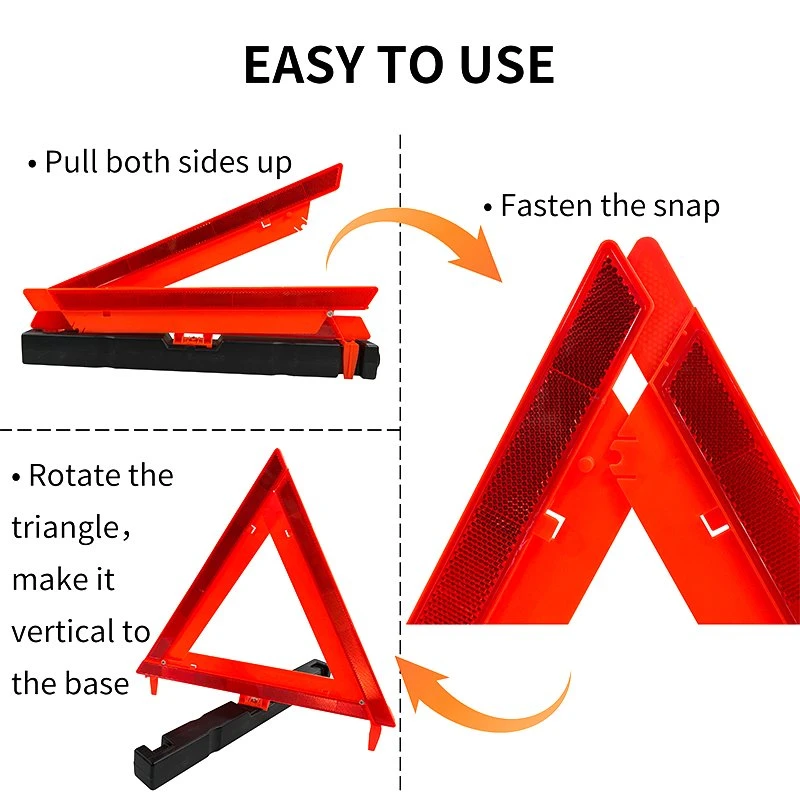
Reflective warning triangles are bright, foldable safety devices that alert other drivers to a stopped vehicle or road hazard. They work by reflecting headlights, so they stay visible even in low light, rain, or fog.
I have used them in roadside stops where a car was stuck on the shoulder, and the biggest lesson was simple: visibility buys time. That extra time helps passing drivers react calmly instead of swerving at the last second.
They matter because a stopped vehicle is easy to miss, especially at night or on fast roads. A triangle is not just a legal item in some places. It is a warning signal that says, “Slow down, something is wrong ahead.”
When you should use reflective warning triangles
Use reflective warning triangles whenever your vehicle is stopped in a place where other drivers may not see it soon enough. That can include a breakdown, a tire change, a crash, or any emergency stop on or near the road.
Common situations include:
• A flat tire on a highway shoulder
• Engine failure on a dark street
• A stalled vehicle in fog or heavy rain
• A loaded vehicle stopped on a curve or hill
• A crash scene before help arrives
I once saw a driver leave the triangle in the trunk because he thought the hazard lights were enough. They were not. Hazard lights help, but a triangle adds distance and warning, which is what prevents surprise.
How to use reflective warning triangles correctly
The basic job is simple: place the triangle behind your vehicle so approaching drivers can see it early. The exact placement depends on the road, traffic speed, and the shape of the road.
Follow these steps:
-
Turn on your hazard lights right away
This tells nearby drivers that your vehicle is not moving normally. -
Put on your reflective vest if you have one
If you must walk near traffic, extra visibility matters a lot. -
Take the triangle out carefully
Hold it steady and avoid standing in traffic lanes while doing it. -
Place the triangle behind the vehicle
Keep it far enough back so drivers have time to react. -
Face it toward oncoming traffic
The reflective side should catch headlights. -
Check that it stands straight and is visible
Make sure it is not hidden by hills, curves, parked cars, or bushes.
A good rule is to place it far enough away that drivers notice the triangle before they reach your car. On faster roads, that distance should be greater than on slow city streets.
Best placement distances for reflective warning triangles
Placement distance is important because a triangle too close to the car may warn too late. A triangle too far away may be missed or ignored, especially if the road curves.
A practical guide is:
• In city traffic, place it about 10 to 20 feet behind the vehicle
• On roads with faster traffic, place it about 100 feet behind the vehicle
• On highways or high-speed roads, place it about 200 to 300 feet behind the vehicle
If the road has a curve, hill, or bend, place the triangle where drivers first get a clear view of the hazard. The point is not just distance. It is early visibility.
In my experience, this is where people make mistakes. They walk back a short distance, set the triangle down, and feel done. But if traffic cannot see it until the last moment, it has not done its job.
How many triangles you should use
Some roadside safety kits include one triangle, while others include three. If you have three, using all of them gives better warning on roads with moving traffic.
A common setup is:
• One triangle behind the vehicle
• One triangle farther back for extra warning
• One triangle placed in a line if needed for long or dangerous stops
This is especially useful on highways, at night, or in bad weather. Multiple triangles create a clearer warning zone and make the stopped vehicle easier to spot.
If you only have one triangle, use it well. Correct placement matters more than having extra gear you do not know how to use.
Safety tips before you step out of the vehicle
Before you even open the door, think about your safety first. The triangle is helpful, but it is not a shield.
Keep these safety steps in mind:
• Pull over as far from traffic as possible
• Turn on hazard lights immediately
• Stay inside the car if traffic is too close
• Watch mirrors before opening the door
• Exit on the side away from moving traffic when possible
• Keep children and pets inside the vehicle unless it is unsafe to do so
If traffic is fast or the shoulder is narrow, it may be safer to call for help and stay in the car. A triangle should never put you in more danger than the problem already has.
Common mistakes to avoid
People often know they should use reflective warning triangles, but a few small mistakes can make them less effective.
Avoid these errors:
• Placing the triangle too close to the car
• Putting it behind a curve where it cannot be seen early
• Forgetting to turn on hazard lights
• Leaving it facing the wrong direction
• Standing in the traffic lane while setting it up
• Using a damaged or faded triangle
• Not checking local rules for roadside stops
One mistake I have seen often is a triangle set up neatly but blocked by a parked truck or a bend in the road. The triangle was there, but it was not doing any real warning work. Visibility is the whole point.
Reflective warning triangles in bad weather and low light
Rain, fog, snow, and darkness make triangles even more useful. Headlights can reflect off the triangle, helping drivers notice the hazard much earlier than they otherwise would.
Still, weather changes how you use them:
• In fog, place the triangle where it can be seen before drivers are very close
• In rain, avoid low spots where water may hide the triangle
• In snow, set it higher if possible so it is not buried or blocked
• At night, check that the triangle is upright and catching light properly
The triangle is like a lighthouse for a stopped vehicle. It cannot stop the storm, but it can guide others around the danger.
What the law and safety guidance usually say
Rules for reflective warning triangles vary by country and state. In many commercial driving rules and roadside safety guidelines, warning devices are required or strongly recommended for stopped vehicles.
Because laws differ, check your local vehicle code or highway safety rules before relying on a general habit. Some places have specific distance rules, while others focus on whether the device is visible and used correctly.
For professional drivers, bus operators, and truck drivers, roadside warning devices are often part of standard safety equipment. Even if you drive a personal car, it is smart to keep a triangle in your emergency kit.
How to store and maintain reflective warning triangles
A triangle only helps if it works when you need it. That means keeping it in good condition and easy to reach.
Store it:
• In the trunk or cargo area where it is easy to grab
• In its case or pouch to prevent damage
• Away from heavy items that might crush it
Check it now and then for:
• Cracks or broken legs
• Faded reflective surfaces
• Dirt or mud on the reflective parts
• Missing pieces or weak hinges
A quick wipe with a soft cloth can help keep it bright. I always tell people to test their emergency gear before they need it. Emergency moments are the worst time to discover something is broken.
Reflective warning triangles versus other roadside warning tools
Triangles are useful, but they are not the only option. Other safety tools can work alongside them.
Here is how they compare:
• Hazard lights, which warn nearby traffic but do not add much distance
• Flares, which can be very visible but may not be safe in dry or windy conditions
• LED road lights, which can be easier to deploy and more visible in some settings
• Reflective vests, which protect the person setting up warnings
For most drivers, reflective warning triangles are a strong all-around choice because they are simple, reusable, and do not need batteries. That makes them dependable for everyday emergencies.
Real-world tips from roadside experience
After seeing and using roadside warning gear in different conditions, I have learned that calm placement matters more than speed. Rushing often leads to a triangle being set too close, too crooked, or in the wrong spot.
A few practical habits help a lot:
• Think first, then step out
• Use your mirrors and watch traffic before walking behind the car
• Place the triangle with a clear line of sight in mind
• Recheck it after heavy wind or passing trucks
• Keep your phone with you in case you need to call for help
The best roadside safety is quiet and deliberate. It is like setting a warning bell before a door opens. Simple, but powerful.
Frequently Asked Questions about How to use reflective warning triangles
How far behind my car should I place a reflective warning triangle?
The distance depends on the road and traffic speed. A common guide is about 10 to 20 feet in city areas and 100 to 300 feet on faster roads.
Should I use a reflective warning triangle at night?
Yes, night is one of the most important times to use one. Headlights reflect off the triangle and help drivers see your stopped vehicle much earlier.
Do hazard lights replace reflective warning triangles?
No, hazard lights and triangles do different jobs. Hazard lights warn nearby drivers, while a triangle gives them extra time and distance to react.
Can I use one triangle for a roadside emergency?
Yes, one triangle is better than none if it is placed correctly. If you have more than one, using multiple triangles can improve visibility and warning distance.
Where should I keep reflective warning triangles in my car?
Keep them in a spot you can reach quickly, like the trunk or cargo area. Store them in their case so they stay protected and ready to use.
Conclusion
Knowing how to use reflective warning triangles is a small skill that can have a big impact. When you place them the right way, they give other drivers a clear warning, help reduce surprise, and make roadside emergencies safer for everyone.
The main idea is simple: stay visible, stay calm, and give traffic enough time to react. If you keep a triangle in your vehicle and practice where it belongs, you will be much better prepared the next time the unexpected happens. Take a few minutes today to check your emergency kit, and if you found this guide useful, explore more road safety tips or share your own roadside experience in the comments.