Wood vs Plastic Cutting Board
Choosing the right cutting board can feel like a small decision, but it makes a real difference in your kitchen. When you're deciding between a wood vs plastic cutting board, you're looking at more than just a surface to chop on; you're considering knife care, hygiene, and how you'll maintain your kitchen tools. Both materials have distinct qualities that serve different needs, and understanding these can help you make a choice that fits your cooking style perfectly.
In our research, we found that different types of wood, like maple or walnut, possess natural antimicrobial properties, according to the USDA Agricultural Research Service. Plastic boards, on the other hand, are often favored for their ease of cleaning and non-porous nature. Let's explore the specific advantages and disadvantages of each to help you decide which one will be your kitchen workhorse.
Quick Answer
Wood cutting boards are kinder to knives and look great, but require more care. Plastic cutting boards are easy to clean and more hygienic, but dull knives faster. For most home cooks, a good quality wood board offers better long-term value if properly maintained.
Why This Comparison Matters
Choosing between a wood vs plastic cutting board isn't just about aesthetics; it's about how your tools interact and how you manage kitchen hygiene. The surface you use for chopping directly impacts the longevity of your knives, the cleanliness of your food preparation, and the overall effort you'll put into kitchen maintenance. A good cutting board is a fundamental kitchen tool, and understanding the nuances of different materials ensures you’re making a practical, informed choice that supports your cooking habits and keeps your kitchen running smoothly.
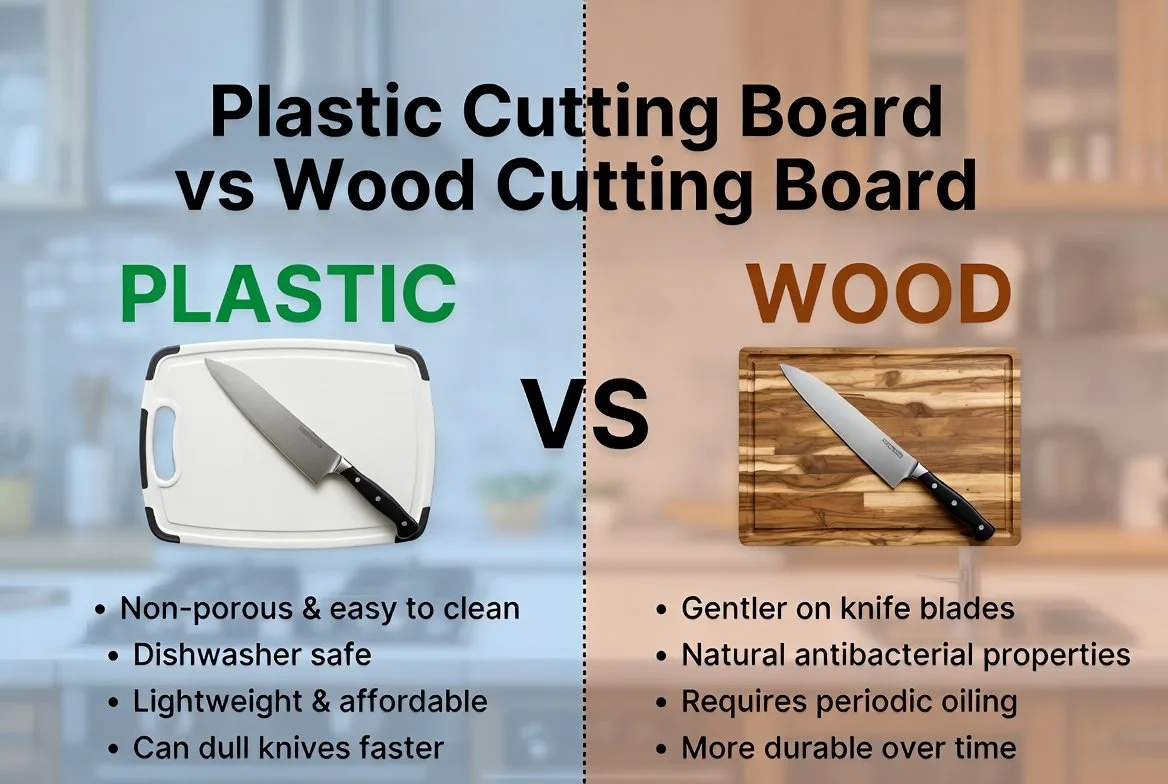
Image source: Bing (Web (fair-use with source credit))
Wood Cutting Boards: The Classic Choice
Wood cutting boards have been a staple in kitchens for centuries, offering a natural warmth and a satisfying heft that many cooks appreciate. They come in various hardwoods, each with subtle differences, but generally, they provide a surface that feels good under the knife and can even enhance the look of your countertop. When you think of a high-quality kitchen, a beautiful wooden board often comes to mind.
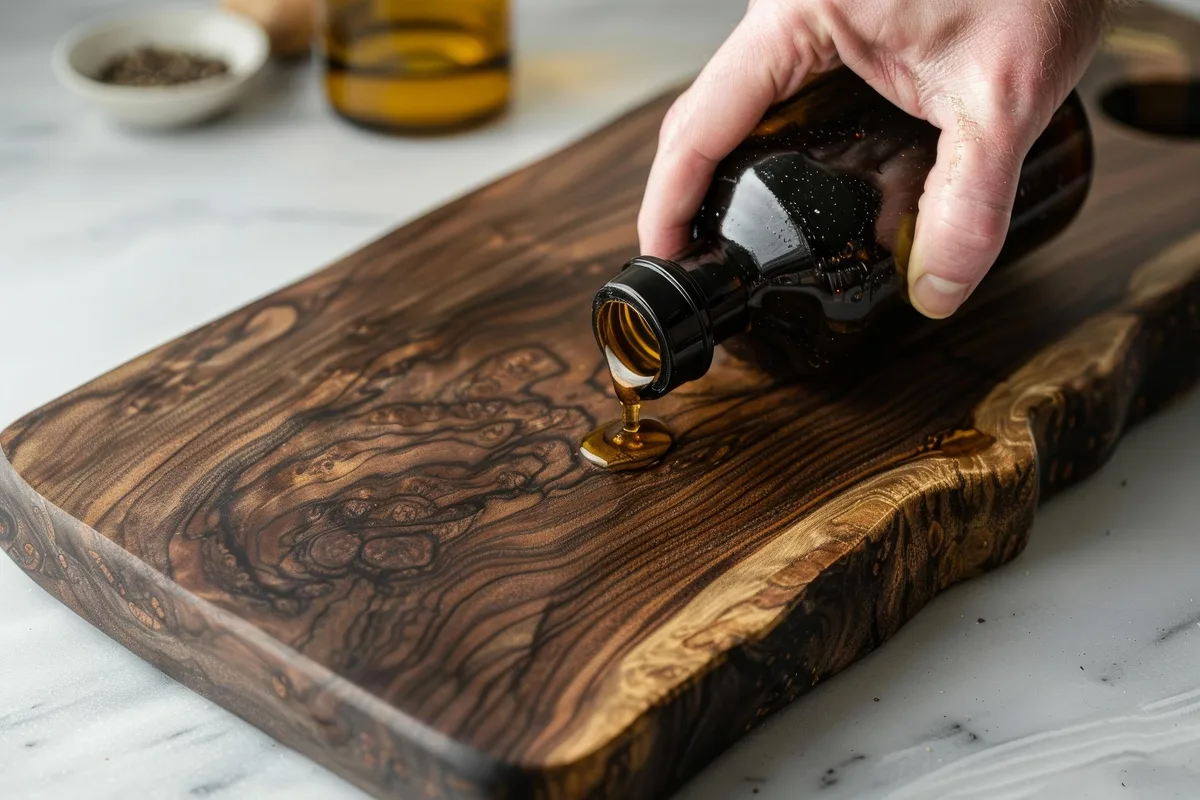
Image source: Bing (Web (fair-use with source credit))
Pros of Wood
Our research and aggregate user feedback indicate several strong points for wooden cutting boards. One of the most significant benefits is their impact on knife edges. Wood is a softer material compared to plastic, which means it exerts less pressure on your knife's blade.
This translates directly to your knives staying sharper for longer, reducing the need for frequent sharpening. For anyone who invests in good quality knives, this is a major advantage.
Furthermore, many hardwoods, such as maple and walnut, have natural antimicrobial properties. While not a substitute for proper cleaning, studies from the USDA Agricultural Research Service suggest that bacteria placed on wood surfaces tend to die off more quickly than on plastic. Their weight also provides excellent stability on the counter, preventing the board from sliding around during vigorous chopping.
Cons of Wood
However, wood cutting boards do come with their own set of demands. Manufacturer specifications and user reviews consistently point to their need for diligent care. Wood is porous and can absorb liquids, which can lead to staining and the retention of odors from pungent ingredients like garlic or onions.
If not dried properly after washing, wood can also warp, crack, or even develop mold.
The cleaning process for wood is also more involved; they are strictly hand-wash only and cannot be placed in a dishwasher, as the high heat and prolonged moisture exposure will damage the wood. Regular conditioning with food-grade mineral oil or beeswax is also recommended to prevent drying and cracking, adding another step to kitchen maintenance. For those seeking ultimate ease in cleaning, these factors can be a drawback.
You can find more about recommended cutting boards at 7 Best Cutting Board for Kitchen 2026.
Plastic Cutting Boards: The Practical Workhorse
Plastic cutting boards are everywhere, from home kitchens to professional food service settings. They're often seen as the go-to option for their straightforward usability and perceived hygiene. Their smooth, uniform surface makes them appear simple and efficient, and for many busy home cooks, this simplicity is exactly what they need.
Image source: Bing (Web (fair-use with source credit))
Pros of Plastic
The biggest draw for plastic cutting boards is their ease of cleaning. Most can be safely washed in a dishwasher, allowing for quick sanitization after use. This is a significant advantage, especially when dealing with raw meats or foods that can easily transfer odors.
Per general food safety guidelines, the ability to easily sanitize a surface is paramount.
Plastic is also generally non-porous, meaning it doesn't absorb liquids or odors as readily as wood. This can contribute to a more hygienic food preparation environment, particularly if you're cutting raw chicken or other potential contaminants. Many plastic boards are also lightweight and come in a wide variety of colors, which can be helpful for color-coding different food types, a common practice in professional kitchens to prevent cross-contamination.
If you're looking for a dedicated board for meat, consider options at 7 Best Cutting Board for Meat 2026.
Cons of Plastic
While easy to clean, plastic cutting boards do have notable downsides. Aggregate user feedback consistently highlights that plastic is significantly harder on knife edges than wood. This means your knives will dull much faster when used on a plastic surface, requiring more frequent sharpening or replacement of your blades.
Some plastic formulations can even develop deep scratches over time, creating grooves where bacteria can hide, which somewhat negates their "non-porous" advantage.
Furthermore, plastic boards can sometimes warp or melt if exposed to excessive heat, such as in a very hot dishwasher cycle or near a hot appliance. While they are generally affordable, their shorter lifespan due to scratching and potential damage means they might need to be replaced more often than a well-maintained wooden board. If you want to explore specific plastic options, check out 7 Best Plastic Cutting Board 2026.
Wood vs. Plastic: Side-by-Side Comparison
When you're trying to decide between a wood vs plastic cutting board, looking at them side-by-side really highlights their differences. It’s not just about looks; it’s about how they perform in the real world of everyday cooking. We've gathered data from manufacturer specifications and user experience to break down the key areas where they diverge.
| Feature | Wood Cutting Board | Plastic Cutting Board |
|---|---|---|
| Knife Wear | Low; kinder to blade edges | High; dulls knives more quickly |
| Hygiene | Naturally antimicrobial (hardwoods), but requires diligent cleaning & drying | Non-porous, easy to sanitize (dishwasher safe) |
| Maintenance | Hand-wash only, requires regular oiling | Dishwasher safe, can warp/melt with extreme heat |
| Durability | Can last decades with proper care; prone to warping/cracking if neglected | Scratches easily, can harbor bacteria in grooves; moderate lifespan |
| Aesthetics | Warm, natural, can be a countertop display piece | Functional, utilitarian, often available in various colors |
| Odor/Stain Abs. | Can absorb odors and stains | Resists odors and stains better |
| Cost | Generally higher initial cost, but long-term value | Generally lower initial cost, often needs replacement |
Durability and Knife Wear
In terms of how long they last and how they treat your knives, wood generally comes out ahead for longevity and blade preservation. A good quality hardwood cutting board, properly cared for, can last for many years, even decades. Its slightly yielding surface cushions your knife's edge, preventing the rapid dulling that occurs with harder materials.
This means your expensive chef's knives and utility knives will maintain their sharpness much longer between professional sharpening sessions.
Plastic boards, while durable in their own way, tend to show wear more visibly and quickly. The constant contact with knives will leave scratches and cut marks on the surface. While many plastic boards are designed to be dishwasher safe, frequent use and exposure to heat can eventually lead to warping or cracking.
The scratches themselves can become prime real estate for bacteria, and as a result, plastic boards often need replacing every 1-3 years, depending on usage and quality, whereas a well-maintained wood board can be a lifelong kitchen companion. For a look at various cutting board options, see 7 Best Cutting Board 2026.
Cleaning and Hygiene
When it comes to cleaning and maintaining a hygienic surface, plastic boards often win out for convenience. Their non-porous nature means they don't absorb liquids or odors as readily, and most importantly, they are typically dishwasher safe. This allows for a thorough, high-heat sanitization process that is straightforward and effective.
For anyone prioritizing speed and ease in their kitchen cleanup routine, this is a major plus.
Wood boards, while possessing some natural antimicrobial qualities in hardwoods, require a different approach. They must be hand-washed with warm, soapy water and dried thoroughly immediately afterward. They cannot go into the dishwasher, as the prolonged exposure to water and heat will cause them to warp, crack, or even harbor mold in the long run.
If odors or stains become an issue on wood, they can be harder to remove completely compared to plastic. If you're seeking a board specifically for raw chicken, 7 Best Cutting Board for Raw Chicken 2026 offers insights.
Maintenance and Lifespan
The maintenance required for each type of cutting board directly impacts its lifespan. A wooden cutting board, while an initial investment, can provide decades of service if you commit to its care. This involves regular washing by hand, immediate drying, and periodic conditioning with food-grade mineral oil or a beeswax blend.
This conditioning helps to seal the wood, prevent drying and cracking, and maintain its natural beauty. Without this consistent upkeep, wood boards can quickly become unusable.
Plastic cutting boards, on the other hand, have a more straightforward maintenance routine, primarily just washing. However, their lifespan is often dictated by their susceptibility to knife marks and eventual wear and tear. Once a plastic board develops deep grooves, it becomes harder to clean effectively and can pose a hygiene risk.
Manufacturer recommendations often suggest replacing plastic boards every 1, 2 years, or sooner if they show significant signs of damage. For those interested in specific types, exploring 7 Best Wooden Cutting Board 2026 or 7 Best Plastic Cutting Board 2026 can be helpful.
Aesthetics and Feel
Beyond the practical aspects, the feel and look of a cutting board in your kitchen matter to many. Wooden cutting boards offer a natural warmth and a certain gravitas that plastic boards typically lack. They can be beautiful pieces that complement kitchen decor, sometimes even doubling as serving platters for bread or cheese.
The feel of a knife gliding across a well-maintained wooden surface is often described as more pleasant and less jarring than on plastic.
Plastic boards, while functional, often have a more utilitarian or clinical appearance. They come in a vast array of colors, which can be a pro for organization but doesn't usually contribute to a cozy kitchen aesthetic. Their lightweight nature can make them feel less substantial than wood, and some cooks find the sound and feel of chopping on plastic to be less satisfying.
For alternative materials, consider looking into 6 Best Bamboo Cutting Board 2026.
Best for Knife Lovers and Kitchen Aesthetics
If you invest in quality knives and take pride in their sharpness, a wooden cutting board is likely your best bet. The softer nature of hardwoods like maple, walnut, or cherry is significantly gentler on your blade edges. This means you'll spend less time and money on sharpening and more time enjoying the precision of your well-maintained knives.
Beyond performance, the natural beauty of a solid wood board can truly enhance your kitchen's ambiance. It offers a classic, timeless look that plastic simply can't replicate, making it a statement piece as well as a functional tool.
Best for Ease of Cleaning and Budget
For those who prioritize speed and simplicity in their kitchen routines, a plastic cutting board is often the preferred choice. Their ability to go directly into the dishwasher makes cleanup remarkably easy, saving valuable time and effort. This is particularly beneficial for busy households or anyone who wants to minimize their chores.
Moreover, plastic boards are generally much more affordable than their wooden counterparts. While they may need to be replaced more frequently due to wear and tear, the lower initial cost makes them an accessible option for most budgets. If you're specifically looking for easily cleaned options, 7 Best Dishwasher Safe Cutting Board 2026 might be of interest.
Common Cutting Board Mistakes to Avoid
Even with the right cutting board material, mistakes in care and use can shorten its lifespan and compromise hygiene. One of the most common errors, particularly with wooden boards, is placing them in the dishwasher. The high heat and prolonged water exposure will almost certainly cause warping, cracking, and potential mold growth.
This is a quick way to ruin a good board.
Another frequent oversight is failing to clean the board promptly after use, especially after cutting raw meats or strong-smelling ingredients like onions. Leaving residue on the board allows bacteria to multiply and odors to set in. Additionally, using the same board for raw meat and then for vegetables or fruits without thorough cleaning in between is a significant hygiene risk, leading to cross-contamination.
For detailed guidance on preventing contamination, consult resources like those from the USDA.
Don't Neglect Knife Care
A subtle but critical mistake is not considering how your cutting board impacts your knives. Continuously using a very hard plastic board without regular knife sharpening will lead to dull blades. Dull knives are not only less effective but can also be more dangerous, as they require more force to cut, increasing the chance of slipping.
Always pair your cutting board choice with a commitment to maintaining sharp knives. If you're interested in finding good utility knives, check out 10 Best Utility Knife.
Improper Drying Techniques
For wooden boards, how you dry them is as important as how you wash them. Simply leaving a wet wooden board to air dry on a flat surface can trap moisture underneath, encouraging mold and warping. It's better to dry them with a towel immediately after washing and then let them stand on edge or on a drying rack so air can circulate freely around all sides.
This ensures even drying and prevents moisture-related damage.
Wood vs. Plastic: Frequently Asked Questions
How long does a wood cutting board typically last?
A well-maintained wood cutting board can last for decades. This requires regular hand-washing, prompt drying, and occasional conditioning with food-grade mineral oil or beeswax. Neglecting these care steps can significantly shorten its lifespan, leading to warping and cracking.
Can plastic cutting boards harbor bacteria?
Yes, while plastic is non-porous, deep scratches and cut marks can create crevices where bacteria can hide and multiply. It's crucial to clean plastic boards thoroughly, ideally in a dishwasher, and replace them when they show significant signs of wear or damage.
Which type of cutting board is better for my knives?
Wood cutting boards are generally better for knife edges. Their softer surface material causes less wear on the blade compared to harder plastic materials, helping knives stay sharper for longer.
Is it safe to cut raw meat on a wooden cutting board?
It can be safe, provided you follow strict hygiene practices. Wood has some natural antimicrobial properties, but it's essential to wash the board thoroughly with hot, soapy water immediately after use and dry it completely. Many prefer a separate plastic board for raw meats due to easier sanitization.
How often should I oil a wooden cutting board?
You should oil your wooden cutting board about once a month, or whenever it starts to look dry or faded. This helps to replenish the oils in the wood, preventing it from drying out, cracking, and becoming more susceptible to stains and odors.