Maxshine M15 Vs Griot’s G9: Best Dual Action Polisher
The Maxshine M15 offers faster correction, while Griot’s G9 provides smoother control and easier learning.
Choosing between the Maxshine M15 vs Griot’s G9 depends on your paint condition, skill level, and polishing goals. After comparing their orbit size, power, comfort, backing plates, speed range, and real-world use, the difference becomes clear: the M15 is a long-throw correction tool, while the G9 is a friendly and balanced all-rounder.
Maxshine M15 vs Griot’s G9 at a Glance
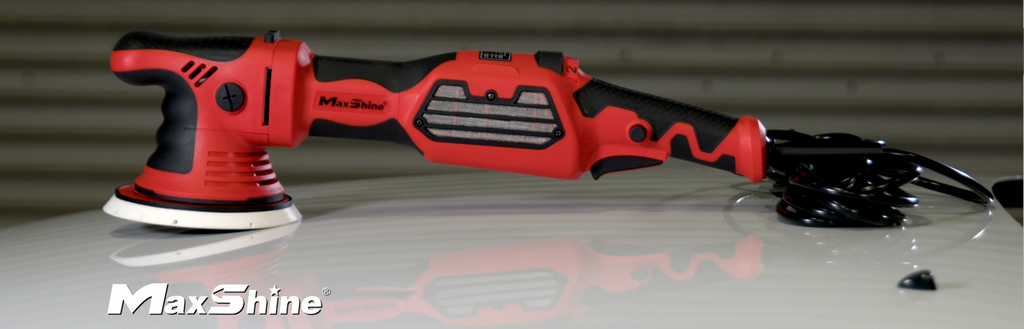
The Maxshine M15 and Griot’s G9 are dual-action random orbital polishers. Both move a polishing pad in two ways: the spindle rotates, and the backing plate moves in an orbit. This action removes defects with less risk than a rotary polisher.
The main difference is the orbit size. The Maxshine M15 uses a 15 mm throw, while the Griot’s G9 uses an 8 mm orbit. A larger throw covers more paint with each movement. This can speed up paint correction, but it may also feel less forgiving on curved panels.
| Feature | Maxshine M15 | Griot’s G9 |
|---|---|---|
| Polisher type | Dual-action random orbital | Dual-action random orbital |
| Orbit size | 15 mm | 8 mm |
| Typical speed range | About 2,500 to 5,500 OPM, depending on version | About 1,000 to 4,500 OPM |
| Common backing plate | 5-inch plate, with some kits offering other options | 6-inch plate |
| Motor output | Around 900 watts, depending on version | Around 1,000 watts |
| Best use | Faster correction on larger panels | General polishing, finishing, and learning |
| Learning curve | Moderate | Easy |
| Main advantage | Long-throw cutting power | Control and user-friendly operation |
Specifications can vary between standard, Pro, and updated versions. Always check the product label and the current manufacturer listing before buying replacement parts.
Orbit Size: The Biggest Difference
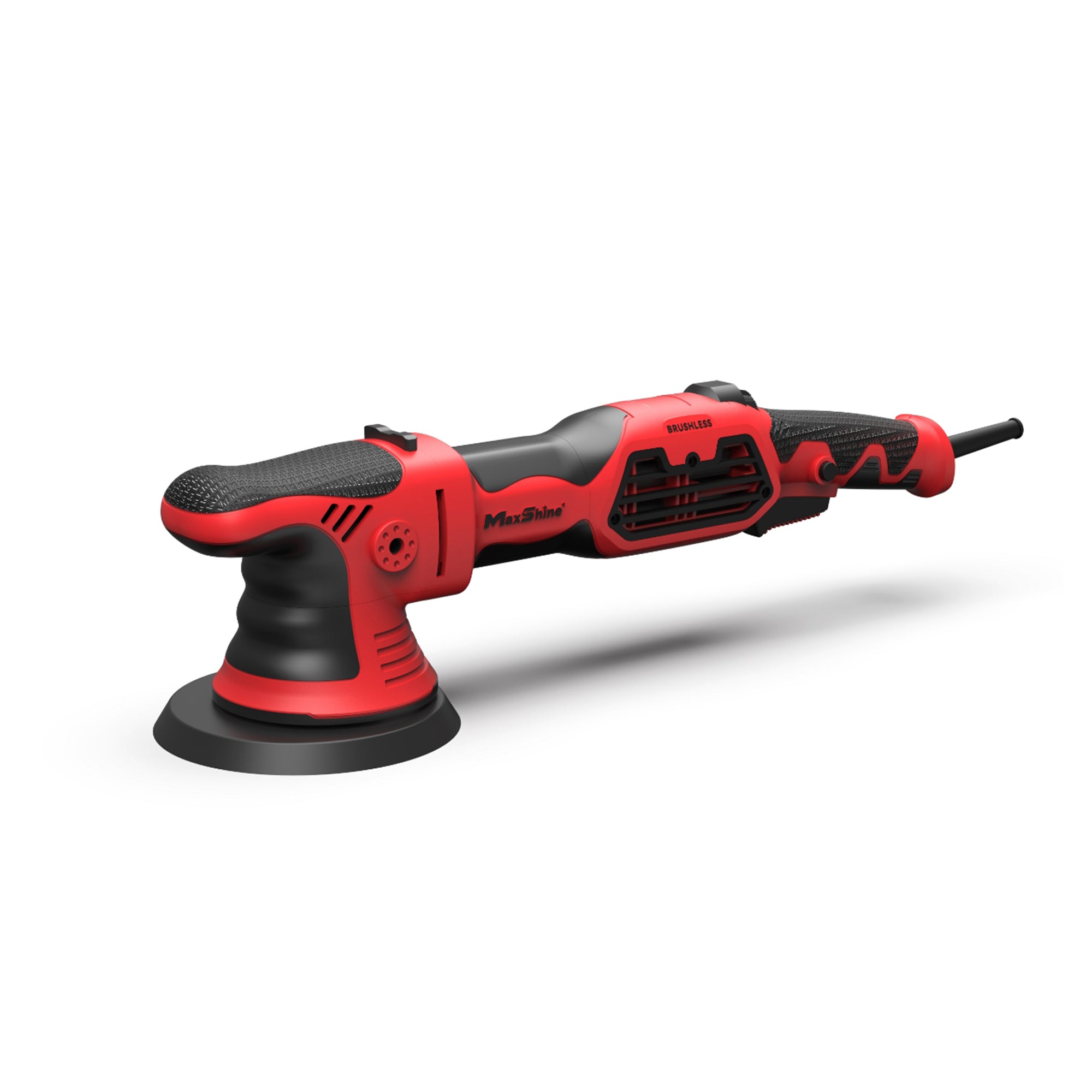
The orbit, or throw, is the distance the backing plate travels from one side of its path to the other. It is one of the most important features in a dual-action polisher.
The Maxshine M15 has a 15 mm throw. This long-throw movement lets the pad work across a wider area. On a large hood, roof, or door, you may need fewer passes to cover the same section.
The Griot’s G9 has an 8 mm orbit. Its smaller movement covers less area per pass, but it gives the machine a calm and predictable feel. That makes the G9 easier to control around mirrors, body lines, edges, and smaller panels.
Think of the two machines as paintbrushes. The M15 is a wide brush for covering a wall quickly. The G9 is a smaller brush that gives you more control near corners and trim.
How Orbit Size Affects Correction
A longer throw can help with:
• Faster defect removal
• Better pad movement across flat panels
• More efficient work on hard clear coats
• Reduced polishing time on large vehicles
A shorter throw can help with:
• Easier control on curved surfaces
• Better work near edges and raised body lines
• Smoother handling for new users
• More comfortable finishing work
The longer orbit does not automatically make the M15 more powerful in every situation. Pad type, compound, paint hardness, pressure, arm speed, and working area all affect the result.

Paint Correction Performance
When comparing Maxshine M15 vs Griot’s G9 for paint correction, the M15 usually has the advantage in speed. Its 15 mm orbit creates more pad movement, which can help spread compound and remove moderate defects faster.
The M15 is a strong choice for faded paint, wash marks, light scratches, and oxidation. With a microfiber cutting pad and a suitable compound, it can make quick progress on a neglected vehicle.
The G9 still corrects paint well. Its smaller orbit does not mean it is weak. It can remove light and moderate defects with the right pad and compound, although it may take more section passes than the M15.
Which One Cuts Better?
For pure correction speed, the Maxshine M15 usually wins. The longer throw gives it a wider working path and strong mechanical action.
However, correction depends on the complete system:
• A firm foam or microfiber pad
• A modern diminishing or micro-abrasive compound
• Proper downward pressure
• A slow arm speed
• A clean, defect-free pad
• A test spot before full-panel work
A G9 with a good pad and compound can outperform an M15 used with the wrong pad or rushed technique. The machine is only one part of the correction process.
Paint Hardness Matters
Soft clear coat may correct quickly with either polisher. Hard clear coat may benefit from the M15’s longer throw and stronger pad movement.
On delicate paint, the G9 can feel safer because its action is easier to control. It also gives you more time to watch the paint and stop before removing more clear coat than needed.
Experienced detailers often remove only as much clear coat as necessary. A deep scratch may not be safe to chase if it reaches the base coat or primer.

Finishing Quality and Hologram Risk
Both polishers can produce a high-gloss finish when used correctly. Dual-action movement naturally reduces the hologram risk associated with rotary polishing.
The Griot’s G9 has a reputation for smooth, controlled finishing work. Its 8 mm orbit works well with soft finishing pads and fine polish. It is a comfortable choice for jeweling paint, refining light haze, and applying an all-in-one polish.
The Maxshine M15 can also finish well. Its longer throw may feel more active, especially at higher speeds. With a soft pad, low pressure, and a fine polish, it can still leave a clear and glossy surface.
In my detailing experience, the most common finishing mistake is not the machine. It is using too much product. A heavy layer of polish can make the panel look glossy at first, then reveal haze after the residue is removed. Use a small amount and clean the pad often.

Handling, Comfort, and Noise
A polisher may look good on paper but still feel tiring after several hours. Balance, grip shape, vibration, trigger design, and cord placement all matter.
The Griot’s G9 is often easier for beginners because its shorter orbit feels stable. The machine is simple to guide, and its speed range starts low enough for spreading polish or wax.
The Maxshine M15 feels more energetic because of its long throw. That movement can be helpful, but it may require a firmer grip on curved panels. New users should begin at a moderate speed and avoid pushing hard.
Comfort Tips for Both Machines
• Hold the machine with two hands when working near edges.
• Keep the pad flat against the paint.
• Use your shoulders and arms, not only your wrists.
• Clean or replace saturated pads.
• Take short breaks during a full correction.
• Keep the power cord over your shoulder when possible.
The G9 may suit someone who details one vehicle on weekends. The M15 may suit a professional or serious enthusiast who values faster panel coverage.

Backing Plate and Pad Compatibility
Pad size changes how a polisher behaves. A smaller pad usually gives more control and concentrates the machine’s action. A larger pad covers more area but may feel less precise.
The Maxshine M15 is commonly paired with a 5-inch backing plate. Some versions or kits may support different plate sizes. A 5-inch plate gives a useful balance between correction power and control.
The Griot’s G9 commonly comes with a 6-inch backing plate. It works well with 6.5-inch pads, although many users choose a compatible 5-inch plate for tighter areas.
Before changing a backing plate, confirm:
• The plate diameter
• The shaft and thread size
• The plate’s maximum safe speed
• Pad diameter recommendations
• Manufacturer compatibility
Do not place a large, heavy pad on a small machine without checking the instructions. Excess weight can increase vibration and motor stress.
Recommended Pad Pairings
For the Maxshine M15:
• Microfiber cutting pad for strong defect removal
• Firm foam cutting pad for moderate defects
• Medium polishing pad for one-step work
• Soft foam pad for final finishing
For the Griot’s G9:
• Microfiber or firm foam pad for correction
• Medium foam pad for all-in-one polish
• Soft foam pad for finishing and gloss
Always perform a test spot. A small section tells you whether your pad and polish combination is strong enough, too aggressive, or not suitable for the paint.

Speed Control and Real-World Use
Speed control is another key difference in the Maxshine M15 vs Griot’s G9 comparison. The G9 starts at a lower speed, which helps when spreading polish or working with a soft finishing pad.
The M15 commonly has a higher operating range. That can help during correction, especially with a firm pad and compound. It also makes the machine useful for users who prefer a faster cutting cycle.
A simple speed guide looks like this:
-
Use a low speed to spread polish across the section.
-
Increase to a moderate speed for correction.
-
Reduce speed for final refinement.
-
Wipe the panel with a clean microfiber towel.
-
Check the result under strong, angled light.
Do not treat speed as a substitute for technique. High speed with heavy pressure can create heat, sling product, and wear the pad faster.
Work in sections of about 18 by 18 inches. Use overlapping passes from left to right, then up and down. This crosshatch pattern helps you polish the whole section evenly.

Which Polisher Is Better for Beginners?
The Griot’s G9 is usually the better beginner polisher. It is easy to understand, easy to control, and versatile enough for cleaning up light defects and improving gloss.
The G9 also gives new users time to learn basic skills. You can practice pad priming, section work, pressure control, and paint inspection without feeling that the machine is pulling too hard.
The Maxshine M15 is not difficult to use, but it demands more awareness. Its long throw can move quickly across a panel. If you tilt the machine or run it over a sharp edge, the pad may react more strongly.
A beginner can use the M15 safely by following these rules:
• Start on a flat panel.
• Use a clean polishing pad.
• Keep the backing plate level.
• Avoid sharp edges until you gain confidence.
• Use a test spot before full correction.
• Do not chase every deep scratch.
The best machine is the one you can control. A slower, careful correction is better than fast work that damages paint or trim.
Which One Is Better for Professional Detailers?
Professional detailers may prefer the Maxshine M15 when time matters. The 15 mm orbit can reduce work time on large panels, especially when correcting hard paint or moderate defects.
The G9 still has a valuable place in a professional setup. It can work as a finishing machine, a backup tool, or a polisher for tight areas when paired with a smaller backing plate.
Many working detailers use more than one machine. A long-throw polisher handles broad correction, while a short-throw machine handles edges and fine finishing. This two-machine approach is often more useful than searching for one perfect tool.
For mobile detailers, weight and storage also matter. A compact G9 may be easier to carry between homes. A Maxshine M15 may save time when several vehicles need correction in one day.
Maxshine M15 vs Griot’s G9: Pros and Cons
Maxshine M15 Pros
• Faster coverage on large panels
• Strong long-throw correction action
• Good choice for moderate paint defects
• Useful for hard clear coats
• Often supplied with a practical 5-inch backing plate
Maxshine M15 Cons
• More demanding around curves and edges
• May feel more tiring during long sessions
• Higher orbit speed can require better pad control
• Model specifications may vary by version
Griot’s G9 Pros
• Easy for beginners to control
• Smooth feel during polishing
• Good low-speed range for spreading products
• Strong support from an established detailing brand
• Useful for correction, finishing, and one-step polishing
Griot’s G9 Cons
• Smaller orbit may require more correction passes
• Standard 6-inch setup may feel large in tight areas
• May not be as fast as a 15 mm machine on large panels
• Extra backing plates may be needed for smaller pads
Value, Warranty, and Long-Term Ownership
Price should not be the only factor. Pads, compounds, backing plates, towels, lighting, and replacement parts add to the total cost of ownership.
The Maxshine M15 may offer more correction speed for the money. That value is strongest when you regularly polish large vehicles or handle paint that needs serious correction.
The Griot’s G9 may offer better value for new users who want a simple and flexible machine. Its approachable design can reduce mistakes, and its lower-speed control helps with many detailing tasks.
Check the current warranty, return policy, service options, and included accessories. Product bundles change over time, so the machine price alone does not tell the full story.
Also consider replacement pads. A polisher is only useful when you have fresh pads in the right sizes. Budget for at least three or four pads so you can change them as they become warm or saturated.
Common Mistakes to Avoid
Even a quality dual-action polisher can deliver poor results when used incorrectly. These mistakes are common among first-time users.
• Using too much compound: Excess product reduces cutting action and creates a difficult wipe-off.
• Working on a dirty panel: Dirt can cause fresh scratches during polishing.
• Skipping a test spot: You may use an overly aggressive combination when a lighter one would work.
• Tilting the machine: A tilted pad can reduce control and create uneven results.
• Using a worn pad: A damaged pad can vibrate, overheat, or leave an uneven finish.
• Polishing in direct sun: Heat changes product behavior and makes inspection harder.
• Chasing deep scratches: Some defects are too deep to remove safely.
• Ignoring trim: Tape sensitive plastic and rubber before correction.
A clean, shaded work area is ideal. Wash and dry the vehicle first, then use proper lighting to inspect the paint before and after each test section.
Which One Should You Buy?
Choose the Maxshine M15 if you:
• Want faster paint correction
• Work on large vehicles
• Often deal with moderate defects
• Have some dual-action polishing experience
• Prefer a 15 mm long-throw machine
Choose the Griot’s G9 if you:
• Are new to machine polishing
• Want a controlled, easy-to-learn tool
• Do mostly light correction and finishing
• Prefer a lower-speed starting range
• Need a versatile polisher for weekend detailing
The better choice in the Maxshine M15 vs Griot’s G9 decision depends on your work. The M15 is the better speed tool. The G9 is the better comfort and learning tool.
If you already own a small polisher, the M15 may add useful correction speed. If this is your first machine, the G9 may help you build confidence with fewer surprises.
Frequently Asked Questions of Maxshine M15 vs Griot's G9
Is the Maxshine M15 more powerful than the Griot’s G9?
The Maxshine M15 often feels more aggressive because it uses a 15 mm orbit. Motor wattage alone does not determine correction power, since pad movement, speed, pressure, and compound also matter.
Is the Griot’s G9 good for beginners?
Yes, the Griot’s G9 is a strong beginner-friendly choice. Its 8 mm orbit and smooth control make it easier to learn safe pad movement and paint correction basics.
Which polisher removes scratches faster?
The Maxshine M15 usually removes light and moderate defects faster on broad panels. Deep scratches may not be safe to remove with either machine, especially if they reach the base coat or primer.
Can the Griot’s G9 use 5-inch pads?
The G9 can often use a compatible 5-inch backing plate and smaller pads. Confirm the plate and pad specifications before changing accessories.
Is the Maxshine M15 safe for clear coat?
Yes, the M15 is a dual-action polisher designed for paint correction, but safe use depends on technique. Keep the pad flat, control heat, avoid sharp edges, and remove only the defects that can be corrected safely.
Which one is better for one-step polishing?
Either machine can perform a good one-step polish. The G9 may feel easier for controlled finishing, while the M15 can complete large panels faster when paired with a suitable medium pad and polish.
Should I buy the Maxshine M15 or Griot’s G9 for detailing cars at home?
Choose the Griot’s G9 for simple weekend use and easier learning. Choose the Maxshine M15 if you want faster correction and are comfortable managing a long-throw machine.
Conclusion
The Maxshine M15 vs Griot’s G9 comparison comes down to speed versus control. The Maxshine M15’s 15 mm orbit makes it the stronger choice for fast correction on large panels, while the Griot’s G9’s 8 mm orbit offers a smoother and more forgiving learning experience.
For a first machine polisher, the G9 is easy to recommend. For experienced users who want faster paint correction, the M15 is the more capable long-throw option. Whichever machine you choose, start with a test spot, use the least aggressive method that works, and inspect the paint under proper lighting.
Choose the tool that matches your skill and workload, then practice on one panel at a time. Share your experience or explore more paint correction guides to build a safer, cleaner detailing routine.