How To Use A Pressure Washer On A Car: Safe Steps
Use low pressure, a wide fan tip, and keep the nozzle at a safe distance to wash a car without damage.
If you want to clean your car fast, a pressure washer can help a lot when used the right way. I’ve used pressure washers on everything from daily drivers to muddy SUVs, and the big lesson is simple: the tool is safe only when you respect the paint, trim, and seals. In this guide, I’ll walk you through how to use a pressure washer on a car the right way, what settings to choose, what to avoid, and how to get a clean finish without turning a wash into a repair bill.
What a pressure washer does for car cleaning
A pressure washer uses a strong stream of water to lift dirt, grime, salt, and loose road film from a surface. On a car, that makes pre rinsing much easier than a garden hose alone. It can also save time, help loosen stuck dirt, and reduce the amount of scrubbing needed later.
The key is control. Cars are made of paint, clear coat, rubber seals, plastic trim, badges, and delicate parts like sensors and vents. A pressure washer can be safe for all of that if you use the right pressure, the right nozzle, and the right distance.
I’ve found that the best results come when you treat the washer like a helper, not a weapon. Let the water do the heavy lifting, then finish with proper soap and a soft wash mitt.
Is it safe to use a pressure washer on a car?
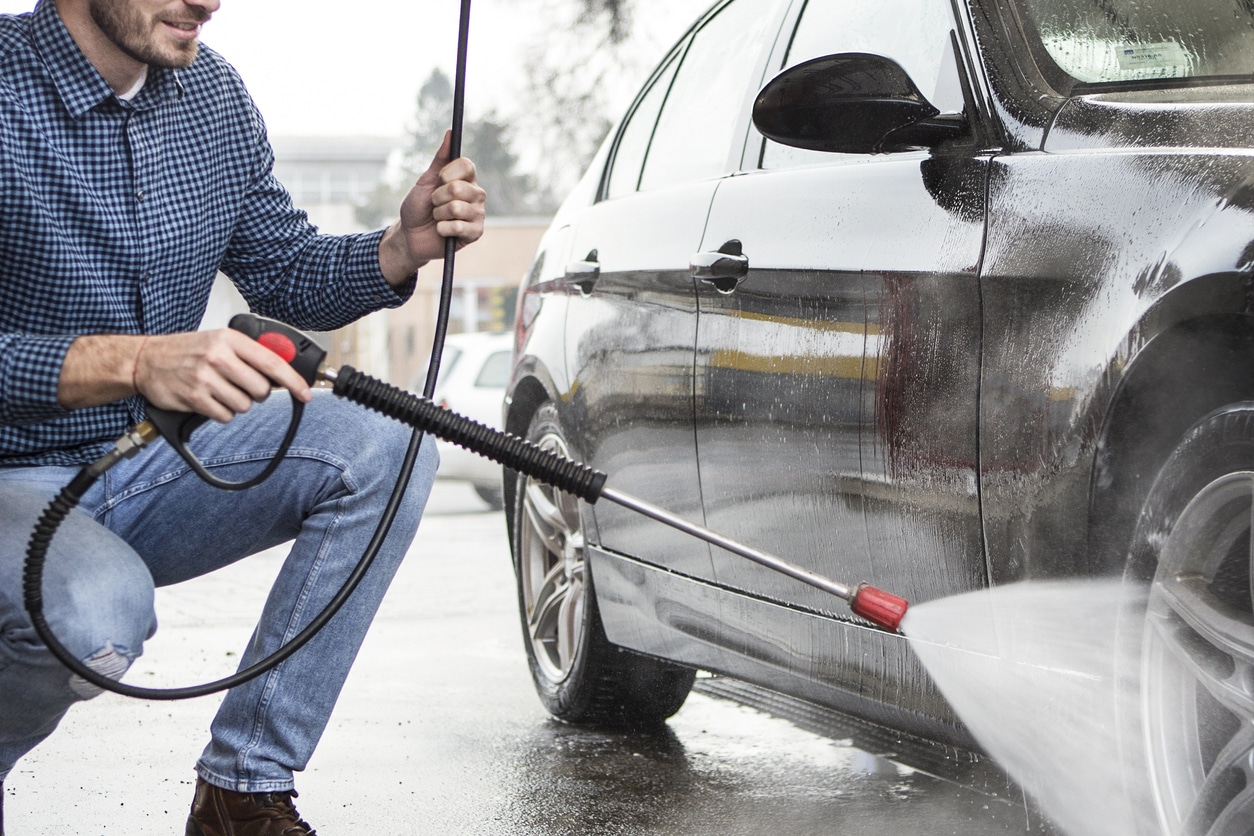
Yes, a pressure washer is safe for car washing when used correctly. The risk comes from high pressure, a narrow spray pattern, and holding the nozzle too close for too long. Those mistakes can chip paint, force water into seals, or damage trim.
Most detailing experts recommend using a unit with moderate pressure, often around 1,200 to 2,000 PSI, with a wide fan tip. For many cars, that range is plenty strong for rinsing while still being gentle on the finish. Flow rate matters too, because good water volume helps rinse dirt away without needing extreme pressure.
If you have ever seen a car hood get peppered with tiny marks after a wash, that is usually from using too much pressure or the wrong nozzle. I learned early on that more force is not better. A careful pass with the washer is cleaner, safer, and usually faster.
What you need before you start
Before you use a pressure washer on a car, gather the right tools. Having everything ready makes the wash smoother and keeps you from rushing.
- Pressure washer with adjustable pressure or a low PSI setting
- Wide fan nozzle, usually 25 degree or 40 degree
- Car wash soap made for foam cannon or bucket washing
- Foam cannon or soap attachment, if available
- Soft wash mitt
- Two buckets if you plan to hand wash after rinsing
- Microfiber drying towels
- Wheel cleaner and wheel brush, if needed
- Safety glasses and closed toe shoes
It also helps to work in the shade. Hot panels dry too fast and can leave spots. A cool car gives you more control and better results.
How to use a pressure washer on a car step by step
Follow these steps for a safe and effective wash.
1. Park the car in the right spot
Choose a shaded area with enough room to walk around the vehicle. Avoid washing on very hot pavement or direct sunlight if you can. A cool surface helps prevent soap and water from drying too quickly.
Make sure windows are closed and any loose accessories are removed. Fold in mirrors if needed. If your car has aftermarket trim, wraps, or delicate decals, check them before starting.
2. Choose the right nozzle
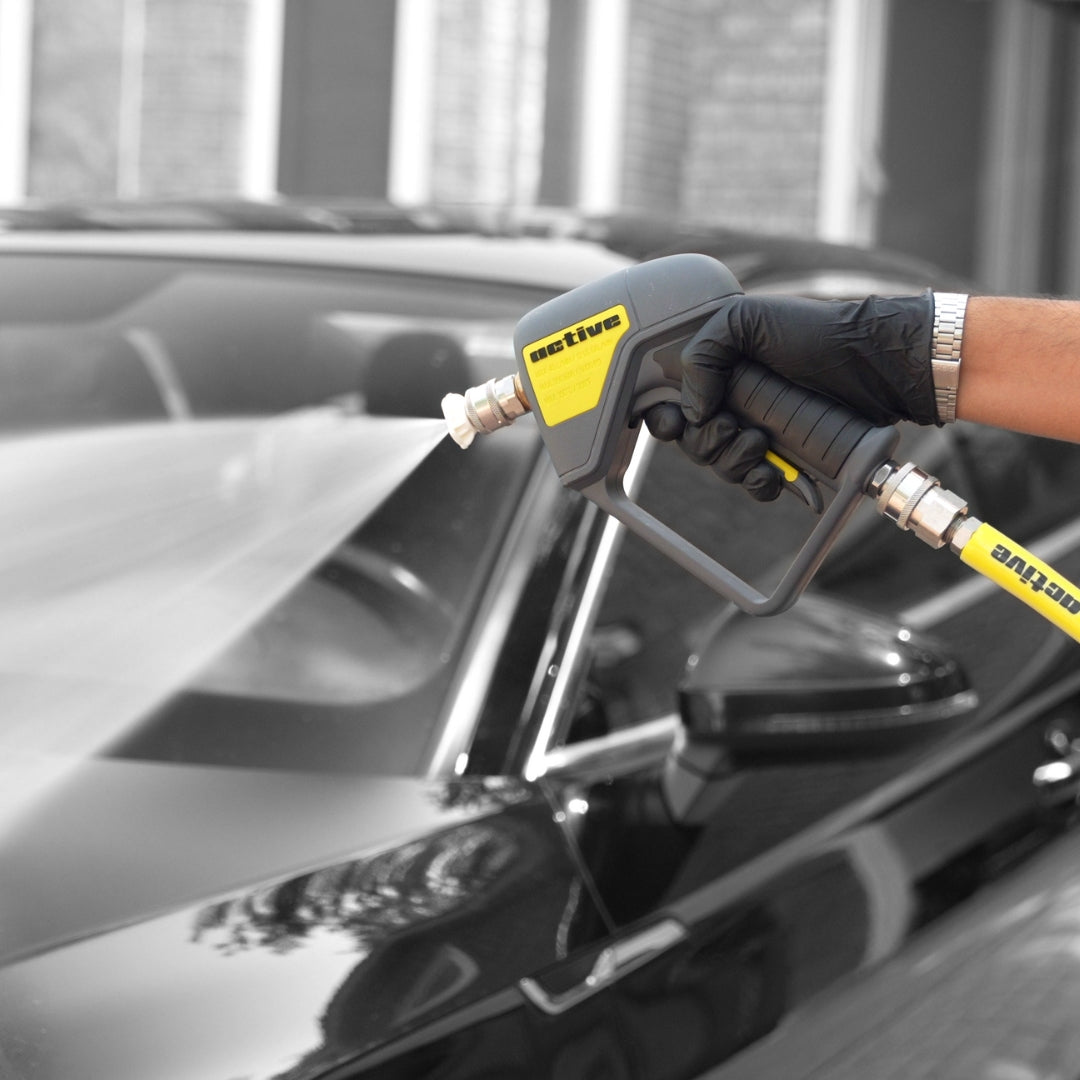
Use a wide fan spray, not a pinpoint jet. A 25 degree nozzle is common for safe car rinsing, and a 40 degree nozzle is even gentler. Never use a turbo nozzle or a zero degree tip on paint.
If your washer has adjustable pressure, start low. Test on a small area first, like the lower rocker panel or a dirty wheel well area. You want the dirt to move, not the surface to peel back.
3. Pre rinse the car
Start from the top and work down. This helps gravity carry dirt away instead of dragging it over already cleaned panels. Hold the nozzle at a safe distance, usually about 12 to 24 inches away, depending on the washer power.
Move the spray in smooth, overlapping passes. Do not stop the stream in one place. That is one of the easiest ways to damage clear coat or force water into emblems and seals.
4. Apply car soap
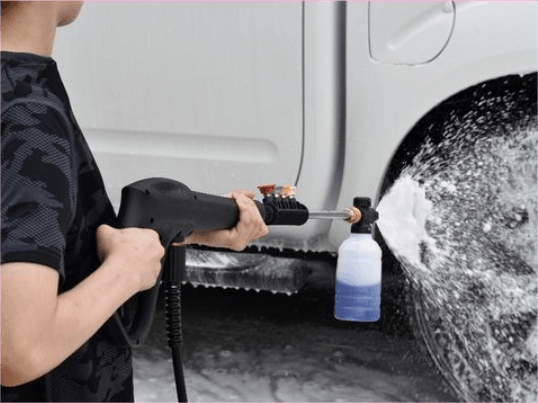
If you have a foam cannon, cover the vehicle with a layer of foam. Let it dwell for a few minutes, but do not let it dry. Foam helps soften grime and adds lubrication for the hand wash.
If you do not have a foam cannon, mix car wash soap in a bucket and wash with a mitt after rinsing. Use soap made for cars, not dish soap. Dish soap can strip protective wax faster than most people expect.
5. Wash by hand
After the foam or pre soak, wash the car panel by panel. Start at the roof and work downward. Rinse the mitt often so you do not grind dirt back into the paint.
This is where a pressure washer really helps. It removes loose grit before you touch the surface, so the mitt does less damage. That is one of the biggest benefits of using a pressure washer on a car.
6. Rinse thoroughly
Rinse from top to bottom until the soap is gone. Pay attention to mirrors, door handles, emblems, and the lower panels where grime tends to hide. A clean rinse reduces streaks and prevents soap residue.
If your car has a ceramic coating, you may notice water behavior looks different. That is normal. The coating can make rinsing easier because water beads and sheets off more cleanly.
7. Dry the car safely
Use clean microfiber drying towels or a blower designed for car drying. Do not let the car air dry if you want to avoid spots. Mineral deposits in tap water can leave marks on the paint.
I like to pat dry rather than drag the towel hard across the panel. That keeps the finish safer and cuts down on swirl marks. Think of it like drying glasses with a soft cloth, not wiping a kitchen counter.
8. Clean the wheels and lower areas last
Wheels and tires usually hold the worst dirt, so save them for the end. Use a separate brush and, if possible, a separate mitt. Brake dust can be abrasive, and you do not want it on your paint tools.
For wheel wells and lower rockers, a pressure washer is very useful. Just keep the nozzle moving and avoid blasting directly into sensors, vent openings, or damaged trim. Be extra careful around side skirts and wheel sensors.
Best pressure washer settings for cars
The right settings matter more than raw power. For most passenger cars, a pressure washer in the low to moderate range is ideal.
Here is a simple guide:
- PSI: 1,200 to 2,000 for most cars
- GPM: 1.4 to 2.0 is useful for good rinse flow
- Nozzle: 25 degree or 40 degree fan tip
- Distance: about 12 to 24 inches from the surface
If you use a gas pressure washer that is much stronger, you may need a pressure regulator or a larger tip. Higher pressure does not clean better by itself. It only increases the risk if the water is too focused or too close.
From experience, the safest approach is to start farther back and move in gradually if needed. The paint should never feel like it is being cut by the spray. If it does, step away and widen the fan.
Common mistakes to avoid
A lot of pressure washer damage comes from simple mistakes. These are the ones I see most often.
- Using a zero degree or turbo nozzle on paint
- Holding the nozzle too close to the surface
- Spraying straight into window seals, badges, or vents
- Washing a hot car in direct sun
- Using dish soap instead of car shampoo
- Letting soap dry on the paint
- Rinsing in one spot for too long
- Forgetting to test pressure on a small area first
One mistake I made years ago was trying to blast mud off a fender liner too fast. It worked, but I also forced dirt into a crack near the trim. Since then, I always start with a gentle pass and let the water loosen buildup step by step.
Benefits of using a pressure washer on a car
Using a pressure washer on a car has real advantages when you do it carefully.
- It removes loose dirt before you touch the paint
- It saves time during rinsing
- It helps reduce swirl marks during hand washing
- It works well on wheel wells and lower panels
- It improves results when paired with foam and proper soap
For people who wash their cars often, this can make maintenance easier. The car stays cleaner, and the wash process feels less like a chore. That matters because consistent washing is usually better than waiting until the car is heavily caked in grime.
Limitations and when not to use one
A pressure washer is not the answer for every situation. Old paint, failing clear coat, cracked trim, loose emblems, and damaged seals need extra caution. If the car has visible paint damage, high pressure can make it worse.
You should also be careful with aftermarket wraps, vinyl graphics, and partially lifted trim. In those cases, use a wider tip, lower pressure, and more distance. If you are unsure, it is better to use a hose and hand wash than to guess.
Very dirty off road vehicles can also hide rocks, sand, or hardened mud in seams. A pressure washer helps, but you still need to inspect the car first. Water alone will not make embedded grit safe.
Pro tips for better results
These small tips make a big difference.
- Pre rinse first so you are not scrubbing loose grit
- Use a foam cannon if you want better dwell time and lubrication
- Work from top to bottom so dirt falls away naturally
- Keep one mitt for paint and another for wheels
- Dry with clean microfiber towels to prevent water spots
- Wash regularly so buildup does not harden
I also like to do a quick final pass on the lower panels. That area catches the most road film, salt, and mud. A gentle extra rinse there can make the whole car look cleaner without adding much time.
When a pressure washer is especially useful
There are a few times when using a pressure washer on a car really shines.
- After winter driving, to remove salt and brine
- After a road trip, when bugs and dust build up fast
- After rain storms, when grime sticks to panels
- On trucks and SUVs with more lower body dirt
- Before applying wax, sealant, or ceramic spray
In each case, the washer helps prep the surface. Clean prep is the base of a good finish. It is like sweeping a floor before mopping, not after.
Frequently Asked Questions of How to use a pressure washer on a car
What PSI is safe for washing a car?
For most cars, 1,200 to 2,000 PSI is a safe range when used with a wide fan nozzle. The real key is distance and movement, because even moderate pressure can be too strong if you hold it too close.
Can a pressure washer damage car paint?
Yes, it can damage paint if you use too much pressure, the wrong nozzle, or spray too close. Used correctly, though, it is a safe and very effective way to rinse dirt from a car.
Should I use hot or cold water?
Cold water is fine for most car washes. Hot water is not usually needed and can create extra risk if the panels are already warm.
Can I use a pressure washer with soap?
Yes, and that is often the best method. A foam cannon or soap attachment helps loosen dirt and adds lubrication before hand washing.
How far should I hold the pressure washer from the car?
A good starting point is about 12 to 24 inches away. If the pressure feels strong or the spray is narrow, move farther back and widen the nozzle.
Is it okay to pressure wash wheels?
Yes, wheels can handle more cleaning force than paint, but you still need caution. Avoid spraying directly at damaged areas, valve stems, or sensitive brake components for long periods.
Conclusion
Using a pressure washer on a car can make washing faster, safer, and more effective when you keep the pressure controlled and the spray wide. The best results come from gentle technique, good soap, careful rinsing, and smart drying. Once you get the rhythm down, the whole process feels simple and almost relaxing.
If you wash your car at home, start with low pressure, practice on the lower panels, and build confidence from there. Try the steps in this guide on your next wash, and pay attention to how much easier the dirt comes off. If you found this helpful, keep exploring car care tips and share your own pressure washing experience in the comments.