How To Use A Blind Spot Mirror: Easy Setup Guide
A blind spot mirror helps you see hidden lanes, then change lanes with more confidence.
If you have ever leaned forward in the driver’s seat and still missed a car beside you, you already know why a blind spot mirror matters. Learning how to use a blind spot mirror is one of the simplest ways to make lane changes safer, reduce stress, and build better driving habits. I have seen this tiny tool make a big difference for new drivers, daily commuters, and anyone who spends real time on busy roads.
What a blind spot mirror is and why it helps
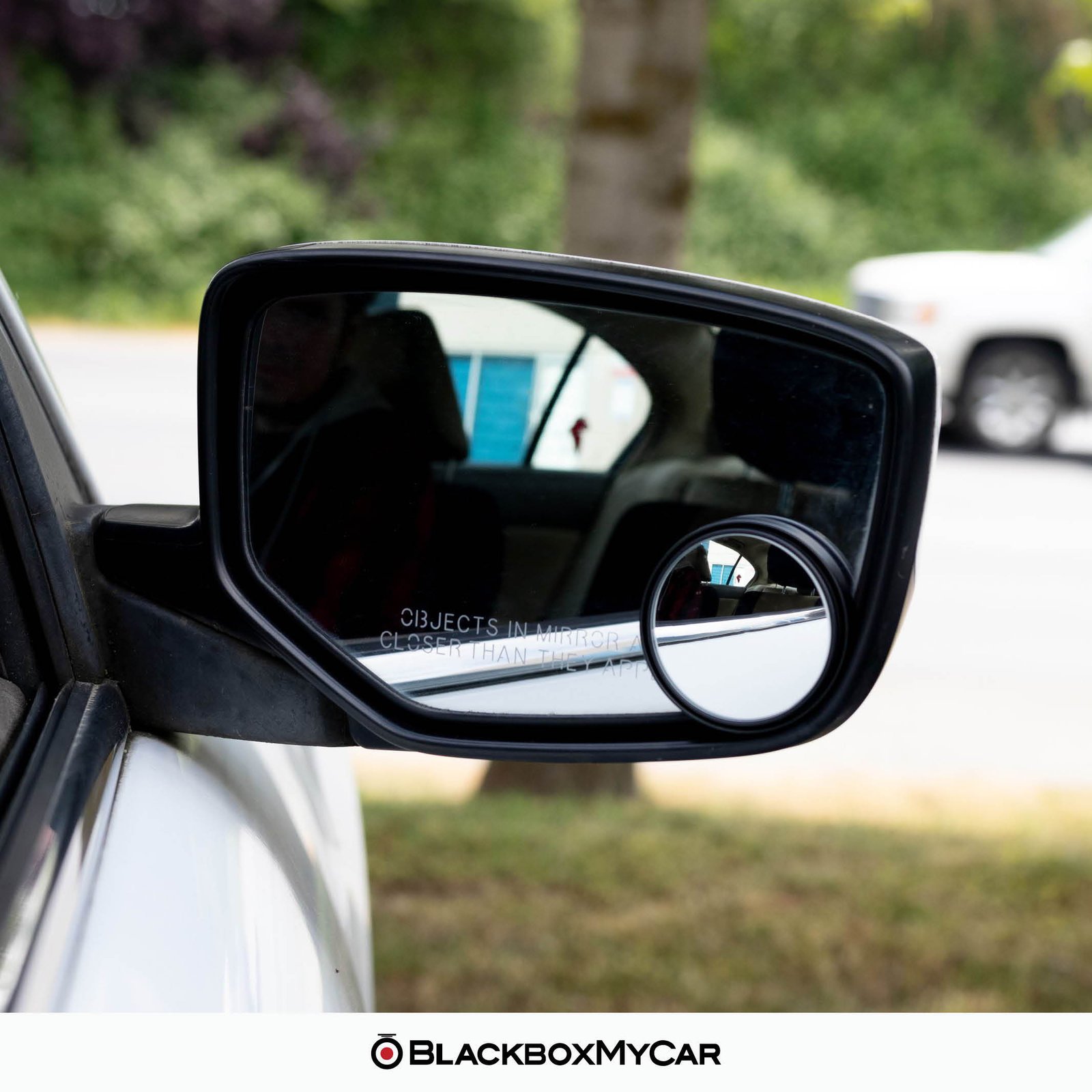
A blind spot mirror is a small convex mirror that sticks to your side mirror. It gives you a wider view of the lane beside and behind your car. That extra view helps you spot vehicles, motorcycles, and even bicycles that can hide in a normal mirror’s blind zone.
I like to think of it as adding a small “extra eye” to your side mirror. It does not replace good driving habits, but it fills the gap that standard mirrors leave behind. That is why knowing how to use a blind spot mirror is useful for everyday driving, highway merges, parking, and lane changes.
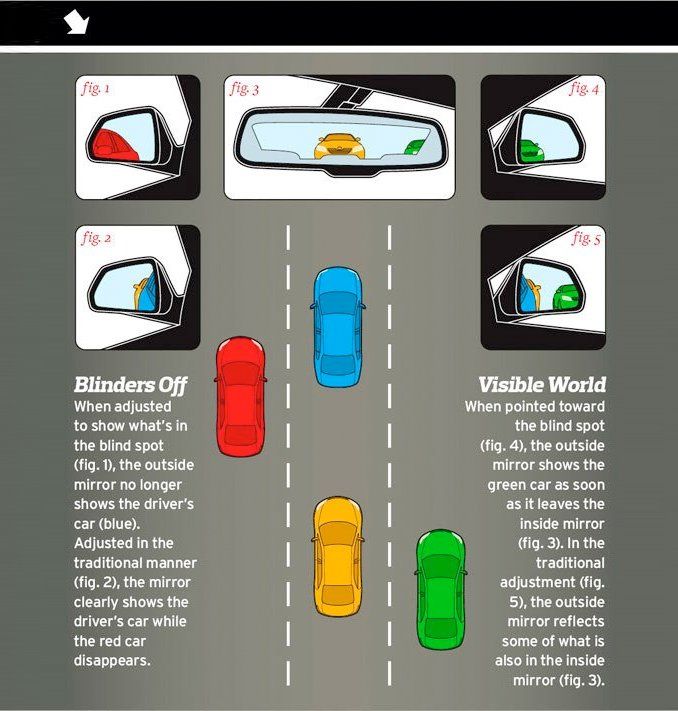
Blind spots are real because of a car’s shape and the way mirrors work. Bigger vehicles can have larger blind zones, but even compact cars have them. A blind spot mirror gives you a faster check without making you twist your neck as much.
How to use a blind spot mirror correctly
Using a blind spot mirror is simple, but placement matters a lot. If you stick it in the wrong spot, it may show too much of your own car or not enough of the lane you need to see.
Follow these steps:
-
Clean the side mirror surface
Use glass cleaner or rubbing alcohol to remove dust, wax, and oil. The adhesive on the blind spot mirror sticks better to a clean, dry surface. -
Position the mirror on the outer edge
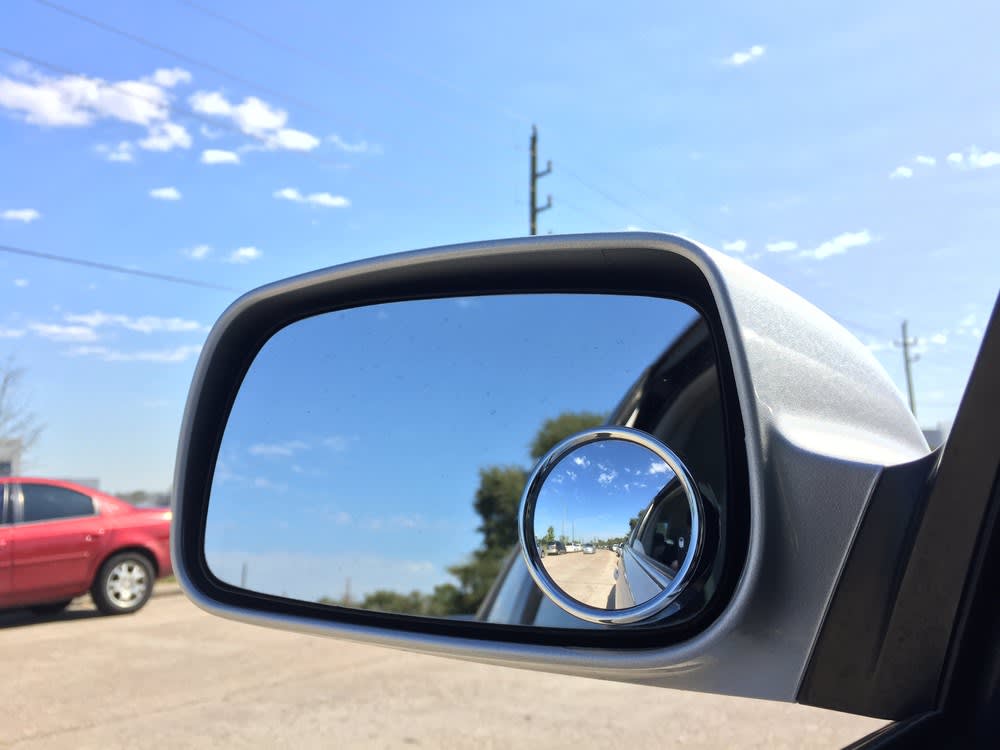
Place it on the outer top or outer bottom corner of your side mirror, depending on your car and what gives the best view. The goal is to expand your field of vision, not to cover the whole mirror. -
Sit in your normal driving position
Adjust the blind spot mirror while sitting as you normally drive. If you lean in or move too far out, the angle may be wrong once you are on the road. -
Aim it to show the lane beside you
The blind spot mirror should show a slice of the adjacent lane and the area behind your car. You should still use your main side mirror for most rear-view checking. -
Test it in a safe area
Drive slowly in an empty parking lot or quiet street. Check whether cars beside you appear in the mirror at the right time, then fine-tune it as needed.
I learned early on that many drivers place the mirror too close to the center of the side mirror. That usually creates overlap and wastes the benefit. A better setup is one that shows what your main mirror cannot.
Best way to position a blind spot mirror
The best placement depends on your car, your seat height, and your mirror size. Still, there are a few reliable rules that work for most drivers.
Keep these tips in mind:
- Place it near the outer edge of the side mirror
- Keep it angled outward enough to catch the adjacent lane
- Avoid placing it where it blocks your normal rear view
- Make sure both left and right mirrors are adjusted consistently
- Recheck the position after driving for a day or two
A common mistake is setting the blind spot mirror too low. That can make it useful for curb checks, but less helpful for lane changes. Another mistake is trying to use it like a main mirror. It works best as a support tool, not a replacement.
For many drivers, the outer upper corner works well on the driver side. The passenger side may need a slightly different angle because of road width and seating position. Small adjustments can make a big difference.

How to use a blind spot mirror while driving
Once the mirror is installed, you need a habit that makes it useful every day. The mirror only helps if you check it at the right time.
A simple lane change routine looks like this:
- Check your rearview mirror first
- Check your side mirror next
- Glance at the blind spot mirror
- Turn your head for a final quick shoulder check
- Change lanes only when the space is clear
That sequence keeps you aware without overthinking it. I have found that drivers who use the blind spot mirror well often feel calmer in traffic because they trust their checks more.
Use it especially when:
- Merging onto highways
- Passing slower vehicles
- Changing lanes in heavy traffic
- Backing out of parking spaces
- Driving near motorcycles, scooters, or bicycles
The blind spot mirror is especially helpful in fast-moving traffic. Cars can appear and disappear quickly in a normal side mirror. The added angle gives you a better chance of seeing them sooner.
Common mistakes to avoid
Many drivers buy a blind spot mirror and then never get the full benefit. Usually, the issue is not the mirror itself. It is how it is used.
Avoid these mistakes:
- Mounting it before cleaning the mirror
- Placing it too far inward
- Using it as your only lane-change tool
- Forgetting to adjust it after seat changes
- Assuming it works the same on every vehicle
Another mistake is ignoring glare. Some blind spot mirrors reflect bright sunlight at certain angles. If that happens, try a slight repositioning or look for a model with anti-glare coating.
Also, do not rely on it blindly at night or in rain. Weather can reduce visibility, so your mirror check should always be paired with a shoulder check and safe driving judgment.
Benefits of using a blind spot mirror
A blind spot mirror offers more than just convenience. It can improve awareness in a way that feels immediate and practical.
Some key benefits include:
- Better lane-change visibility
- Fewer surprise vehicles in your blind zone
- Improved confidence for new drivers
- Easier parking and merging
- Better awareness of motorcycles and bicycles
It also supports safer habits over time. When you can see more clearly, you make better decisions faster. That matters in city traffic, on highways, and in crowded parking lots.
From an E-E-A-T point of view, the value is simple: this is a low-cost safety aid with a clear purpose. It does not replace training or attention, but it adds a real layer of awareness.
Limitations you should know
A blind spot mirror is helpful, but it is not magic. It cannot remove all blind spots, and it cannot predict what other drivers will do.
Here are the main limits:
- It has a smaller viewing area than a full mirror
- Objects can appear smaller than they really are
- It can distort distance a little because it is convex
- It may not suit every vehicle or mirror shape
- It still requires shoulder checks and good habits
That last point matters most. A mirror should support your eyes, not replace them. Even with a blind spot mirror, you should still use safe lane-change habits every time.
Choosing the right blind spot mirror
Not all blind spot mirrors are the same. Some are simple round stick-on mirrors, while others are larger or adjustable.
When choosing one, look for:
- Strong adhesive
- Clear glass with minimal distortion
- Weather resistance
- A size that fits your side mirror
- Anti-glare features if possible
Round mirrors are common and easy to install. Smaller mirrors blend in well, while larger ones can give a wider view. If you drive a larger SUV or truck, a slightly bigger option may be more useful.
I usually recommend starting with a simple model and testing it for a week. If it feels too small, too bright, or poorly placed, then upgrade. That saves time and money.
Tips for new drivers
If you are new to driving, the blind spot mirror can help you build confidence faster. The trick is learning to use it as part of a full mirror routine.
Helpful tips for new drivers:
- Practice in an empty lot first
- Check your mirrors before every lane change
- Learn what a car looks like in the blind spot mirror
- Adjust your mirrors before you start driving
- Rehearse the habit until it feels natural
Think of it like learning to ride a bike with training wheels. It is not about dependence. It is about building good balance until the motion becomes second nature.
Frequently Asked Questions
Where should I place a blind spot mirror?
Place it on the outer edge of your side mirror, usually in the upper or lower corner. The best spot is the one that expands your view of the lane beside you without covering your normal mirror view.
Do I still need to turn my head if I have a blind spot mirror?
Yes, you should still do a quick shoulder check before changing lanes. The blind spot mirror helps you see more, but it should not replace a final visual check.
Can a blind spot mirror be used on any car?
Most cars, SUVs, and trucks can use one, but mirror shape and size matter. If the side mirror is very small or unusually curved, you may need to test a few positions before finding the right fit.
Is a blind spot mirror better than a regular side mirror?
No, it is not better by itself. It works best as a support tool that adds visibility to your regular side mirror, especially for lane changes and merging.
How do I know if my blind spot mirror is adjusted correctly?
You should see vehicles in the adjacent lane before they fully disappear from your main mirror view. If you mostly see your own car, or if the mirror shows too little of the road, adjust it outward a little.
Conclusion
Learning how to use a blind spot mirror is one of those small driving upgrades that can make a big difference. With the right placement, a simple mirror check routine, and a quick shoulder glance, you can improve safety, reduce stress, and feel more in control behind the wheel.
If you drive often, it is worth taking a few minutes to set it up properly and test it in real traffic. Try it, adjust it, and make it part of your everyday habit. If you found this guide useful, explore more driving safety tips and share your own experience in the comments.





One Comment