How to Sanitize Kitchen Knives
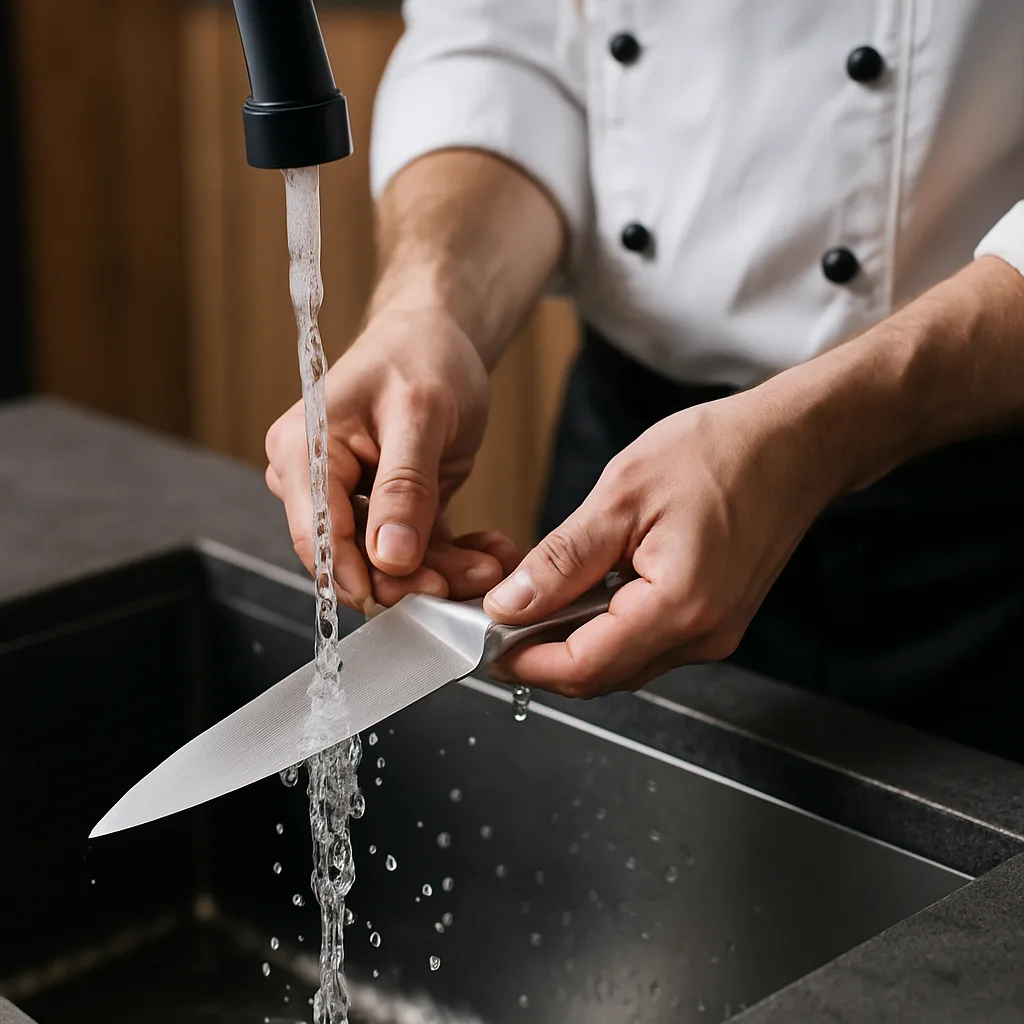
Image source: Bing (Web (fair-use with source credit))
How to Sanitize Kitchen Knives: A Quick Decision Guide
Knowing how to sanitize kitchen knives is key to safe food prep. Bacteria can linger on blades, so a simple wash isn't always enough, especially after handling raw meats. Getting this right means keeping your kitchen hygienic and your family safe from foodborne illnesses.
Our research indicates that proper sanitization often involves specific temperatures or methods that go beyond daily cleaning. For instance, the U.S. Department of Agriculture (USDA) recommends that surfaces and utensils that touch raw meat should be washed with hot, soapy water, rinsed, and then sanitized, often using a solution at least 170°F (77°C).
Let's look at how to achieve that.
Quick Answer
Sanitize kitchen knives by first washing them thoroughly with hot, soapy water. If you've handled raw meat, poultry, or fish, you must then use a higher heat method. Options include immersing the blade in water at least 170°F (77°C) for 30 seconds or running them through a dishwasher on a hot cycle with heated dry.
Always dry knives immediately after.
Basic Knife Cleaning: When It's Enough
Sometimes, all your knife really needs is a good, thorough cleaning. This is perfectly fine when you've only been prepping things like fruits, vegetables, or bread. The goal here is to remove any visible food particles and surface grime.
Step-by-Step: Washing Your Knives
Here’s how to give your knives a solid, everyday clean:
- Rinse: Start by running the knife under warm water. This helps to wash away any large bits of food that might be stuck to the blade.
- Wash: Grab your favorite dish soap and a clean sponge or dishcloth. Work up a lather and wash the entire knife, blade, handle, and bolster. Pay attention to any areas where food could hide, like where the blade meets the handle.
- Rinse Again: Rinse the knife thoroughly under hot running water. Make sure all soap residue is gone, as it can affect food taste.
- Dry Immediately: This is a crucial step for blade longevity. Use a clean, dry dish towel to dry the knife completely. Don't let it air dry, as this can lead to water spots and, more importantly, rust, especially on carbon steel blades.
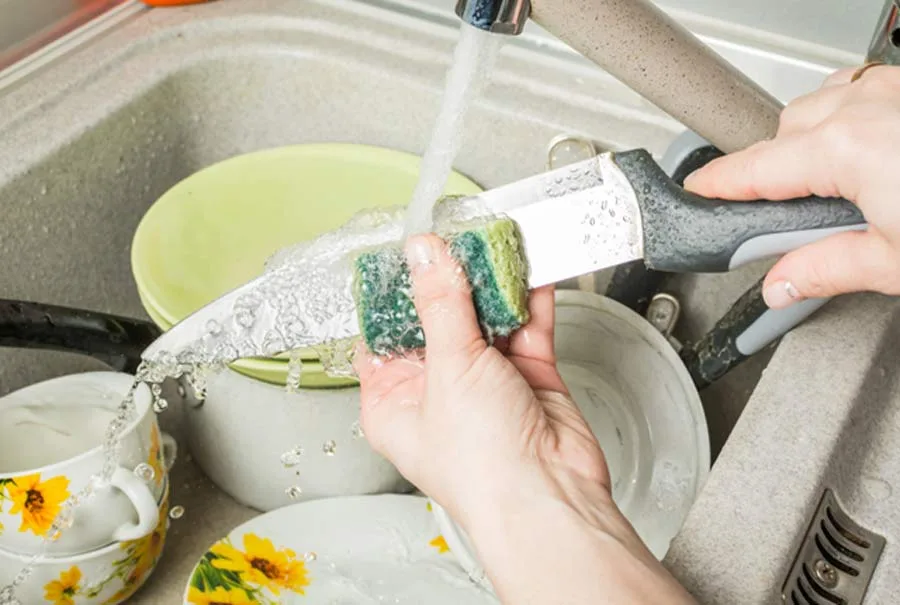
Image source: Bing (Web (fair-use with source credit))
This basic wash is excellent for general kitchen tasks. However, when raw animal products enter the picture, we need to step up our game to ensure true sanitization.
When Raw Meat Calls: The Need for True Sanitization
Things change significantly when your knife has come into contact with raw meat, poultry, or fish. These foods can carry harmful bacteria, such as Salmonella or E. coli, which aren't always visible to the naked eye. A simple wash might remove the food residue, but it often doesn't kill all the microbes.
To prevent cross-contamination and keep your kitchen safe, you need to actively sanitize the knife. Sanitization reduces the number of harmful microorganisms to a safe level. This is a critical step in food safety, turning a clean knife into a truly hygienic one.
Here's the decision point:
- If you just cut vegetables, fruits, or bread: A thorough wash and dry is usually sufficient.
- If you just cut raw meat, poultry, or fish: You must proceed with a sanitization step after washing.
This difference is vital for preventing the spread of pathogens around your kitchen and to other foods.
Option 1: Hot Water Power-Up for Sanitizing
This method is your best bet if your knives aren't dishwasher-safe, or if you prefer a more hands-on approach. It relies on high temperatures to kill off unwanted guests.
How It Works: Heat Kills Bacteria
The principle here is simple: extreme heat denatures the proteins that make up bacteria, rendering them inactive and harmless. Research consistently points to water temperatures above 165°F (74°C) being effective for sanitizing, with higher temperatures providing a quicker kill time. The USDA recommends water at 170°F (77°C) for about 30 seconds.
Image source: Bing (Web (fair-use with source credit))
Step-by-Step: The Hot Water Method
- Wash Thoroughly: First, wash your knife with hot, soapy water as you would for basic cleaning. Get rid of all food particles.
- Prepare Hot Water: Fill a clean bowl or basin with very hot water. Aim for a temperature of at least 170°F (77°C). You can test this by carefully dipping a thermometer or by feeling the steam, it should be quite hot to handle, but manageable with caution.
- Sanitize the Blade: Submerge the blade of the knife into the hot water. Make sure the entire blade is covered. Hold it there for at least 30 seconds. Alternatively, you can use a clean cloth dipped in the hot water and carefully wipe down the entire knife, paying special attention to the blade.
- Rinse (Optional but Recommended): After sanitizing, you can give the knife a quick rinse under hot running water. This helps remove any lingering hot water taste if you plan on immediate use.
- Dry Immediately: Just like with basic cleaning, dry the knife completely and immediately with a clean, dry towel. This prevents rust and water spots.
This method is effective and requires no special equipment beyond a heat-resistant bowl and a way to heat water.
Option 2: Dishwasher: The Easy Sanitizing Route
For many households, the dishwasher offers the simplest and most effective way to sanitize kitchen knives, especially those made from stainless steel. Modern dishwashers are designed to reach temperatures high enough to kill most common household bacteria.
How Dishwashers Sanitize
Dishwashers achieve sanitization through a combination of hot water and a heated drying cycle. During the wash and rinse cycles, the water temperature can reach levels effective for killing germs. For instance, many consumer-grade dishwashers can heat water up to 150°F (66°C) or higher.
When paired with a heated drying option, the internal temperature of the dishwasher can rise significantly, further ensuring that items are sanitized. Some dishwashers even have specific "sanitize" cycles that meet certain standards for bacteria reduction. If your dishwasher has such a setting, it's an excellent way to ensure knives are properly cleaned and sanitized.
What Knives Work Best in the Dishwasher?
- Stainless Steel Knives: These are generally very durable and can withstand the high heat and detergent of a dishwasher.
- Knives with Plastic or Composite Handles: These materials are usually less susceptible to damage from heat and moisture than wood.
Knives to Avoid in the Dishwasher:
- Carbon Steel Knives: These can rust very easily, even with a quick wash, and prolonged exposure to hot water and detergent in a dishwasher will likely cause significant damage.
- Knives with Wooden Handles: The heat and moisture can cause wood to warp, crack, or split over time.
- Knives with Delicate or Specialty Handles: Check manufacturer recommendations, as some unique handle materials might not be dishwasher-safe.
Loading for Best Results:
- Blade Up: Always load knives with the blades pointing upwards. This prevents accidental cuts when unloading and ensures the water spray can effectively clean the blades.
- Space Them Out: Don't overcrowd the dishwasher. Ensure knives have enough space so water and detergent can reach all surfaces. They shouldn't be jammed against other dishes or cutlery.
Using a dishwasher can be a real time-saver for keeping knives hygienic. For those with smaller kitchens or specific needs, exploring options like 7 Best Compact Dishwasher or even a 7 Best Portable Dishwasher might be helpful in finding a unit that fits your space and still offers robust cleaning and sanitizing capabilities.
Knife Sanitizing Mistakes to Avoid
It's easy to make small mistakes that undermine your sanitizing efforts. Being aware of these can save you a lot of trouble and keep your kitchen safer. The goal is always to be thorough and not cut corners.
- Leaving Knives to Soak: Never leave dirty knives soaking in the sink. This is bad for the blades, promoting rust and dulling. It also doesn't sanitize them and can spread bacteria if the water becomes stagnant.
- Using Too Cool Water: If you're using the hot water method, ensure the water is genuinely hot (at least 170°F / 77°C). Lukewarm water won't kill bacteria effectively.
- Skipping the Drying Step: Air-drying is a missed opportunity for sanitization and can lead to rust. Always dry knives immediately and completely with a clean towel.
- Dishwashing Unsafe Knives: Putting carbon steel or wooden-handled knives in the dishwasher can ruin them. Always check manufacturer guidelines or err on the side of caution with handwashing and hot water.
- Not Washing Before Sanitizing: Sanitizing a dirty knife is far less effective. Food debris can shield bacteria, preventing sanitizers from reaching them. Always wash thoroughly first.
Avoiding these common pitfalls ensures your knives are not only clean but truly sanitized for safe food preparation.
Expert Tips for Ultimate Knife Hygiene
Beyond the basic steps, a few pro tips can elevate your knife hygiene game. These are practices that seasoned cooks and culinary professionals often employ to maintain both safety and the longevity of their tools. Think of these as the extra steps that make a real difference.
- Dedicated Cutting Boards: Use separate cutting boards for raw meats and produce. Color-coding them can be helpful, red for meat, green for veggies, etc. This significantly reduces the risk of cross-contamination.
- Immediate Cleaning: Clean knives as soon as you're finished using them. The longer food particles sit on the blade, the harder they are to remove and the more time bacteria has to multiply.
- Handle Material Matters: Be extra vigilant with knives that have wood handles. They are porous and can harbor bacteria if not dried immediately and thoroughly. Some experts suggest oiling wooden handles periodically to seal them and prevent moisture absorption.
- Blade Inspection: Before you put a knife away, give the blade a quick visual inspection. Are there any lingering food particles? Is it completely dry? A quick wipe can prevent future issues.
- Consider a Knife Block with a Sanitizing Feature: While less common, some advanced knife blocks or storage solutions might incorporate UV sanitization. For most home cooks, however, the hot water or dishwasher methods are perfectly sufficient.
Implementing these tips, alongside the core sanitization steps, will ensure your kitchen knives remain safe, hygienic, and in top condition for years to come.