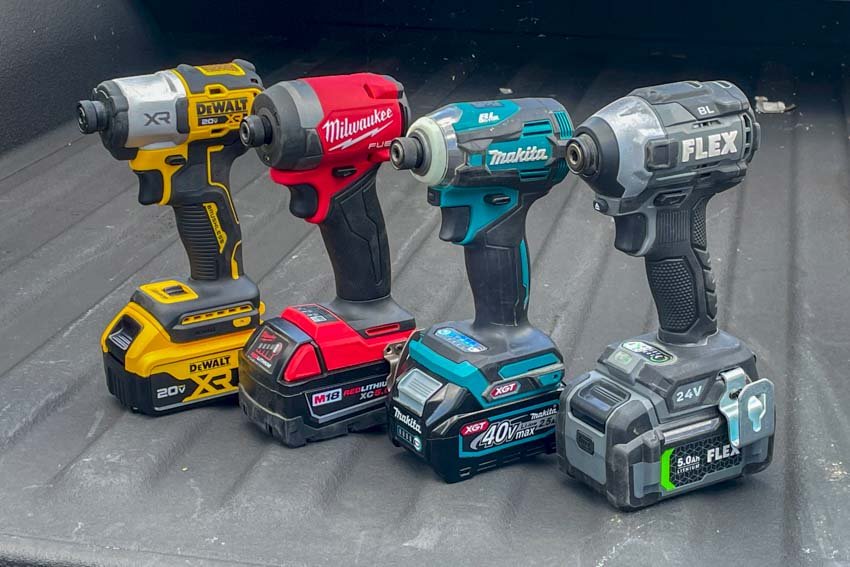
Flex Vs Milwaukee: Which Tool Brand Wins?
Flex often wins on value and power, while Milwaukee leads in ecosystem depth, service, and jobsite trust.
Choosing between Flex vs Milwaukee is not just a question of brand loyalty. It means comparing battery systems, tool power, durability, comfort, warranty support, and the cost of building a full tool collection. This guide breaks down the real differences so you can choose the platform that fits your work, budget, and long-term needs.
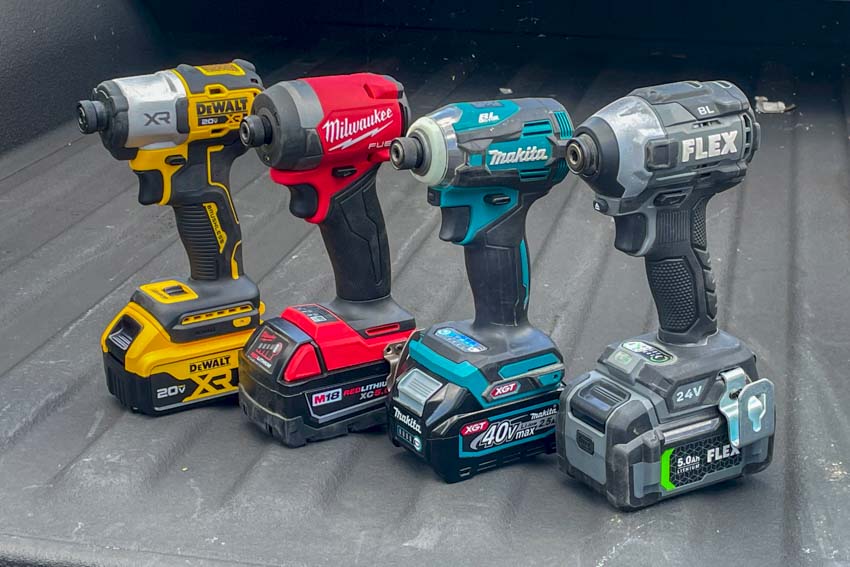
Flex vs Milwaukee: An Overview
Flex and Milwaukee are respected power tool brands, but they serve slightly different buyers.
Flex is known for strong performance, modern brushless motors, high battery output, and competitive prices. Its main cordless systems include the Flex 24V platform and the more powerful Flex 60V platform.
Milwaukee has a longer history in professional cordless tools. Its M12 and M18 systems cover a very wide range of tools, from compact drivers to high-power saws and specialty equipment.
The basic difference is simple:
• Flex often gives you more power and features for the money.
• Milwaukee offers a larger tool range and a more established professional ecosystem.
• Flex is attractive for new buyers who want high performance at a lower entry cost.
• Milwaukee is often better for contractors who need many trade-specific tools.
The best choice depends on how you work. A homeowner may value price and power. A full-time electrician, plumber, or builder may value tool variety, replacement access, and proven service support.
Brand Background and Tool Platforms
Flex 24V and 60V systems
Flex is owned by Chervon, a large power tool manufacturer that also produces tools for other brands and markets. Flex tools are sold mainly through major home improvement retailers and online dealers in the United States.
The Flex 24V system uses lithium-ion batteries and brushless motors. It includes common tools such as:
• Drills and impact drivers
• Reciprocating saws
• Circular saws
• Oscillating multi-tools
• Sanders and grinders
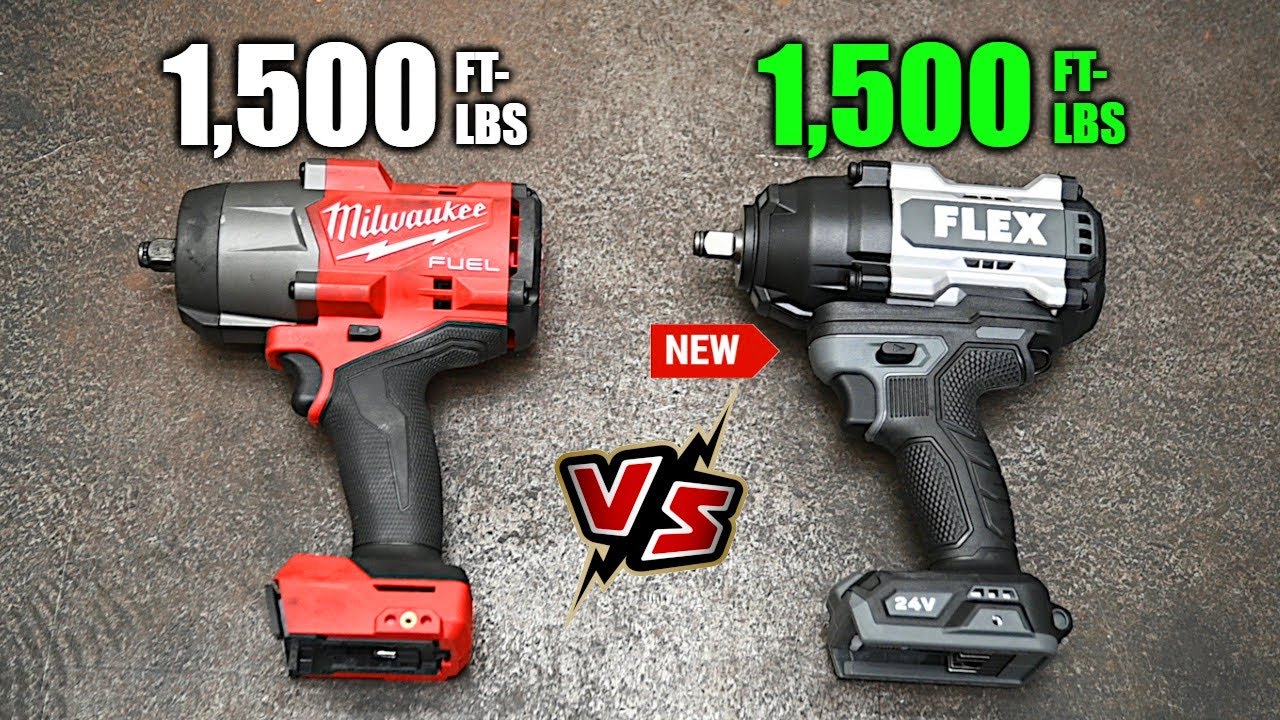
• Impact wrenches
• Outdoor power equipment
The Flex 60V system is designed for demanding work. It includes large saws, high-power grinders, lawn tools, and other equipment that can benefit from a higher-voltage battery.
A key point is that Flex 24V and Flex 60V batteries are not interchangeable. You must match the battery to the correct tool platform.
Milwaukee M12 and M18 systems
Milwaukee offers two major cordless platforms:
• M12 is a compact 12V system for light work, tight spaces, and specialty tools.
• M18 is an 18V system for general construction, remodeling, mechanical work, and heavy-duty applications.
Milwaukee M18 tools use several battery grades, including compact packs, high-output packs, and larger extended-runtime batteries. The voltage label does not tell the whole story. Battery cells, motor design, electronics, and heat control also affect performance.
Milwaukee also offers One-Key tools. This system can track certain tools, adjust performance settings, monitor battery information, and help manage equipment on larger jobsites.

Performance Comparison
Drills and impact drivers
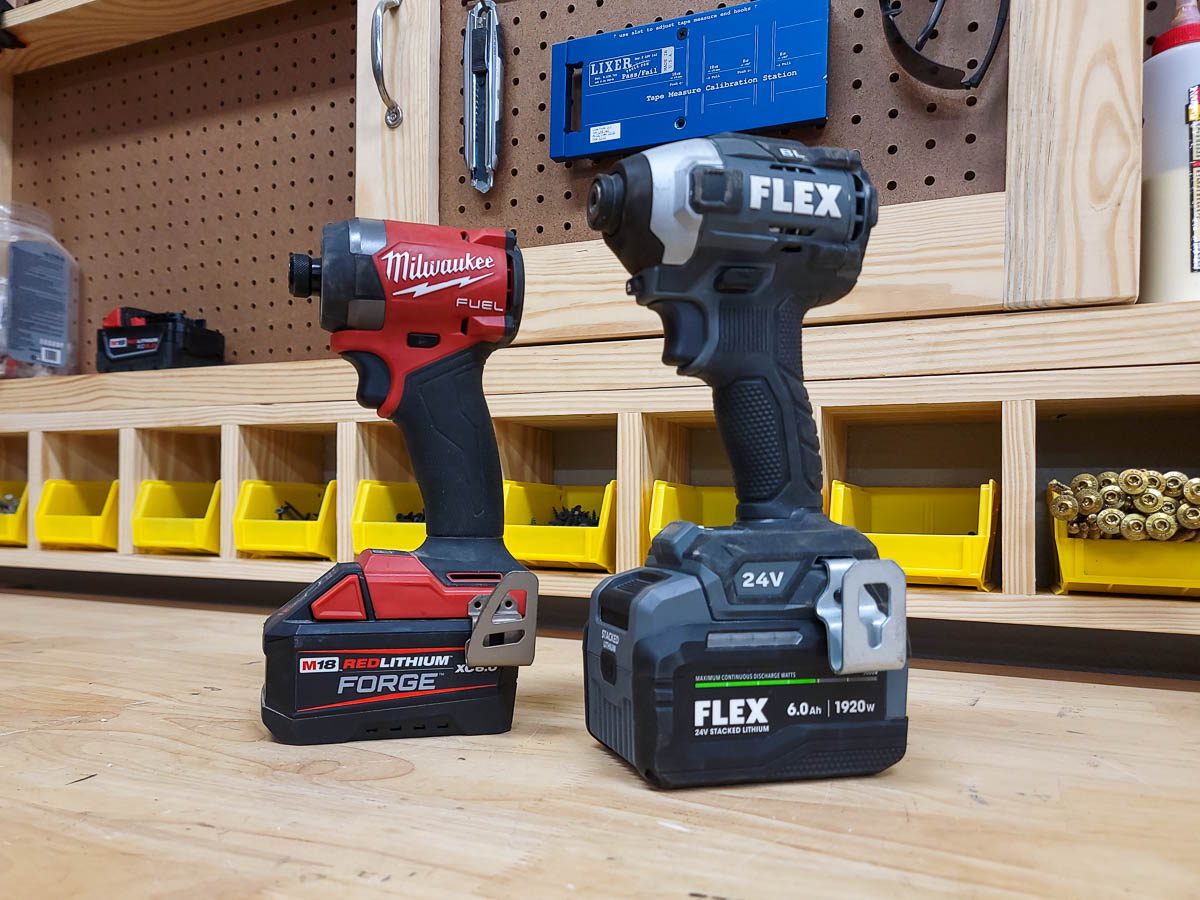
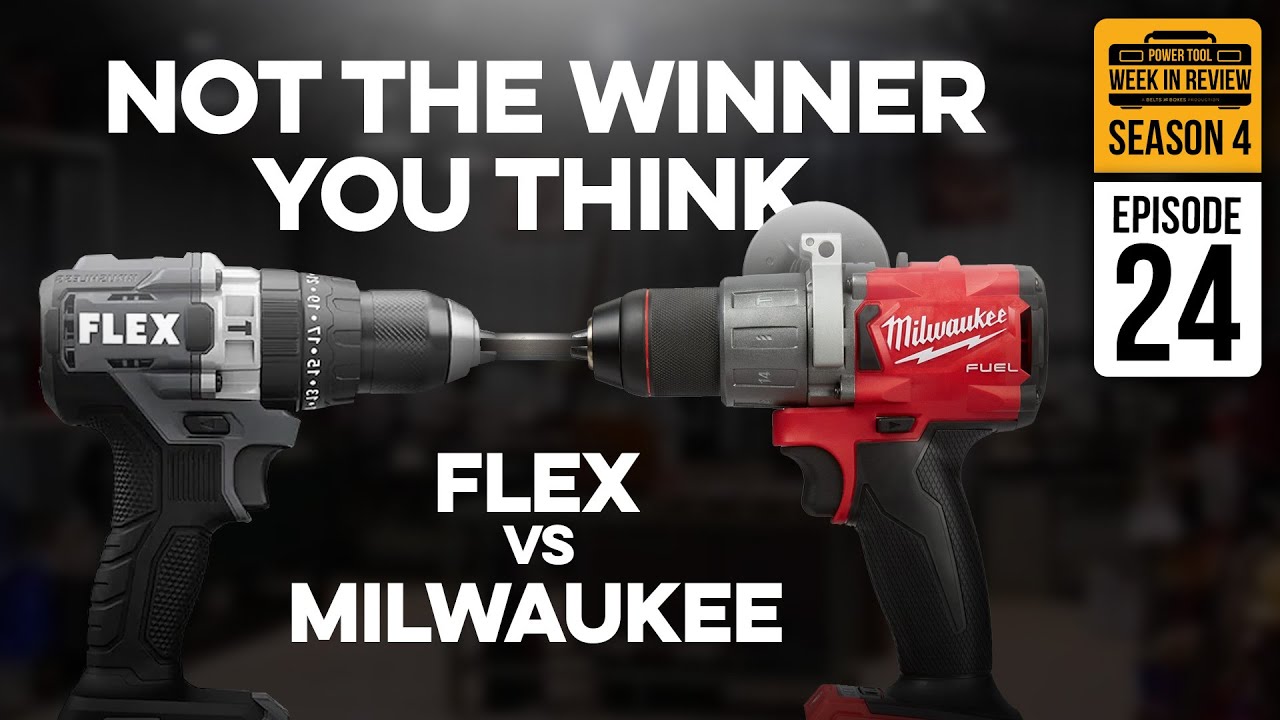
Both brands make strong brushless drills and impact drivers. Flex often feels aggressive and quick, especially in high-speed fastening and drilling tasks. Many Flex kits also include useful features at a lower price.
Milwaukee drills tend to have a refined feel. The trigger response is smooth, the clutch settings are consistent, and the tool range is easy to expand if you already own M12 or M18 batteries.
For basic home repair, either brand should provide more than enough power. For daily framing, deck building, or commercial work, battery size and tool cooling become more important than peak speed alone.
Saws
Flex circular saws are often praised for their cutting power. A large Flex 24V or 60V battery can help the saw maintain speed through dense lumber and sheet goods.
Milwaukee also offers strong cordless saws, including compact models and high-output M18 versions. The M18 system provides many blade sizes and saw styles, which helps professionals choose a tool for a specific task.
When comparing saws, check these details:
• Blade size and cutting depth
• Bevel range
• Weight with the battery installed
• Guard movement
• Line-of-sight visibility
• Battery runtime
• Dust collection options
A saw that has more power is not always better. If you work overhead or climb ladders often, a lighter tool may be safer and easier to control.
Grinders and high-demand tools
Flex has built a strong reputation for high-output tools. Its 60V equipment can be useful for demanding cutting, grinding, and outdoor work.
Milwaukee M18 high-output tools are also designed for serious use. The M18 system may be more convenient if your work already depends on Milwaukee batteries and chargers.
The practical Flex vs Milwaukee choice here depends on battery investment. Buying a powerful tool from a new platform may look affordable at first, but adding chargers and several batteries increases the total cost.
Battery Technology and Runtime
Battery performance is one of the most important parts of any cordless tool comparison.
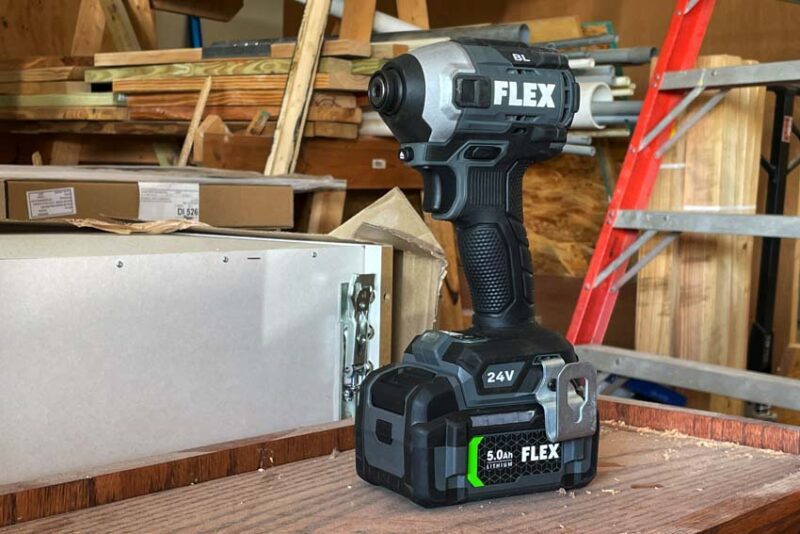
Flex batteries use advanced lithium-ion designs and are available in different capacities. Larger amp-hour ratings usually provide longer runtime, but they also add weight and cost.
Milwaukee offers a wide range of M12 and M18 batteries. Its High Output battery packs are designed to deliver more power than older standard M18 packs in compatible tools.
Remember that amp-hours measure stored energy, not direct tool power. A 5.0Ah battery may run longer than a 2.5Ah battery, but the actual runtime depends on the tool, material, temperature, and work method.
For example, cutting plywood places a different load on a battery than driving long structural screws. A grinder may drain a pack much faster than a drill.
Battery factors to compare
• Battery cost
• Charging time
• Weight
• Runtime
• Heat control
• Availability of replacement packs
• Compatibility with older tools
• Warranty terms
One common mistake is buying a tool kit based only on the number of batteries included. A kit with two small batteries may be less useful than a kit with one larger pack and a fast charger.
Tool Selection and Ecosystem Depth
Milwaukee has a major advantage in the number of available tools. The M12 and M18 platforms include equipment for many specialized trades.
You can find Milwaukee tools for:
• Electrical installation
• Plumbing
• Automotive repair
• HVAC work
• Carpentry
• Concrete drilling
• Metal fabrication
• Landscaping
• Jobsite lighting
• Dust extraction
• Material handling
Flex has a growing product range, but it does not match Milwaukee in overall platform depth. This difference matters when your work requires unusual tools.
A homeowner may need only a drill, impact driver, saw, and light. A professional may later need a cable cutter, inspection camera, press tool, drain cleaner, heated jacket, or specialty measuring device.
That is where Milwaukee’s ecosystem can save time. You can add a new tool without changing battery systems.
Durability and Jobsite Use
Durability depends on the specific tool, not only the logo on the side.
A premium tool can still fail if it is dropped repeatedly, exposed to water, packed with concrete dust, or used with the wrong accessory. Proper storage and cleaning matter for both Flex and Milwaukee.
Milwaukee has a long professional reputation, and many contractors trust M18 tools for daily jobsite use. Its service network and parts availability can also be important when a tool needs repair.
Flex tools are built for demanding work as well, but the brand has a shorter professional track record in some markets. That does not automatically mean poor durability. It means there may be less long-term field history for certain newer models.
A useful jobsite check includes:
• Inspecting the battery connection for play
• Checking the trigger for smooth operation
• Looking for exposed seals and weak housing points
• Testing the tool under a realistic load
• Confirming that replacement parts are available
• Reading the warranty terms before purchase
Do not judge durability from a short store demonstration. A tool may feel powerful for five minutes but behave differently after months of dust, heat, and daily impact.

Ergonomics, Comfort, and Control
A tool can have excellent power and still be uncomfortable.
Flex tools often provide a solid balance of power and size. Some models are compact for their output, although larger batteries can make them feel heavy during overhead work.
Milwaukee offers many compact M12 tools. These are useful when you work in cabinets, engine bays, utility rooms, or other tight areas. M18 tools provide more power but can become tiring with large battery packs.
Pay attention to:
• Handle shape
• Trigger reach
• Tool balance
• Vibration
• Grip texture
• Battery position
• Weight above the wrist
Comfort affects accuracy. It also affects fatigue and safety. The best Flex vs Milwaukee tool is often the one you can control all day without changing your grip.
If possible, hold the bare tool and the tool with its normal battery. A drill can feel light on a store shelf but much heavier when fitted with a large pack.
Warranty and Customer Support
Warranty coverage can change, so always confirm the current terms before buying. Manufacturer policies may differ by tool type, battery, accessory, registration status, and purchase location.
Flex has promoted extended warranty coverage on many tools and batteries when buyers complete the required registration. The exact coverage and registration period can vary.
Milwaukee also provides warranty coverage for many tools and batteries. Its service centers, authorized dealers, and repair process are important reasons professionals stay with the brand.
Before purchasing, check:
• Warranty length
• Registration requirements
• Battery coverage
• Proof-of-purchase rules
• Service center location
• Replacement or repair policy
• Coverage for commercial use
A strong warranty is useful, but easy service may matter even more. A tool that remains in a repair center for several weeks can cost a professional more than the original purchase price.
Price and Long-Term Value
Flex usually competes strongly on price. Tool kits often include useful features, large batteries, and brushless motors at an attractive cost.
Milwaukee tools can cost more, especially when you buy premium M18 models and high-output batteries. However, the larger ecosystem may provide better value for professionals who will add many tools over time.
Consider total ownership cost, not just the first kit price.
A simple cost checklist
• Initial tool kit price
• Number and size of batteries
• Charger cost
• Extra tool prices
• Replacement battery prices
• Accessories and blades
• Warranty service
• Resale value
• Cost of switching platforms later
For example, a homeowner who buys four cordless tools may save money with Flex. A contractor who buys 15 or 20 specialty tools may find Milwaukee more efficient because one battery system supports nearly everything.
Sales can change the result. Compare complete kits during holiday promotions, seasonal sales, and bundle events. Avoid choosing a platform from one unusually discounted tool.
Flex vs Milwaukee for Homeowners
Flex is a strong choice for homeowners who want professional-level performance without paying the highest platform prices.
It may suit you if you:
• Need powerful tools for repairs and remodeling
• Want a brushless kit with larger batteries
• Prefer strong value
• Do not need many specialty tools
• Plan to stay with a small tool collection
Milwaukee is also an excellent homeowner choice, especially if compact tools are important. The M12 line is convenient for small repairs, while M18 offers more power for construction and outdoor projects.
Choose Milwaukee if you:
• Want access to many future tools
• Need compact M12 equipment
• Prefer a widely supported brand
• May use the tools for side work or a small business
• Care about long-term platform depth
For occasional use, both brands offer more power than most homeowners need. Focus on comfort, battery availability, warranty terms, and the tools you will actually use.
Flex vs Milwaukee for Contractors
For contractors, the answer depends on trade and tool count.
A framing contractor may value the high output of Flex saws and larger batteries. A remodeling contractor may appreciate Flex’s price-to-performance ratio when equipping a crew.
Milwaukee often has the edge for electricians, plumbers, HVAC workers, and service technicians. The M12 and M18 systems include many trade-specific tools that are difficult to replace with one competing platform.
Milwaukee may also be better for companies that need tool tracking and fleet management. One-Key can help businesses monitor selected tools and organize equipment across multiple workers.
Still, Flex can make financial sense for a small contractor who needs core tools and wants to control startup costs. The right decision should be based on the work, not on brand popularity alone.
A practical contractor strategy
-
List the tools you use every week.
-
List the specialty tools you may need within three years.
-
Compare the price of complete kits.
-
Check battery runtime for your heaviest tools.
-
Review local repair and replacement options.
-
Choose one platform and avoid mixing systems without a clear reason.
This process prevents a common mistake: buying a cheap starter kit and later discovering that the platform lacks the tools your business needs.
Flex vs Milwaukee: Main Advantages and Drawbacks
Flex advantages
• Strong power for the price
• Competitive brushless tool kits
• High-output 24V and 60V options
• Attractive warranty programs on eligible products
• Good choice for homeowners and budget-minded professionals
Flex drawbacks
• Smaller overall ecosystem than Milwaukee
• Fewer specialty tools in some trades
• Less long-term market history for certain products
• Limited compatibility between 24V and 60V systems
• Local repair support may vary
Milwaukee advantages
• Very broad M12 and M18 tool range
• Strong professional reputation
• Many specialty trade tools
• Compact M12 options
• M18 high-output tools for heavy work
• One-Key tracking on selected products
Milwaukee drawbacks
• Higher prices on many premium tools
• Batteries can be expensive
• M12 and M18 batteries are not interchangeable
• Large high-output packs can add weight
• Some tools offer more features than casual users need
Common Buying Mistakes to Avoid
The first mistake is comparing voltage labels as if they were direct performance scores. Flex 24V and Milwaukee M18 systems use different naming methods, but voltage alone does not determine cutting speed, torque, or runtime.
The second mistake is ignoring battery cost. A low-priced tool without a battery may become expensive once you add two packs and a charger.
The third mistake is buying the largest battery for every tool. Large packs are useful for saws and grinders, but compact batteries are often better for drills, lights, and overhead work.
Other mistakes include:
• Choosing a tool without checking its weight
• Ignoring the warranty registration deadline
• Mixing battery platforms without planning
• Buying based only on online comments
• Forgetting the cost of blades, bits, and accessories
• Selecting peak power over daily comfort
Reviews can help, but your work conditions matter more. A tool that performs well for one person may be too heavy, too large, or too specialized for another.
How to Choose Between Flex and Milwaukee
Use this quick decision guide:
• Choose Flex if you want high performance, strong value, and a smaller core collection.
• Choose Milwaukee if you want the widest tool ecosystem and strong trade-specific options.
• Choose Flex 60V for demanding cordless outdoor equipment or heavy cutting tasks.
• Choose Milwaukee M12 for compact work in tight spaces.
• Choose Milwaukee M18 for a broad professional system.
• Choose either brand if the tool feels comfortable and the local warranty support is reliable.
A good final test is to compare one drill, one impact driver, and one saw from each platform. Hold them, check the controls, compare battery weight, and review the cost of the next three tools you expect to buy.
That small test often reveals more than a long list of specifications.

Frequently Asked Questions of Flex vs Milwaukee
Is Flex better than Milwaukee?
Flex can be better for buyers who want strong power and value. Milwaukee is often better for users who need a large professional ecosystem and many specialty tools.
Are Flex batteries compatible with Milwaukee tools?
No. Flex batteries are not designed to work with Milwaukee tools, and Milwaukee M12 or M18 batteries are not compatible with Flex tools. Use the battery and charger made for each platform.
Which brand has more tools, Flex or Milwaukee?
Milwaukee has a much larger selection, especially for electrical, plumbing, HVAC, automotive, and industrial work. Flex offers the main tools most homeowners and general contractors need, but its specialty range is smaller.
Is Flex a professional tool brand?
Yes. Flex makes brushless cordless tools for demanding construction, remodeling, mechanical, and outdoor applications. Its professional suitability still depends on the exact model, battery, workload, and service support in your area.
Which has better batteries, Flex or Milwaukee?
Both brands offer capable lithium-ion batteries with compact and high-capacity options. Milwaukee provides more battery choices across M12 and M18, while Flex often offers strong output and value in its 24V and 60V systems.
Is Milwaukee worth the higher price?
Milwaukee can be worth the extra cost if you need its specialty tools, service network, compact M12 options, or One-Key features. For a small collection of basic tools, Flex may provide better value.
Which brand is better for homeowners?
Either brand can serve homeowners well. Flex is appealing for power and price, while Milwaukee is useful for buyers who want compact tools or expect to expand into many different tool types.
Can Flex tools replace Milwaukee tools on a jobsite?
For many common tasks, Flex tools can perform at a similar professional level. Milwaukee may still have an advantage when a job requires specialized equipment, large fleet support, or a long-established service network.
Conclusion
Flex vs Milwaukee is not a simple winner-takes-all contest. Flex stands out for power, value, and strong core tools, while Milwaukee leads in platform size, specialty equipment, service support, and long-term trade use.
Choose Flex if you want a capable cordless setup at a competitive cost. Choose Milwaukee if you expect to build a wide professional collection or need M12, M18, and specialty tools for your trade.
Before you buy, compare the complete system rather than one tool. Check battery prices, warranty terms, comfort, local service, and the tools you may need in the future. Explore current kits and reviews, then share your own Flex vs Milwaukee experience to help other buyers make a confident choice.