Flex XFE Vs Griot’s G9: Best Dual-Action Polisher
Flex XFE offers faster correction and a longer throw, while Griot’s G9 delivers excellent control and value for smaller jobs.
The Flex XFE vs Griot’s G9 comparison is not simply about which polisher has more power. Both are dual-action polishers, but they serve different detailing styles. The Flex XFE is built for faster paint correction and larger panels, while the Griot’s G9 is easier to manage for beginners, tight areas, and occasional home detailing.
Flex XFE vs Griot’s G9: The Main Difference
The biggest difference between the Flex XFE and Griot’s G9 is the size of their orbital throw. The Flex XFE commonly uses a 15 mm throw, while the Griot’s G9 uses a 9 mm throw.
A longer throw moves the pad across a wider path with each rotation. This can improve cutting speed and reduce work time. A shorter throw feels calmer and more controlled, especially near body lines, trim, and curved panels.
In simple terms:
• Flex XFE: Faster correction, longer throw, stronger professional focus
• Griot’s G9: Easier control, shorter throw, strong value for beginners
• Flex XFE: Better for large vehicles and regular correction work
• Griot’s G9: Better for light polishing, maintenance, and smaller projects
Both machines use a free-spinning dual-action motion. This motion is safer than a rotary polisher because the pad can stop rotating when it meets too much resistance. Still, safe technique matters. A dual-action polisher can damage paint if you use too much pressure, heat, or an aggressive compound for too long.
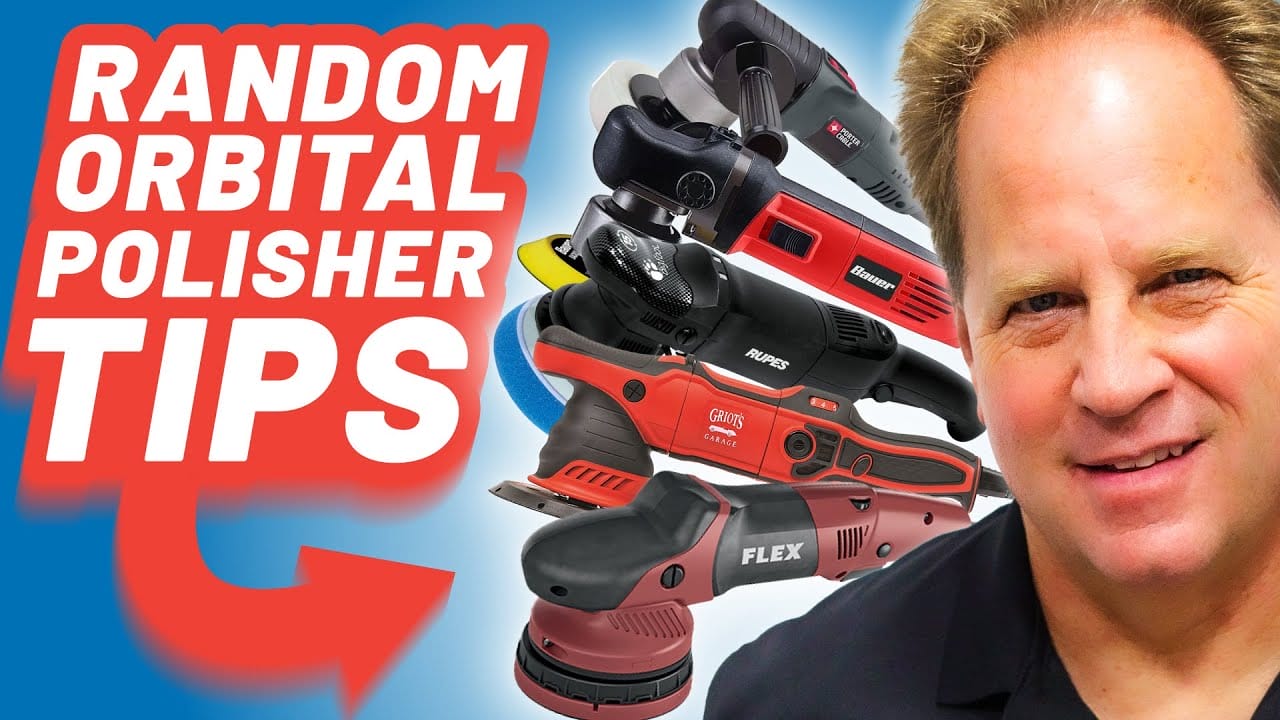
Flex XFE 7-15 150 Overview
The Flex XFE 7-15 150 is a long-throw random orbital polisher designed for fast paint correction. Its 15 mm orbit helps the pad cover more surface with each movement, so it can remove defects faster than many short-throw machines.
The XFE platform is known for smooth movement and strong build quality. It is often chosen by professional detailers who need a machine that can handle repeated use. It also has a soft-start design, variable speed control, and a comfortable grip layout.
Key Flex XFE features include:
• A 15 mm orbital throw
• A 5-inch backing plate on many standard configurations
• Variable speed control
• Electronic speed management
• Smooth free-spinning dual-action motion
• A design aimed at professional paint correction
The exact speed range, backing plate, and included accessories can vary by model and market. Always check the product label and current manufacturer specifications before buying replacement pads or accessories.
The Flex XFE is not a tiny spot polisher. It needs room to move. On a flat hood, roof, or door, that is a major benefit. On a narrow bumper edge, it can feel less natural than a compact 8 mm or 9 mm machine.
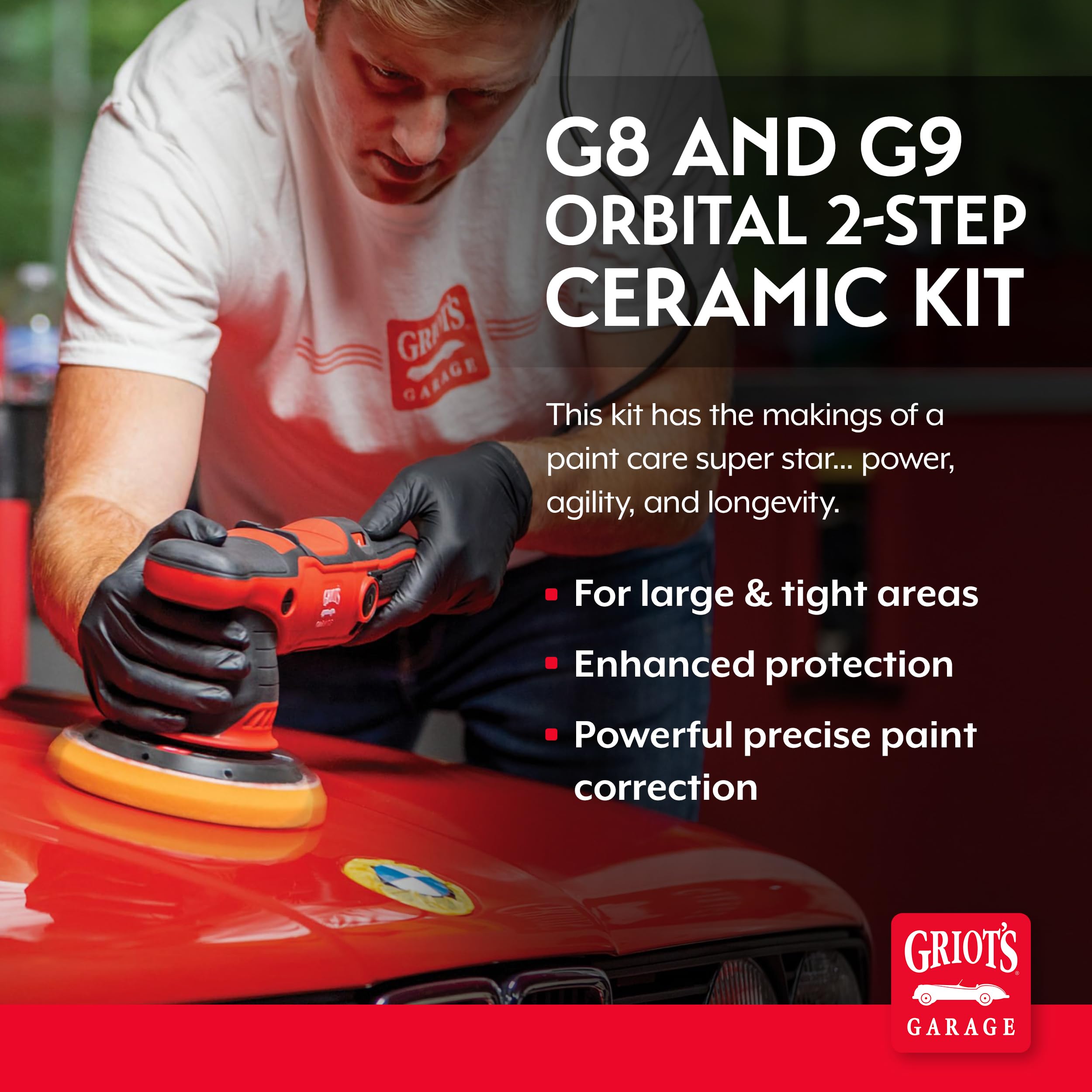
Griot’s G9 Overview
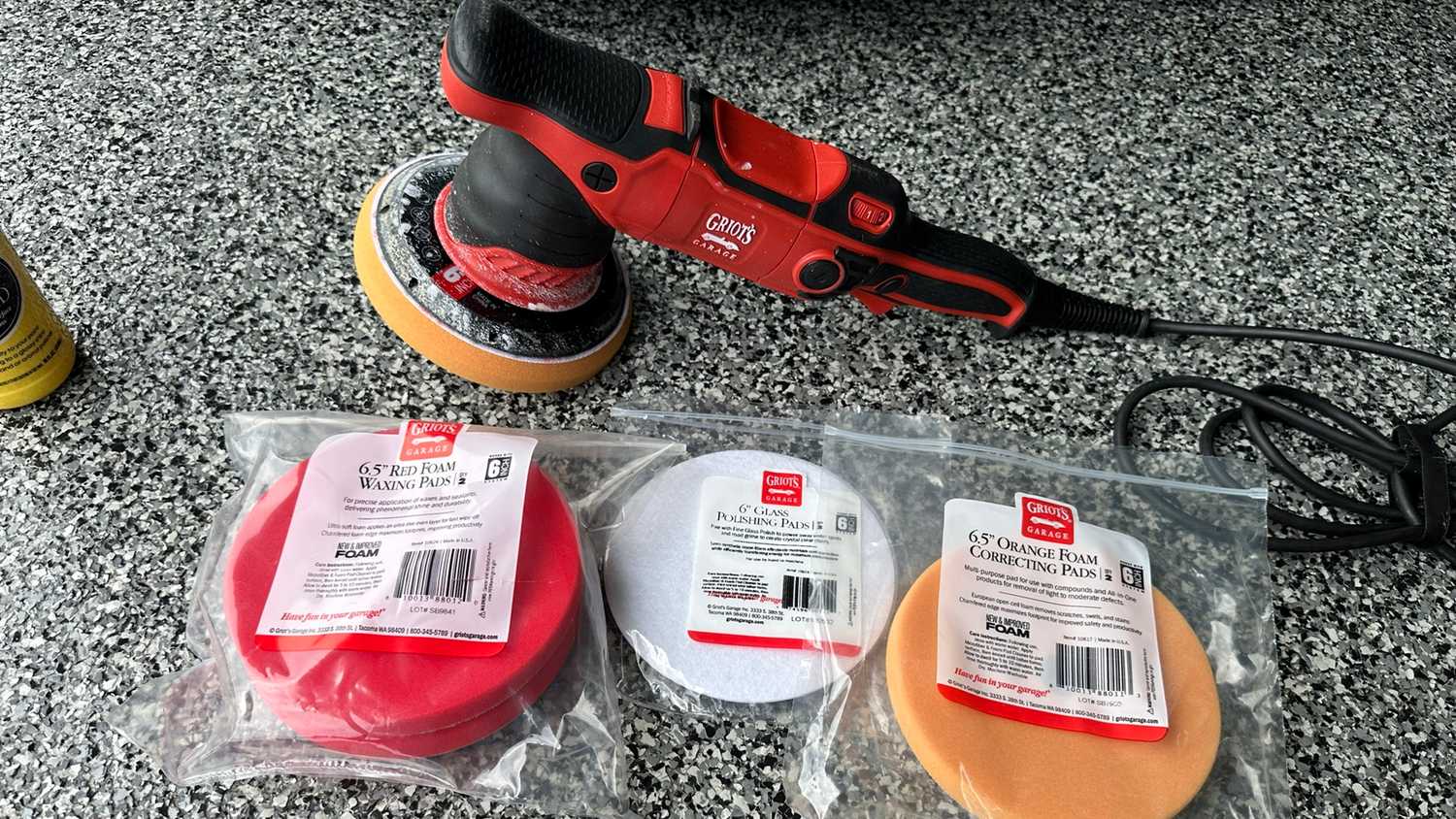
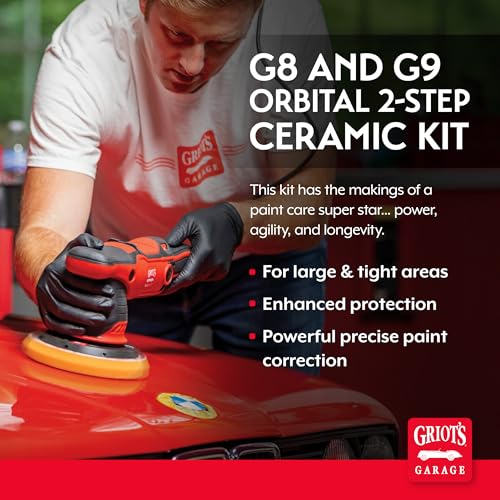
The Griot’s G9 is a popular 9 mm dual-action polisher made for enthusiasts and professional detailers who want a balanced, user-friendly machine. It has enough power for many common paint defects but remains easier to control than a long-throw polisher.
The G9 is often sold with a 5-inch backing plate, and some packages include extra accessories. Its shorter throw makes it more forgiving on curved panels. It also tends to feel predictable when working around mirrors, door handles, spoilers, and body creases.
Notable Griot’s G9 features include:
• A 9 mm orbital throw
• Variable speed control
• Electronic load control
• A comfortable side handle
• A brushless-style performance focus in its modern design
• Support for common 5-inch and 6-inch pad systems, depending on the backing plate
The G9 can polish light swirls, haze, water spots, and oxidation when paired with the right pad and compound. It may need more passes than the Flex XFE for deeper defects, but that extra time can be useful for a new user learning paint correction.
The Griot’s G9 is also a practical choice for people who detail only a few cars each year. You do not need a race car when a dependable commuter will do the job.
Flex XFE vs Griot’s G9 Specifications
Specifications help explain the difference, but they do not tell the whole story. Pad choice, paint hardness, compound strength, pressure, and technique can change the final result.
| Feature | Flex XFE 7-15 150 | Griot’s G9 |
|---|---|---|
| Machine type | Free-spinning dual-action | Free-spinning dual-action |
| Orbital throw | About 15 mm | About 9 mm |
| Typical backing plate | About 5 inches | Commonly 5 inches |
| Main strength | Fast correction | Control and versatility |
| Best user | Experienced enthusiast or professional | Beginner, enthusiast, or light professional use |
| Panel behavior | Fast on broad, flat areas | Predictable on curved and tight areas |
| Learning curve | Moderate | Lower |
| Typical use | Paint correction and heavy polishing | One-step polish and light correction |
These figures describe common versions of each machine. Product packages can change over time, and regional models may have different accessories or electrical specifications.
The most important detail is the orbit size. A 15 mm machine does not automatically produce better results. It simply gives you a different balance between speed, movement, and control.
Paint Correction Performance
The Flex XFE generally has the advantage when removing moderate defects. Its longer throw allows the pad to work over a larger path, which can increase the amount of paint corrected during each section pass.
For example, imagine correcting a large SUV with moderate swirl marks. The Flex XFE may reduce the number of section passes needed on the hood and doors. That matters when you are working for several hours and your arms are becoming tired.
The Griot’s G9 can still correct the same paint. It may need a stronger pad, a more suitable compound, or a few extra passes. On soft paint, that slower approach can actually help you avoid removing more clear coat than needed.
Paint correction should always follow the least aggressive method that achieves the desired result. Clear coat is limited. A perfect finish is not worth removing unnecessary paint.
The Flex XFE is usually the better choice for:
• Moderate swirl removal
• Oxidation correction
• Large vehicles
• Frequent professional work
• Faster one-step polishing
The Griot’s G9 is usually the better choice for:
• Light to moderate swirls
• Cleaner wax or sealant preparation
• Small and medium vehicles
• Beginner paint correction
• Curved panels and tight spaces
Which Polisher Is Easier to Use?
The Griot’s G9 is easier for most first-time users. Its 9 mm throw feels stable, and the machine is less likely to wander across the panel when you change direction.
The Flex XFE is also user-friendly, but its longer throw creates more movement. You need to keep the pad flat and guide the machine with steady hands. If you tilt the tool too far, the pad can lose contact or move across the panel faster than expected.
When learning with either machine, use this method:
-
Wash and decontaminate the vehicle.
-
Tape sensitive trim and edges.
-
Choose a small test spot.
-
Apply two or three small drops of polish.
-
Work a section of about 18 by 18 inches.
-
Use slow arm movement and moderate pressure.
-
Wipe the residue and inspect the paint under strong light.
-
Change your pad or compound only if the first test does not work.
In my practical view, this test-spot habit prevents more mistakes than buying a stronger machine. Many people blame the polisher when the real problem is a poor pad and compound match.
Ergonomics, Noise, and Daily Comfort
A polisher can correct paint well and still be unpleasant to use. Comfort matters because detailing often takes hours.
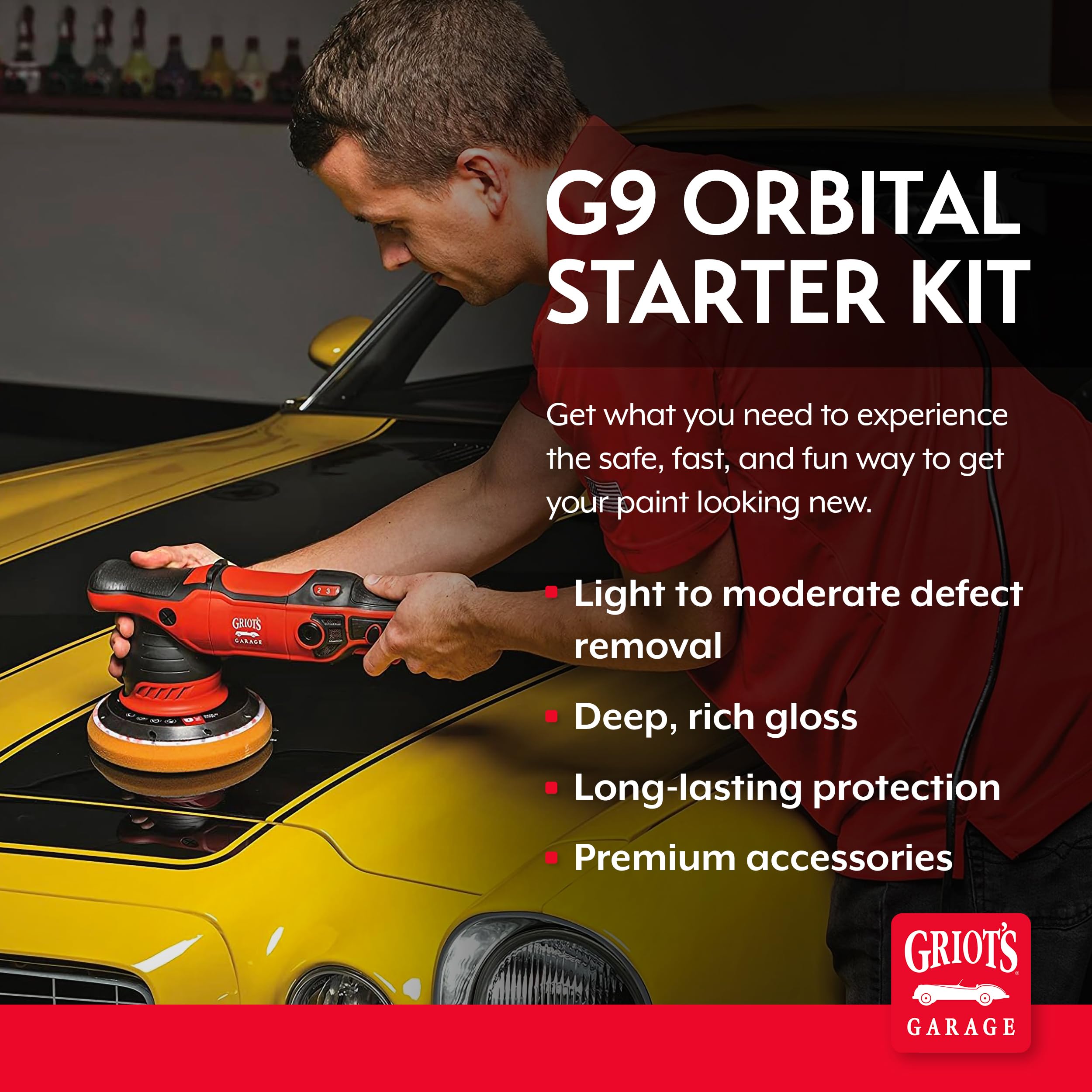
The Griot’s G9 has a familiar shape and a controlled feel. Many users find it comfortable for basic correction and polishing. Its shorter orbit can also reduce the feeling of vibration when working on curved areas.
The Flex XFE feels more active in the hand. That movement is useful on large panels, but it can require more attention. The machine may feel less relaxed when you are working near sharp contours or narrow sections.
Consider these comfort factors:
• Hand position
• Trigger and speed control access
• Vibration
• Machine balance
• Pad size
• Time spent on the vehicle
A smaller pad can improve control on both polishers. A larger pad can cover more area but may reduce stability on curved surfaces. Do not choose a pad only because it promises faster correction.
Hearing protection is also wise during long detailing sessions. Electric polishers produce continuous noise, and repeated exposure can affect hearing over time.

Pad and Compound Compatibility
The Flex XFE vs Griot’s G9 result depends heavily on the pad system. The machine is only one part of the correction process.
A microfiber or heavy foam cutting pad can remove defects quickly, but it may leave haze on soft paint. A medium foam pad often gives a better balance for a one-step polish. A soft finishing pad is useful for refining the surface or applying a finishing product.
A simple starting system may include:
• A cutting pad for deeper defects
• A polishing pad for moderate swirls
• A finishing pad for gloss
• A medium compound
• A fine finishing polish
Use clean pads. A saturated pad loses cutting ability and can create extra heat. After each section, brush or blow out the pad when appropriate, then switch to a clean pad as needed.
A common mistake is using one pad on an entire vehicle. Paint oils, compound residue, and removed clear coat can build up in the foam. Multiple pads help the machine work more consistently and keep heat under control.

Flex XFE vs Griot’s G9 for Beginners
For a beginner, the Griot’s G9 is often the safer first purchase. It gives enough power to make visible improvements without feeling too aggressive or difficult to guide.
The Flex XFE is still a good beginner machine if you are willing to practice. It may save time as your skills improve. However, its longer throw can make mistakes more noticeable when you tilt the pad, use too much pressure, or work too close to an edge.
A beginner should focus on these habits:
• Keep the pad flat
• Use small working sections
• Avoid pressing hard on body lines
• Check the panel temperature often
• Clean the pad regularly
• Start with a light polishing combination
• Inspect the paint after each test section
Neither machine removes deep scratches that reach the base coat or metal. If your fingernail catches firmly in a scratch, polishing may improve its appearance but will not always remove it safely.
Flex XFE vs Griot’s G9 for Professionals
Professional detailers often value the Flex XFE because time is part of the business. A faster machine can help reduce labor on large vehicles, especially when the paint responds well to a long-throw system.
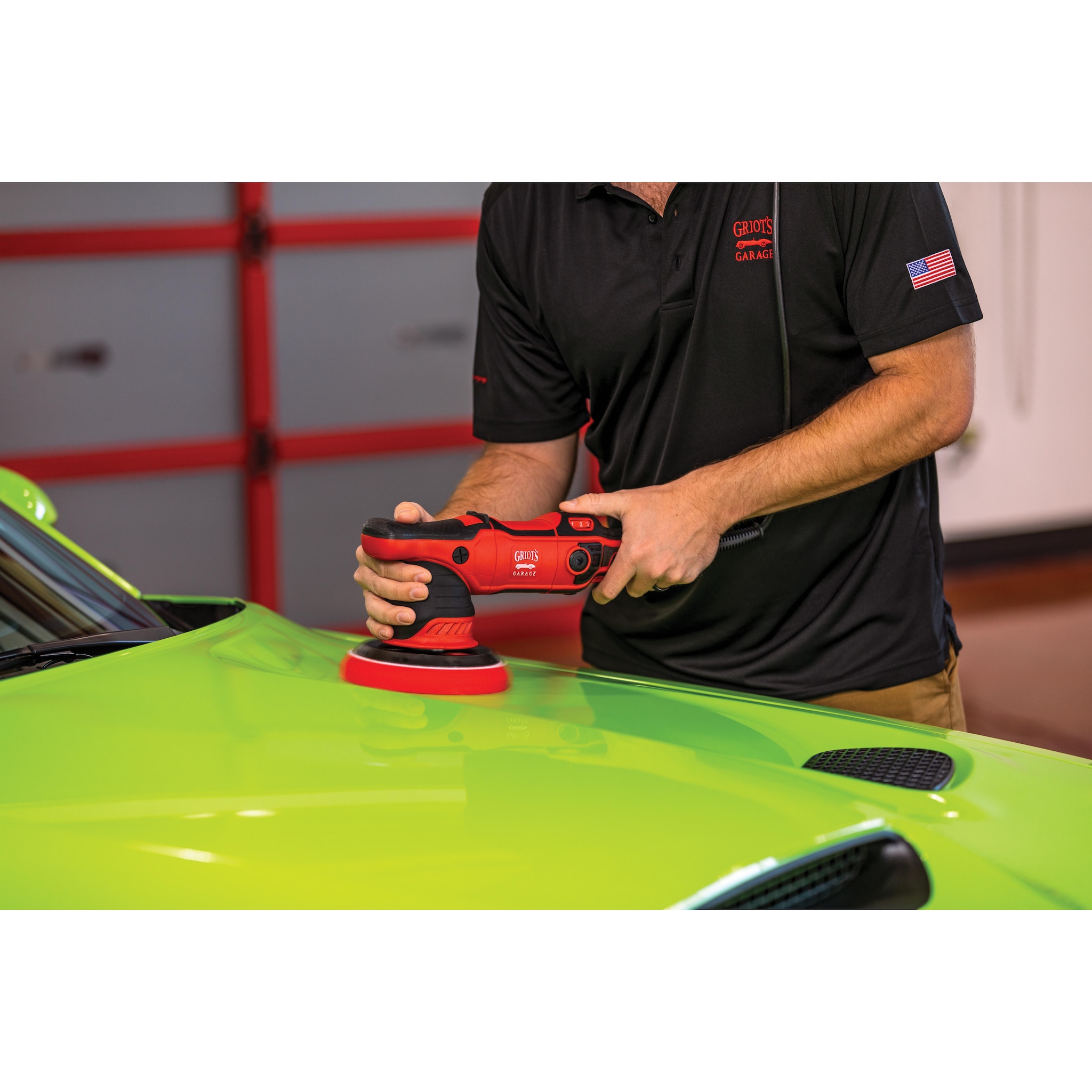
The Griot’s G9 still has a place in a professional setup. It works well for spot correction, finishing work, tight areas, and jobs where maximum cutting speed is not the main goal.
Many experienced detailers use more than one machine. A long-throw polisher handles broad panels, while a short-throw or compact machine handles bumpers, pillars, and narrow body shapes.
This is an important lesson from real detailing work: one machine rarely does everything perfectly. The best tool is the one that matches the panel, paint condition, and correction target.
Flex XFE vs Griot’s G9: Advantages and Limitations
Flex XFE advantages
• Faster correction on many paint systems
• Excellent coverage on large panels
• Strong choice for frequent detailing
• Smooth long-throw motion
• Professional-grade feel
Flex XFE limitations
• Higher purchase cost in many markets
• More movement for new users to control
• Less convenient in very tight areas
• Can expose technique errors faster
Griot’s G9 advantages
• Easier learning curve
• Good control on curved panels
• Strong value for home detailers
• Useful for one-step polishing
• Easy access to common pad sizes
Griot’s G9 limitations
• May require more correction passes
• Shorter throw can take longer on large vehicles
• Less efficient for heavy defect removal
• May not replace a dedicated long-throw machine in a busy shop
The Flex XFE vs Griot’s G9 decision becomes easier when you match the limitations to your work. A professional who values speed may accept the Flex learning curve. A weekend user may prefer the G9’s relaxed handling.
Price and Long-Term Value
Price changes by retailer, package, and region. The Flex XFE typically sits in a higher professional price range, while the Griot’s G9 is often more accessible to enthusiasts.
Do not compare only the machine price. Include the cost of:
• Backing plates
• Polishing pads
• Compounds
• Extension cords
• Pad cleaning tools
• Inspection lights
• Replacement brushes or service parts
The G9 can deliver excellent value because it leaves more money for pads and products. That matters because a good pad set and proper lighting often improve results more than a small jump in machine power.
The Flex XFE may offer better value for someone who corrects several cars each month. Time saved across repeated jobs can offset the higher purchase cost.
Common Mistakes to Avoid
The Flex XFE vs Griot’s G9 comparison often becomes confusing because users focus on machine power and ignore technique.
Avoid these mistakes:
• Using too much product: Excess polish reduces pad movement and creates a messy wipe-off.
• Working areas that are too large: The polish can dry before the machine finishes the section.
• Applying heavy pressure everywhere: Pressure can slow pad rotation and increase heat.
• Ignoring paint thickness: Clear coat removal is permanent.
• Skipping decontamination: Embedded dirt can reduce pad performance and cause new marks.
• Using worn pads: A damaged pad can create uneven results.
• Polishing hot paint: Heat changes product behavior and increases risk.
• Expecting polishing to repair deep scratches: Some damage needs touch-up or professional refinishing.
The safest approach is controlled improvement. Aim for a clean, glossy finish, not the removal of every mark at any cost.
Which One Should You Buy?
Choose the Flex XFE if:
• You want faster correction on large panels.
• You detail cars often.
• You already understand dual-action polisher technique.
• You work on moderate defects and hard paint.
• You want a professional long-throw machine.
Choose the Griot’s G9 if:
• You are new to machine polishing.
• You detail your own vehicles.
• You want a lower-cost entry into paint correction.
• You value control over maximum speed.
• You need a versatile machine for curved panels and one-step polishing.
If you are still unsure, the Griot’s G9 is the easier recommendation for most home users. The Flex XFE is the better recommendation for users who prioritize speed and plan to make paint correction a regular part of their work.
Frequently Asked Questions About Flex XFE vs Griot’s G9
Is the Flex XFE better than the Griot’s G9?
The Flex XFE is better for faster correction and frequent use on large vehicles. The Griot’s G9 is better for easy control, lower cost, and many beginner-friendly detailing tasks.
Can the Griot’s G9 remove deep scratches?
The Griot’s G9 can improve many moderate defects with the right pad and compound. It cannot safely remove every deep scratch, especially damage that reaches through the clear coat.
Is the Flex XFE difficult for beginners?
The Flex XFE is not difficult, but its 15 mm throw requires careful pad control. Beginners should practice on a test panel and use light pressure before working on a valuable vehicle.
Which polisher is better for a one-step polish?
Both machines can perform a one-step polish well. The Griot’s G9 may offer easier control, while the Flex XFE can complete the work faster when the paint and pad combination respond well.
Does a longer throw always correct paint faster?
A longer throw can improve correction speed, but results depend on paint hardness, pad type, compound, pressure, and arm speed. A skilled user with a short-throw machine can outperform a careless user with a long-throw machine.
Can both machines use the same polishing pads?
Both machines can use many of the same foam and microfiber pad types when the backing plate and pad diameter match. Check the backing plate size before buying pads, and avoid using a pad that extends too far beyond the plate.
Conclusion
The Flex XFE vs Griot’s G9 choice comes down to speed, control, experience, and budget. The Flex XFE brings a longer 15 mm throw and strong correction performance for large panels and regular professional work. The Griot’s G9 offers a calmer 9 mm throw, simple handling, and excellent value for enthusiasts.
Choose the Flex XFE when time and correction speed matter most. Choose the Griot’s G9 when you want an approachable machine that can polish, refine, and maintain your vehicle with confidence. Start with a test spot, use the least aggressive method that works, and build your pad system carefully.