Rupes LHR15 Vs Flex XFE: Which Polisher Wins?
Rupes LHR15 offers smoother control, while Flex XFE delivers strong power and broader pad coverage.
Choosing between the Rupes LHR15 vs Flex XFE can feel like picking between two excellent paint correction tools. Both use a 15 mm random orbital throw, but their design, pad size, speed range, balance, and handling feel quite different. This guide compares real-world performance, paint correction ability, comfort, noise, maintenance, and value so you can choose the machine that fits your detailing work.
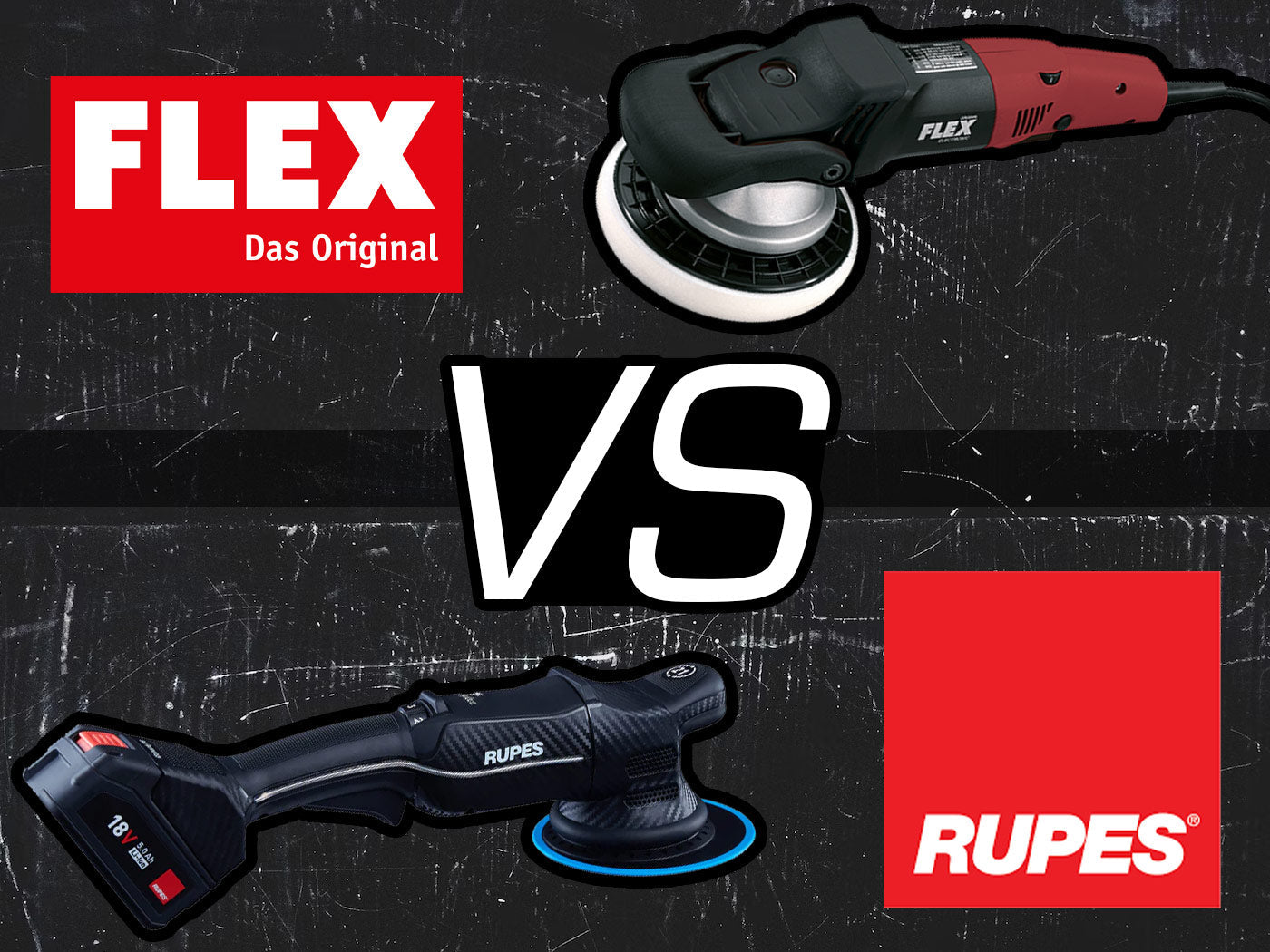
Rupes LHR15 vs Flex XFE: Quick Comparison
The Rupes LHR15 and Flex XFE are long-throw dual-action polishers. Their 15 mm orbit helps them correct paint faster than small, traditional dual-action polishers while keeping the risk of holograms low.
The main difference is simple:
• The Rupes LHR15 focuses on balance, smooth control, and a refined detailing feel.
• The Flex XFE focuses on power, a wider 150 mm pad, and fast coverage on larger panels.
Here is a practical comparison of the two popular models.
| Feature | Rupes LHR15 Mark V | Flex XFE 7-15 150 |
|---|---|---|
| Polisher type | Random orbital dual-action | Random orbital dual-action |
| Orbit size | 15 mm | 15 mm |
| Recommended backing plate | About 125 mm | 150 mm |
| Power rating | About 500 watts | About 710 watts |
| Speed range | About 3,000 to 5,200 rpm | About 2,900 to 8,600 rpm |
| Best pad size | 5-inch to 5.5-inch class | 6-inch class |
| Main strength | Control and smooth operation | Power and panel coverage |
| Ideal user | Enthusiast or professional detailer | Professional or high-volume detailer |
Exact specifications can vary by market, package, and model revision. Always check the manual for the specific machine before buying accessories.

Rupes LHR15 vs Flex XFE: Design and Build Quality
Rupes has built the LHR15 around the BigFoot design concept. The machine has a long 15 mm orbit, a compact body, and a strong focus on balance. Its front and rear grips help the user guide the tool without placing too much pressure on the pad.
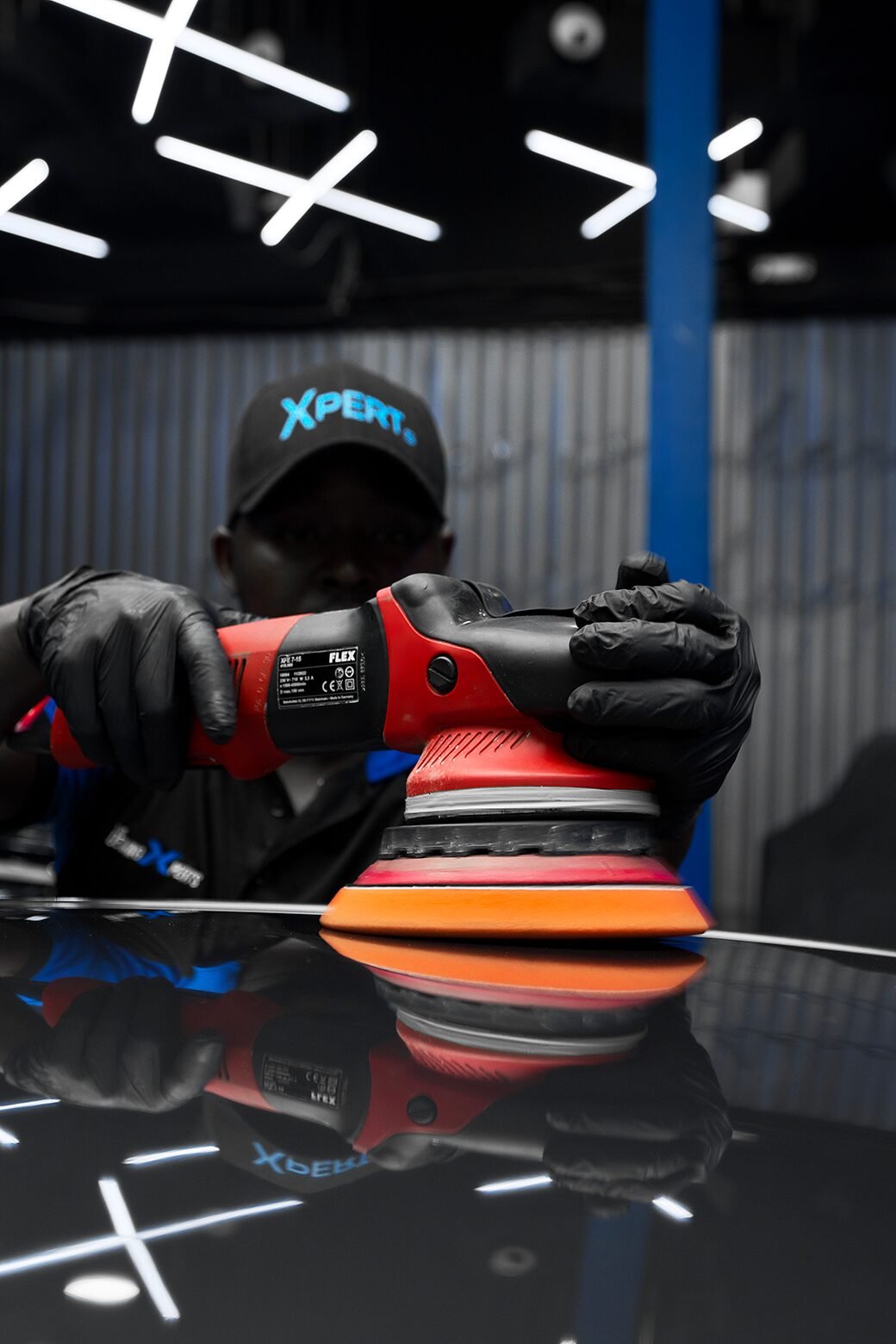
The Flex XFE has a solid, work-focused design. It feels powerful in the hand and has a broad body that suits larger pads. The tool is made for long correction sessions, and its gear and motor system gives it a strong working feel on flat panels.
Both machines use brushless-style modern designs in their current product families, but exact motor technology can depend on the version. Check the model number before assuming that two machines have identical internal parts.
Balance and handling
The Rupes LHR15 often feels more natural when working around mirrors, body lines, and curved panels. Its smaller pad setup can make it easier to keep the machine stable on narrow sections.
The Flex XFE feels especially comfortable on hoods, roofs, doors, and other broad surfaces. Its larger pad can move across a panel quickly, but it may feel less nimble in tight areas.
A useful rule is this:
• Choose the Rupes LHR15 for precision and controlled movement.
• Choose the Flex XFE for speed across large, open panels.
Neither machine is automatically better for every user. Your pad size and working style matter just as much as the motor.
Correction Performance and Cutting Ability
A 15 mm orbit gives both polishers a good balance between cutting and finishing. The pad travels far enough to increase correction speed, but it does not create the aggressive movement of a rotary polisher.
The Rupes LHR15 can remove light to moderate defects quickly with a microfiber or foam cutting pad. With the right compound, it can also handle deeper marks that do not reach through the clear coat. However, no dual-action polisher can safely repair every scratch.
The Flex XFE has more rated power and a larger pad. On a wide, flat panel, that combination can provide fast correction. The larger pad also spreads the work over more paint, which can help a professional detailer finish a vehicle in less time.
What affects correction more than machine power?
Machine power matters, but it is only one part of the result. These factors often have a greater effect:
• Pad material and thickness
• Compound strength
• Downward pressure
• Arm speed
• Paint hardness
• Panel shape
• Working section size
• Temperature and surface condition
For example, a soft foam pad with a mild polish may finish beautifully but remove little paint. A microfiber cutting pad with a strong compound may correct much faster but leave a haze on soft paint.
The Rupes LHR15 vs Flex XFE comparison should therefore include a complete pad and compound system. Comparing bare machines alone can produce a misleading result.
Finishing Quality and Hologram Control
Both polishers can produce a high-gloss finish when used correctly. Their random orbital movement helps reduce the rotary-style holograms that can appear when a rotary tool is held at the wrong angle or used with too much pressure.
The Rupes LHR15 has a reputation for smooth finishing. Its controlled motion works well with fine foam pads and finishing polish. It is a strong choice for dark colors, soft clear coats, and final polishing after a cutting step.
The Flex XFE can also finish very well. Its wide speed range gives the user more room to slow the pad for delicate finishing work. However, the larger pad may feel less precise on curved or sharply contoured areas.
How to get the best finish
Use a simple process:
-
Clean and decontaminate the paint.
-
Test a small area with the least aggressive pad and polish.
-
Work a section of about 18 by 18 inches.
-
Use moderate pressure during correction.
-
Reduce pressure for the final passes.
-
Wipe the panel with a clean microfiber towel.
-
Inspect under bright, even light.
The best polishers cannot replace a good test spot. Paint varies from one car to another, and even two panels on the same vehicle can behave differently.
Pad Size and Panel Coverage
Pad size is one of the biggest differences in the Rupes LHR15 vs Flex XFE decision.
The Rupes LHR15 is commonly paired with a 125 mm backing plate and pads in the 5-inch to 5.5-inch range. This setup gives strong control and makes it easier to work around tight body shapes.
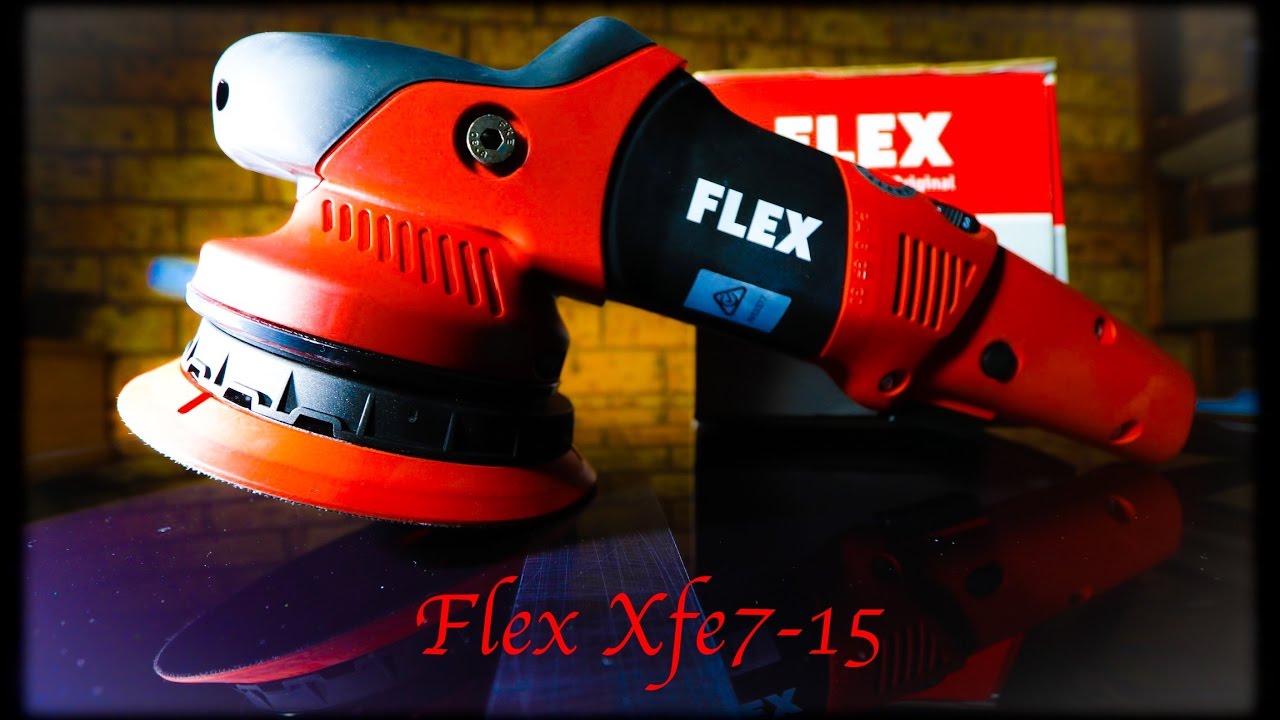
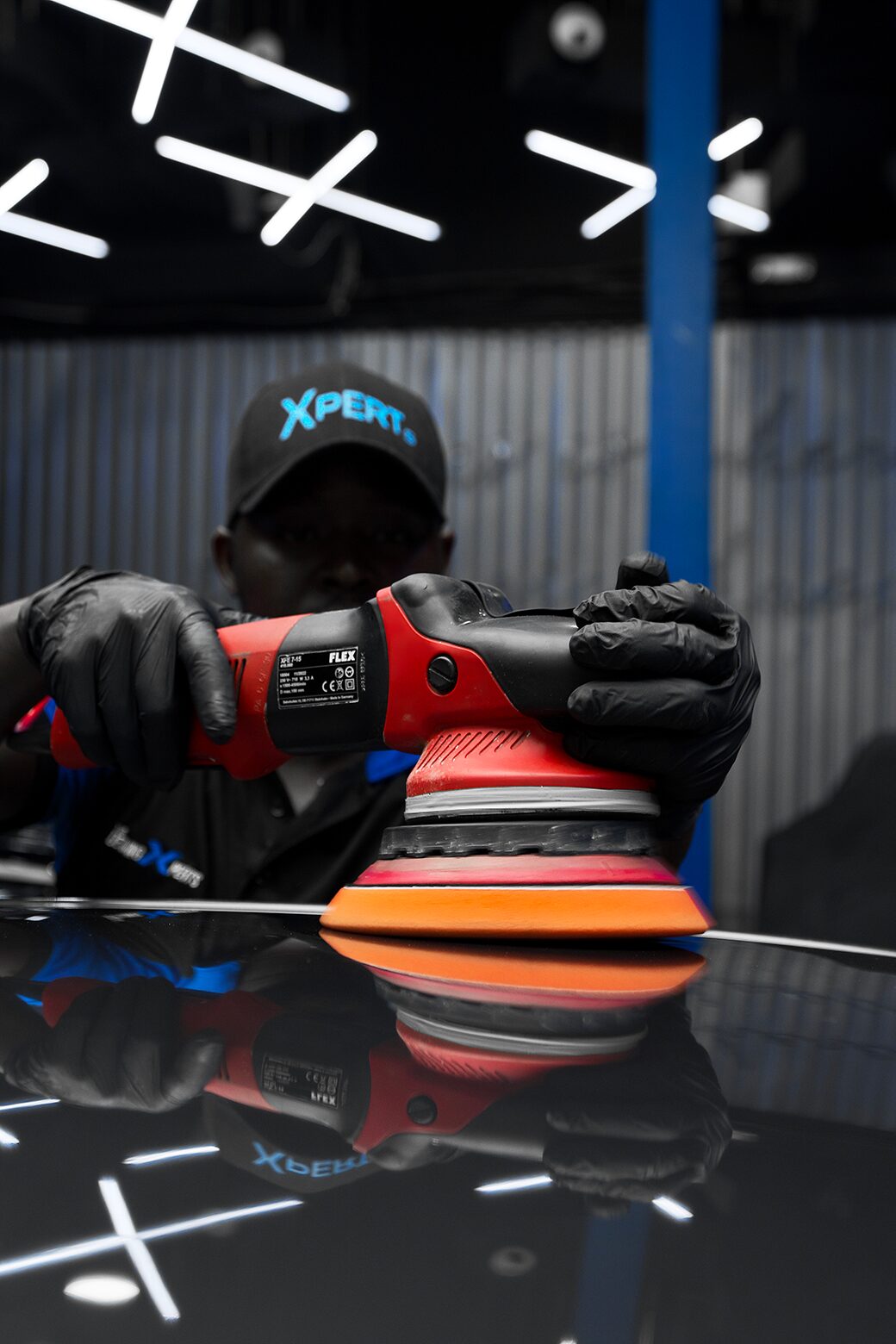
The Flex XFE 7-15 150 is built around a 150 mm pad. That larger pad covers more paint with each pass. It is useful for large vehicles, fleet work, and detailers who want to reduce working time.
When a smaller pad wins
A smaller pad is useful for:
• Door pillars
• Bumpers
• Spoilers
• Curved fenders
• Narrow body lines
• Motorcycle parts
• Small repair areas
When a larger pad wins
A larger pad is useful for:
• Truck hoods
• SUV roofs
• Large doors
• Flat quarter panels
• Commercial vehicles
• High-volume correction work
One common mistake is using a large pad on a curved panel. The pad may lose full contact with the paint, which reduces correction and increases vibration. A smaller pad often gives a better result in that situation.
Ergonomics, Vibration, and User Comfort
Long polishing sessions can expose small design differences. A machine that feels fine for 10 minutes may feel tiring after four hours.
The Rupes LHR15 is known for a smooth, balanced feel. Its grip positions allow the user to move the machine with less wrist strain. The smaller pad also makes it easier to control pressure near edges.
The Flex XFE provides strong stability on flat panels. Its motor has enough power to keep the pad moving under pressure, which can reduce the need to fight pad stall. Still, the larger pad can create more noticeable movement when used on tight curves.
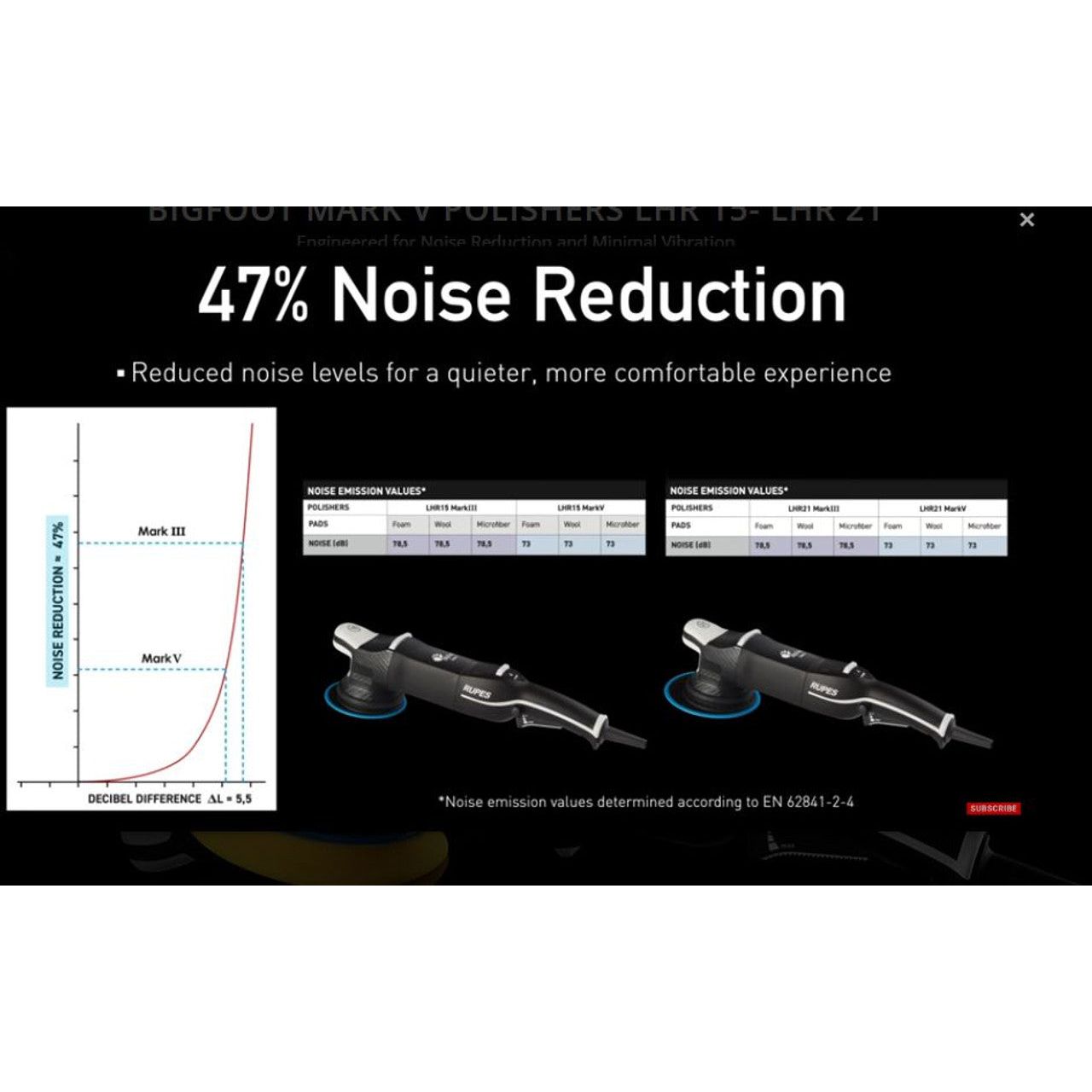
Noise and vibration depend on the pad, backing plate, speed, and panel. A worn pad or damaged backing plate can make either machine feel rough. Hearing protection is a sensible choice during extended use, even if the machine does not seem extremely loud.
Practical comfort tips
• Keep the machine flat on the panel.
• Use both hands when correcting large areas.
• Avoid pressing harder than needed.
• Change hand position often.
• Keep the cord over your shoulder or away from the paint.
• Stop if your wrist or fingers begin to go numb.
Comfort is not just a luxury. Fatigue can lead to uneven pressure, missed defects, and accidental contact with trim.
Speed Control and Stall Resistance
The Rupes LHR15 has a focused speed range suited to common polishing tasks. Its controls are easy to understand, and the machine responds predictably as you adjust the trigger or speed dial.
The Flex XFE offers a wider speed range. The lower settings help with finishing, while the upper range can support faster correction when the pad and compound require it. More speed does not always mean better correction, though. Excess speed can raise surface temperature and make some polishes dry too quickly.
Both machines resist pad stall better than many short-throw dual-action polishers. Still, any random orbital can stall on sharp curves, deep body channels, or heavily loaded pads.
To reduce stall:
• Use a clean pad.
• Avoid excessive pressure.
• Keep the backing plate parallel to the panel.
• Use a smaller pad on tight curves.
• Clean the pad after each working section.
The Flex XFE may have an advantage when you need to maintain pad rotation under pressure. The Rupes LHR15 may feel easier to guide when you want fine control. That difference becomes clearer on curved panels.
Which Machine Is Better for Beginners?
The Rupes LHR15 is often the easier choice for a beginner who wants a controlled, professional-quality tool. Its balance and smaller pad setup make it less intimidating on complex body shapes.
The Flex XFE is also beginner-friendly when used with sensible speed, pressure, and pad choices. Its extra power can help prevent stalling, but a new user may be tempted to work too fast or press too hard.
A beginner should focus on technique before machine strength. Start with a finishing pad and light polish. Learn how the tool moves, how fast the product breaks down, and how the paint responds.
A safe beginner workflow
-
Wash the vehicle with a pH-balanced car shampoo.
-
Remove tar, iron particles, and bonded contamination.
-
Mask sensitive trim.
-
Choose a small test area.
-
Start with a soft foam pad and mild polish.
-
Inspect the result before increasing aggressiveness.
-
Clean the pad often.
-
Protect the finished paint with a sealant or coating.
This method reduces the risk of removing too much clear coat. Paint correction should improve the finish, not chase every mark at any cost.
Which Machine Is Better for Professional Detailers?
The best choice depends on the type of work you do.
A mobile detailer who works on many vehicle shapes may prefer the Rupes LHR15. It offers a practical mix of correction, finishing, control, and compact pad coverage.
A shop that handles large SUVs, trucks, and repeated correction jobs may prefer the Flex XFE. Its larger pad and strong motor can help improve productivity on broad surfaces.
Professional detailers may also keep both types of tools available. One machine can handle large panels, while the other can work around curves and smaller sections. In a busy shop, that flexibility can save time and reduce fatigue.
The Rupes LHR15 vs Flex XFE choice is less about winning a universal contest and more about matching the tool to your workflow.

Reliability and Maintenance
A good polisher should last for years when maintained correctly. Both Rupes and Flex have established reputations in the professional detailing and surface-finishing markets.
Maintenance is simple but important:
• Inspect the backing plate before each job.
• Replace a cracked or worn plate.
• Clean dust from ventilation openings.
• Do not operate the machine with a damaged cord.
• Store pads dry and clean.
• Avoid dropping the tool.
• Follow the manufacturer’s service instructions.
Do not use compressed air carelessly near seals or electrical parts. Also, never continue using a machine that smells strongly of burning, sparks, or loses power under normal load.
Warranty coverage varies by country and seller. Keep the receipt and confirm whether the machine is an authorized regional model. A lower purchase price is not always a better deal if service support is poor.
Price, Accessories, and Total Value
The machine price is only part of the ownership cost. You also need pads, compounds, backing plates, extension cords, brushes, microfiber towels, and paint inspection lights.
The Rupes LHR15 may offer better value for a user who already owns compatible 5-inch or 5.5-inch pads. The Flex XFE may be more efficient for a professional who already uses 6-inch pads and wants wide panel coverage.
Before buying, compare:
• Machine cost
• Included backing plate
• Pad compatibility
• Replacement plate price
• Warranty length
• Local service support
• Compound and pad system
• Expected work volume
A cheaper machine can become expensive if it needs special accessories or causes longer correction times. Likewise, a premium machine may not provide meaningful value for someone who details one vehicle every few months.
Rupes LHR15 vs Flex XFE: Pros and Cons
Rupes LHR15 advantages
• Smooth and balanced handling
• Excellent control on curved panels
• Strong finishing ability
• Useful 125 mm pad platform
• Good choice for enthusiasts and professionals
• Easy to pair with compact pad systems
Rupes LHR15 limitations
• Less broad panel coverage than the Flex XFE
• Lower rated motor power
• May need more passes on large vehicles
• Pad stall can still occur on sharp curves
Flex XFE advantages
• Strong motor output
• Large 150 mm pad coverage
• Wide speed range
• Good performance on flat panels
• Strong productivity for professional shops
• Good resistance to pad slowdown under load
Flex XFE limitations
• Larger pad is less nimble in tight spaces
• May feel more tiring on complex body shapes
• Larger pads and backing plates can cost more
• Extra speed requires careful technique
The right answer in the Rupes LHR15 vs Flex XFE debate depends on whether you value precision or coverage more.

How to Choose Between the Rupes LHR15 and Flex XFE
Use these simple questions to narrow your choice.
Choose the Rupes LHR15 if:
• You want smooth and precise control.
• You work on many curved panels.
• You prefer smaller pads.
• You detail personal vehicles or mixed vehicle types.
• You want strong finishing performance.
• You already own compatible Rupes-style pads.
Choose the Flex XFE if:
• You correct large panels often.
• You want strong motor power.
• You prefer 150 mm pads.
• You work in a professional shop.
• You value speed across SUVs and trucks.
• You often need to maintain pad movement under pressure.
If you are still unsure, think about the panels you polish most. A person who mainly works on sedans and tight body lines may enjoy the Rupes LHR15 more. A detailer who corrects large trucks every week may gain more from the Flex XFE.

Practical Mistakes to Avoid
Many poor results blamed on the machine actually come from process errors.
Avoid these common mistakes:
• Starting with an overly aggressive compound
• Using a dirty or overloaded pad
• Working an area that is too large
• Applying heavy pressure on curved panels
• Ignoring paint temperature
• Skipping a test spot
• Letting polish dry on the panel
• Using a damaged backing plate
• Chasing deep scratches through the clear coat
One lesson experienced detailers learn quickly is that cleaner pads usually correct better. A clogged pad loses bite, creates heat, and can leave an uneven finish.
Another important lesson is to inspect the paint after wiping away polishing oils. Some products can hide light defects for a short time. Use bright inspection lighting and, when appropriate, a panel wipe before judging the final correction.
Frequently Asked Questions About Rupes LHR15 vs Flex XFE
Is the Rupes LHR15 better than the Flex XFE?
Neither machine is better for every user. The Rupes LHR15 usually suits detailers who want balance and precision, while the Flex XFE is a strong choice for larger panels and faster coverage.
Can the Rupes LHR15 remove deep scratches?
The Rupes LHR15 can reduce many light and moderate defects with the correct pad and compound. It cannot safely remove scratches that have passed through the clear coat, and deep defects should be evaluated before correction.
Does the Flex XFE finish as well as the Rupes LHR15?
Yes, the Flex XFE can produce an excellent finish with the right pad, polish, speed, and technique. The Rupes LHR15 may feel more controlled on delicate paint and tight curves because of its smaller pad setup.
Which polisher is easier for a beginner?
The Rupes LHR15 may feel easier for beginners because it is balanced and precise. The Flex XFE is also manageable, but its larger pad and stronger motor require careful control on curved panels.
Can you use smaller pads on the Flex XFE?
You may be able to use smaller pads with the correct backing plate and accessory setup, but you must follow the manufacturer’s compatibility guidance. Do not fit a pad or plate that exceeds the machine’s safe design limits.
Is the Flex XFE more powerful than the Rupes LHR15?
The Flex XFE has a higher rated wattage in the commonly compared 7-15 150 model. Real correction results still depend on paint hardness, pad design, compound, pressure, and working speed.
Which one should a mobile detailer buy?
A mobile detailer may prefer the Rupes LHR15 for its control and flexible handling across many vehicle shapes. The Flex XFE can be the better choice when fast correction on large panels is the main priority.
Conclusion
The Rupes LHR15 vs Flex XFE comparison comes down to control versus coverage. The Rupes LHR15 offers a smooth, balanced experience with excellent handling on curves and strong finishing ability. The Flex XFE brings more motor power, a larger pad, and efficient performance on broad panels.
Choose the Rupes LHR15 for precision, comfort, and mixed vehicle work. Choose the Flex XFE for productivity, large surfaces, and heavy professional use. Whichever tool you select, pair it with the right pads, compounds, inspection light, and test-spot process.
Start with your usual vehicle types and working areas, then choose the polisher that makes those tasks easier. Share your experience or explore more paint correction guides before making your purchase.