Battery Tender Vs NOCO: Best Charger For You
Battery Tender is best for long-term maintenance, while NOCO offers faster charging and more versatile battery care.
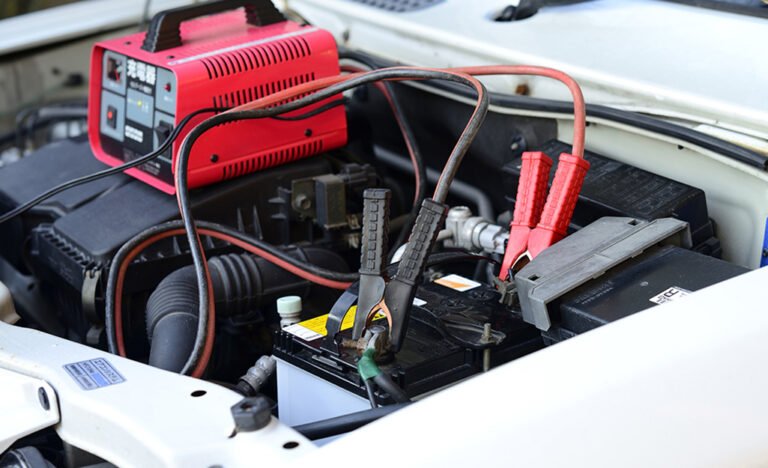
Choosing between Battery Tender vs NOCO depends on how you use your vehicle, how fast you need to charge, and whether you want extra features. Both brands make trusted battery chargers, maintainers, and accessories, but they serve slightly different needs.
After comparing charging modes, battery support, safety features, portability, and real-world use, this guide will help you choose the right option for a car, truck, motorcycle, boat, ATV, or seasonal vehicle.

Battery Tender vs NOCO: Key Differences
Battery Tender and NOCO both help keep 12-volt batteries charged. The main difference is their design focus.
Battery Tender products are known for simple, reliable battery maintenance. They are popular with motorcycle riders, classic car owners, boat owners, and anyone who stores a vehicle for weeks or months.
NOCO chargers, especially the Genius line, focus on broader battery support and modern features. Many NOCO models can charge several battery types and provide more charging power in a small case.
Here is the basic comparison:
| Feature | Battery Tender | NOCO |
|---|---|---|
| Main strength | Long-term battery maintenance | Versatile charging and battery recovery |
| Best known for | Motorcycle and seasonal vehicle maintainers | Compact smart chargers and jump starters |
| Typical charging speed | Low to moderate | Low to high, depending on model |
| Battery types | Often lead-acid, AGM, and gel | Lead-acid, AGM, lithium, and more on select models |
| Reverse polarity protection | Available on many models | Common on Genius models |
| Repair or recovery modes | Available on select chargers | Available on many Genius models |
| Jump-start capability | Limited on charger models | Available through separate Boost products |
| Best buyer | Someone who wants simple upkeep | Someone who wants more functions |
Battery Tender vs NOCO is not a case of one brand being good and the other being bad. It is more like choosing between a dependable slow cooker and a multi-function kitchen tool. The right choice depends on the job.

What Is a Battery Tender?
A battery tender is a smart battery charger that maintains a battery after it reaches a full charge. It does not simply push electricity into the battery all day.
Most modern Battery Tender chargers use several stages:
• Initial charging restores energy to the battery.
• Absorption charging carefully brings the battery close to full capacity.
• Float or maintenance charging keeps the battery ready without constant high current.
This process helps reduce overcharging. It is useful for vehicles that sit unused, such as motorcycles during winter or convertibles stored in a garage.
Battery Tender is also a brand name owned by Deltran. The company makes products ranging from small 0.75-amp motorcycle maintainers to stronger chargers for cars, trucks, boats, and recreational vehicles.
A small Battery Tender Junior may work well for a motorcycle or lawn tractor. It may be too slow for a large truck battery that needs a quick recharge. Always check the charger’s amp rating and the battery manufacturer’s instructions before buying.
What Is a NOCO Charger?
NOCO chargers are smart battery chargers made by NOCO, a company known for its Genius battery charger line and Boost jump starters.
NOCO Genius chargers use automatic charging programs. Depending on the model, they may support:
• Standard flooded lead-acid batteries
• AGM batteries
• Gel batteries
• Deep-cycle batteries
• Lithium-ion batteries with a battery management system
Some models also include low-voltage charging, temperature monitoring, reverse polarity protection, and repair modes. These features make NOCO attractive to people who maintain several types of vehicles.
For example, one NOCO charger may serve a car, a motorcycle, and a boat battery. However, not every NOCO charger supports lithium batteries or every battery size. The model number matters.
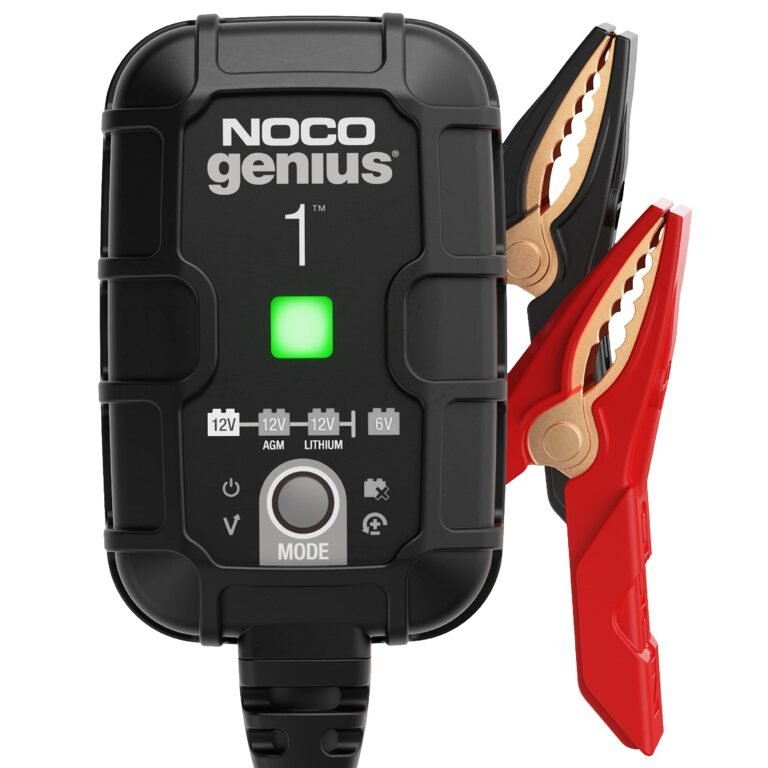
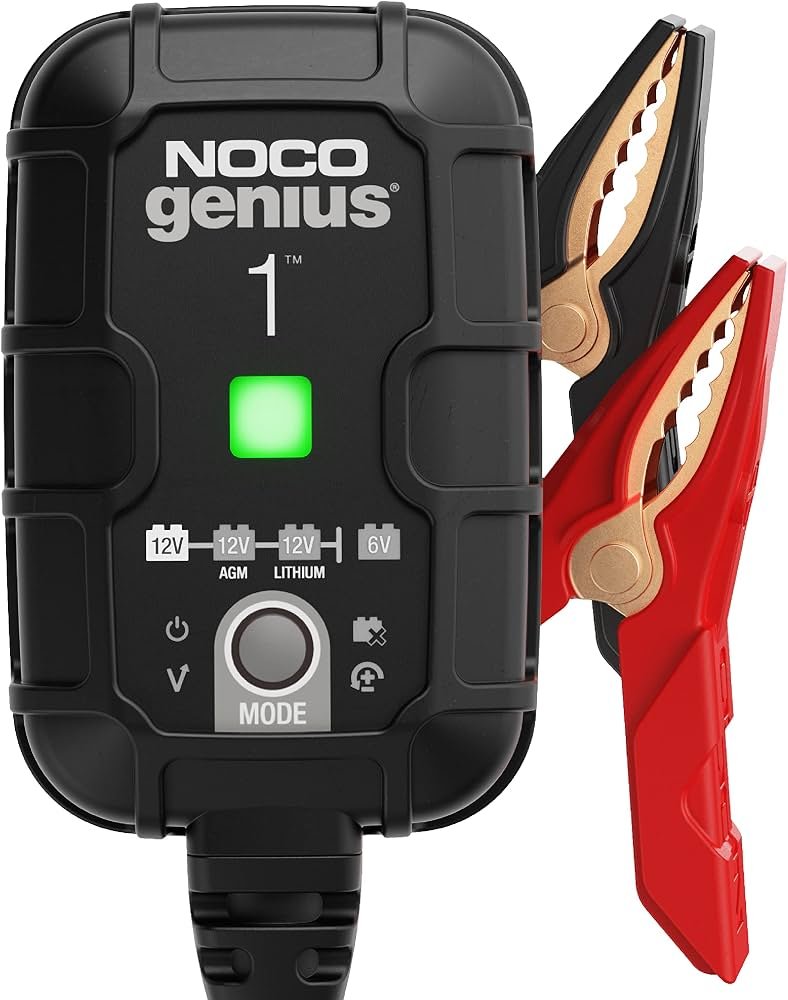
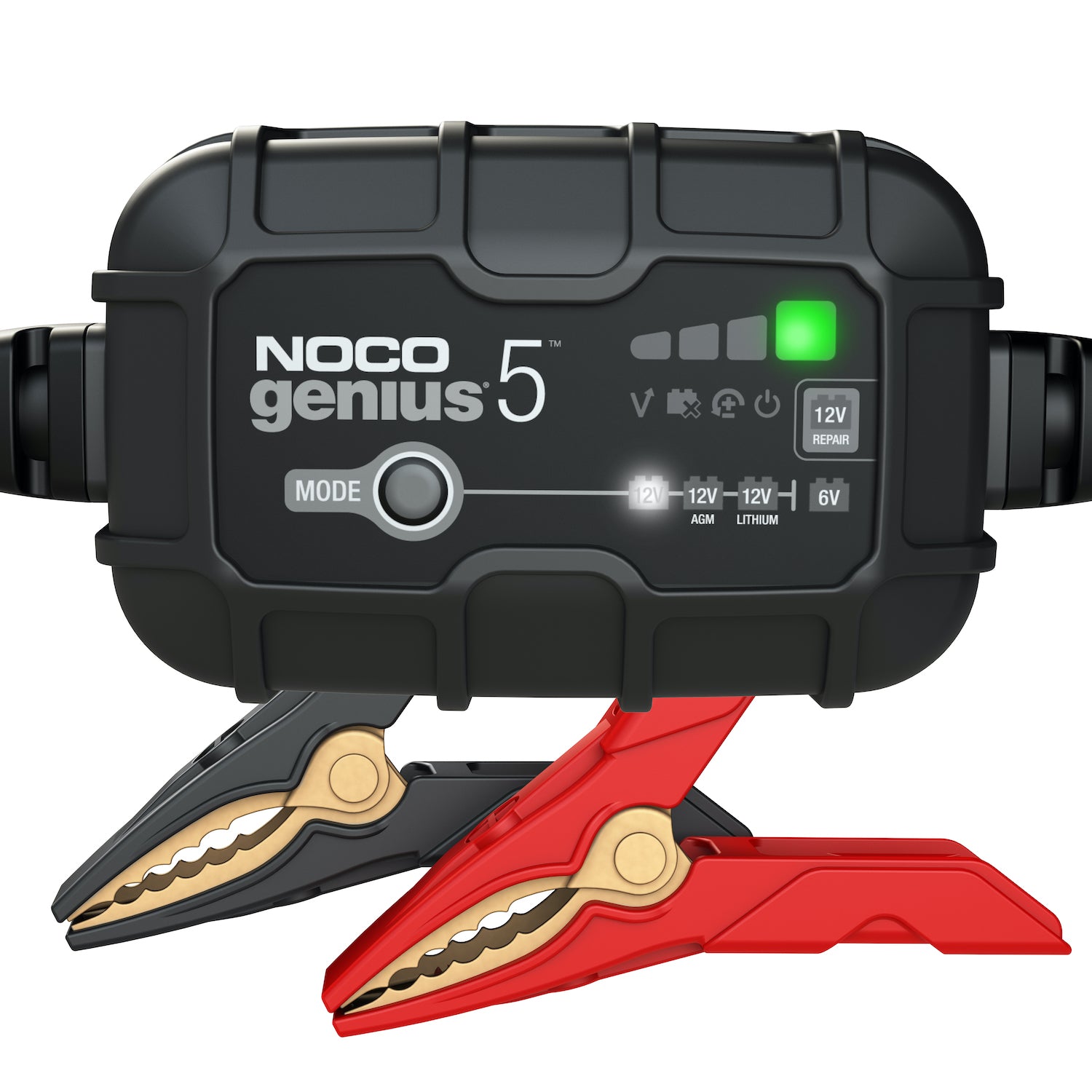
A NOCO Genius1 is a small 1-amp charger. A Genius5 provides more charging power. Larger models, such as the Genius10, can recharge bigger batteries faster. More power is not always better for a small battery, so match the charger to the application.

Battery Tender vs NOCO for Cars
For a daily driver, both brands can work well. The best choice depends on whether you need maintenance or faster charging.
A Battery Tender Plus or similar model can maintain a car battery while the vehicle sits. It is useful for a second car, a classic car, or a vehicle that only gets driven on weekends.
A NOCO Genius5 or similar charger may be better if you want to recharge a weak battery in less time. It can also offer more modes for different battery designs.
Keep in mind that a charger cannot fix every battery problem. If a battery has a damaged cell, severe sulfation, or a short circuit, it may not recover. A battery test with a digital multimeter or conductance tester can help you find the real issue.
For most car owners:
• Choose Battery Tender for simple storage maintenance.
• Choose NOCO for stronger charging and more battery modes.
• Choose a higher amp model for large batteries or frequent use.
• Choose a maintainer rather than a charger if the vehicle already starts well and only needs storage support.

Battery Tender vs NOCO for Motorcycles
Motorcycles are one of the strongest use cases for Battery Tender. Many motorcycle batteries are small, and a low-amp maintainer can keep them ready without stressing the battery.
Battery Tender Junior models are widely used for motorcycles, ATVs, scooters, and personal watercraft. They often include ring-terminal leads and alligator clips, which make connection easy.
NOCO also makes excellent motorcycle-friendly chargers. A small Genius model can be a good choice if you want support for AGM or lithium batteries. Some riders prefer NOCO because one charger can work with both a motorcycle and a car.
The key issue is charging current. A small motorcycle battery does not need a very powerful charger. A 1-amp charger is often suitable, but always confirm the battery maker’s recommendation.
When comparing Battery Tender vs NOCO for a motorcycle, ask:
• Is the battery lead-acid, AGM, or lithium?
• Will the motorcycle sit for a few days or several months?
• Do you need a permanent ring-terminal connection?
• Will you also use the charger on a car or truck?
Battery Tender often wins for simple motorcycle storage. NOCO may win for riders who want more battery chemistry support.

Battery Tender vs NOCO for Lithium Batteries
Lithium batteries need a charger with the correct lithium charging program. A standard lead-acid charger may not be safe or suitable for every lithium battery.
Some lithium batteries include an internal battery management system, often called a BMS. This system helps control charging and discharging, but it does not make every charger compatible.
NOCO offers lithium support on selected Genius models. Battery Tender also sells lithium-compatible chargers, but the exact model must be checked before use.
Do not assume that a charger labeled “smart” supports lithium batteries. Read the product manual and battery instructions. Look for clear support for LiFePO4 or lithium iron phosphate if that is the battery chemistry.
For lithium battery owners:
• Confirm the charger supports LiFePO4 if required.
• Check the battery voltage, such as 12 volts or 24 volts.
• Do not use repair or desulfation modes unless the manual says they are safe.
• Avoid charging a damaged, swollen, frozen, or unusually hot battery.
This is one area where Battery Tender vs NOCO cannot be judged by brand alone. The model and battery chemistry are more important than the logo.

Charging Speed and Amp Ratings
Charging speed is one of the clearest differences between small maintainers and full chargers.
An amp rating tells you how much current the charger can provide. A 1-amp charger may be ideal for a motorcycle but slow for a large truck battery. A 5-amp or 10-amp charger can restore a larger battery more quickly.
A simple estimate is:
Charging time equals amp-hours divided by charging amps, with extra time added for charging losses and the final absorption stage.
For example, a 60 amp-hour car battery charged at 5 amps will not fully recharge in exactly 12 hours. The real time may be longer because the charger reduces current as the battery fills.
Battery Tender products often focus on low-current maintenance. NOCO offers both low-current maintainers and higher-output chargers.
Choose based on use:
• For storage, 0.75 to 1.25 amps is often enough for small batteries.
• For a typical car battery, 2 to 5 amps offers a useful balance.
• For larger batteries, 5 to 10 amps can reduce charging time.
• For routine maintenance, constant high current is unnecessary.
Fast charging can be helpful, but it creates more heat and places greater demands on the battery. Smart charging is more important than choosing the biggest number on the box.
Safety Features Compared
Battery Tender vs NOCO products commonly include safety features, but the details vary by model.
Useful safety functions include:
• Reverse polarity protection
• Short-circuit protection
• Overcharge control
• Spark-resistant connection
• Temperature monitoring
• Automatic shutoff or maintenance mode
Reverse polarity protection is especially helpful. If you connect the clamps backward, the charger should warn you or refuse to begin charging. Still, you should connect the leads carefully every time.
Many chargers also use visual lights to show charging status. Read the light codes before assuming the battery is full. Some patterns indicate a fault, poor connection, low voltage, or battery damage.
Never charge a visibly damaged or leaking battery. Lead-acid batteries can release hydrogen gas, which is flammable. Charge in a well-ventilated area and keep sparks, cigarettes, and open flames away from the battery.
A smart charger improves safety, but it does not replace good judgment.

Ease of Use and Connections
Both brands offer alligator clips and ring-terminal cables. Ring terminals are useful for motorcycles and stored vehicles because you can leave the cable attached to the battery.
Battery Tender products often have a simple setup. Connect the terminals, plug in the charger, and let the automatic program work. This straightforward design is one reason the brand remains popular with seasonal vehicle owners.
NOCO chargers may have more buttons and charging modes. That adds flexibility, but it can also create a small learning curve. The first time you use a NOCO Genius charger, take a moment to identify the correct mode before connecting it.
A practical setup looks like this:
-
Turn off the vehicle and place the charger on a dry, stable surface.
-
Connect the positive lead to the positive battery terminal.
-
Connect the negative lead to the negative terminal or approved vehicle ground.
-
Plug in the charger.
-
Select the correct battery mode.
-
Check the indicator lights.
-
Allow the charger to complete its cycle.
One common mistake is selecting a lithium mode for a lead-acid battery, or a 6-volt mode for a 12-volt battery. The mode must match the battery.
Build Quality, Portability, and Weather Use
Battery Tender and NOCO chargers are generally compact and easy to store. Their housings are made for garage and workshop use, but water resistance differs by model.
Some NOCO Genius chargers carry an IP rating for protection against dust and water. Battery Tender products also vary in weather protection. Check the individual product specifications rather than assuming every model can stay outdoors.
For boat owners and outdoor users, look for:
• A clear water-resistance rating
• Long enough cables
• Secure strain relief
• Corrosion-resistant connectors
• A protected outlet and ground-fault circuit interrupter
Neither brand should be left in standing water. Weather resistance is not the same as waterproofing.
Portability can also affect your choice. A small Battery Tender or NOCO Genius1 fits easily in a glove box or motorcycle tool bag. Larger chargers offer more power but take up more space.
Battery Tender vs NOCO: Which Is Better?
Battery Tender is better for owners who want a simple, dependable maintainer. It is a strong choice for motorcycles, classic cars, boats, and vehicles that spend long periods in storage.
NOCO is better for owners who want one charger for several battery types. It is also a good fit if you want higher charging power, lithium support, low-voltage charging, or a repair mode.
Choose Battery Tender when:
• Your main goal is long-term maintenance.
• You own a motorcycle or small seasonal vehicle.
• You prefer simple controls.
• You want a permanent ring-terminal lead.
• You already know the battery type and voltage.
Choose NOCO when:
• You want a charger for cars, trucks, motorcycles, and boats.
• You need more charging current.
• You use AGM, deep-cycle, or lithium batteries.
• You want extra charging and diagnostic modes.
• You prefer one compact charger with several functions.
The best Battery Tender vs NOCO choice is the one that matches your battery, not the one with the most features.
Best Models to Consider
Product names and features can change, so check the current manual before purchasing. Still, these model types provide a useful starting point.
Battery Tender Junior
This is a low-current maintainer designed for small batteries. It is often a good fit for motorcycles, ATVs, lawn equipment, and other seasonal vehicles.
It may be too slow for frequent charging of a deeply discharged car battery.
Battery Tender Plus
This model offers more charging power than the Junior while keeping a maintenance-focused design. It can suit car batteries, classic vehicles, and storage applications.
It is not a substitute for a jump starter.
NOCO Genius1
This compact charger works well for small batteries and basic maintenance. Depending on the version, it may support several battery chemistries.
It is a useful option for motorcycle owners who may also need occasional car battery support.
NOCO Genius5
This model provides a practical middle ground between a small maintainer and a high-output charger. It is suitable for many cars, motorcycles, boats, and recreational vehicles.
Its extra modes can be helpful, but users should follow the manual closely.
NOCO Genius10
This higher-output option is designed for larger batteries and faster charging. It may be useful for trucks, large boats, and demanding garage work.
It is more charger than many motorcycle owners need for simple maintenance.
Common Mistakes to Avoid
A battery charger can extend battery life, but poor setup can cause trouble. These mistakes are easy to avoid.
• Using the wrong voltage: A 6-volt battery needs a 6-volt setting, while a standard car battery usually needs 12 volts.
• Ignoring battery chemistry: AGM, gel, flooded lead-acid, and lithium batteries may require different modes.
• Choosing too little power: A tiny maintainer may take a very long time to recharge a large, deeply discharged battery.
• Choosing too much power: High current may be unsuitable for a small battery.
• Charging a frozen battery: Allow it to thaw safely first and inspect it for damage.
• Leaving poor connections in place: Dirty or loose terminals can interrupt charging.
• Treating repair mode as a cure: Desulfation or recovery modes cannot repair every failed battery.
• Using a charger as a jump starter: A charger is not designed to provide the instant current needed to start an engine.
• Forgetting parasitic drain: Vehicle electronics can still discharge a battery while the vehicle sits.
One lesson worth remembering is simple: a maintainer protects a healthy battery, but it cannot turn a worn-out battery into a new one.
How to Use a Battery Maintainer Safely
Before charging, inspect the battery and cables. Look for swelling, cracks, leaks, corrosion, or damaged insulation.
Follow these steps:
-
Park the vehicle in a ventilated area.
-
Turn off the ignition and all electrical accessories.
-
Confirm the battery voltage and chemistry.
-
Clean heavy corrosion from the terminals.
-
Connect the charger leads with the charger unplugged if the manual recommends it.
-
Select the correct mode.
-
Plug in the charger and confirm the status light.
-
Check the setup after a few minutes.
-
Keep the charger and battery away from water and heat.
For an installed battery, many smart chargers allow the negative lead to connect to a suitable chassis ground. Some vehicle makers have special instructions, especially for vehicles with battery monitoring systems.
If the battery becomes hot, smells strongly, leaks, or behaves oddly, unplug the charger and stop. Safety matters more than saving one battery.
Battery Tender vs NOCO for Storage
Long-term storage is where battery maintainers provide the most value. A vehicle that sits for months can lose charge through natural self-discharge and small electrical loads.
A fully charged lead-acid battery generally stores better than a partly discharged one. Low charge can increase the risk of sulfation, which reduces capacity over time.
For storage:
• Clean the battery terminals.
• Fully charge the battery before storage.
• Use a compatible smart maintainer.
• Inspect the charger connection from time to time.
• Keep the battery in a cool, dry, ventilated space.
• Follow the battery maker’s storage instructions.
Battery Tender has a strong reputation for this use because its products are simple and maintenance-focused. NOCO can perform the same role when the correct model and mode are used.
For a stored motorcycle, the choice may come down to convenience. For a mixed garage with several battery types, NOCO may offer more flexibility.
Do Battery Chargers Extend Battery Life?
A charger can help extend battery life by keeping a compatible battery at a proper state of charge. It cannot prevent normal aging, heat damage, vibration, or internal defects.
The effect is strongest when a vehicle sits for long periods. Maintaining charge can reduce deep discharge, one of the common causes of early lead-acid battery failure.
Battery life also depends on:
• Climate and temperature
• Charging system health
• Driving habits
• Battery quality
• Electrical drain while parked
• Number of discharge cycles
If a car battery keeps going dead, do not blame the charger first. Test the alternator, inspect the cables, and check for parasitic drain.
Frequently Asked Questions About Battery Tender vs NOCO
Is Battery Tender better than NOCO?
Battery Tender is often better for simple, long-term maintenance, especially on motorcycles and seasonal vehicles. NOCO is often better when you need faster charging, more battery modes, or support for several battery types.
Can a NOCO charger replace a Battery Tender?
Yes, a compatible NOCO Genius charger can maintain a battery in a similar way. Select the correct voltage and battery mode, then follow the charging instructions for that specific model.
Can I leave a Battery Tender or NOCO charger connected overnight?
Most smart models are designed for extended connection after the battery reaches full charge. Use only a compatible charger, inspect the battery first, and follow the product manual.
Which is better for a motorcycle, Battery Tender or NOCO?
Battery Tender is a strong choice for basic motorcycle storage and low-current maintenance. NOCO may be better if the motorcycle uses a lithium battery or if you want to charge other vehicles with the same unit.
Can these chargers start a dead car?
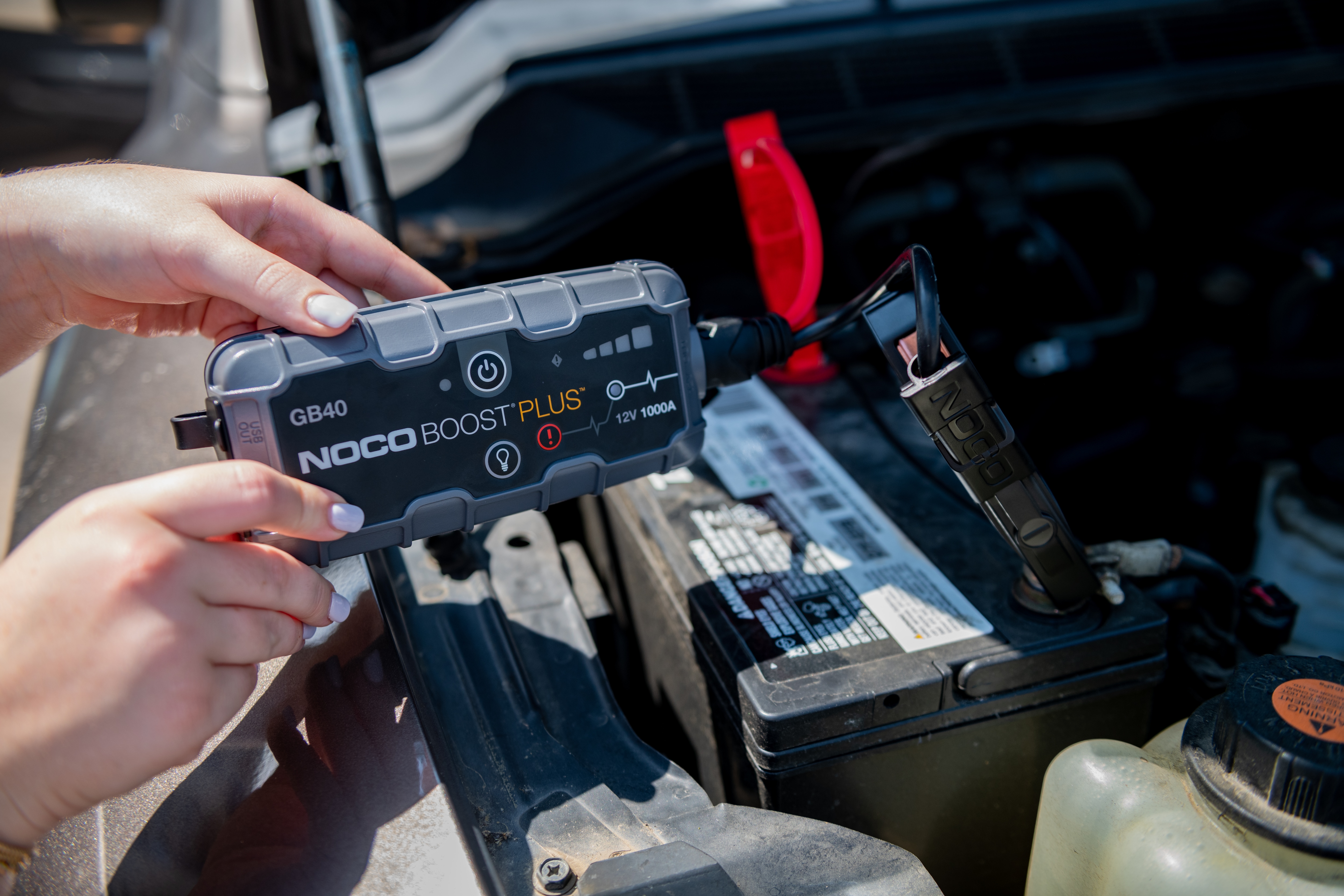
A standard Battery Tender or NOCO battery charger is not a jump starter. Some NOCO Boost products can start vehicles, but they are separate portable jump starters rather than ordinary chargers.
Does NOCO charge faster than Battery Tender?
A NOCO charger may charge faster when comparing models with higher amp ratings. However, the real speed depends on the specific Battery Tender and NOCO models, battery size, battery condition, and selected mode.
Can I use either brand on an AGM battery?
Many Battery Tender and NOCO models support AGM batteries, but you must confirm the exact model. Select the AGM setting when one is available and follow the battery manufacturer’s instructions.
Conclusion
Battery Tender vs NOCO comes down to purpose. Battery Tender is a dependable choice for simple battery maintenance, especially for motorcycles, classic cars, and stored vehicles. NOCO offers broader battery support, stronger charging options, and useful features for people with several types of vehicles.
Before buying, check the battery voltage, chemistry, size, and condition. Match the charger’s amp rating to the job, and never use recovery modes without confirming compatibility.
Choose the model that fits your real needs rather than chasing the longest feature list. If this guide helped, share your Battery Tender or NOCO experience in the comments and explore more battery care resources before your next purchase.