Battery Tender Plus Vs Battery Tender Junior: Which Is Best?
Battery Tender Plus charges faster and suits larger batteries, while Battery Tender Junior saves money for small vehicles.
Choosing between Battery Tender Plus vs Battery Tender Junior looks simple, but the right model depends on battery size, storage time, and how quickly you need a full charge. Both maintain 12-volt lead-acid batteries, yet their charging output and best use cases differ. This guide compares their features, limits, safety points, and real-world value so you can buy with confidence.
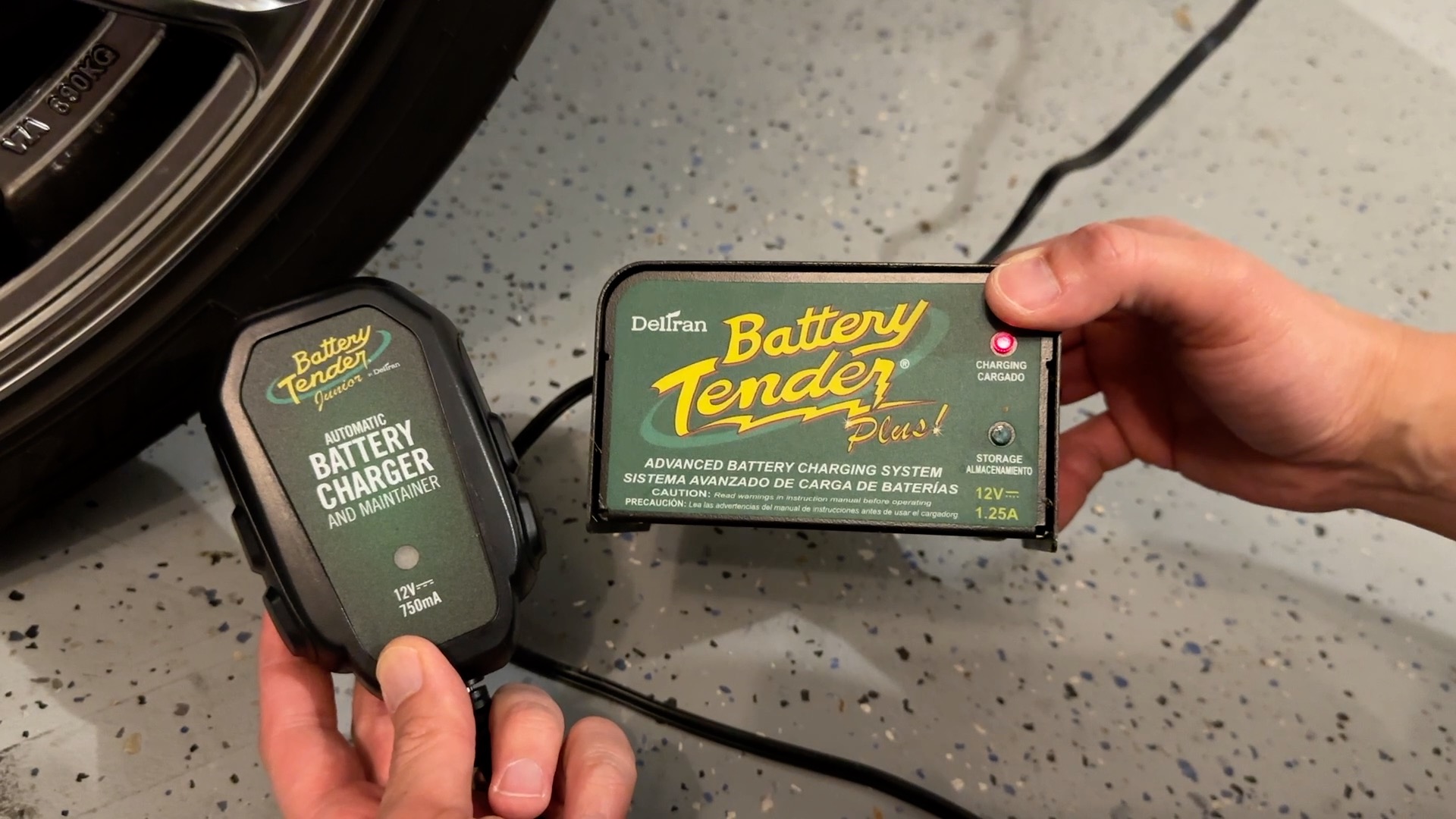
Battery Tender Plus vs Battery Tender Junior at a glance
Battery Tender Plus and Battery Tender Junior are automatic battery chargers and maintainers. They are made for vehicles that may sit for weeks or months, such as motorcycles, cars, boats, ATVs, lawn tractors, and classic vehicles.
The main difference is charging current:
| Feature | Battery Tender Plus | Battery Tender Junior |
|---|---|---|
| Charging output | 1.25 amps | 0.75 amps |
| Battery system | 12 volts | 12 volts |
| Charging type | Automatic multi-step charging | Automatic multi-step charging |
| Best for | Cars, trucks, larger motorcycles, boats | Motorcycles, ATVs, lawn equipment |
| Battery types | Commonly lead-acid, AGM, and gel | Commonly lead-acid, AGM, and gel |
| Maintenance mode | Yes | Yes |
| Lithium support | No, unless clearly labeled for lithium | No, unless clearly labeled for lithium |
| Main advantage | Faster charging and wider vehicle use | Lower cost and compact size |
The Battery Tender Plus delivers about two-thirds more current than the Junior. That does not mean it is always better. It means it can refill a larger battery more quickly.
The Junior works like a slow drip of water into a cup. The Plus uses a stronger stream. Both can keep the cup full, but the stronger stream is more useful when the cup is large or partly empty.
What is Battery Tender Plus?
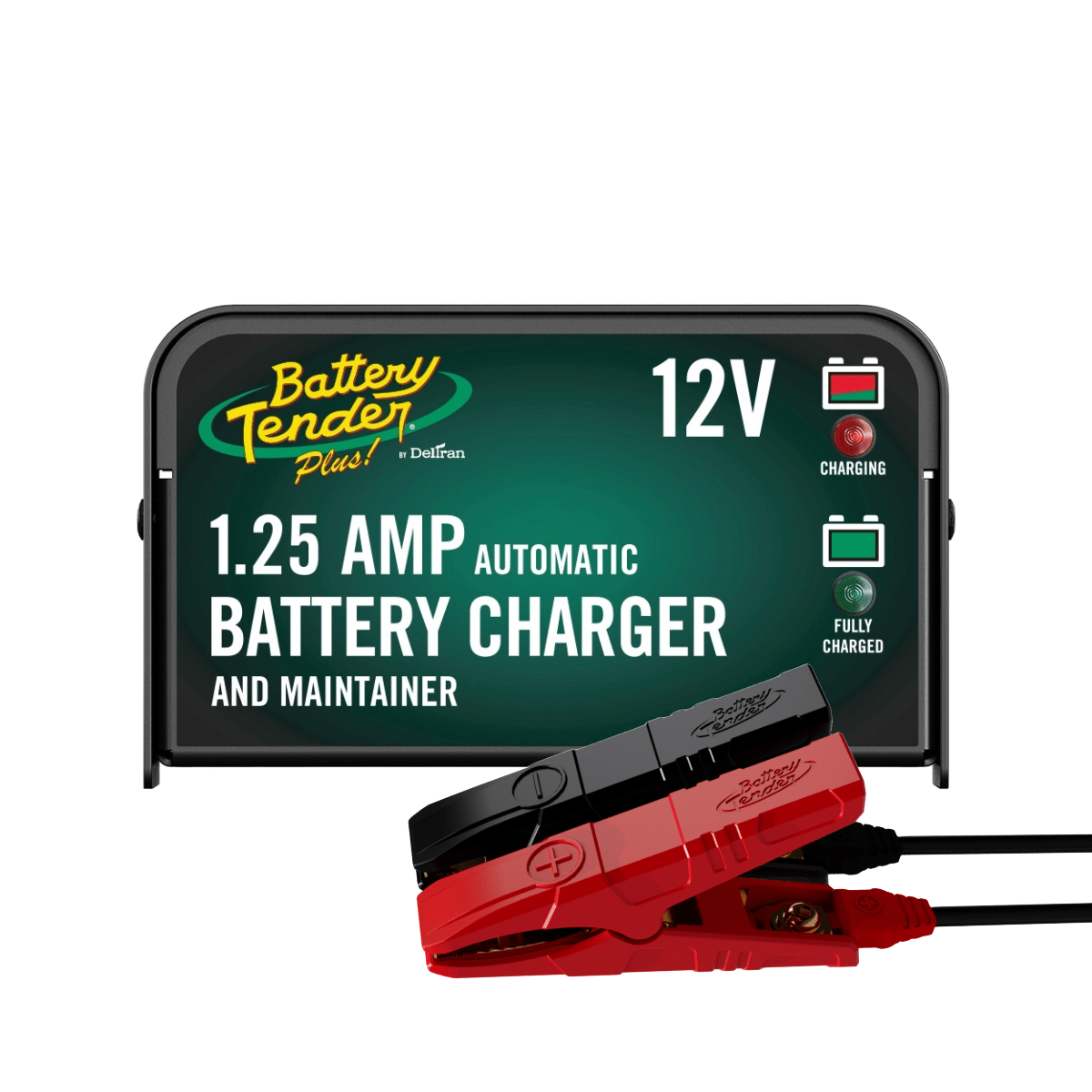
Battery Tender Plus is a 12-volt automatic charger and battery maintainer with a 1.25-amp output. It uses a multi-step charging process to bring a battery up to charge and then maintain it without constant overcharging.
Its typical charging stages include:
- Initial battery testing
- Bulk charging
- Absorption charging
- Float or maintenance charging
During bulk charging, the unit sends more current into the battery. During the final stages, it reduces the current and monitors voltage. Once the battery is full, it provides only the energy needed to offset normal battery drain.
The Plus is a strong fit for:
• Cars that sit for long periods
• Larger motorcycles
• Boats and personal watercraft
• ATVs and utility vehicles
• Classic cars with seasonal storage
• Lawn tractors with medium-sized batteries
The 1.25-amp output is still gentle compared with many fast automotive chargers. However, it can restore a partly discharged battery faster than the 0.75-amp Junior.
The Plus is not a jump starter. It also is not meant to replace a high-output shop charger when a battery is deeply discharged and needs rapid service.

What is Battery Tender Junior?
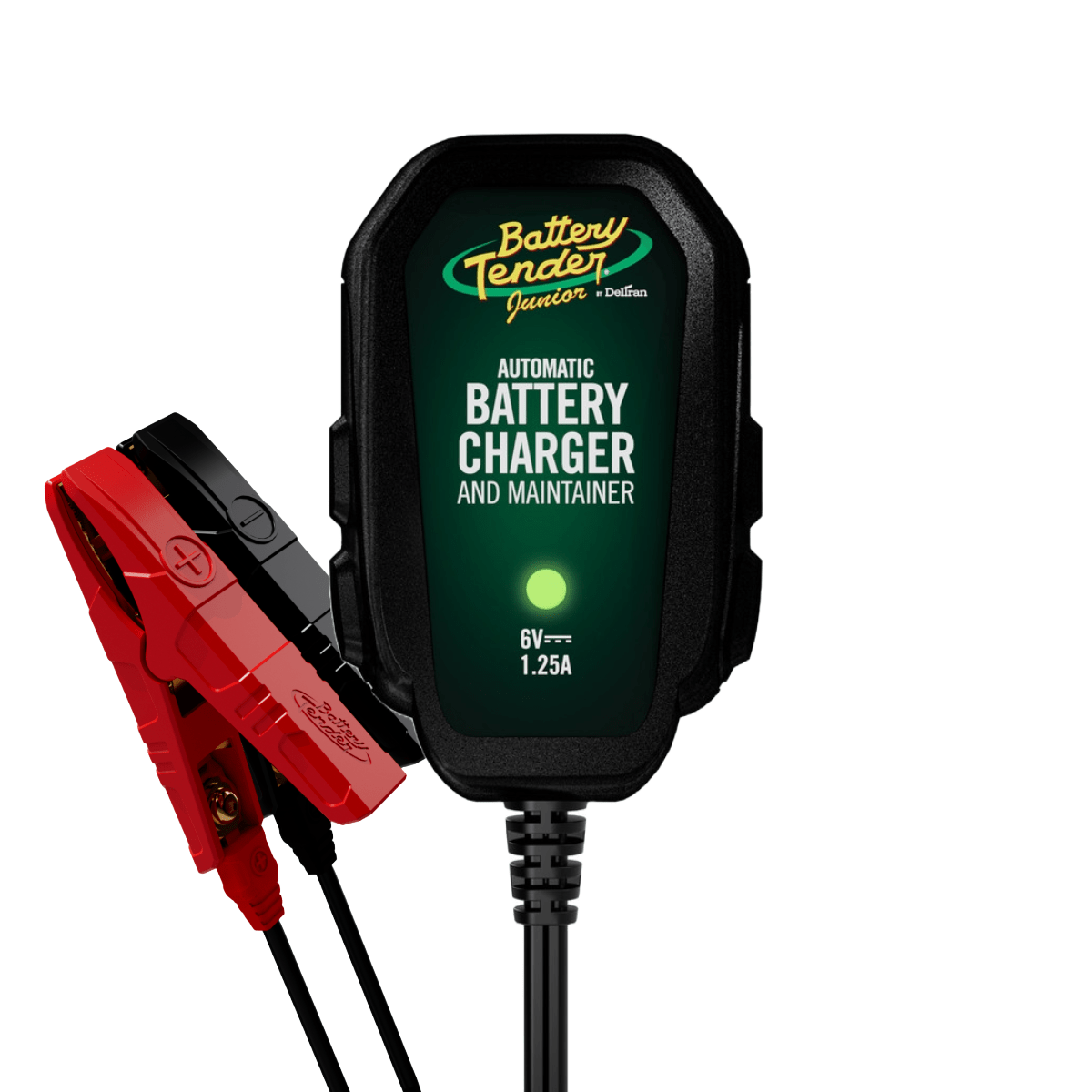
Battery Tender Junior is a compact 12-volt maintainer with a 0.75-amp output. It is designed mainly for small batteries and long-term storage.
The Junior is popular with motorcycle owners because it is small, simple, and easy to leave connected during the off-season. It can also work well with ATVs, scooters, riding mowers, and some small cars when the battery is healthy and only needs maintenance.
The Junior is best for:
• Motorcycles
• Scooters
• ATVs
• Snowmobiles
• Riding lawn mowers
• Small boats
• Seasonal equipment
Its lower output is both a benefit and a limitation. It is gentle and energy-efficient, but it takes longer to recharge a larger battery.
For example, a healthy motorcycle battery may need only a modest amount of energy after sitting for a few weeks. The Junior can handle that job well. A large car battery that is heavily discharged may take much longer, and the charger may not be the best tool for recovery.
Battery Tender Plus vs Battery Tender Junior: charging speed
Charging speed is the clearest difference between Battery Tender Plus vs Battery Tender Junior.
The Plus supplies 1.25 amps. The Junior supplies 0.75 amps. In ideal conditions, the Plus can deliver roughly 67% more current than the Junior.
Real charging time varies. Battery capacity, battery age, temperature, discharge level, and battery condition all affect the result. A simple estimate is:
Charging time = amp-hours needed ÷ charger amps
That estimate is not exact because charging slows near full capacity. For example, a battery that needs 20 amp-hours may take more than 16 hours with a 1.25-amp charger. The Junior may need more than 26 hours under the same basic conditions.
Use the following as a rough guide:
| Battery condition | Battery Tender Junior | Battery Tender Plus |
|---|---|---|
| Small battery, lightly discharged | Several hours | A few hours |
| Motorcycle battery, half discharged | About 10 to 20 hours | About 6 to 14 hours |
| Car battery, half discharged | Often a long overnight period or more | Usually faster, but still not rapid |
| Severely discharged battery | May not begin charging | May not begin charging |
These are broad estimates, not guarantees. A weak or sulfated battery may show a full reading but lose power soon after the charger is removed.

Battery Tender Plus vs Battery Tender Junior: battery compatibility
Both models are commonly sold for 12-volt lead-acid batteries. That category includes flooded, AGM, and gel batteries, depending on the exact product version and instructions.
Always check the label on your battery before connecting a charger. Look for terms such as:
• Lead-acid
• AGM
• Absorbed glass mat
• Gel cell
• 12V or 12 volts
Do not assume either model can charge a lithium battery. Lithium iron phosphate batteries use a different charging profile. Some Battery Tender products are made for lithium batteries, but a standard lead-acid model should not be used unless the manual specifically allows it.
Battery chemistry matters because the charger must use the correct voltage and charging pattern. Using the wrong charger can reduce battery life and may create a safety risk.
The Plus and Junior are also not suitable for 6-volt batteries unless you buy a model clearly labeled for 6-volt operation. Voltage must match the charger.
Battery Tender Plus vs Battery Tender Junior for motorcycles
For most motorcycles, either model can work well. The better choice depends on the battery size and your charging habits.
Choose the Junior when:
• You only need winter maintenance
• The motorcycle has a small battery
• The battery is usually kept near full charge
• You want the lowest-cost option
• Space around the battery is limited
Choose the Plus when:
• The motorcycle has a larger battery
• You often return from rides with a partly drained battery
• You want faster recovery
• You also maintain a car or boat
• You want one maintainer for several vehicle types
A practical mistake is waiting until spring to test the motorcycle battery. A maintainer cannot repair a battery that has already suffered deep discharge or severe sulfation. Connect the unit before storage, check the indicator lights, and inspect the battery after a few weeks.
The Battery Tender Plus vs Battery Tender Junior decision is often easy for motorcycle owners: the Junior is enough for routine storage, while the Plus adds speed and flexibility.

Battery Tender Plus vs Battery Tender Junior for cars and trucks
The Plus is generally the better choice for cars and trucks because their batteries are larger. It still works slowly compared with a 6-amp, 10-amp, or 15-amp automotive charger, but it can maintain a healthy battery during storage.
The Junior may maintain a car battery if the battery is already fully charged and the vehicle has little electrical drain. It is less attractive for restoring a car battery after repeated starting problems.
Modern vehicles can draw small amounts of power even when parked. Alarm systems, computers, remote-start systems, and other electronics may slowly drain the battery. A maintainer can offset this drain when used correctly.
However, a charger is not a cure for a parasitic drain. If a car goes dead every few days, the real problem may be a light that stays on, a faulty module, or an aging battery. Have the vehicle tested instead of leaving a charger connected as a permanent fix.

Battery Tender Plus vs Battery Tender Junior for long-term storage
Both chargers are designed for storage, and both use automatic monitoring. After the battery reaches full charge, the unit shifts into a maintenance mode.
This is useful for:
• Winter motorcycles
• Summer cars that are rarely driven
• Classic vehicles
• Backup generators
• Boats stored on land
• Farm equipment used only during certain seasons
The key is to connect the charger to a healthy battery. A maintainer can preserve charge, but it cannot reverse every form of battery damage.
Before storage, follow these steps:
- Clean dirt and corrosion from the battery terminals.
- Charge the battery fully.
- Inspect the case for cracks, swelling, or leaks.
- Connect the charger with the power disconnected first.
- Confirm that the indicator shows a normal charging or maintenance state.
- Keep the charger and cables dry.
- Check the setup from time to time.
A battery tender should sit in a dry, ventilated area. Do not cover it with clothing, towels, or other material that can trap heat.
Safety and correct connection
Correct connection is simple, but small mistakes can damage equipment or create sparks.
For a negative-ground vehicle, use this order:
- Turn off the vehicle.
- Connect the red clamp to the positive battery terminal.
- Connect the black clamp to the negative terminal or a clean chassis ground.
- Plug the charger into a safe wall outlet.
- Check the indicator lights.
- Unplug the charger before removing the clamps.
If the battery is installed in the vehicle, follow the vehicle maker’s instructions. Some modern vehicles have special charging points or sensitive electronic systems.
Keep these safety rules in mind:
• Do not use a damaged cable or cracked charger case.
• Do not charge a frozen, leaking, swollen, or visibly damaged battery.
• Keep sparks and flames away from flooded lead-acid batteries.
• Use the charger in a dry space with airflow.
• Do not reverse the positive and negative connections.
• Do not connect the charger to a battery with the wrong voltage.
The Battery Tender Plus vs Battery Tender Junior comparison is not only about amps. A safe setup matters just as much as the charger model.
Can either charger revive a dead battery?
Sometimes, but not always.
Many automatic chargers need to detect a minimum voltage before they begin charging. If a battery is extremely flat, internally damaged, or shorted, the charger may remain in standby or show a fault condition.
A battery can also be “dead” in two different ways. It may simply be discharged, or it may be worn out. A discharged battery can often be recharged. A worn-out battery may accept charge briefly but fail under load.
If the charger does not start:
• Confirm that the clamps are connected correctly.
• Test the battery voltage with a multimeter.
• Inspect the terminals for corrosion.
• Try a known-good battery if available.
• Have the battery load-tested.
Do not repeatedly leave a failing battery on a maintainer and assume it is safe. A battery that becomes hot, swells, leaks, or smells strongly should be disconnected and replaced.
Important differences in price and value
The Junior usually costs less, uses less power, and takes up less space. That makes it attractive for one small vehicle used seasonally.
The Plus costs more, but its 1.25-amp output gives it broader use. If you own a motorcycle and a car, the Plus may offer better value because it can serve both vehicles.
Consider these factors:
• Buy the Junior for one small battery and basic storage maintenance.
• Buy the Plus for larger batteries or faster recharge times.
• Buy the Plus if you want one charger for several vehicles.
• Choose a lithium-specific model if your battery is lithium iron phosphate.
• Choose a multi-bank charger if you need to maintain several batteries at once.
Product bundles can vary. Some packages include ring-terminal leads, alligator clips, or a longer cable. Compare the included accessories, warranty terms, and battery compatibility before focusing only on the price.
Common mistakes to avoid
Many charger problems come from the setup, not the charger itself.
The most common mistakes include:
• Using a 12-volt charger on a 6-volt battery
• Using a lead-acid charger on an unsupported lithium battery
• Expecting a maintainer to act like a jump starter
• Leaving a damaged battery connected
• Hiding the charger under a cover
• Ignoring a vehicle with a serious electrical drain
• Connecting the clamps backward
• Assuming a full indicator proves the battery is healthy
One useful habit is to measure battery voltage before and after charging. A fully charged 12-volt lead-acid battery often rests near 12.6 to 12.8 volts, but readings vary by battery type, temperature, and rest time. Voltage alone cannot replace a proper load test.
In practical use, the biggest lesson is simple: a maintainer protects a good battery better than it repairs a bad one. Start storage with a healthy battery, and both models become much more useful.
Which one should you buy?
Use this decision guide:
Choose Battery Tender Junior if:
• You maintain a motorcycle, scooter, ATV, or mower.
• The battery is small or medium-sized.
• You mainly need storage maintenance.
• You do not mind slower charging.
• Price and compact size matter most.
Choose Battery Tender Plus if:
• You maintain a car, truck, boat, or large motorcycle.
• You want a faster charge than the Junior provides.
• You need one charger for several vehicle types.
• You often deal with partly discharged batteries.
• You want more flexibility for future vehicles.
For a small motorcycle battery that is already healthy, the Junior is usually enough. For a mixed garage with cars, motorcycles, and seasonal equipment, the Plus is the more versatile choice.
The best Battery Tender Plus vs Battery Tender Junior option is the one that matches your battery size and charging needs. More power is useful, but it does not automatically create better maintenance for every small battery.
Battery Tender Plus vs Battery Tender Junior frequently asked questions
Is Battery Tender Plus better than Battery Tender Junior?
Battery Tender Plus is better for larger batteries and faster charging because it supplies 1.25 amps instead of 0.75 amps. Battery Tender Junior is often the better value for small motorcycles, ATVs, and lawn equipment that only need maintenance.
Can Battery Tender Junior charge a car battery?
Yes, it may charge or maintain a healthy car battery, but it will do so slowly. Battery Tender Plus is usually a better fit for cars because its higher output can restore charge more quickly.
Can I leave Battery Tender Plus or Junior connected all winter?
Both are designed for automatic maintenance when used with a compatible, healthy battery. Keep the charger dry and ventilated, inspect the cables, and follow the instructions for your exact model.
Can these chargers charge lithium batteries?
Do not use a standard lead-acid Battery Tender model on a lithium battery unless the product label and manual specifically approve it. Lithium batteries need a charger with the correct lithium charging profile.
Will Battery Tender Junior revive a completely dead battery?
It may not start if the battery voltage is too low or the battery is internally damaged. Test the battery and connections first, and replace the battery if it fails a proper load test.
Is Battery Tender Plus safe for AGM batteries?
The Plus is commonly designed for 12-volt AGM batteries, but you should confirm the exact model instructions. AGM batteries still require correct voltage, safe connections, and good ventilation.
Does Battery Tender Plus work faster than Battery Tender Junior?
Yes, under similar conditions. Its 1.25-amp output is higher than the Junior’s 0.75 amps, although battery condition and temperature can change the actual charging time.
Conclusion
Battery Tender Plus vs Battery Tender Junior comes down to output, battery size, and how quickly you need a charge. The Junior is compact, affordable, and well suited to small vehicles during storage. The Plus costs more but offers faster charging and wider use for cars, boats, larger motorcycles, and mixed vehicle collections.
Check your battery voltage and chemistry before buying. Then choose the Junior for simple maintenance or the Plus for extra speed and flexibility. Explore the exact product manual for your model, set up the charger safely, and share your experience if you have used either maintainer.