NOCO Genius10 Vs Genius5: Which Charger Is Best?
NOCO Genius10 is faster and stronger, while Genius5 is smaller, cheaper, and ideal for everyday battery care.
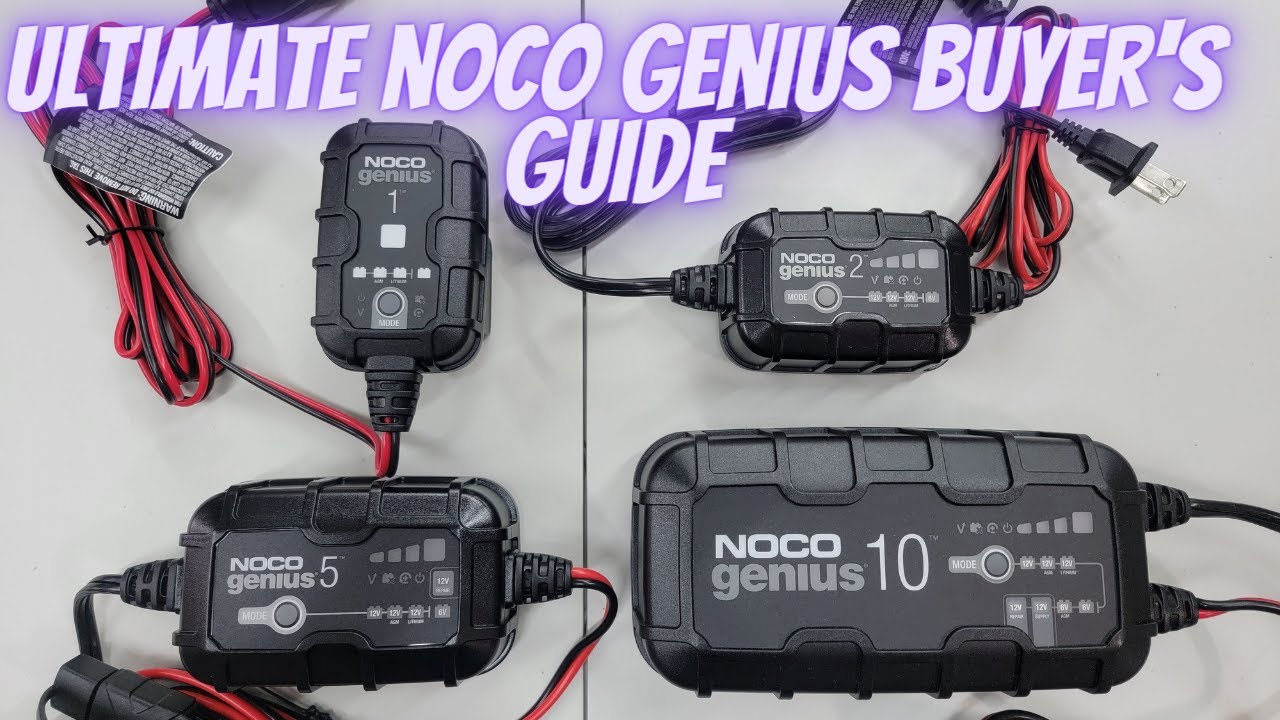
Choosing between the NOCO Genius10 vs Genius5 is easier when you compare real charging needs, battery size, charge speed, and long-term value. Both are smart chargers from NOCO’s Genius range, but their power ratings make them suited to different drivers, vehicles, and battery setups. This guide explains the key differences, limits, safety features, and best uses so you can buy with confidence.
NOCO Genius10 vs Genius5 at a glance
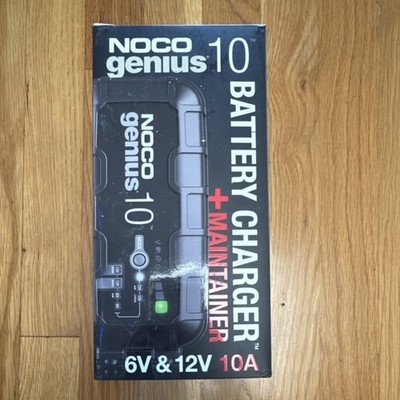
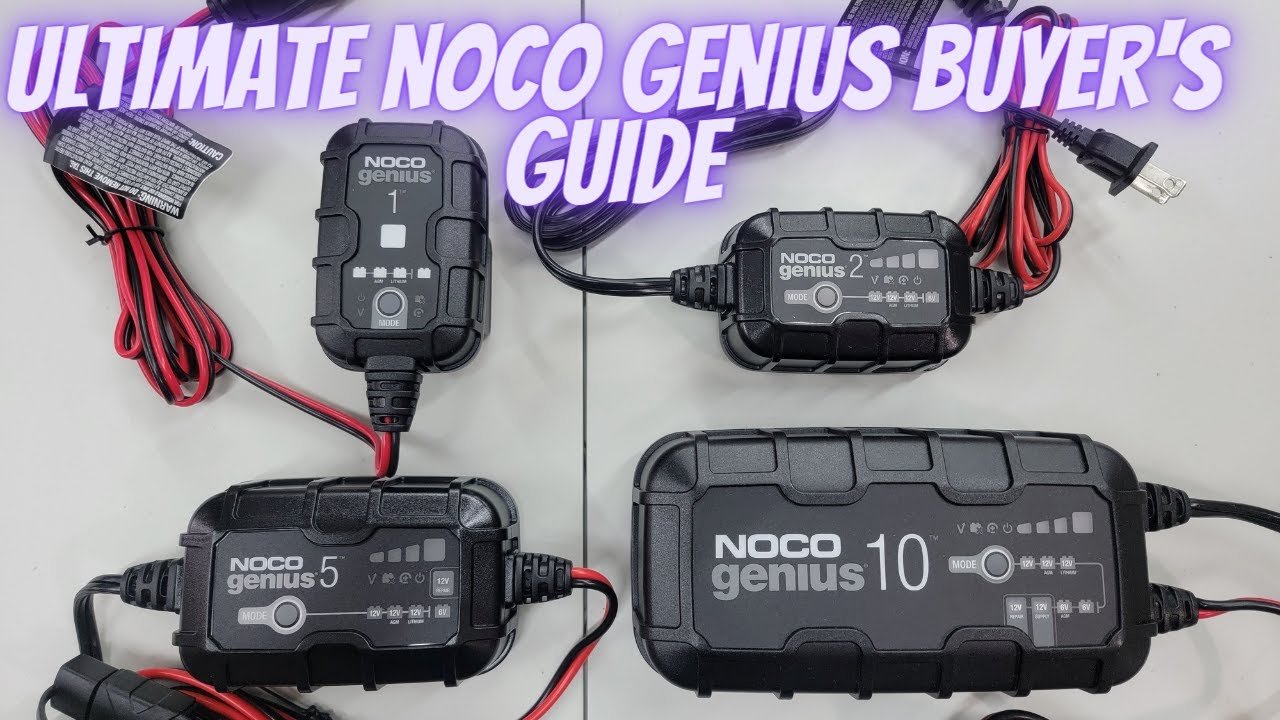
The main difference is simple: the Genius10 delivers up to 10 amps, while the Genius5 delivers up to 5 amps. That extra output helps the Genius10 recharge larger batteries and recover from low charge levels more quickly.
Both models support 6-volt and 12-volt batteries. They can work with common lead-acid types, including flooded, AGM, gel, and maintenance-free batteries. Both also support 12-volt lithium-ion batteries when the battery has a suitable battery management system.
| Feature | NOCO Genius5 | NOCO Genius10 |
|---|---|---|
| Maximum charging output | 5 amps | 10 amps |
| Battery voltage | 6V and 12V | 6V and 12V |
| Common battery types | Lead-acid and 12V lithium-ion | Lead-acid and 12V lithium-ion |
| Approximate battery capacity rating | Up to 120Ah | Up to 230Ah |
| Battery repair mode | Yes | Yes |
| Maintenance mode | Yes | Yes |
| Temperature compensation | Yes | Yes |
| Reverse-polarity protection | Yes | Yes |
| Water and dust resistance | IP65 | IP65 |
| Best fit | Cars, motorcycles, small boats, storage batteries | Trucks, SUVs, larger boats, RV batteries, frequent charging |
The NOCO Genius10 vs Genius5 comparison is not about which charger is “better” in every case. It is about matching charging power to your battery and your patience.

What the NOCO Genius5 offers
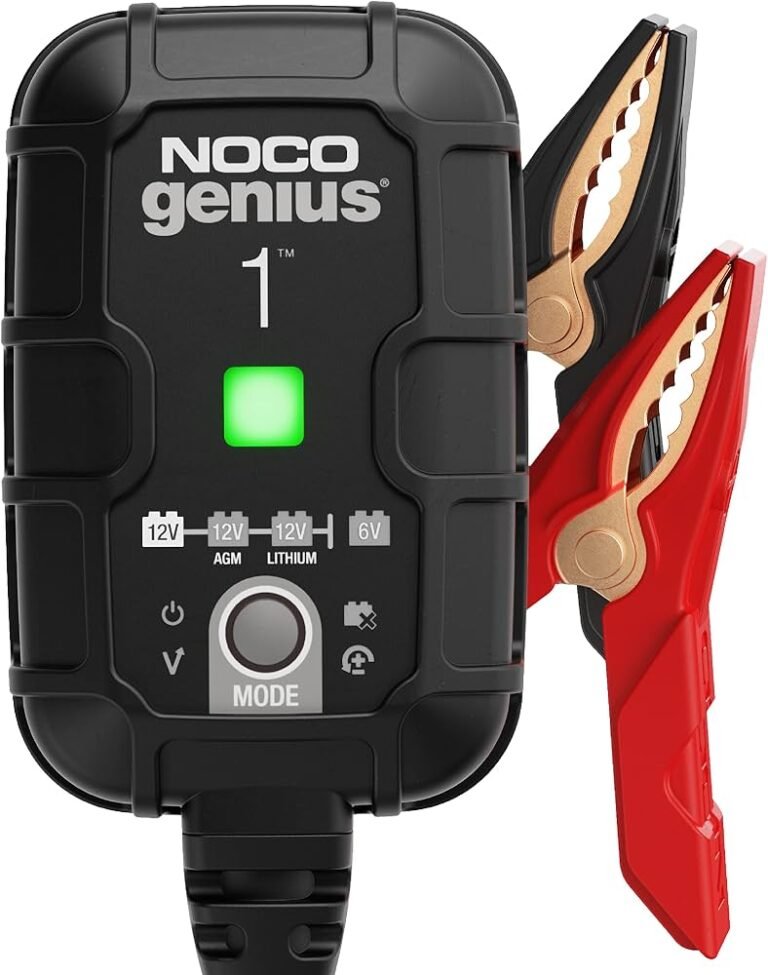
The Genius5 is a compact 5-amp smart battery charger and maintainer. It is made for people who want one device for a car, motorcycle, lawn tractor, ATV, or small boat battery.
Its 5-amp output is enough for routine charging and battery maintenance. It can also charge a battery that has been drained by lights, cold weather, or long storage. However, it will take more time with large batteries.
Key benefits of the Genius5
• Supports 6V and 12V batteries
• Works with flooded lead-acid, AGM, gel, and many maintenance-free batteries
• Includes a lithium charging mode for compatible 12V lithium batteries
• Automatically changes from charging to maintenance
• Can detect battery condition and select a suitable charging stage
• Includes a repair mode for some 12V lead-acid batteries
• Uses a compact design that is easy to store in a glove box or tool cabinet
The Genius5 is also a good choice for seasonal vehicles. For example, you can connect it to a classic car during winter storage and let it maintain the battery without constant supervision.
Still, the Genius5 is not a magic repair tool. A battery with a damaged cell, severe sulfation, or internal failure may not recover. The repair mode can help some weak lead-acid batteries, but it cannot replace a new battery.

What the NOCO Genius10 offers
The Genius10 provides up to 10 amps, so it can charge larger batteries and restore usable power sooner. It is better suited to full-size trucks, SUVs, RVs, larger boats, and vehicles with high-capacity battery banks.
The Genius10 also includes a power supply mode for certain 12V applications. This mode can provide steady power during tasks such as battery replacement or vehicle memory support, but it should be used only when the vehicle maker allows it.
Key benefits of the Genius10
• Delivers twice the charging current of the Genius5
• Supports 6V and 12V batteries
• Handles larger battery capacities
• Includes lead-acid repair and maintenance functions
• Supports compatible 12V lithium batteries
• Uses built-in safety controls for polarity, sparks, overheating, and overcharging
• Offers more practical headroom for large or deeply discharged batteries
The extra output does not mean the Genius10 forces 10 amps into every battery. A smart charger adjusts its operation based on battery condition, voltage, chemistry, and charging stage.
That point matters. Some buyers assume a 10-amp charger will damage a small battery. In normal automatic mode, the charger controls its current. However, you should always choose the correct battery mode and follow the battery maker’s instructions.
NOCO Genius10 vs Genius5 charging speed
Charging time depends on battery size, battery condition, temperature, and the amount of power removed. A simple estimate is:
Charging time in hours ≈ amp-hours removed ÷ charger amps
Real charging often takes longer because the charger slows down near full capacity.
For example, if a 60Ah battery is about half empty, around 30Ah may need to be replaced. A Genius5 could need about six hours under ideal conditions. A Genius10 could need about three hours under the same simplified conditions.
In real use, the times may look closer to these estimates:
| Battery example | Genius5 estimate | Genius10 estimate |
|---|---|---|
| 40Ah battery, half discharged | 5 to 7 hours | 3 to 4 hours |
| 70Ah battery, half discharged | 8 to 11 hours | 4 to 6 hours |
| 100Ah battery, half discharged | 11 to 15 hours | 6 to 9 hours |
| 200Ah battery, half discharged | Long and less practical | About 12 to 18 hours |
These figures are estimates, not promises. A cold battery, sulfated battery, or battery with high internal resistance may charge much more slowly.
The NOCO Genius10 vs Genius5 difference is most noticeable when you often need a battery ready by morning. The Genius5 works well for overnight charging, while the Genius10 gives you more flexibility during the day.

Battery compatibility and charging modes
Both chargers offer several modes. Selecting the right one is essential because battery chemistry and voltage are not interchangeable.
12V lead-acid mode
Use this mode for standard flooded batteries and many maintenance-free batteries. It is also suitable for many automotive batteries that do not have a special AGM label.
12V AGM mode
AGM batteries often need a different charging profile. Choose AGM mode when the battery label or manufacturer confirms that it is an AGM battery.
12V lithium mode
Use lithium mode only for compatible 12V lithium-ion batteries. The battery must include the correct protection system. Do not use lithium mode for a standard lead-acid battery.
6V mode
This setting is for 6V batteries. It is common in some classic vehicles, garden equipment, and older battery systems. Confirm the battery voltage before connecting the charger.
Repair mode
Repair mode is designed for some 12V lead-acid batteries with low voltage or sulfation. It may use a higher-voltage recovery process, so disconnect sensitive vehicle electronics before using it unless the vehicle manufacturer says it is safe.
A common mistake in the NOCO Genius10 vs Genius5 debate is focusing only on amps. Correct chemistry selection matters just as much as charging speed.
Which charger is better for your vehicle?
The right model depends on how you use your vehicle and how often you charge.
Choose the Genius5 if:
• You mainly charge a compact car or motorcycle
• Your battery is usually below about 80Ah
• You want a small charger for seasonal maintenance
• You normally leave the charger connected overnight
• You want to spend less
• You value simple storage and easy portability
For many households, the Genius5 is enough. It can maintain a family car, restore a lightly drained battery, and support a motorcycle or lawn tractor battery.
Choose the Genius10 if:
• You own a truck, SUV, RV, or larger boat
• You regularly charge batteries above 100Ah
• You want shorter charging times
• You maintain more than one vehicle
• You use a battery bank or high-capacity deep-cycle battery
• You want extra output for demanding situations
The Genius10 is also a better long-term choice if you expect to buy a larger vehicle later. Paying more now may be cheaper than replacing a smaller charger when your needs change.
NOCO Genius10 vs Genius5 for RVs and boats
RVs and boats often use deep-cycle batteries. These batteries may have larger capacities than standard car batteries, and they can take many hours to recharge.
The Genius5 can maintain a smaller marine or RV battery. It is useful when the battery is stored and only needs a small maintenance current. It may feel slow when a large battery bank is deeply discharged.
The Genius10 is more practical for one large deep-cycle battery. It is still not a replacement for a high-output marine charger or a multi-bank RV charging system. If you have two or more batteries connected together, check the total battery capacity and wiring layout before choosing a charger.
A useful rule is to treat the Genius5 like a garden hose and the Genius10 like a wider hose. Both can fill the container, but the wider hose saves time when the container is large.

Safety features and proper use
Smart charging reduces risk, but safe setup still matters. Before connecting either model, inspect the battery for cracks, swelling, leaks, or a strong sulfur smell. Do not charge a damaged battery.
Follow these steps:
-
Park the vehicle in a ventilated area.
-
Turn off the ignition and all electrical accessories.
-
Connect the positive clamp to the positive terminal.
-
Connect the negative clamp to the negative terminal, or use the approved vehicle grounding point.
-
Plug in the charger.
-
Select the correct voltage and battery chemistry mode.
-
Check the indicator lights and allow the charger to complete its cycle.
-
Unplug the charger before removing the clamps.
Keep the charger away from fuel, sparks, and open flames. Lead-acid batteries can release hydrogen gas during charging. Never place the charger directly on top of a battery, and do not cover it while it is working.
One lesson worth remembering is that a charger cannot fix poor connections. Clean corrosion from the terminals, tighten loose cables, and test the battery after charging. A battery that repeatedly loses charge may have a parasitic drain or an alternator problem.
Real-world lessons from using smart chargers
In practical battery work, the biggest mistake is buying a charger based only on the lowest price. A small charger may look like a bargain until you need to charge a large battery before a trip.
The second mistake is expecting repair mode to revive every old battery. I have seen drivers spend hours charging a battery that had a failed cell. A battery tester or professional load test would have shown the problem much sooner.
My practical advice is simple:
• Use the Genius5 for routine maintenance and smaller batteries
• Use the Genius10 when time matters or battery capacity is high
• Test a battery that repeatedly goes flat
• Do not leave repair mode running without checking the battery
• Confirm lithium compatibility before charging
• Avoid using a charger as a substitute for a faulty alternator
The NOCO Genius10 vs Genius5 decision becomes much clearer when you think about your most common problem. If the problem is storage, the Genius5 may be enough. If the problem is speed or battery size, the Genius10 is the safer choice.
Price, value, and long-term ownership
The Genius5 usually costs less, and its lower power use may appeal to occasional users. It offers strong value for a daily driver, motorcycle owner, or person maintaining one seasonal vehicle.
The Genius10 costs more, but the added output can justify the difference. Faster charging is useful when a vehicle must return to service quickly. The larger capacity rating also gives you more room for future needs.
Neither charger should be judged only by its maximum amp rating. Consider:
• The size and type of your battery
• How often the battery becomes discharged
• Whether you need overnight or same-day charging
• The number of vehicles you maintain
• Whether you need lithium support
• The cost of replacing a smaller charger later
For a small car battery, the Genius10 may be more power than you need. For a truck, RV, boat, or large deep-cycle battery, the Genius5 may feel limiting.
Common mistakes to avoid
Even a high-quality smart charger can be misused. These errors are easy to prevent.
• Choosing 6V mode for a 12V battery can prevent proper charging and may create a safety risk.
• Selecting lithium mode for a lead-acid battery uses the wrong charging profile.
• Charging a swollen or leaking battery is unsafe.
• Connecting clamps to dirty terminals can cause poor results.
• Using repair mode on sensitive vehicle electronics may cause problems.
• Assuming a green light proves the battery is healthy can lead to another breakdown.
• Expecting a 5-amp charger to quickly fill a large RV battery creates unrealistic expectations.
• Leaving a battery connected to a vehicle with an electrical fault can drain it again.
When in doubt, read the battery label first. It normally lists voltage, chemistry, capacity, and charging instructions.
Frequently Asked Questions About NOCO Genius10 vs Genius5
Is the NOCO Genius10 better than the Genius5?
The Genius10 is better for larger batteries and faster charging. The Genius5 is better if you mainly maintain smaller car, motorcycle, or lawn equipment batteries.
Can the Genius5 charge a car battery?
Yes, the Genius5 can charge and maintain many 12V car batteries. It will take longer than the Genius10, especially if the battery is large or deeply discharged.
Can the Genius10 damage a small battery?
In normal automatic operation, the Genius10 regulates its charging process and does not constantly force 10 amps into the battery. You must still select the correct mode and follow the battery manufacturer’s instructions.
Can both chargers maintain a battery long term?
Yes, both models can switch to maintenance operation after charging. This makes them useful for vehicles stored during winter or for batteries that are not used every day.
Can the Genius10 and Genius5 charge lithium batteries?
Both models support compatible 12V lithium-ion batteries through the correct lithium mode. Confirm that the battery has an approved battery management system before charging.
Which model is better for an RV battery?
The Genius10 is usually the better option for one large RV battery because it offers twice the charging output. A multi-bank RV setup may need a specialized multi-bank charger instead.
Do these chargers repair dead batteries?
They may recover some low-voltage or sulfated 12V lead-acid batteries through repair mode. They cannot repair physical damage, failed cells, severe corrosion, or a battery that has reached the end of its service life.
Conclusion
The NOCO Genius10 vs Genius5 choice comes down to power, battery size, and charging speed. The Genius5 is compact, affordable, and well suited to everyday cars, motorcycles, and battery maintenance. The Genius10 is the stronger choice for trucks, SUVs, boats, RVs, large deep-cycle batteries, and anyone who wants shorter charging times.
Choose the Genius5 if your battery needs are modest and you usually charge overnight. Choose the Genius10 if you want extra capacity, faster recovery, or room for larger vehicles in the future. Check your battery label, select the correct mode, and compare your real charging needs before buying.