Schumacher Vs NOCO Battery Charger: Which Is Best?
Schumacher offers stronger starting power, while NOCO wins for compact design, ease of use, and daily battery care.
Choosing between a Schumacher vs NOCO Battery Charger can feel harder than it should. Both brands make smart chargers for cars, trucks, motorcycles, boats, and recreational vehicles, but they serve different needs. Schumacher often focuses on high output, engine-start support, and wide battery coverage. NOCO is known for small, simple chargers with strong maintenance features.
This guide compares charging speed, safety, battery types, repair modes, portability, price, and real-world use. It will help you pick the right charger for your vehicle instead of buying based only on brand popularity or amp ratings.

Schumacher vs NOCO Battery Charger: Main Differences
The biggest difference between a Schumacher vs NOCO Battery Charger is the design goal. Schumacher chargers often act like a full garage tool. Many models provide higher charging current, jump-start assistance, alternator testing, and manual control options.
NOCO chargers are usually more compact and simple. They are made to sit beside a car, motorcycle, boat, or stored vehicle and maintain its battery with little effort.
| Feature | Schumacher | NOCO |
|---|---|---|
| Main strength | High output and garage use | Compact charging and maintenance |
| Common battery support | Lead-acid, AGM, deep-cycle, and some lithium models | Lead-acid, AGM, deep-cycle, and selected lithium models |
| Engine start feature | Available on many models | Usually not the main focus |
| Portability | Moderate to large | Very portable |
| User controls | More settings on many models | Simple automatic operation |
| Best for | Dead batteries and larger vehicles | Maintenance and everyday convenience |
| Price range | Budget to premium | Budget to premium |
A Schumacher vs NOCO Battery Charger comparison must always include the exact model. A small Schumacher maintainer may perform very differently from a Schumacher charger with a 50-amp engine-start function. The same applies to NOCO GENIUS models, which vary in voltage, current, and battery support.
Charging Power and Speed
Charging speed depends on amperage, battery size, battery condition, temperature, and the charger’s charging stage. A 10-amp charger usually fills a battery faster than a 2-amp maintainer, but it may not be the best choice for a small motorcycle battery.
Schumacher has a clear advantage when you need more power. Some Schumacher automotive chargers offer 10, 15, 20, or more amps. Certain units also include engine-start assistance for a vehicle that will not crank.
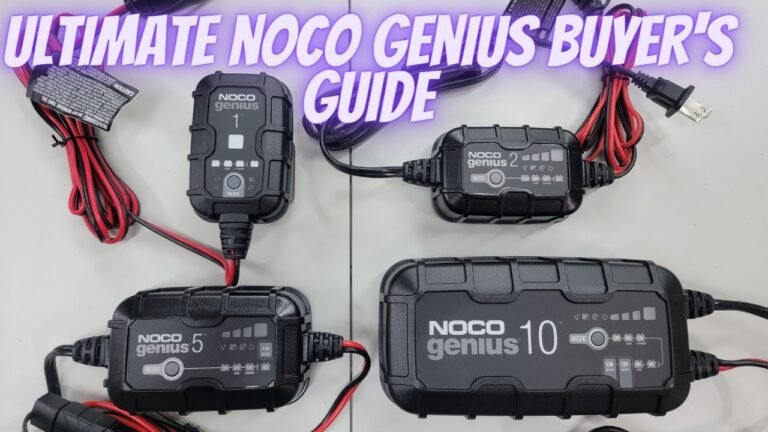
NOCO offers several output levels. The NOCO GENIUS1 is designed for small batteries and maintenance. The GENIUS5 and GENIUS10 provide more current for larger automotive batteries. However, these products are generally chargers, not replacements for a true jump starter or heavy-duty shop power supply.
Consider these examples:
• A 2-amp maintainer can suit a motorcycle stored for the winter.
• A 5-amp smart charger works well for many passenger cars.
• A 10-amp charger can reduce charging time for a larger car battery.
• A high-output Schumacher charger may be better for trucks, farm equipment, or frequent shop use.
Do not judge a charger only by its maximum amp rating. Smart charging matters because the charger should reduce current as the battery fills. Overcharging can cause heat, water loss, and battery damage, especially with older flooded batteries.

Battery Compatibility
Battery chemistry is one of the most important parts of the Schumacher vs NOCO Battery Charger decision. Lead-acid batteries include conventional flooded batteries, AGM batteries, and gel batteries. Deep-cycle batteries may look similar but often need a charging profile suited to repeated discharge.
Some modern chargers also support lithium-ion batteries that use a battery management system. You should never assume that a charger marked “12 volt” is safe for every 12-volt battery.
Before buying, check for support for:
• Standard flooded lead-acid batteries
• AGM batteries
• Gel batteries
• Deep-cycle batteries
• Lithium-ion or LiFePO4 batteries
• Six-volt batteries, if needed
NOCO’s GENIUS range includes models that support several battery types, including lithium on compatible products. Schumacher also sells models with lithium support, but this feature is not present across the entire brand.
Read the product label and manual. A lithium battery may require a special mode or a battery voltage above a certain level before charging begins. If the battery management system has disconnected the battery, a normal charger may not detect it.
A practical lesson is simple: match the charger to the battery label, not just the vehicle. Two vehicles can use the same voltage but different battery chemistry and charging needs.

Safety and Smart Charging Features
A modern Schumacher vs NOCO Battery Charger should provide automatic voltage control and protection against common connection errors. These features make charging safer for new users.
Common safety functions include:
• Reverse-polarity protection
• Short-circuit protection
• Overcharge protection
• Spark-resistant connection
• Overheating protection
• Automatic shutoff or float maintenance
Smart chargers usually move through several stages. They test the battery, deliver a stronger charge, reduce the current as the voltage rises, and then maintain the battery at a safe level. This is much safer than leaving an old manual charger connected for days.
NOCO chargers are often praised for their simple interface. They usually use clear buttons and lights to show the selected mode and charging status. This makes them friendly for drivers who want to plug in a charger without learning many controls.
Schumacher models can offer more information and more control. A display may show voltage, charge level, or selected mode. That is useful in a garage, but the extra settings can feel confusing if you only want basic maintenance.
Even the best smart charger cannot fix a battery with a shorted cell, severe internal damage, or extreme sulfation. Stop charging if the battery becomes swollen, leaks fluid, smells strongly of sulfur, or becomes unusually hot.

Ease of Use and Portability
NOCO usually has the advantage in portability. Many models are small enough to keep in a glove box, tool bag, or motorcycle storage case. Their connectors and optional accessories also make repeated use convenient.
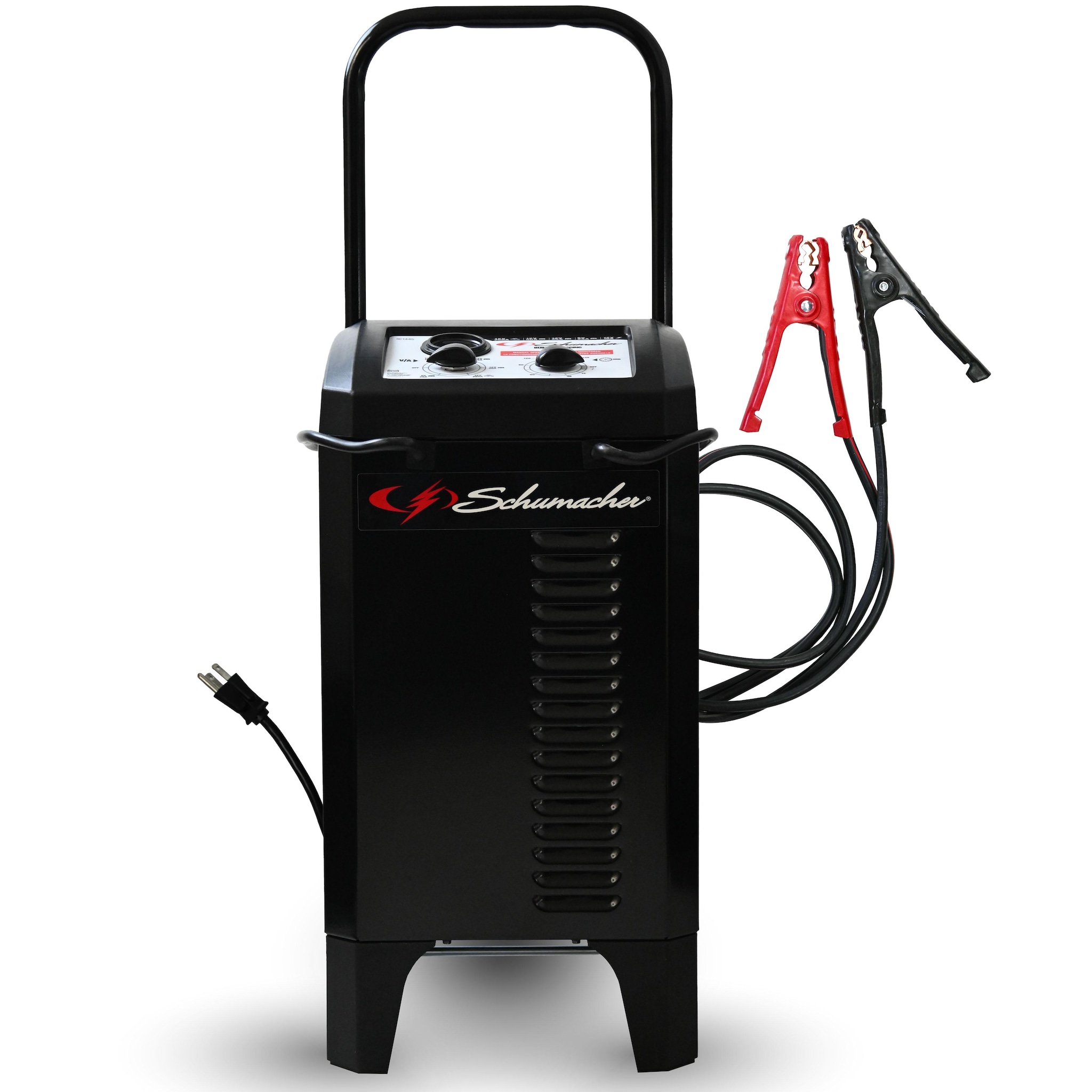
Schumacher chargers are often larger and heavier, especially models with a high output or engine-start function. They may be less convenient for travel, but the size can support stronger components and better garage performance.
Think about where you will use the charger:
• For a home garage, a larger Schumacher unit may be easy to store and use.
• For a motorcycle or weekend car, a compact NOCO may be more practical.
• For a boat, choose a model with enough output and suitable marine battery support.
• For roadside emergencies, a charger with engine-start support may help, but a dedicated lithium jump starter is often faster.
In my experience comparing charger designs, the most common mistake is buying a powerful unit that is too inconvenient to use. A charger that stays in a closet cannot help a battery. Small size can be a major benefit if it encourages regular maintenance.
Maintenance and Battery Repair Modes
Battery maintainers are useful for vehicles that sit for long periods. A stored car slowly loses charge through alarms, computers, and other electrical systems. A maintainer keeps the battery near full without continuously forcing maximum current into it.
Both Schumacher and NOCO sell products with maintenance functions. These chargers can monitor battery voltage and provide small amounts of current when needed.
Some models also include a repair, recondition, or desulfation mode. This mode may help a battery with mild lead sulfate buildup. It cannot restore every old battery, and it should not be treated as a guaranteed repair.
Use repair modes carefully:
• Follow the manual’s battery type instructions.
• Disconnect sensitive vehicle electronics when the manual requires it.
• Do not use repair mode on a battery that is damaged or leaking.
• Avoid leaving repair mode active without supervision.
• Test the battery after charging with a battery tester or professional load test.
A charger can maintain a healthy battery, but it cannot replace a worn battery. If the vehicle battery loses power again after a full charge, check for a parasitic drain, poor alternator output, loose terminals, or an aging battery.
Schumacher vs NOCO Battery Charger for Different Vehicles
The best Schumacher vs NOCO Battery Charger depends on the vehicle and your main goal.
Cars and SUVs
For a normal car or SUV, a 5-amp or 10-amp smart charger is often enough. NOCO is a strong choice for simple maintenance and compact storage. Schumacher may be better if you also want a display, higher output, or engine-start assistance.
Trucks and Work Vehicles
Large trucks may benefit from a higher-output Schumacher charger. Check the battery capacity and whether the truck uses one battery or multiple batteries. A small maintainer may keep a charged battery full, but it may take a long time to recover a deeply discharged one.
Motorcycles
Motorcycle batteries usually need a low-current charger. A 1-amp or 2-amp maintainer is often more suitable than a powerful automotive charger. Confirm that the charger supports AGM or lithium chemistry if your motorcycle uses one.
Boats and RVs
Boats and RVs may use deep-cycle batteries, starting batteries, or battery banks. Choose a charger that matches the battery voltage and chemistry. For multiple batteries, ask a qualified technician before connecting a charger, because series and parallel setups require careful planning.
Classic Cars
Classic cars may have older flooded batteries and simpler electrical systems. A Schumacher charger with manual control can be useful, but automatic protection still matters. Avoid leaving a high-output charger connected unattended.

Price, Warranty, and Long-Term Value
NOCO and Schumacher both offer products at several price levels. A basic maintainer costs less than a charger with high output, battery testing, engine-start power, and multiple battery modes.
A fair value comparison should include:
• Charging output
• Supported battery chemistry
• Cable length
• Connector quality
• Weather resistance
• Warranty period
• Replacement accessories
• Ease of returning or servicing the unit
Do not compare only the retail price. A cheaper charger may lack lithium support, a useful display, or the correct connector for your vehicle. On the other hand, an expensive charger may provide features you never use.
Warranty terms can change by model and region. Check the current product page and manual before purchase. Also remember that charger warranties normally do not cover damage caused by incorrect polarity, water exposure, misuse, or an unsuitable battery.

How to Choose the Right Charger
Use this simple process when comparing a Schumacher vs NOCO Battery Charger.
-
Check the battery label. Find the voltage, chemistry, and capacity.
-
Decide your main task. Do you need maintenance, normal charging, recovery, or engine-start support?
-
Choose the right output. Small batteries need low current, while larger batteries may need more.
-
Check physical use. Pick a compact charger for travel and a stronger unit for garage work.
-
Confirm safety features. Look for reverse-polarity and overcharge protection.
-
Read the exact manual. Brand names do not guarantee compatibility.
-
Consider accessories. Ring terminals, alligator clips, extension leads, and storage cases can affect convenience.
For many drivers, NOCO is the better choice for easy battery maintenance. For users who want more output and more garage functions, Schumacher may offer better value.

Common Mistakes to Avoid
Even a good charger can cause problems when used incorrectly. The most common mistake is connecting the positive and negative clamps to the wrong terminals. Smart chargers may block the connection, but you should never rely on that protection.
Avoid these errors:
• Charging a frozen battery
• Using a 12-volt setting on a six-volt battery
• Selecting lithium mode for a lead-acid battery
• Charging in a closed space without ventilation
• Connecting to damaged or swollen batteries
• Leaving a manual charger connected too long
• Using thin or damaged extension cords
• Ignoring corrosion on the battery terminals
Park the vehicle in a safe, dry place. Turn off accessories and follow the connection order in the manual. After charging, unplug the charger from the wall before removing the clamps unless the instructions say otherwise.
A battery that repeatedly needs charging deserves a full diagnosis. Charging it again and again may hide an alternator problem or electrical drain.
Schumacher vs NOCO Battery Charger: Which One Wins?
There is no single winner for every driver. The right choice depends on whether you value power, portability, controls, or maintenance.
Choose Schumacher when:
• You want higher charging output.
• You need engine-start assistance.
• You work on trucks, equipment, or several vehicles.
• You prefer a display and more control options.
• You want one charger for garage tasks.
Choose NOCO when:
• You want a small and simple charger.
• You mainly maintain a car, motorcycle, or boat battery.
• You value easy automatic operation.
• You need a portable unit for travel.
• You want a clean connector system and simple status lights.
The Schumacher vs NOCO Battery Charger debate is less about brand quality and more about matching the tool to the job. A compact NOCO may be perfect for keeping a weekend car ready. A stronger Schumacher may be the better garage tool when a large battery needs fast recovery.
Frequently Asked Questions About Schumacher vs NOCO Battery Charger
Is Schumacher better than NOCO for car batteries?
Schumacher can be better when you need higher output, battery testing, or engine-start support. NOCO may be better for simple, automatic charging and long-term maintenance.
Can a NOCO charger charge a completely dead battery?
Some NOCO models can begin charging a deeply discharged battery, but the battery must still meet the charger’s detection requirements. If the battery voltage is extremely low or the battery has an internal failure, the charger may not start.
Can a Schumacher charger be used as a battery maintainer?
Many Schumacher smart chargers include float or maintenance modes. Check the exact model because not every Schumacher charger is designed for continuous connection.
Which charger is better for a motorcycle battery?
A low-current NOCO or Schumacher maintainer can work well for a motorcycle battery. Confirm the battery chemistry and avoid using a high-output setting that exceeds the battery maker’s guidance.
Can these chargers charge lithium batteries?
Some Schumacher and NOCO models support lithium-ion or LiFePO4 batteries, while others support only lead-acid batteries. Read the label carefully and select the lithium mode only when the battery and charger are compatible.
Does a battery charger fix a bad alternator?
No. A charger can refill the battery, but it cannot repair an alternator. If the battery goes flat while driving or soon after charging, test the alternator and vehicle charging system.
Conclusion
The Schumacher vs NOCO Battery Charger choice comes down to your daily needs. Schumacher is often the stronger option for high output, larger vehicles, engine-start support, and garage work. NOCO is often the better fit for compact storage, easy controls, motorcycle use, and dependable battery maintenance.
Check your battery voltage, chemistry, capacity, and intended use before buying. Pick a charger you can use safely and often, then follow the manual every time. Explore the exact model specifications before ordering, and share your charger experience or questions in the comments.