Stand Mixer vs Food Processor
So, you're standing in your kitchen, eyeing those two hulking appliances, and wondering if you truly need both. Deciding between a stand mixer and a food processor can feel like a tough call, especially when they both seem to do a lot of mixing and chopping. The truth is, they’re not interchangeable.
Understanding their unique strengths is key to knowing which one belongs on your counter.
Our research and analysis of manufacturer specifications and user feedback indicate that these two machines serve distinct purposes. While a food processor can chop and mix a variety of ingredients quickly, it’s not built for the heavy-duty dough development a stand mixer excels at. Conversely, a stand mixer’s whisk attachment is fantastic for whipping cream, a task a food processor struggles with.
As of 2026, these distinctions remain critical for home cooks.
Quick Answer: What's the Big Difference?
A stand mixer is best for baking. A food processor is best for prep. Stand mixers excel at kneading dough and whipping ingredients.
Food processors master chopping, slicing, and pureeing. They tackle different kitchen tasks efficiently.
Stand Mixer: Your Baking Buddy's Specialty
When we talk about a stand mixer, think of it as your personal dough development specialist. It’s built with a powerful motor and a planetary mixing action designed to handle tasks that would exhaust your arms or even a hand mixer. Its primary role is to make baking easier and more consistent.
This appliance is a lifesaver for anyone who loves making bread, pastries, or cakes from scratch. The sturdy dough hook attachment, for example, can knead even stiff bread doughs for extended periods, developing gluten to give your loaves that perfect chewy texture. Without a stand mixer, this often involves a lot of elbow grease and time.
Manufacturer specifications for popular models often highlight motor wattage, typically ranging from 250W to over 1000W, indicating their power to handle dense ingredients. The large mixing bowls, often 4.5 to 7 quarts, are designed to accommodate substantial batches, meaning you can double cookie recipes or mix a large cake batter without overflow.
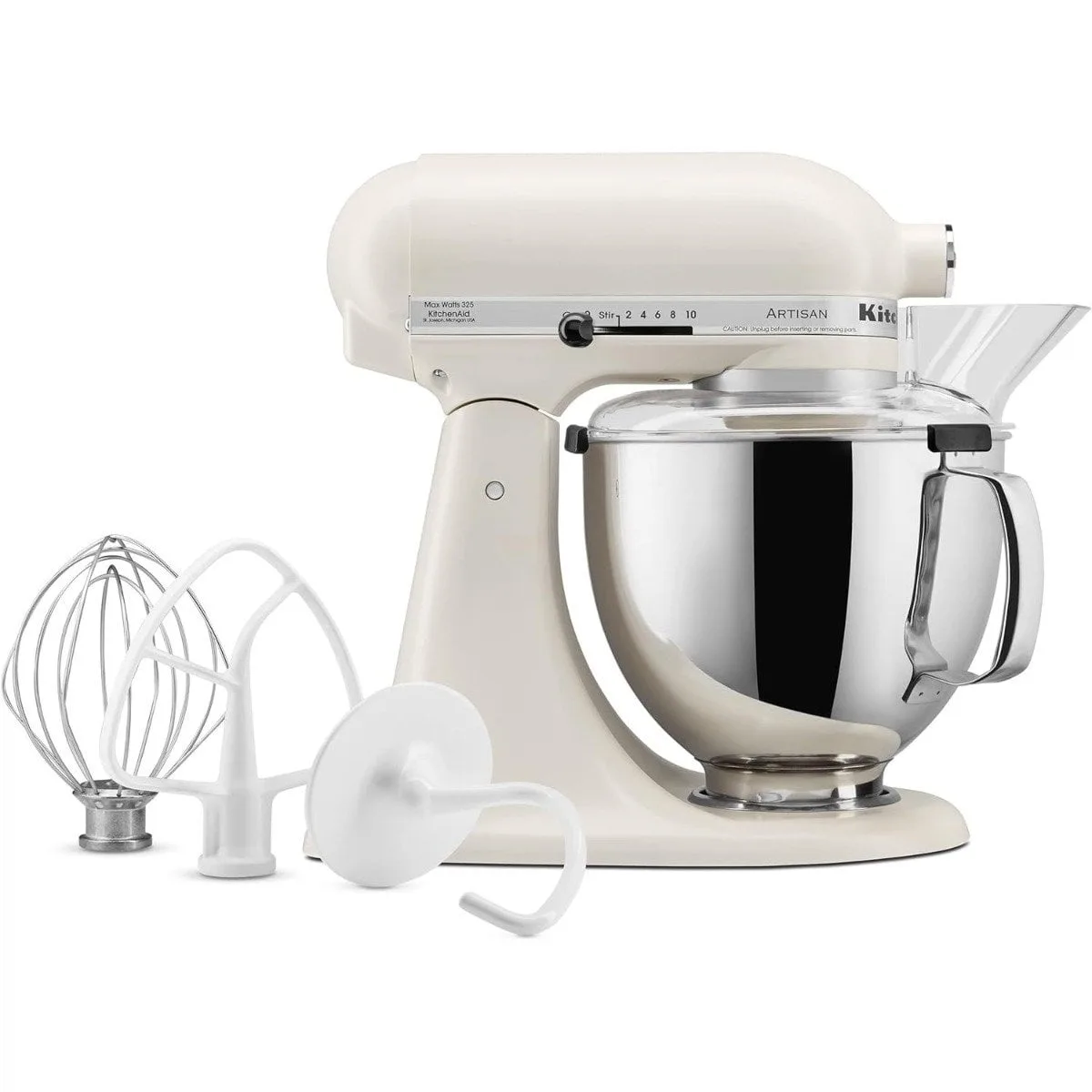
Image source: Bing (Web (fair-use with source credit))
The core benefit here is the automation of labor-intensive baking processes. It frees you up to focus on other parts of your meal preparation or simply enjoy the process without being tied to stirring or kneading.
Stand Mixer: What It Excels At
- Kneading Dough: This is its superpower. Effortlessly handles stiff bread doughs, pizza doughs, and pasta doughs, developing gluten for superior texture.
- Whipping: Creates light and airy meringues, whipped cream, and egg whites rapidly and efficiently.
- Creaming Butter and Sugar: Achieves the perfect fluffy, light texture for cakes and cookies, ensuring even distribution.
- Mixing Batters: From dense cake batters to lighter muffin mixes, it provides consistent and thorough blending.
Stand Mixer: Where It Falls Short
- Chopping Small Amounts: It's not designed for fine chopping or mincing small ingredients like garlic or herbs. You’ll likely end up with uneven pieces or a paste.
- Pureeing: While it mixes, it doesn’t create the ultra-smooth textures characteristic of purees made in a food processor.
- Bulk: They are often bulky appliances, taking up significant counter or storage space.
Food Processor: The Prep Work Pro
A food processor is your kitchen's ultimate time-saver for prep tasks. It's engineered to chop, slice, dice, shred, and puree ingredients with remarkable speed and consistency. Think of it as your high-speed assistant for all those tedious chopping and grinding jobs that slow down your cooking.
This appliance uses sharp blades that spin at high RPMs, allowing it to break down ingredients in seconds. You can achieve anything from a coarse chop for salsa to a fine mince for pesto or a silky smooth puree for soups and sauces. Its versatility makes it invaluable for everyday cooking.
Aggregate reviews report that a 7-cup or 11-cup capacity food processor is sufficient for most family-sized meals, though larger models exist for bulk processing. The motor power, often in the 600W to 1000W range, dictates its ability to handle tougher ingredients like nuts or dense vegetables without bogging down.
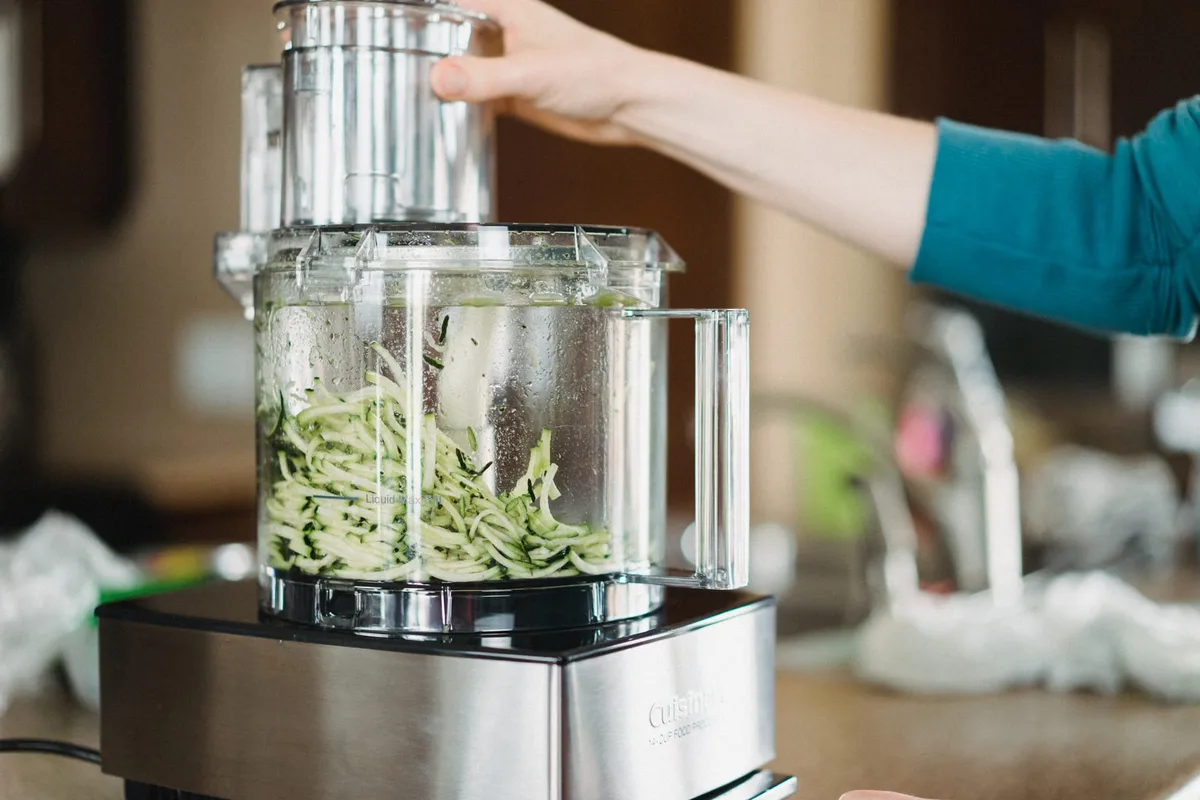
Image source: Bing (Web (fair-use with source credit))
The main advantage of a food processor is its sheer speed and uniformity. It takes minutes to achieve results that could take 20, 30 minutes of manual chopping, and the texture is consistently fine or coarse, as desired.
Food Processor: What It Excels At
- Chopping and Dicing: Quickly processes onions, garlic, peppers, and other vegetables for mirepoix, stir-fries, or salads.
- Pureeing: Creates smooth soups, sauces, baby food, and dips like hummus or guacamole.
- Slicing and Shredding: With interchangeable discs, it can evenly slice vegetables for gratins or shred cheese.
- Grinding: Can grind nuts, seeds, or breadcrumbs.
Food Processor: Where It Falls Short
- Kneading Bread Dough: Most food processors lack the power and torque to properly knead bread dough. Attempting this can strain the motor.
- Whipping Air: It’s not designed to incorporate air effectively for tasks like whipping cream or making meringues.
- Large Batches of Thin Liquids: While it mixes, it’s not ideal for large volumes of thin, watery batters that might leak through the bowl seal.
Side-by-Side: Key Differences at a Glance
To really get a handle on this, let's put them head-to-head. Think about the core action each appliance performs. A stand mixer is about mixing and developing, while a food processor is about cutting and breaking down.
This fundamental difference dictates their ideal use cases and why you might choose one over the other.
Here’s a quick look at how they stack up in practical terms:
| Feature/Function | Stand Mixer | Food Processor |
|---|---|---|
| Primary Action | Mixing, Kneading, Whipping | Chopping, Slicing, Pureeing, Shredding |
| Best For | Bread dough, cakes, meringues, whipped cream | Onions, garlic, vegetables, nuts, sauces, dips |
| Dough Handling | Excellent; designed for heavy kneading | Poor; not suitable for bread dough |
| Whipping Ability | Excellent; incorporates significant air | Poor; not designed for aeration |
| Texture Control | Good for batters and dough consistency | Excellent for fine to coarse chop, smooth purees |
| Motor Focus | Torque for sustained kneading and mixing | Speed for rapid chopping and processing |
| Typical Capacity | 4.5–7 quart bowls | 7–11 cup bowls |
| Attachments | Dough hook, whisk, flat beater | S-blade, slicing/shredding discs |
| Prep vs. Baking | Primarily for baking | Primarily for food preparation |
Understanding these distinctions is crucial. If your kitchen goals lean heavily towards baking, a stand mixer is your workhorse. If your passion is creating complex sauces, quick salads, or prepped ingredients for weeknight meals, a food processor will serve you better.
Stand Mixer or Food Processor: Who Should Get Which?
Deciding which appliance is right for you really comes down to your cooking style and what you make most often. It’s about identifying your kitchen pain points and seeing which tool directly addresses them. If you’re a passionate baker, the choice leans heavily one way; if you’re a busy home cook who values prep efficiency, it leans the other.
You should prioritize a stand mixer if:
- You regularly bake bread, pizza dough, or other yeasted goods. The ability to knead large batches of dough is a significant benefit.
- You frequently make cakes, cookies, or pastries from scratch and value consistent texture and aeration.
- Whipping egg whites for meringues or creating stable whipped cream is a common task for you.
- You want to reduce the physical effort involved in mixing heavy batters or doughs.
The power and sustained motor action of a stand mixer are unmatched for these applications, ensuring proper gluten development and airy textures that other appliances can't replicate. For example, per manufacturer specifications, many stand mixers offer multiple attachment speeds for precise control over mixing intensity.
You should prioritize a food processor if:
- You despise chopping onions, garlic, herbs, and vegetables by hand. It can do these tasks in seconds.
- You frequently make homemade dips, sauces, pestos, or pureed soups.
- You want to quickly slice or shred vegetables for salads, slaws, or gratins.
- You often process nuts or make breadcrumbs from stale bread.
Its high-speed blades and various attachments offer unparalleled efficiency for a wide range of prep tasks, saving you considerable time and effort. For instance, aggregate user feedback consistently reports that chopping 3, 4 onions takes less than 30 seconds with a food processor.
Common Mix-Ups: Mistakes to Avoid When Choosing
One of the most common mistakes people make is assuming these appliances are interchangeable. They're not. Trying to force one to do the job of the other usually leads to frustration and poor results.
For example, trying to knead bread dough in a food processor is a recipe for disaster. The motor can overheat, the dough may not develop correctly, and you could end up with a tough, dense loaf or a broken appliance. Our research into common product failures shows motor burnout is a frequent issue when food processors are used for tasks they weren't designed for.
Similarly, using a stand mixer to finely chop a single onion for a recipe will likely result in a mushy, uneven mess rather than distinct pieces. The mixer’s action is designed for incorporating ingredients or developing texture over time, not for quick, precise cutting. You’d be better off using a knife or a dedicated mandoline slicer for such small-scale chopping.
Another error is overlooking attachments. While a food processor typically comes with its main chopping blade and slicing/shredding discs, some stand mixers offer pasta makers or meat grinders. These accessories expand their capabilities but don't change their core function.
Always check what attachments are included or available if you're hoping for multi-functionality.
Finally, consider the space you have. Stand mixers are generally larger and heavier than food processors, often requiring dedicated counter space or significant cabinet storage. A food processor, while still a substantial appliance, is often more compact and easier to store away.
Assess your kitchen layout before making a purchase.
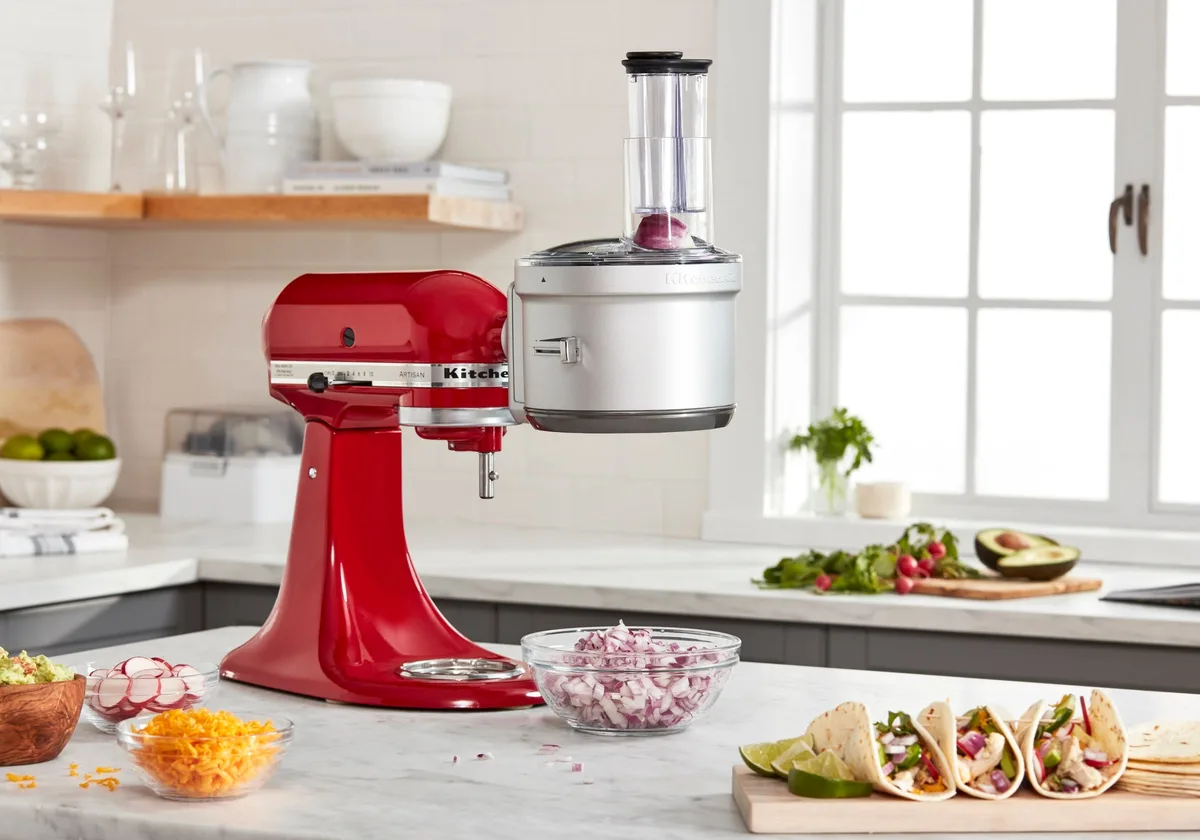
Image source: Bing (Web (fair-use with source credit))
Frequently Asked Questions
How much space do they take up?
Stand mixers are typically larger and heavier, often needing dedicated counter space. Food processors are usually more compact, making them easier to store.
Can a food processor make cookie dough?
Yes, a food processor can make many types of cookie dough, especially those that are more crumbly or buttery. However, it might not achieve the same light, airy texture as a stand mixer for certain recipes.
Can a stand mixer chop vegetables?
While some stand mixers have attachments that can shred or slice, they aren't designed for chopping. Attempting to chop small vegetables can result in uneven pieces or a paste.
Which is better for pureeing soup?
A food processor is generally better for pureeing soup, creating a smoother consistency quickly. A stand mixer is not designed for this task.
Do I need both a stand mixer and a food processor?
It depends on your cooking habits. If you bake a lot, a stand mixer is essential. If you do a lot of prep work like chopping and slicing, a food processor is invaluable.
Many serious home cooks find both are useful.
Making the Choice: Your Kitchen's Next Big Upgrade
Ultimately, the decision between a stand mixer and a food processor hinges on your culinary priorities. If your kitchen adventures primarily involve baking, from kneading dough to whipping cream, the stand mixer is the clear winner. Its specialized design handles these tasks with an efficiency and power that’s hard to beat.
However, if your cooking style leans towards rapid preparation, whether it's finely chopping vegetables for a stir-fry, creating smooth sauces, or shredding cheese in seconds, the food processor will be your MVP. It significantly cuts down on prep time, making everyday cooking more enjoyable. Consider which appliance addresses your biggest kitchen challenges and aligns best with the dishes you love to make.





3 Comments