How To Use A Recovery Board: Easy Off-Road Guide
A recovery board helps you escape soft ground by creating traction and a stable path for your tires.
If you drive off-road, camp in remote places, or just like being prepared, knowing how to use a recovery board can save you time, stress, and a long walk for help. I’ve used recovery boards in mud, sand, and snow, and the biggest lesson is simple: they work best when you use them before you make the problem worse. In this guide, I’ll walk you through how to use a recovery board the right way, what mistakes to avoid, and how to stay safe while getting unstuck.

What a recovery board is and why it works
A recovery board is a strong traction tool placed under a stuck tire to help it grip loose terrain. You may also hear them called traction boards, sand ladders, or recovery tracks. They are common in overlanding, off-roading, and winter driving because they give the tire something firm to bite into.
The idea is simple. Instead of spinning in mud or sinking deeper into sand, the tire climbs onto the board. That creates forward motion and can help the vehicle drive out under its own power. I like to think of them as a portable road you carry in the back of your rig.
Recovery boards are useful in:
• Sand
• Mud
• Snow
• Loose gravel
• Soft shoulders
They are not magic, though. If the vehicle is deeply buried or resting on the frame, you may need to dig, reduce weight, or use a winch too.
When you should use a recovery board
The best time to use a recovery board is when the tires still have some chance of moving. If you wait until the vehicle is fully buried, the recovery gets harder and more risky. In my experience, early action is the difference between a quick self-recovery and a full rescue job.
Use recovery boards when:
• The tires are spinning with little forward motion
• The vehicle is stuck in soft sand or mud
• Snow is packed under the drive tires
• You need to get out of a rut or off a slippery shoulder
Avoid using them if:
• The vehicle is unstable on a steep slope
• The underside is sitting hard on the ground
• The terrain is so deep that the boards cannot reach firm support
A recovery board is most effective when the problem is traction, not heavy underbody entrapment.

How to use a recovery board step by step
Using a recovery board is straightforward, but the details matter. Small mistakes can cause the board to slip, fly out, or break. Here’s the method I trust and use in real recovery situations.
- Stop wheel spin
The first rule is to stop flooring it. Spinning the tires just digs the vehicle deeper. Keep calm, ease off the accelerator, and assess the terrain.
- Clear around the tires
Use a shovel, your hands, or a recovery tool to remove packed material from around the drive tires. Dig out in front of the tire and under the axle area if needed. This gives the board a flatter surface and more room to work.
- Place the recovery board correctly
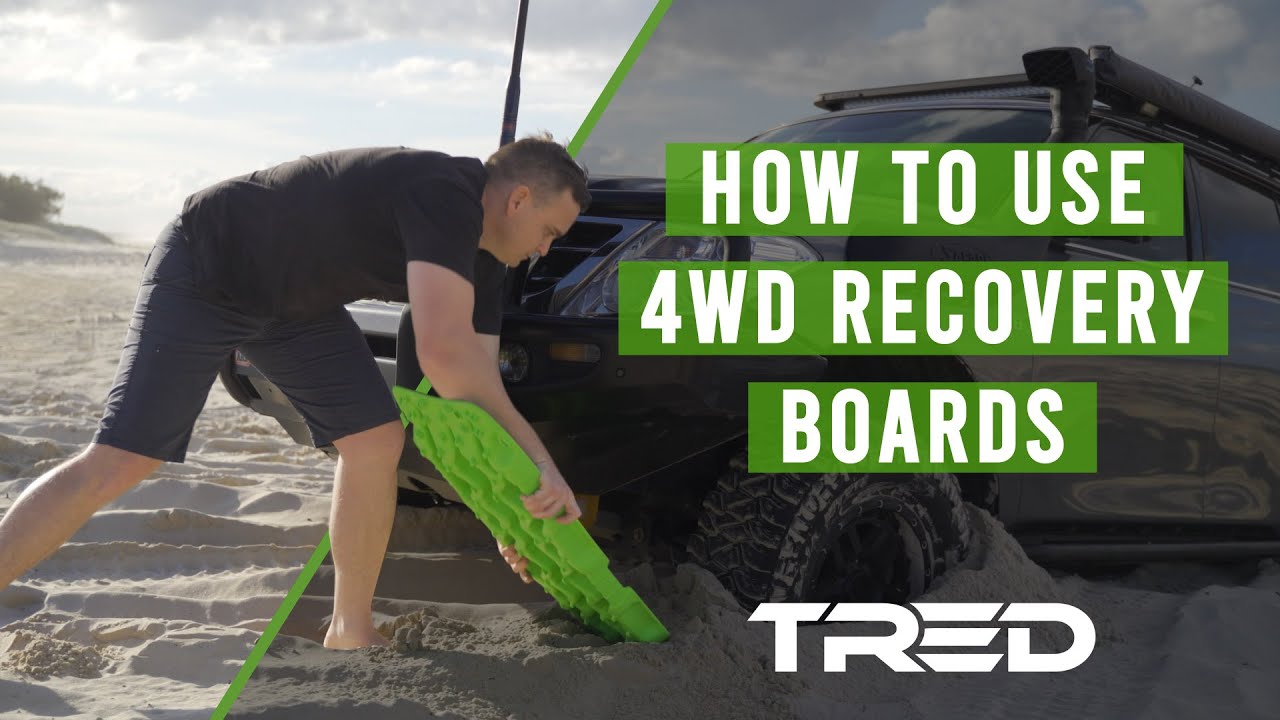
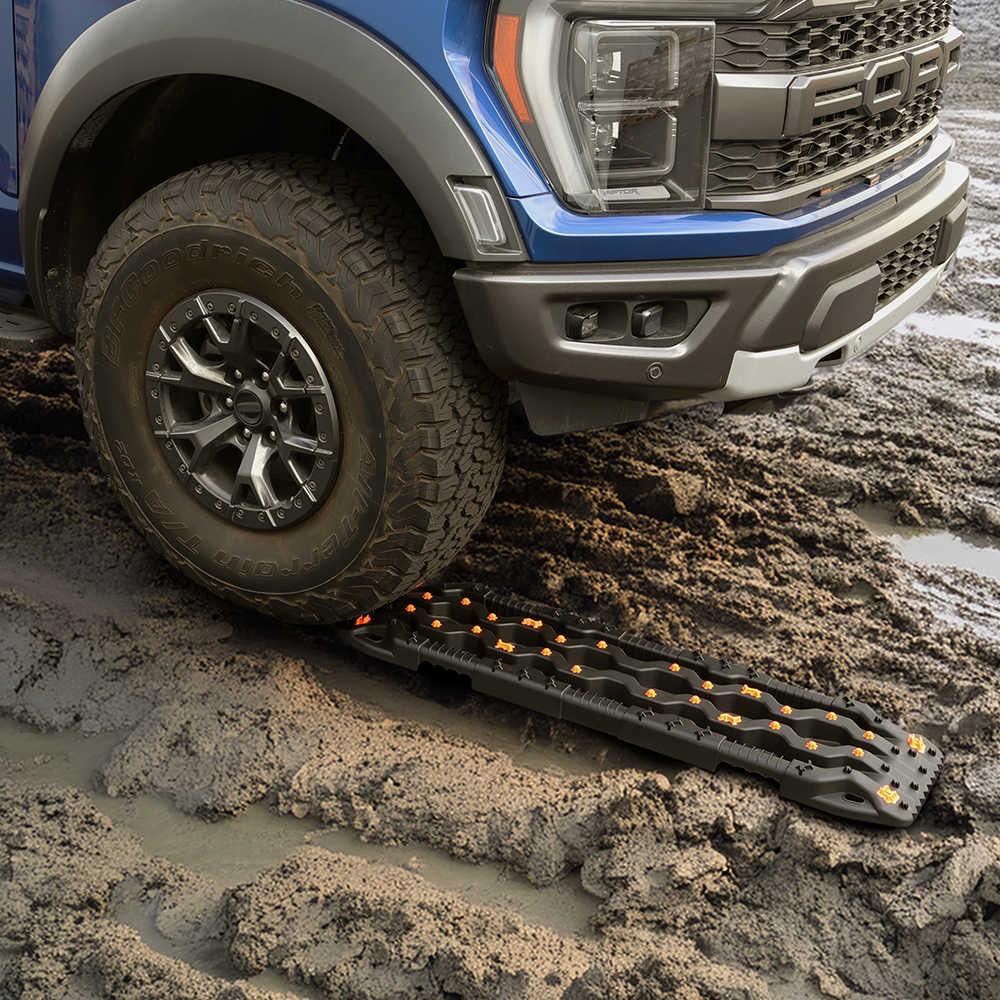
Slide the board under the drive tire, with the cleats or grip surface facing the tire. The board should extend forward in the direction you want the vehicle to move. If possible, angle it so the tire can climb onto it smoothly.
- Add support if needed
If the ground is very soft, place the board on firmer material or stack small amounts of packed sand or snow beneath it. The goal is to stop the board from sinking immediately. I’ve found this step especially helpful in beach sand.
- Engage gently
Use low gear or 4WD low if your vehicle has it. Apply steady throttle, not a sudden burst. The tire should climb onto the board and begin rolling forward.
- Keep moving
Once the vehicle starts moving, keep a smooth pace until you reach firm ground. Do not stop on the soft section unless you have to. If you stop too early, you may sink again.
- Recover the board
As soon as it is safe, stop on solid ground and remove the board. Clean off mud, sand, or snow before storing it. A dirty board is harder to use next time and can damage storage gear.

Common mistakes to avoid
I’ve seen a lot of recoveries go sideways because of small errors. The good news is that most of them are easy to avoid once you know what to look for.
• Spinning the tires too much, which digs the vehicle deeper
• Placing the board too far back from the tire
• Using too much throttle and launching the board
• Forgetting to dig out packed material first
• Standing in the line of fire if the board slips
• Using worn or cracked boards past their limit
• Failing to match the board size to the vehicle weight
One of the biggest mistakes is treating the board like a ramp instead of a traction aid. It works best when the tire can roll onto it with controlled pressure.
Safety tips for recovery board use
Recovery gear can be powerful, and power deserves respect. A recovery board under load can flex, snap, or eject with force if used the wrong way.
Keep these safety tips in mind:
• Stand clear of the front and rear of the tire path
• Wear gloves when digging or handling muddy boards
• Use recovery boards rated for your vehicle weight
• Check for cracks before each trip
• Keep hands and feet away from the tire while moving
• Never place your body under the vehicle unless it is properly supported
If you are recovering in a group, give clear voice commands before starting. Good communication is just as important as the gear itself.
Types of recovery boards and how to choose one
Not all recovery boards are built the same. Some are better for light vehicles, while others are made for heavier rigs and harsh use. Choosing the right one depends on where and how you travel.
Common types include:
• Basic polymer boards: Light, affordable, and common for casual off-road use
• Reinforced boards: Better for heavier vehicles and repeated use
• Metal traction tracks: Durable but heavier and less common for modern travel
• Folding or compact boards: Easier to store in tight spaces
When choosing a recovery board, look for:
• Load rating
• Grip design
• UV resistance
• Flexibility in cold weather
• Ease of mounting and storage
From my own experience, a slightly larger board is often worth the extra space. It gives you more surface area and better confidence in soft terrain.
Recovery board use in sand, mud, and snow
Different surfaces need slightly different technique. The basic idea stays the same, but traction changes from one environment to another.
In sand:
• Deflate tires if appropriate for your setup
• Dig a small ramp in front of the tire
• Place the board firmly under the tire
• Keep momentum smooth and steady
In mud:
• Clear thick mud from the tread and under the tire
• Use the board on the firmest point available
• Expect more suction, so avoid hard throttle
• Clean the board quickly after use, because mud can make it slick
In snow:
• Pack the snow lightly where the board will sit
• Make sure the board does not sink into powder
• Use gentle throttle and avoid sudden wheel spin
• Brush off ice buildup before storing the board
Each surface behaves like a different kind of trap. Sand flows, mud sticks, and snow compresses, so your setup should match the ground.
Maintenance and storage tips
A recovery board only helps if it is ready when you need it. That means basic care after every use.
Do this after recovery:
• Wash off mud, salt, sand, or snow
• Check for cracks, deep gouges, or bent teeth
• Make sure mounting straps and brackets are tight
• Store the boards where they will not warp in heat
If you drive in salty beach conditions, rinse the boards well. Salt can damage hardware and shorten the life of your recovery gear.
My practical advice from real use
The biggest lesson I’ve learned is to treat recovery boards as part of a system, not a standalone fix. They work best with a shovel, tire pressure control, and patience. On one sandy trip, I saw a vehicle get unstuck in less than five minutes because the driver stopped spinning early and set the boards carefully. On another, someone buried the tires to the hubs before trying, and the boards barely had a chance.
That taught me something useful. Recovery boards reward calm thinking. The less drama you create at the start, the easier the recovery usually is.
Frequently Asked Questions of How to use a recovery board
How do you place a recovery board under a tire?
Place the board directly in front of the drive tire with the traction surface facing up toward the tread. Make sure it lines up with the direction you want the vehicle to move.
Can recovery boards work on all vehicles?
They work on many vehicles, including SUVs, trucks, and some vans, but the board must match the vehicle’s weight and the terrain. Heavier vehicles need stronger boards and more careful technique.
Do you need to air down tires before using a recovery board?
Not always, but lowering tire pressure can improve flotation in sand and soft ground. Just make sure you know the right pressure for your vehicle and re-inflate when you return to firmer terrain.
What if the recovery board slips out?
Stop immediately and reassess the setup. You may need more digging, a better board angle, or less throttle to keep the tire climbing instead of spinning.
Can you use recovery boards in snow?
Yes, recovery boards can work very well in snow, especially when packed under the drive tires. They are most effective when the snow is soft but not so deep that the vehicle is buried on the frame.
How do you clean recovery boards after use?
Rinse off dirt, mud, or salt with water and let them dry before storing. Cleaning them helps prevent wear and keeps the traction surface effective.
Conclusion
Learning how to use a recovery board can turn a bad day on the trail into a manageable problem. With the right placement, steady throttle, and a little patience, you can often get unstuck without needing outside help. The key is to act early, stay safe, and use the board as part of a smart recovery plan.
If you drive where mud, sand, or snow can trap your vehicle, it is worth practicing before you really need it. Keep your gear ready, know your setup, and build confidence one recovery at a time. If you found this guide helpful, explore more off-road recovery tips and share your own experience in the comments.