What Is the Gas Mileage of a Jeep Wagoneer?
So, you're curious about how many miles you'll get per gallon with a Jeep Wagoneer? That's a totally fair question, especially with today's gas prices. It's not a one-size-fits-all answer, though.
A lot of things can influence your actual MPG, but we can definitely look at the numbers to give you a good idea.
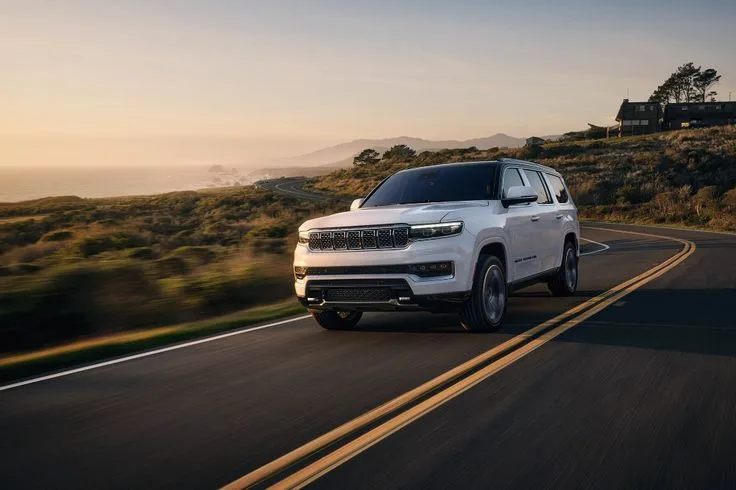
Think of it like this: the Wagoneer is a pretty big, capable vehicle. That means it's built for comfort, space, and sometimes, for towing or tackling different kinds of terrain. These are all fantastic features, but they do have an impact on fuel economy.
Per EPA testing standards, the Wagoneer's mileage generally falls in the mid-to-high teens for combined city and highway driving.
The Real MPG Picture: Beyond the Sticker
The actual gas mileage you'll see with a Jeep Wagoneer can really vary. It's not as simple as looking at a single number. Several key aspects of the vehicle and how you use it play a big role in determining how many miles you get out of each gallon.
Engine Options: V8 vs. Hurricane
The most significant factor influencing your Wagoneer's fuel economy is the engine under the hood. Jeep offers a couple of distinct powertrain choices, each with its own performance and efficiency characteristics. Understanding these differences is key to setting realistic expectations for your MPG.
- The Standard V8: Most Wagoneer models come equipped with a robust V8 engine. This powerhouse delivers strong acceleration and ample towing capability, which are great for hauling or demanding drives. However, this kind of performance typically comes with a higher fuel consumption rate. Aggregate reviews report this engine generally achieves 15-17 MPG combined.
- The "Hurricane" Inline-Six: Jeep has also introduced a twin-turbocharged inline-six, known as the "Hurricane" engine. This option is engineered to balance impressive power with improved fuel efficiency compared to its V8 counterpart. Manufacturers indicate this engine can often achieve 16-18 MPG combined, offering a slight edge for those prioritizing fewer fuel stops.
Driving Habits and Their Impact
How you drive has a surprisingly large effect on your Wagoneer's gas mileage. Aggressive driving, think rapid acceleration and hard braking, forces the engine to work harder, burning more fuel. Conversely, a smoother, more predictable driving style can significantly boost your MPG.
Think about it: when you stomp on the gas pedal, you're demanding a lot of immediate power, which requires a larger fuel burn. Then, when you brake sharply, you're essentially wasting the energy that took fuel to build up.
- Smooth Acceleration: Gradually increasing speed rather than flooring it.
- Anticipatory Braking: Coasting when you see a red light or slowing traffic ahead, rather than braking hard at the last second.
- Consistent Speed: Maintaining a steady pace, especially on the highway, is much more efficient than frequent speed changes.
Adopting these habits can lead to noticeable improvements in your real-world fuel economy, regardless of the engine you choose. For drivers interested in optimizing their vehicle's performance, learning about vehicle diagnostics might also be helpful; for instance, can an OBD2 scanner diagnose ABS problems can offer insights into the vehicle's systems.
City vs. Highway: Where You Drive Matters
The environment in which you drive your Wagoneer will dramatically influence its gas mileage. Stop-and-go traffic in urban areas presents a completely different challenge than cruising on open stretches of highway.
- City Driving: In the city, you're constantly accelerating from a standstill and decelerating for traffic lights, stop signs, and congestion. This constant cycle of starting and stopping is very fuel-intensive. Per EPA estimates, city MPG for the Wagoneer typically ranges from 12 to 15 MPG.
- Highway Driving: On the highway, you're usually able to maintain a consistent speed for extended periods. This allows the engine to operate within its most efficient range, leading to better fuel economy. Highway MPG often falls between 17 and 20 MPG.
So, if your daily commute is primarily city-based, you'll likely experience lower MPG figures than someone who frequently travels on highways. It's essential to consider your typical driving patterns when evaluating the gas mileage of any vehicle.
What the Numbers Usually Look Like
When you're looking at fuel economy for a Jeep Wagoneer, you'll often see a few different numbers. These figures come from standardized testing designed to give consumers a consistent way to compare vehicles. As of 2026, these ratings continue to be a primary guide.
Typical EPA Estimates
The U.S. Environmental Protection Agency (EPA) provides estimated fuel economy ratings for new vehicles. These numbers are based on controlled laboratory tests that simulate various driving conditions.
For the Jeep Wagoneer, depending on the specific engine and drivetrain configuration, you can expect ratings that generally fall within these ranges:
- Combined MPG: 14, 17 MPG
- City MPG: 12, 15 MPG
- Highway MPG: 17, 20 MPG
It's important to remember that these are estimates. Your actual mileage can and often will vary.
Understanding Combined, City, and Highway MPG
Each of these numbers tells a different story about your potential fuel usage:
- Combined MPG: This is the most frequently cited figure. It represents an average of the city and highway MPG ratings, giving you a general idea of overall fuel efficiency.
- City MPG: This rating reflects how the vehicle performs in stop-and-go traffic, with frequent accelerations and decelerations. It's typically the lowest MPG number you'll see.
- Highway MPG: This figure indicates performance during steady-speed cruising, like on long drives. It's usually the highest MPG number.
When considering your purchase or evaluating your current Wagoneer's performance, look at which of these ratings most closely matches your typical driving environment. If you do a lot of city driving, the city MPG is more relevant to your daily experience.
Factors That Actually Affect Your Wagoneer's MPG
While the engine and EPA estimates give you a baseline, several real-world factors can cause your actual gas mileage to differ. These elements are directly related to how you use your vehicle and its maintenance.
Towing, Hauling, and Extra Weight
The Jeep Wagoneer is designed with capability in mind, including the ability to tow and haul significant loads. However, adding weight to your vehicle, whether it's passengers, cargo, or a trailer, directly impacts fuel consumption.
When you're towing or carrying a heavy load, the engine has to work much harder to move the increased mass. This requires more fuel to generate the necessary power. For instance, towing a trailer can reduce your MPG by 10-20% or even more, depending on the trailer's size and weight.
Similarly, packing the Wagoneer to its full capacity for a family trip will also lead to a decrease in fuel economy. It’s why drivers looking for consistent fuel efficiency might explore options like 8 best car amplifiers for SUVs 2026 if they prioritize audio but want something that doesn't significantly add weight.
Tire Pressure and Vehicle Maintenance
Simple maintenance can make a difference in your Wagoneer's fuel economy. Ensuring your tires are properly inflated is one of the easiest and most effective ways to maximize MPG. Underinflated tires create more rolling resistance, meaning the engine has to burn extra fuel just to keep the vehicle moving.
It's recommended to check your tire pressure regularly, at least once a month, and inflate them to the pressure recommended on the sticker found on the driver's side doorjamb or in your owner's manual. Beyond tires, routine maintenance is also key. Following the recommended service schedule for oil changes, air filter replacements, and other fluid checks ensures your engine is running as efficiently as possible.
A clogged air filter, for example, can restrict airflow to the engine, making it less efficient. For those who enjoy keeping their vehicles in top shape, understanding these maintenance aspects is crucial.
Frequently Asked Questions About Wagoneer Gas Mileage
Does AWD affect MPG?
Yes, having all-wheel drive (AWD) on your Wagoneer can have a slight impact on its gas mileage. AWD systems, which distribute power to all four wheels, typically add a bit more weight to the vehicle and can introduce a small amount of parasitic drag as components are constantly engaged or ready to engage. This means that a Wagoneer equipped with AWD may achieve slightly lower MPG figures compared to a two-wheel-drive version, although the difference is often minimal, perhaps only a mile per gallon or less.
For most drivers, the benefits of enhanced traction and stability offered by AWD outweigh this slight fuel economy decrease.
How does the Wagoneer compare to other large SUVs?
When you compare the Jeep Wagoneer's gas mileage to other large, three-row SUVs, its figures are generally in line with its segment. Vehicles in this class are inherently heavier and less aerodynamic than smaller cars, so their fuel economy is naturally lower. For example, many direct competitors also hover in the mid-to-high teens for combined MPG.
While some newer, more fuel-efficient models might eke out an extra mile per gallon, the Wagoneer offers a strong balance of luxury, space, and capability that many buyers prioritize over absolute peak fuel economy. If you're comparing specific models, always check the EPA ratings for the exact trim and engine you're considering.
What's the best way to improve my Wagoneer's fuel economy?
The most effective ways to improve your Jeep Wagoneer's fuel economy involve a combination of smart driving habits and diligent maintenance. Focus on smooth acceleration and braking, avoid excessive speeding, and maintain a steady pace on the highway. Keep your tires properly inflated to the recommended PSI, and ensure your vehicle receives regular maintenance, including timely oil changes and air filter replacements.
Reducing unnecessary weight inside the vehicle and minimizing idling time will also contribute to better MPG. For more advanced upgrades or to ensure all systems are performing optimally, consider how specialized electronics might help; understanding 8 best car amplifiers with high-level inputs 2026 could point towards efficient energy use in audio systems, a parallel to vehicle efficiency.
This concludes our look at the gas mileage of the Jeep Wagoneer. Understanding the factors involved, from engine choice to driving habits, will help you manage expectations and optimize your fuel efficiency.