Slow Cooker Types
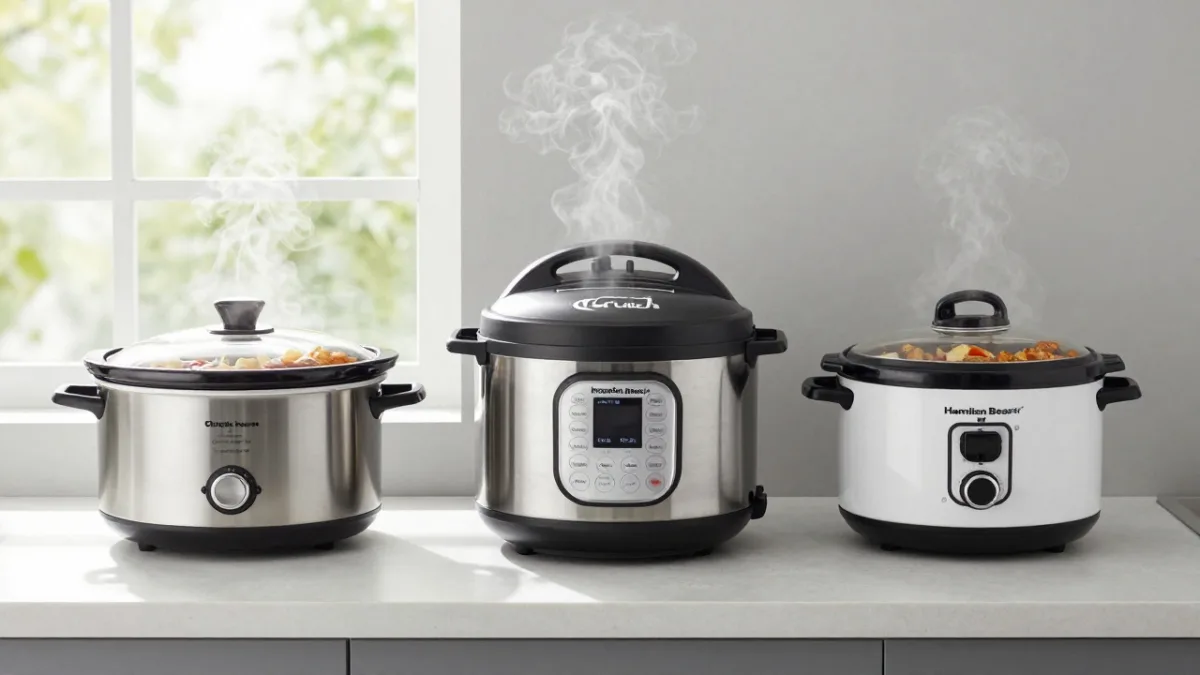
Image source: Bing (Web (fair-use with source credit))
Choosing Your Slow Cooker: A Guide to the Best Fit
Choosing the right kitchen tool can feel overwhelming, especially when you're just trying to make dinner. If you’re looking into slow cookers, you’ve probably noticed there’s a variety of slow cooker types out there, and figuring out which one fits your needs can be a bit of a puzzle. They all promise easy meals, but the features and how they operate can really change your cooking experience.
We've dug into what makes each kind tick, looking at everything from basic models to more advanced ones. Understanding the differences is key to finding a slow cooker that becomes your go-to gadget, not just another appliance gathering dust. For instance, manufacturer specifications often highlight capacities ranging from 1.5 quarts all the way up to 8 quarts, showing how much variety exists even within a single appliance category.
Let’s break down the options to help you make a choice you’ll be happy with.
Quick Answer
The main slow cooker types include classic, programmable, multi-cookers, and travel-friendly models. Classic cookers are basic, programmable ones add timers, multi-cookers offer more functions like pressure cooking, and travel versions secure for transport. Your best choice depends on your cooking frequency, desired features, and how you’ll use it.
Classic Slow Cookers: The Simple & Reliable Choice
This is your most straightforward, no-frills option. It's the workhorse many of us picture when we think of slow cooking. At its core, a classic slow cooker features a base unit with a heating element, a removable insert pot (usually ceramic or porcelain), and a lid.
You simply place your ingredients into the insert, set the pot into the base, cover it, and select a heat setting, typically Low, High, and sometimes a Warm function. The heat emanates from the sides of the base, gently cooking your food over several hours.
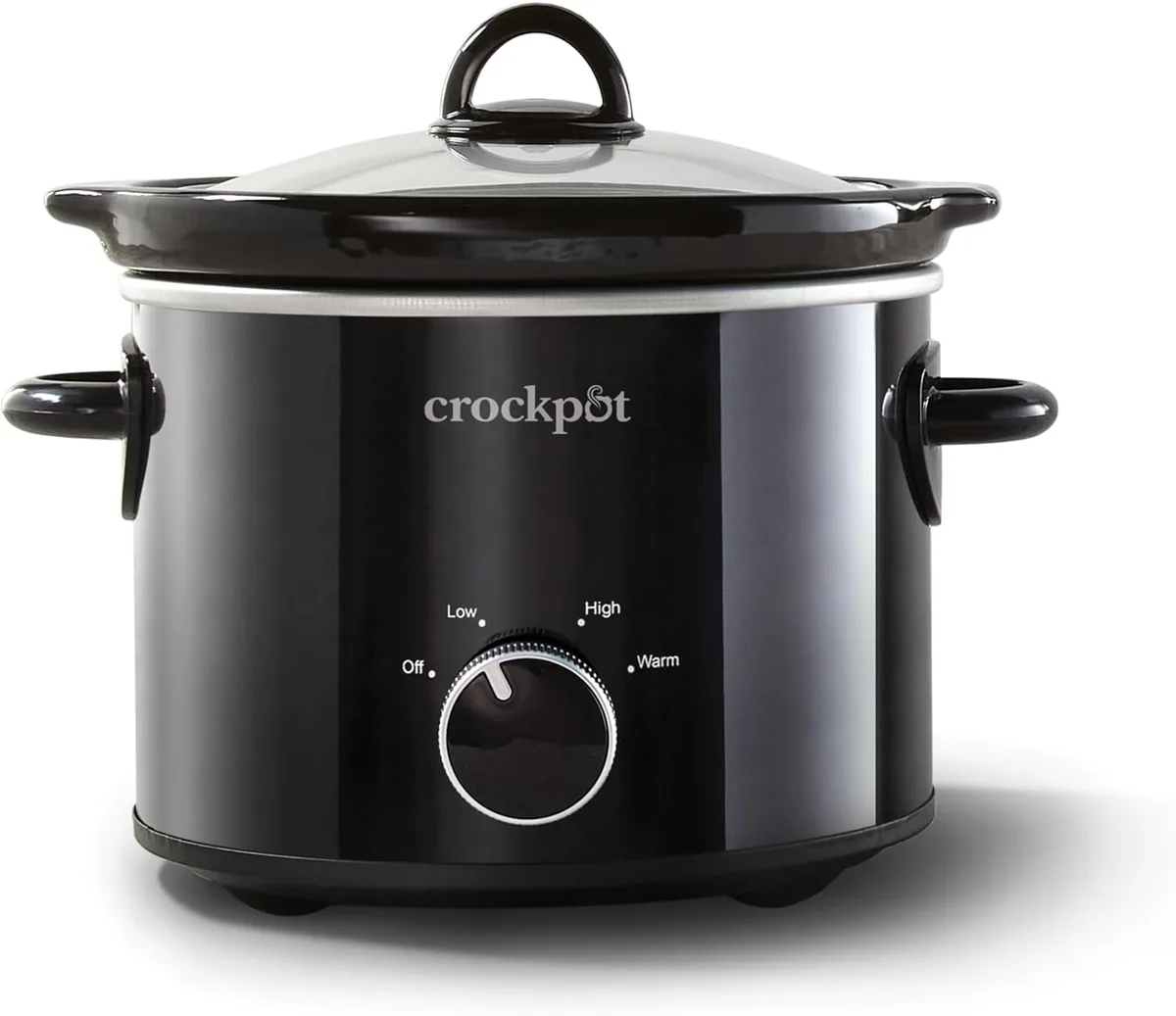
Image source: Bing (Web (fair-use with source credit))
- What it is: A basic appliance with a heating base, insert pot, and lid.
- How it works: Side heating elements warm the insert.
- Best for: Those who want simplicity and affordability. If you enjoy a true "set it and forget it" experience without needing complex settings, this is your machine. It's ideal for recipes that don't require precise timing. For example, if you're making a chuck roast that needs 8 hours on low, you just set it before you leave for work. These models are generally the most budget-friendly, often ranging from $25 to $50 depending on brand and size.
Pros and Cons of Classic Slow Cookers
Here's a quick rundown of what to expect:
| Feature | Pros | Cons |
|---|---|---|
| Simplicity | Extremely easy to operate. | Limited functionality. |
| Cost | Most affordable option. | Fewer advanced features. |
| Reliability | Consistent, straightforward cooking. | No timers or automatic shut-off. |
| Portability | Basic models are lighter than some. | Insert can be heavy when full. |
Programmable Slow Cookers: Set It, Forget It, and Be On Time
If you find yourself needing a bit more control over your cooking schedule, a programmable slow cooker might be your ideal kitchen companion. These models build upon the classic design by adding a digital control panel. This upgrade allows you to set a specific cooking time, and once that time is up, the unit automatically switches to a "Keep Warm" setting.
This means you can go about your day, knowing your meal won't overcook.
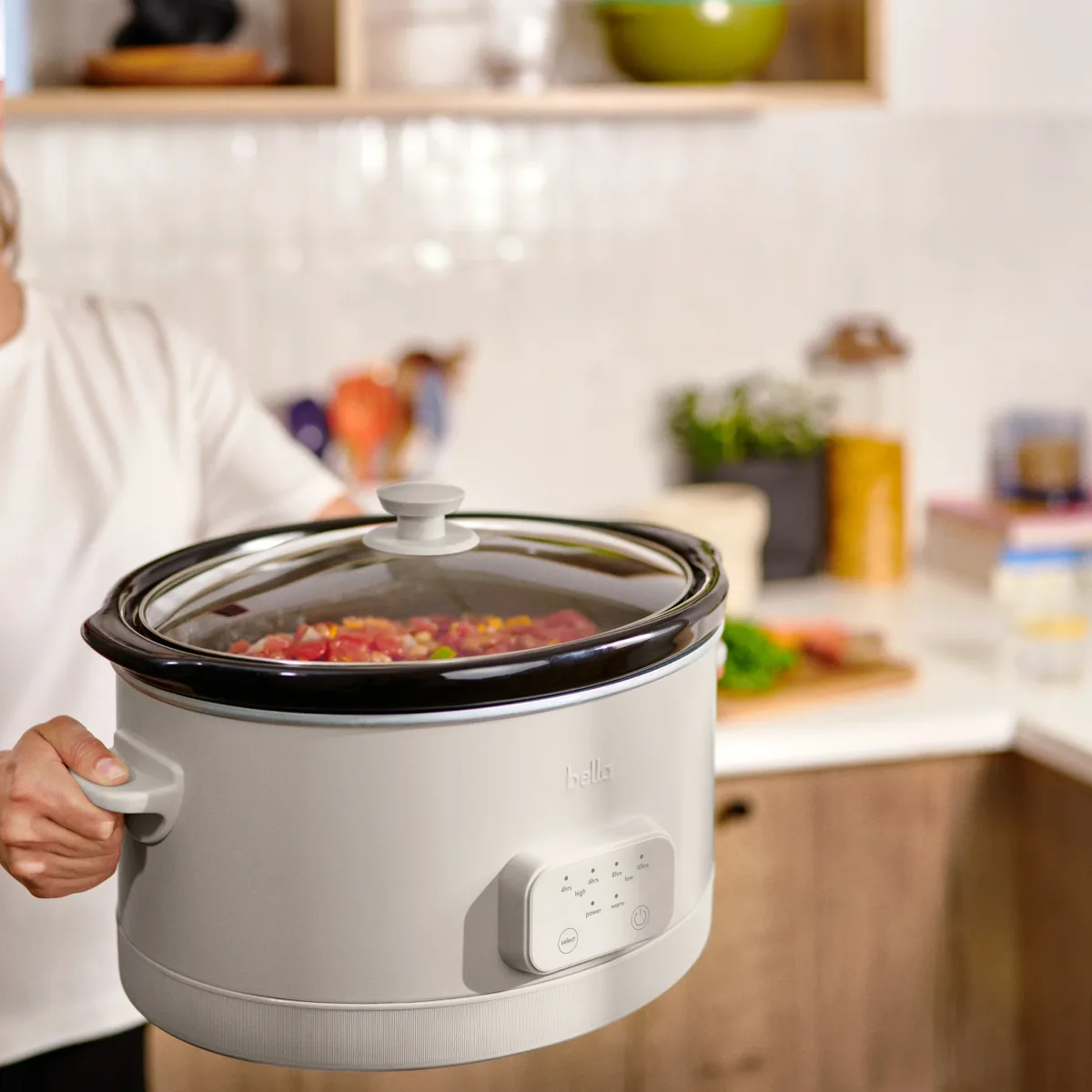
Image source: Web (Bing) / bellakitchenware.com (Web image (fair-use with source credit))
This feature is incredibly useful for busy households. Imagine heading to work with a pot of chili in the morning; you can program it to finish right when you get home, with no fear of it turning to mush. Some advanced programmable models even come with pre-set functions for specific dishes like poultry, beans, or roasts, taking some of the guesswork out of cooking times.
Prices for programmable models typically range from $50 to $100. A key specification to look for is the maximum programmable time, which can often extend up to 20 hours.
Who Benefits Most from Programmable Slow Cookers?
- Busy Professionals: Allows for meals to be ready right when you get home from work.
- Parents: Ensures dinner is ready on time, even with after-school activities.
- Recipe Enthusiasts: Provides precision for dishes requiring exact cooking durations.
- Anyone Who Worries About Overcooking: Offers peace of mind that food won't burn or dry out.
If you're looking for this kind of timing control, you might also be interested in our guide to 7 Best Programmable Rice Cooker for perfectly timed grains.
Multi-Cookers: The Versatile Kitchen All-Rounder
When you think about consolidating kitchen appliances, the multi-cooker often comes to mind. These powerhouses are essentially pressure cookers that also include a slow cook function, making them incredibly versatile. Unlike a traditional slow cooker where heat comes from the sides, multi-cookers typically heat from the bottom, and their inner pots are usually made of stainless steel.
This design is optimized for pressure cooking but also performs slow cooking duties.
The real magic of a multi-cooker is its ability to handle multiple cooking methods in a single pot. You can often sauté your onions and garlic directly in the pot before adding other ingredients and switching to the slow cook or pressure cook setting. This significantly cuts down on the number of dishes you need to wash.
Beyond slow cooking and pressure cooking, many models offer functions for steaming, rice cooking, yogurt making, and more. While the slow cook function on a multi-cooker is effective, some long-time slow cooker users note that the bottom-only heating can result in a slightly different texture compared to side-heated traditional models. These appliances are generally priced higher, often starting around $70 and going up to $200 or more for premium models.
Multi-Cooker Functions to Consider:
- Sauté/Sear: Brown meats and vegetables before slow cooking.
- Slow Cook: Low and slow cooking for tender results.
- Pressure Cook: Significantly reduces cooking time for meats, beans, and stews.
- Steam: For vegetables, dumplings, or fish.
- Rice Cooker: Dedicated settings for various rice types.
- Yogurt Maker: Ferment dairy to create homemade yogurt.
If you're exploring multi-functional kitchen appliances, you might also find our comparisons of 7 Best Japanese Rice Cooker and 7 Best Compact Rice Cooker useful.
Travel-Friendly Slow Cookers: For Potlucks and Parties
Got a potluck, a tailgating event, or a family gathering to attend? The travel-friendly slow cooker is designed with exactly these scenarios in mind. Its primary feature, and the reason it earns its name, is a secure locking lid.
This innovative design prevents spills and leaks during transport, which is a common headache with traditional slow cookers. The lid usually fastens down with clamps or a strap system, ensuring your chili or pulled pork arrives at its destination as neatly as it left your kitchen.
These cookers often have more robust handles for a secure grip, making them easier to carry from car to event. While they function like a standard slow cooker, the added security for transport is their defining characteristic. You'll find capacities similar to other models, ranging from 4 quarts for smaller gatherings to 6 or 7 quarts for larger crowds.
Keep an eye out for models specifically advertised with "locking lids" or "travel features." When considering models with this feature, investigate the sturdiness of the locking mechanism as reported in aggregate reviews. These specialized models can sometimes be a bit pricier than basic non-locking versions, often falling into the $50 to $100 range. If secure transport is a priority, look for options under the umbrella of 7 Best Slow Cooker With Locking Lid.
When to Choose a Travel-Friendly Slow Cooker:
- Regularly attending potlucks or office parties.
- Going tailgating or camping where you need to transport food.
- Taking meals to friends or family who are ill.
- Wanting extra peace of mind that your food won't spill.
Slow Cooker Features That Matter Most
When you're sifting through the different slow cooker types, a few key features consistently stand out as making a real difference in usability and outcome. The insert pot material is a big one. While ceramic and porcelain are common for their even heating and easy cleaning, some multi-cookers use stainless steel, which is durable and great for sautéing but might distribute heat differently.
The lid type is also critical; glass lids let you peek at your food without losing heat, but locking lids are essential for transport.
Another important consideration is the control panel. Basic models stick to simple Low, High, and Warm settings. Programmable units offer timers, allowing you to set a specific cook duration and then automatically switch to a Keep Warm mode, a feature that manufacturer specifications confirm can be set for up to 20 hours.
For those seeking ultimate versatility, multi-cookers offer functions like sautéing, steaming, and pressure cooking, which can significantly expand your meal preparation options beyond just slow cooking. As of 2026, wattage also remains a factor, with higher wattage generally indicating faster heating, though it's not the sole determinant of cooking performance.
Key Features Explained:
- Insert Material: Ceramic/porcelain for even heating, stainless steel for durability and sautéing.
- Lid Type: Glass for visibility, locking lids for secure transport.
- Control Panel: Simple dials (Low/High/Warm) versus digital timers and pre-sets.
- Additional Functions: Sauté, pressure cook, steam, etc., primarily found in multi-cookers.
- Capacity: Typically ranges from 1.5 quarts to 8+ quarts, crucial for family size or event needs.
- Wattage: Indicates heating power, generally ranging from 200W to over 1000W for larger models.