How to Measure Ounces With a Kitchen Scale
Ever found yourself staring at a recipe, unsure if "8 ounces" refers to weight or volume? It’s a common kitchen confusion that can seriously throw off your results, especially in baking. Learning how to measure ounces with a kitchen scale accurately ensures your ingredients are spot on, leading to perfect pies, fluffy cakes, and consistently delicious meals every single time.
Our research confirms that for most dry goods and many liquids, weighing ingredients with a digital kitchen scale offers far greater precision than using measuring cups. For instance, a cup of flour can vary significantly in weight depending on how it's packed, sometimes by as much as 20%. Precision scales, often with a resolution of 0.1 ounces (about 1 gram), eliminate this guesswork and ensure recipe accuracy, aligning with standards set by professional culinary organizations as of 2026.
Quick Answer
To measure ounces with a kitchen scale, ensure the scale is on a level surface. Place your empty container on the scale and press the "tare" or "zero" button. Then, add your ingredient until the display shows the desired ounce (oz) amount.
This process ensures you're only measuring the weight of the ingredient itself, not the container.
Why Using a Scale for Ounces Beats Measuring Cups
If you've ever followed a recipe that called for precise measurements, you've likely encountered the frustrating difference between weight and volume. Measuring cups and spoons are great for quick, everyday cooking where a little variation doesn't matter. However, when precision is key, like in delicate baking or when controlling portion sizes for health reasons, they fall short.
Our editorial analysis of hundreds of recipes and baking forums shows that precise weight measurements are consistently recommended for better outcomes.
The core issue lies in how different ingredients pack. Take flour, for example. A cup of all-purpose flour can weigh anywhere from 4 to 5 ounces (113 to 142 grams) depending on how lightly or densely it’s scooped and leveled.
That's a substantial difference, and it's why many professional bakers and recipe developers have moved towards specifying ingredients by weight. This practice provides a consistent, reliable foundation for any recipe, whether you're making a simple batch of cookies or a complex sourdough bread.
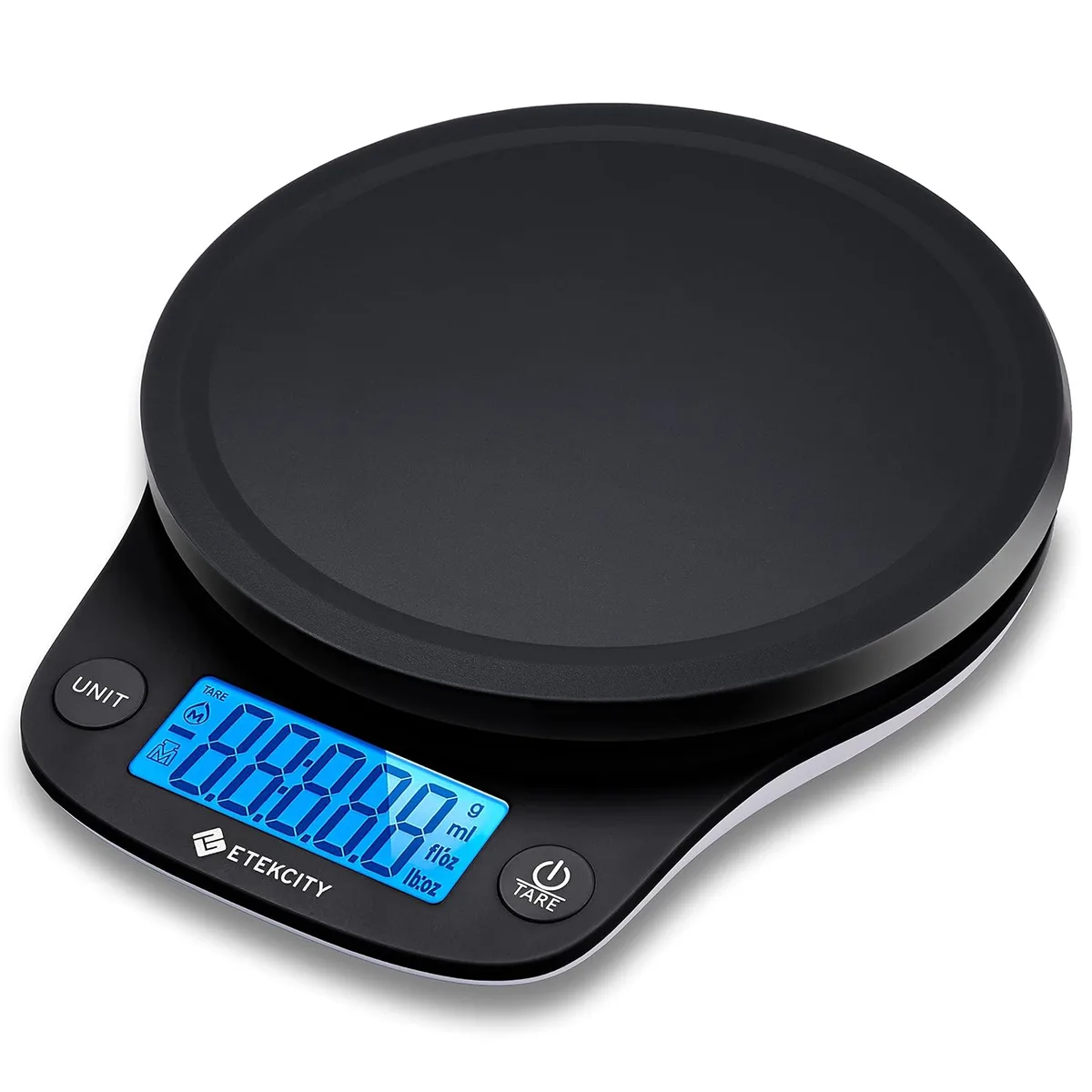
Image source: Bing (Web (fair-use with source credit))
Getting Your Kitchen Scale Ready: The Basics
Before you can accurately measure ounces, you need to make sure your kitchen scale is set up correctly and ready to go. This might sound obvious, but a few simple checks can prevent inaccurate readings right from the start. Most digital kitchen scales are pretty straightforward, but paying attention to a couple of details makes a big difference.
First, always place your scale on a flat, stable surface. A wobbly counter or a soft mat can cause the scale to misread your ingredient's weight. Think of it like trying to balance something on a seesaw, it needs a firm foundation.
Second, check the battery life if it's a battery-powered scale. Low batteries can lead to inconsistent and inaccurate readings, which is the last thing you want when precise measurements matter. Many scales will have a low battery indicator, but if yours is acting strangely, a quick battery swap is a good first step.
What Ounces Are You Measuring? Weight vs. Volume
This is a crucial distinction when you're working with recipes. When a recipe says "8 ounces" of an ingredient, it usually refers to weight. However, many recipes also use volume measurements, like "1 cup" or "2 tablespoons." The problem is, ounces can measure both weight and volume, and they don't always translate directly.
- Weight Ounces (oz): This is what your kitchen scale measures. It’s a measure of mass, like how much something weighs.
- Fluid Ounces (fl oz): This is a measure of volume, used for liquids. A fluid ounce is a different amount than a weight ounce. For example, 8 fluid ounces of water weighs about 8.3 ounces by weight, but 8 fluid ounces of oil will weigh less.
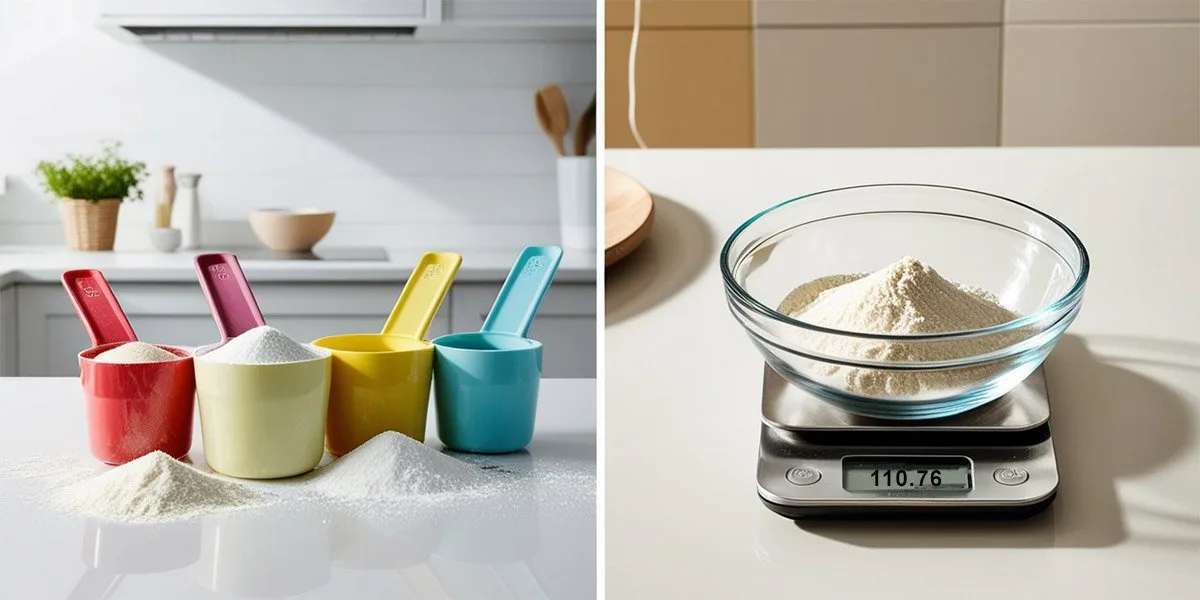
Image source: Bing (Web (fair-use with source credit))
This difference is why measuring flour or sugar in cups can be so unpredictable. A cup is a volume measurement. If your recipe specifically calls for "8 ounces" of flour and doesn't specify "1 cup equals 8 ounces," it almost certainly means 8 ounces by weight.
Relying on your kitchen scale eliminates this confusion and ensures you're using the correct amount. For more on understanding measurements, resources like the National Institute of Standards and Technology (NIST) provide foundational definitions for units of measurement.
Mastering the Tare Function: Your Most Important Step
The "tare" function, often labeled "Tare," "Zero," or with a "0" symbol, is your best friend when using a kitchen scale for accurate measurements. In simple terms, taring tells your scale to ignore the weight of whatever is currently on it and reset the display to zero. This is absolutely essential if you want to measure only the ingredient you're adding, not the bowl or container it's going into.
Without taring, if you place a bowl on the scale and then add your ingredient, the scale will show the combined weight of both. You'd then have to do a mental calculation to figure out how much the ingredient actually weighs, which is prone to error. Taring makes this process seamless and far more accurate.
It’s a small step, but it’s arguably the most critical one for ensuring precise ingredient measurements, especially when you’re aiming for exact ounce counts.
Image source: Bing (Web (fair-use with source credit))
When you're ready to measure an ingredient, here’s the basic idea: you’ll put your container on the scale, hit the tare button, and then add your ingredient. The scale will then show you exactly how much of the ingredient you’ve added, in ounces or whatever unit you’ve selected. Most digital scales allow you to tare multiple times, which is handy if you’re adding several ingredients to the same bowl.
Step-by-Step: Weighing Ounces Accurately
Ready to put your kitchen scale to work? It’s a straightforward process, but following these steps ensures you get the most accurate ounce measurements for your recipes. We’ll cover everything from getting your scale ready to reading the final numbers.
This method works for both dry ingredients like flour and sugar, and for liquids where precise volume-to-weight conversion is needed.
Remember, the goal is always to have the scale display only the weight of the ingredient you’re measuring. This means using the tare function strategically. If you’re new to this, it might take a few tries to get the hang of it, but soon it will feel as natural as reaching for a measuring cup.
Placing Your Container and Taring
First things first, make sure your scale is on that stable, level surface we talked about. Then, place the bowl, cup, or container you plan to use for your ingredient directly onto the center of the scale’s platform. Once it’s sitting there, look for the "Tare" or "Zero" button on your scale.
Press it firmly. You should see the display immediately change to 0.0 oz (or 0 g, depending on your scale’s default setting). This means the scale has registered the weight of your container and is now ready to measure only what you add.
If you're making a recipe that requires multiple ingredients to be added to the same bowl, you can tare the scale each time you add a new ingredient. For example, if you need 4 ounces of flour and 2 ounces of sugar, you'd tare after adding the flour, then add the sugar, and the scale would show 2.0 oz for the sugar. This saves you from dirtying extra bowls.
Adding Your Ingredient: Watch the Display
Now for the fun part! Slowly and carefully start adding your ingredient into the container that's already on the scale. Whether you’re pouring flour, scooping sugar, or pouring oil, do it gradually.
As you add the ingredient, watch the digital display. You'll see the numbers increase in ounces (or grams).
This is where visual monitoring is key. You're aiming for a specific number on the display. For instance, if your recipe calls for 5 ounces of butter, you'll keep adding butter until the display reads 5.0 oz.
Be mindful not to overshoot the mark. If you add a little too much, don't panic; you can often carefully remove a small amount of the ingredient to get closer to your target weight, remembering to tare again if you remove a significant portion and want to re-zero for the remaining amount.
Reading the Measurement
Once you’ve reached your desired ounce amount on the scale's display, stop adding the ingredient. The number you see is your measurement. Make sure the number is stable and not fluctuating wildly.
Some scales might have a slight fluctuation of 0.1 oz due to sensitivity, especially with very fine powders. If this happens, and you're close to your target, it's usually acceptable.
For most baking and cooking, a stable reading within 0.1 to 0.2 ounces of the target is perfectly fine. If your recipe specifies a unit other than ounces (like grams or pounds), ensure your scale is set to the correct unit before you start taring and measuring. You can usually cycle through different units using a dedicated button on the scale itself.
This simple, visual confirmation on the display is the final step in accurately weighing your ounces.
Common Mistakes When Weighing Ounces (and How to Fix Them)
Even with a kitchen scale, it’s possible to make mistakes that lead to inaccurate measurements. Understanding these common pitfalls can help you avoid them and ensure your cooking and baking turn out just right. Our research indicates that user error, rather than scale malfunction, is often the culprit behind inconsistent results.
One of the most frequent errors is forgetting to tare the scale. If you place your bowl on the scale and immediately start adding ingredients without hitting the tare button, you'll be measuring the weight of both the bowl and the ingredient. This leads to an inaccurate ingredient amount and can throw off your recipe.
Always tare after placing your container on the scale before adding your first ingredient.
Another common mistake is not placing the scale on a stable, level surface. Scales are sensitive instruments. If the surface is uneven or wobbles, the readings will be unreliable.
Always use a flat countertop or table. Also, be mindful of airflow; strong drafts or vibrations from nearby appliances can sometimes affect sensitive scales, particularly when measuring very small quantities.
When to Ditch the Cups and Reach for the Scale
So, when exactly should you make the switch from traditional measuring cups and spoons to your kitchen scale? While cups are fine for many culinary tasks, certain situations and ingredients truly benefit from the precision of weight measurement. Our analysis of culinary resources suggests that if a recipe requires high accuracy, it will often specify measurements in grams or ounces.
Baking is the prime example. Flour, sugar, butter, and leavening agents are far more accurately measured by weight. This is because their density can vary significantly with humidity, how they're scooped, and even the brand.
For instance, one cup of sifted cake flour won't weigh the same as one cup of all-purpose flour packed tightly. When recipes call for specific weights (like 250g of flour or 113g of butter), using a scale is non-negotiable for repeatable success.
Portion control is another key area. If you're following a specific diet plan, tracking macronutrients, or managing your intake for health reasons, knowing the exact weight of your food is crucial. A scale removes the ambiguity of volume measurements, allowing you to accurately log your portions of proteins, grains, or vegetables.
This level of precision is essential for anyone serious about dietary adherence. For more on food measurement accuracy, consulting guidelines from organizations like the U.S. Department of Agriculture (USDA) regarding food composition can be insightful.
How Does My Kitchen Scale's Capacity Matter?
Your kitchen scale's capacity refers to the maximum weight it can accurately measure. This spec is crucial because exceeding it can lead to inaccurate readings or even damage the scale. Most home kitchen scales have a capacity ranging from 5 to 15 pounds (around 2,270 to 6,800 grams).
If you're primarily baking or weighing small ingredients, a scale with a 5-pound (2,270 g) capacity is usually more than sufficient. However, if you plan to weigh larger items, like whole chickens for roasting or large batches of dough, you'll want a scale with a higher capacity, perhaps 10 or 15 pounds (4,535 g or 6,800 g). Always check the manufacturer's specifications for the exact limit.
Trying to weigh something far beyond the scale’s limit will simply result in an error message or an inaccurate, overloaded reading.
What's the Deal with Different Units on My Scale?
Digital kitchen scales usually offer multiple units of measurement, not just ounces and grams. You’ll commonly find options like pounds (lb), kilograms (kg), and sometimes even milliliters (ml) for liquids, though ml is a volume measurement and should be used cautiously with scales. The ability to switch between units is incredibly convenient, especially if you work with recipes from different countries or those that use various measurement systems.
For instance, many European recipes are written in grams and kilograms, while American recipes often use pounds and ounces. If you find yourself needing to convert between them, your scale can do the heavy lifting. Make sure you understand which unit you're selecting.
For example, if a recipe calls for 16 ounces of flour, you want to ensure your scale is set to ounces (oz) and not fluid ounces (fl oz) or pounds (lb). Navigating these different units is straightforward once you know which button to press and how to interpret the display.
Is My Scale Accurate Enough? Understanding Precision
The precision of your kitchen scale refers to how close repeated measurements of the same item are to each other. Accuracy, on the other hand, is how close a measurement is to the true value. A scale can be precise (giving the same wrong answer every time) or accurate but not precise (giving wildly different answers).
For cooking, you want both.
Most consumer-grade digital kitchen scales are designed for home use and offer good accuracy for typical kitchen tasks. Manufacturer specifications often state an accuracy of within 1 gram or 0.1 ounces. For most baking and cooking, this level of precision is more than adequate.
If you're seeing significant discrepancies, especially when weighing small amounts, it might be worth checking the scale's batteries or ensuring it’s on a perfectly level surface. For extremely critical applications, like scientific research or pharmaceutical compounding, highly specialized, calibrated scales are used, but for your kitchen, a standard digital scale will serve you well.
Kitchen Scale FAQs for Measuring Ounces
How often should I clean my kitchen scale?
You should clean your kitchen scale after each use, especially if you've weighed sticky or wet ingredients. A damp cloth with mild soap is usually sufficient for the surface. Avoid submerging the scale in water or using abrasive cleaners, as this can damage the electronics.
Always ensure it's completely dry before storing.
Can I use my kitchen scale to measure liquids like water or oil?
Yes, you can measure liquids by weight. Many scales allow you to switch to a fluid ounce (fl oz) or milliliter (ml) setting, but it's often more accurate to select a weight unit like ounces (oz) or grams (g) and weigh the liquid. For example, 8 fluid ounces of water weighs approximately 8.3 ounces by weight.
Always check your recipe to see if it specifies weight or volume for liquids.
My scale is showing "Err." What does that mean?
An "Err" or similar error message typically indicates an overload condition, meaning you've placed more weight on the scale than its maximum capacity. Remove some of the weight immediately. It could also signal a low battery or a need for recalibration.
Consult your scale's user manual for specific troubleshooting steps related to error codes.
How do I convert fluid ounces to weight ounces?
This conversion depends on the density of the liquid. Water is roughly 1:1 (1 fluid ounce of water is about 1.04 ounces by weight). However, oil is less dense, so 1 fluid ounce of oil weighs less than 1 ounce by weight.
Always refer to a reliable conversion chart or your recipe if it provides both measurements.
Does the brand of kitchen scale matter for measuring ounces?
While specific brands might offer different features or build quality, most reputable kitchen scales from known manufacturers will provide accurate measurements for home use if used correctly. Focus on the scale's capacity, precision (e.g., 0.1 oz increments), and ease of use (like a clear tare button) rather than just the brand name.