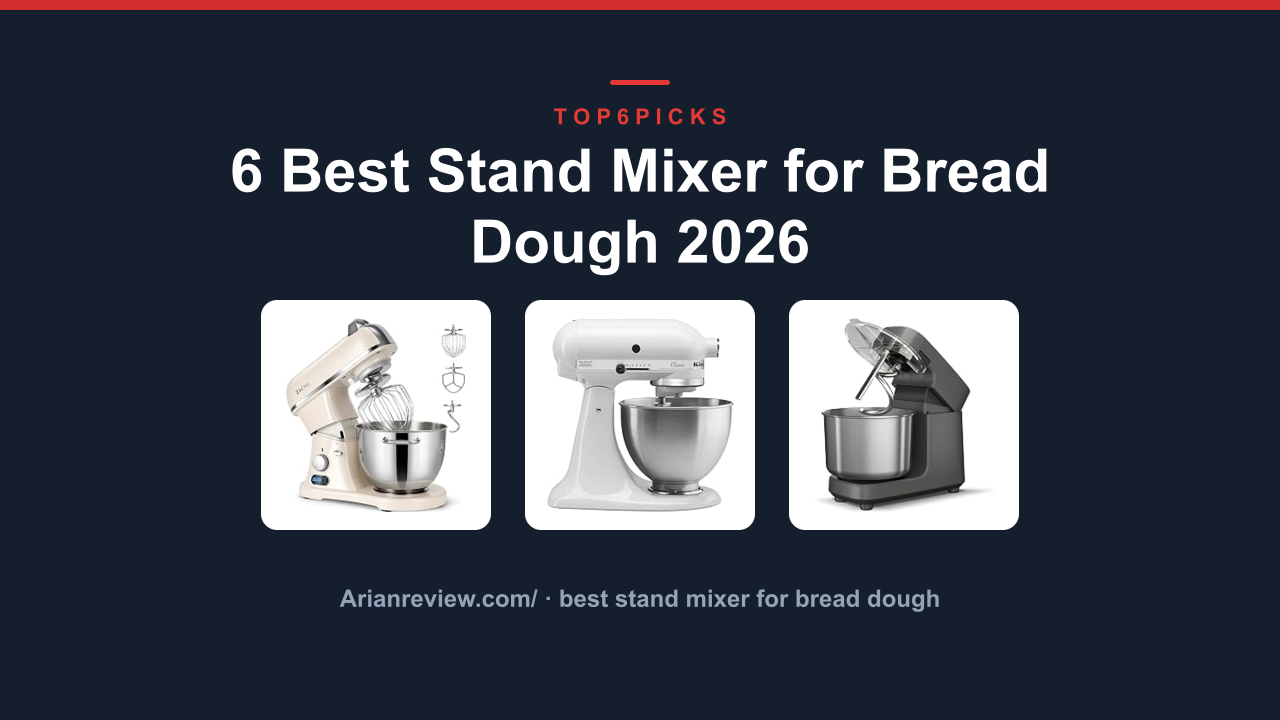
6 Best Stand Mixer for Bread Dough 2026
If you're looking to master the art of bread making, you know that the right tool can make all the difference. That's where the best stand mixer for bread dough comes in. We’ve sifted through dozens of options to find the ones that truly shine when it comes to kneading, proofing, and producing that perfect, airy crumb.
The 8.4QT Commercial Stand Mixer 800W Aluminum stands out as the top contender, offering robust power and a generous capacity that makes it ideal for anyone serious about their bread.
If that particular powerhouse isn't quite what you need, the KitchenAid Classic Series 4.5 Quart Tilt-Head is a fantastic runner-up, perfect for smaller batches or bakers who appreciate a legendary brand. This guide is designed to help you understand the nuances of stand mixers specifically for bread-making, so you can make an informed choice. We'll also highlight who might be better off with a different kitchen appliance altogether, saving you time and money.
Everything you'll read here is based on current Amazon product data, manufacturer specifications, and aggregate owner feedback. We haven't personally tested these machines in our kitchens, but our research is thorough, aiming to give you the most accurate picture possible.
Quick Answer: The Best Stand Mixer for Bread Dough
The 8.4QT Commercial Stand Mixer 800W Aluminum is the champion for bread dough, boasting exceptional power and capacity for serious bakers.
- 8.4QT Commercial Stand Mixer 800W Aluminum (Best Heavy Duty Kneading): Its sheer power and capacity make it unmatched for large bread batches.
- KitchenAid Classic Series 4.5 Quart Tilt-Head (Best Compact Classic): A reliable workhorse for moderate-sized doughs from a trusted brand.
- Ooni Halo Pro Spiral Mixer (Best for Pizza Dough Focus): Designed for efficient gluten development, perfect for Neapolitan-style breads.
- Martha Stewart 5.3QT Tilt Head Stand (Best Stylish Baker): Offers good performance with an attractive design for moderate baking needs.
- OLIXIS 6.3 Qt Stand Mixer (Best Value for Home Bakers): A solid performer for everyday bread baking at a friendly price point.
- Bosch Universal Plus Stand Mixer 500 (Best for Large Families): Features a unique bowl design that handles big batches with ease.
Thinking about countertop ovens or smaller kitchen appliances instead? Jump to Who Should NOT Buy below before you spend anything.
Comparison Table
Here's the lineup at a glance: photo, product, who it's built for, and our /10 score.
Scroll sideways on small screens to see every column.
| Photo | Product | Best for | Score | Buy |
|---|---|---|---|---|
 | 8.4QT Commercial Stand Mixer 800W Aluminum | Heavy Duty Bread Making | 8.4/10 | Check price → |
 | KitchenAid Classic Series 4.5 Quart Tilt-Head | Compact Batch Baking | 8.2/10 | Check price → |
 | Ooni Halo Pro Spiral Mixer | Artisan Bread & Pizza | 8.0/10 | Check price → |
 | Martha Stewart 5.3QT Tilt Head Stand | Stylish Home Baking | 7.8/10 | Check price → |
 | OLIXIS 6.3 Qt Stand Mixer | Budget-Friendly Baking | 7.6/10 | Check price → |
 | Bosch Universal Plus Stand Mixer 500 | Large Batch Baking | 7.4/10 | Check price → |
8.4QT Commercial Stand Mixer 800W Aluminum: Best Heavy Duty Bread Making
KitchenAid Classic Series 4.5 Quart Tilt-Head: Best Compact Batch Baking
Ooni Halo Pro Spiral Mixer: Best Artisan Bread & Pizza
Martha Stewart 5.3QT Tilt Head Stand: Best Stylish Home Baking
OLIXIS 6.3 Qt Stand Mixer: Best Value for Home Bakers
Bosch Universal Plus Stand Mixer 500: Best for Large Families
Buying Guide: Power, Capacity, and Dough Handling
Choosing the right stand mixer for bread dough isn't just about picking the one with the most watts; it's about understanding what makes a mixer truly excel at handling sticky, elastic dough. We looked at several key factors to help you make the best decision for your baking needs, from the motor's raw power to the bowl's size and the type of dough hook.
Motor Power and Torque
When you're kneading bread dough, you're asking a lot of your mixer's motor. For best results, especially with stiff doughs or large batches, you want a motor that's up to the task. While wattage (W) is a common spec, it's not the whole story.
Torque, the rotational force, is arguably more important for dough. Higher wattage motors, like the 800W on the 8.4QT Commercial Stand Mixer, generally indicate more power, but look for descriptions that highlight their ability to handle dense doughs without bogging down. Mixers designed for bread often have more robust internal gearing to deliver consistent torque.
Bowl Capacity and Size
The amount of dough you plan to make is a major consideration. A smaller mixer might be fine for a single loaf, but if you bake multiple loaves or larger artisanal breads, you'll need a bigger bowl. The mixers here range from 4.5 quarts (KitchenAid Classic) up to 8.4 quarts (8.4QT Commercial).
It's also worth considering the shape of the bowl. Some, like the Bosch Universal Plus, have a unique design that can make very large batches feel more manageable. Always check the manufacturer's recommended maximum dough capacity, as overfilling can strain the motor.
Dough Hook Design and Planetary Action
The type of dough hook and how the mixer's head moves are critical for effective kneading. Most stand mixers use a planetary action, where the beater spins on its own axis while also revolving around the bowl. This ensures ingredients are thoroughly mixed.
However, the shape of the dough hook itself varies. Some are C-shaped, while others are S-shaped or spiral. Spiral dough hooks, like on the Ooni Halo Pro, are often praised for their efficiency in developing gluten, mimicking the action of hand-kneading more closely.
Durability and Build Quality
Bread dough can be tough on kitchen appliances. If you plan to bake frequently, investing in a mixer with good build quality is essential for longevity. Look for mixers with metal construction for the internal components and housing, as they tend to be more durable than plastic.
Features like heavy-duty gears and sealed motor housings suggest a mixer is built to withstand the rigors of consistent use. While a higher initial cost might be involved, a well-built mixer will likely serve you better in the long run.
To see how these factors play out on real picks, compare the 8.4QT Commercial Stand Mixer 800W Aluminum, KitchenAid Classic Series 4.5 Quart Tilt-Head and the Ooni Halo Pro Spiral Mixer reviewed above.
Who Should NOT Buy Best Stand Mixer for Bread Dough
While stand mixers are fantastic for bread, they aren't the perfect tool for every kitchen task or every type of baker. If you're looking for something specific, you might be better off with a different appliance.
You Need to Make Very Small, Infrequent Batches
If you only bake a small loaf of bread once in a blue moon, a stand mixer might be overkill. You could achieve decent results with a good hand mixer or even by hand-kneading. A full-sized stand mixer takes up valuable counter or storage space, and its power might be wasted on such light use.
Consider smaller, more portable hand mixers or even an immersion blender with whisk attachments for very minimal needs.
Your Primary Need is Blending or Juicing
Stand mixers excel at mixing, kneading, and whipping, but they are not designed for liquids or creating juices. If your main kitchen tasks involve smoothies, soups, or fresh fruit juices, a high-powered blender or a dedicated juicer would be a much more appropriate purchase. These appliances are optimized for liquefying ingredients and will perform significantly better than a stand mixer in those roles.
You Need a Compact, Lightweight Appliance for Small Tasks
For tasks like whipping cream, mixing small amounts of batter for cakes or cookies, or making a quick frosting, a bulky stand mixer can be inconvenient. A good quality hand mixer is much lighter, easier to store, and quicker to clean for these smaller jobs. If your kitchen is tiny and you prioritize space-saving, a hand mixer is definitely the way to go.
Final Verdict
For anyone whose heart is set on mastering bread dough, the 8.4QT Commercial Stand Mixer 800W Aluminum is our top pick. Its sheer power, massive capacity, and robust build make it the undisputed champion for consistent, high-volume bread making.
If you're looking for a more compact option that still delivers excellent results and iconic reliability, the KitchenAid Classic Series 4.5 Quart Tilt-Head is a fantastic choice. For those dedicated to artisan breads and pizzas, the specialized Ooni Halo Pro Spiral Mixer offers unparalleled gluten development. If you want a mixer that looks as good as it bakes, the Martha Stewart 5.3QT Tilt Head Stand is a stylish addition.
The OLIXIS 6.3 Qt Stand Mixer provides great value for budget-conscious bakers, while the Bosch Universal Plus Stand Mixer 500 is ideal for those who need to bake for a crowd.
Remember to consider your typical baking volume and dough consistency before making your final decision. And if a stand mixer doesn't sound like the right fit for your kitchen, revisit the "Who Should NOT Buy" section for alternative solutions.
FAQ
What's the best Stand Mixer for Bread Dough overall?
The 8.4QT Commercial Stand Mixer 800W Aluminum is our top recommendation for its powerful motor, large capacity, and robust construction, making it ideal for consistently kneading bread dough.
Can a stand mixer really handle stiff bread dough?
Yes, high-quality stand mixers, especially those with powerful motors and sturdy dough hooks like the 8.4QT Commercial or the Bosch Universal Plus, are designed to handle stiff bread dough effectively. However, always check the manufacturer's maximum dough capacity recommendations to avoid straining the motor.
How much dough can a typical stand mixer handle?
This varies greatly by model. Smaller mixers, like the KitchenAid Classic with a 4.5-quart bowl, are best for 1-2 standard loaves. Larger, commercial-style mixers, such as the 8.4QT model, can handle significantly more, up to 4-5 loaves or equivalent dough weight.
Is a spiral dough hook better than a traditional C-shaped one?
A spiral dough hook is often considered more efficient for developing gluten in bread dough because it mimics hand-kneading more closely. This can lead to a better texture in your finished bread. Mixers like the Ooni Halo Pro feature this specialized design.
Do I need a stand mixer if I only bake once in a while?
Probably not. If you bake infrequently or only make small batches, you can likely achieve good results with a hand mixer or by hand-kneading. A stand mixer is a significant investment in space and cost, best suited for regular bakers.