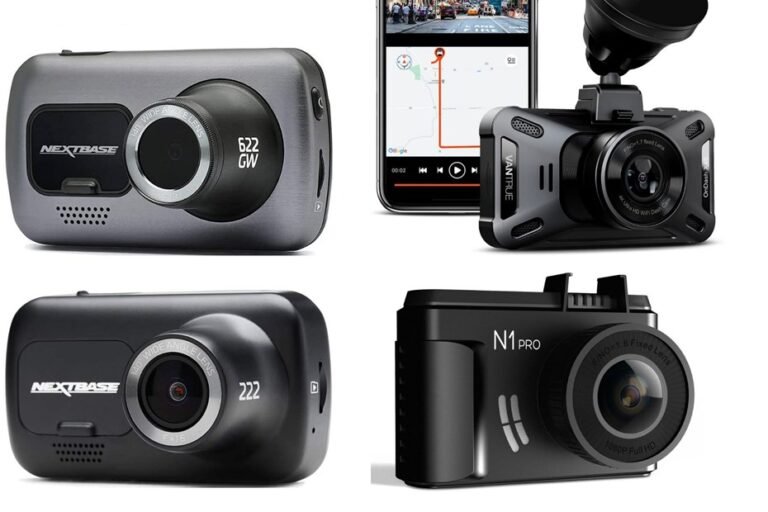
Rexing V1P Vs Vantrue N4: Which Dash Cam Wins?
The Vantrue N4 offers wider three-camera coverage, while the Rexing V1P is simpler, smaller, and often more affordable.
Choosing between the Rexing V1P vs Vantrue N4 depends on more than video resolution. I have compared their camera layouts, night footage, storage needs, parking features, installation demands, and daily usability to show which dash cam fits your car, budget, and driving habits.
Rexing V1P vs Vantrue N4: Key Differences
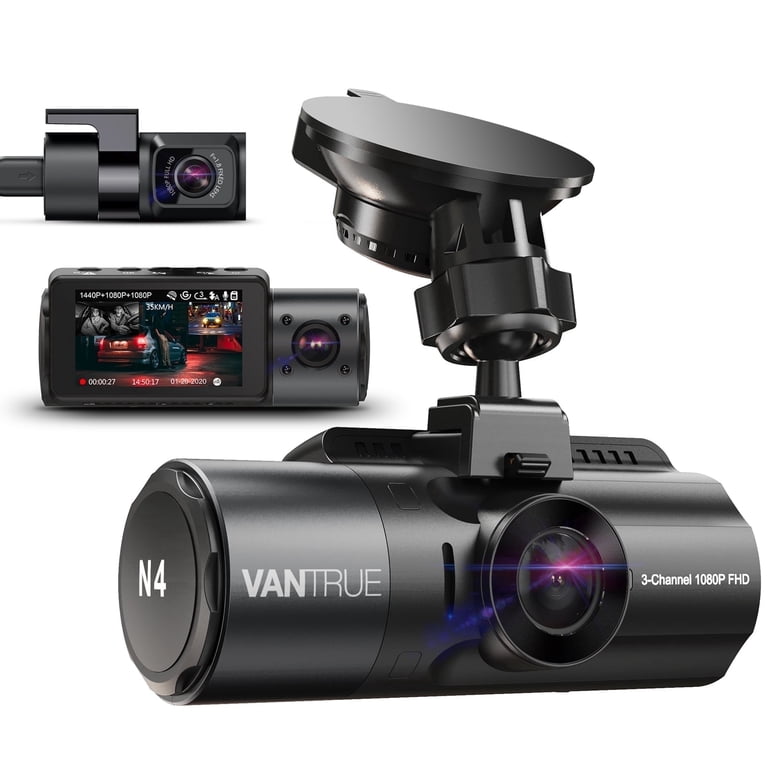
The biggest difference is camera coverage. The Rexing V1P is usually a two-channel dash cam with a front camera and a rear camera. The Vantrue N4 is a three-channel system with front, cabin, and rear cameras.
That extra cabin camera makes the N4 a strong choice for rideshare drivers, families, and anyone who wants to record activity inside the vehicle. The Rexing V1P keeps things more straightforward for drivers who mainly need proof of what happened on the road.
| Feature | Rexing V1P | Vantrue N4 |
|---|---|---|
| Camera channels | Two | Three |
| Front video | Usually 1080p, depending on version | Up to 1440p on the original N4 |
| Cabin camera | No | Yes |
| Rear camera | Yes | Yes |
| Interior night recording | Not applicable | Infrared-supported cabin view |
| GPS | Depends on model and mount | Often available through the GPS mount |
| Wi-Fi | Depends on model version | Original N4 generally lacks built-in Wi-Fi |
| Parking mode | Available with proper wiring | Available with hardwire kit |
| Best for | Simple front and rear coverage | Full vehicle coverage |
Product names can cause confusion. Rexing has sold several V1P versions, including updated editions with different sensors, screens, and connection features. Vantrue also sells the N4, N4 Pro, and newer N4 models with different specifications. Always check the exact product listing before buying.
Video Quality and Real-World Recording
The Vantrue N4 has the stronger core video system. Its front camera records at up to 1440p, while its cabin and rear cameras record at 1080p. This gives the N4 more detail when reading signs, seeing lane markings, or reviewing a crash.
The Rexing V1P is often limited to 1080p recording. That is still useful for everyday driving, but it may show less detail at a distance. A license plate that is clear in bright daylight may become hard to read at night or when another car moves quickly.
Resolution is not the only factor. Lens quality, sensor size, exposure control, and video compression also affect results. A well-tuned 1080p camera can sometimes produce a cleaner image than a poorly tuned 4K camera.
Daytime video
Both cameras can provide useful daytime evidence. The N4 has an advantage when the road scene contains small details, such as:
• License plates
• Traffic signs
• Lane markings
• Vehicle damage
• Road debris
The Rexing V1P still works well for basic incident recording. If you drive in a city and want a simple record of traffic events, its front and rear cameras may be enough.
Night video
Night recording is more difficult for every dash cam. Headlights create glare, dark roads hide detail, and reflective plates can appear washed out.
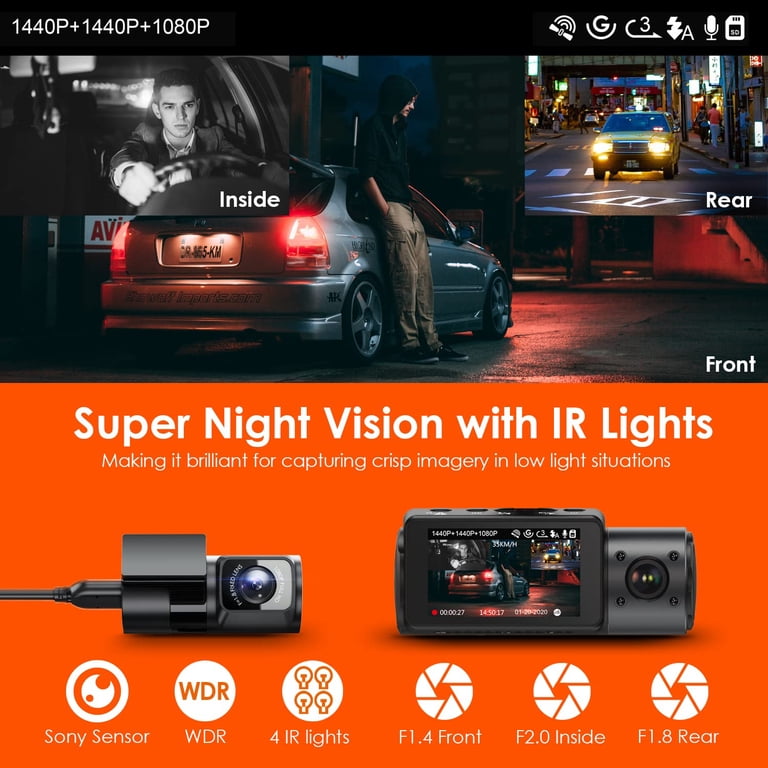
The Vantrue N4 has infrared support for the cabin camera. This helps it record passengers and activity inside the vehicle at night. The front and rear cameras still depend on street lighting, headlights, and proper exposure.
The Rexing V1P does not have a cabin camera, so it cannot match the N4 for interior recording. Its night performance depends heavily on the exact V1P version and the condition of its lens.
A practical lesson from dash cam testing
One common mistake is judging a dash cam only by its highest resolution. In real use, a clean lens, a good memory card, and correct exposure settings often matter more than a number printed on the box.
Clean the lens once a week. Place the camera behind the rearview mirror. Keep the windshield clear. These small steps can improve evidence quality more than many buyers expect.

Camera Coverage: Two Views Versus Three
The Rexing V1P records the road ahead and the road behind. This layout covers the most common driving risks, including rear-end collisions, unsafe lane changes, and traffic stops.
The Vantrue N4 adds an interior camera. That camera points into the cabin and can record both front-seat and rear-seat activity. It is especially useful for people who transport passengers.
The extra view can help in several situations:
• Rideshare and taxi work
• Delivery driving
• Family travel
• Disputes involving passengers
• Vehicle break-ins
• Monitoring children or pets
The N4’s cabin camera also uses infrared lighting. This allows it to see inside the car in low light without relying only on street lamps.
However, more coverage also means more files. Three cameras create more video data than two. The memory card fills faster, and you may spend more time reviewing footage.
The N4 also needs a clean installation for three camera cables. The rear cable must travel from the front camera to the back of the vehicle. In a sedan, this is fairly simple. In an SUV, hatchback, or large van, cable routing can take more time.
Design, Installation, and Daily Use
The Rexing V1P is usually easier to install. You mount the front camera, connect the rear camera, and route one cable through the cabin. Its simpler design can appeal to first-time dash cam buyers.
The Vantrue N4 requires more planning. You must position the front, cabin, and rear cameras so each view is useful. The rear camera must also avoid blocked glass, tint problems, and poor cable placement.
A clean installation should follow these steps:
-
Test every camera before hiding the cables.
-
Place the front camera near the center of the windshield.
-
Keep the camera below the tinted area at the top of the glass.
-
Route wires behind trim panels when possible.
-
Leave enough slack near hinges and the rear hatch.
-
Confirm that airbags are not blocked by cables.
-
Format the memory card inside the camera.
The N4 is not difficult to install, but it demands more time. Think of it as installing a small security system rather than a single camera.
Screen size and controls also vary by version. Some Rexing V1P models have a larger, easier-to-read display. The N4 uses a compact screen and physical buttons. That small screen is enough for setup, but a phone app would be more convenient for reviewing clips. The original N4 is generally not known for built-in Wi-Fi, so removing the memory card may be the main way to transfer files.

Parking Mode and Security Features
Parking mode lets a dash cam monitor your vehicle while it is parked. This feature can record movement, impacts, or activity near the car.
Both the Rexing V1P and Vantrue N4 may support parking mode, but neither should be treated as a complete security system. Most parking features need a compatible hardwire kit. The kit connects the camera to the car’s fuse box and helps prevent the battery from draining too far.
The N4 offers a useful advantage because it can monitor the front, cabin, and rear areas. That wider coverage can help in a parking lot accident or break-in.
Parking modes can work in different ways:
• Impact detection records when the camera senses a bump.
• Motion detection records when movement appears in view.
• Buffered parking mode may save a short period before and after an event.
• Time-lapse mode records at set intervals to save storage.
Performance depends on the exact model, firmware, hardwire kit, and power settings. Read the manual before using parking mode overnight. A poorly installed kit can cause battery problems.
For regular street parking, the Rexing V1P may provide enough protection. For a work vehicle or a car parked in busy areas, the N4 gives you more angles to review.

Storage, Memory Cards, and File Management
Dash cams need reliable microSD cards. Cheap cards can fail because cameras write data for hours each day. When a card fails, the camera may stop recording without making the problem obvious.
Use a high-endurance microSD card that matches the camera’s supported capacity. The original Vantrue N4 commonly supports cards up to 256GB in many listings, but support can vary by firmware and product revision. Rexing V1P models also vary, so check the manual for the exact limit.
A three-channel camera uses storage faster than a two-channel camera. The N4 records three video streams at once, which means a smaller card may fill quickly.
Follow these habits:
• Format the card in the camera on a regular schedule.
• Replace the card when errors appear.
• Download important clips soon after an incident.
• Use loop recording so the camera can overwrite old files.
• Avoid removing the card while recording.
If you need long parking coverage, choose the largest supported high-endurance card. Still, do not assume a bigger card solves every problem. Card quality and camera compatibility matter just as much.

GPS, Wi-Fi, and Evidence Handling
GPS can add speed, location, and route data to a video file. This information may help explain where an event happened, but it can also reveal more personal information than some drivers want to share.
GPS availability differs between Rexing V1P versions. Some packages include a GPS mount, while others require an additional accessory. The Vantrue N4 can also use GPS through a compatible mount in many configurations.
Wi-Fi is another area where model names matter. Some newer Rexing cameras offer Wi-Fi, but the original N4 generally relies on a memory card and computer or card reader for file transfer.
A good evidence workflow is simple:
-
Stop driving safely after an incident.
-
Lock or save the current video if the camera supports that feature.
-
Copy the original file to a phone or computer.
-
Keep the original file unchanged.
-
Write down the date, time, location, and what happened.
-
Share only the needed clip.
Do not edit the only copy of your video. Keep an untouched original in case an insurance company, police officer, or attorney needs it.
Which Dash Cam Is Easier to Use?
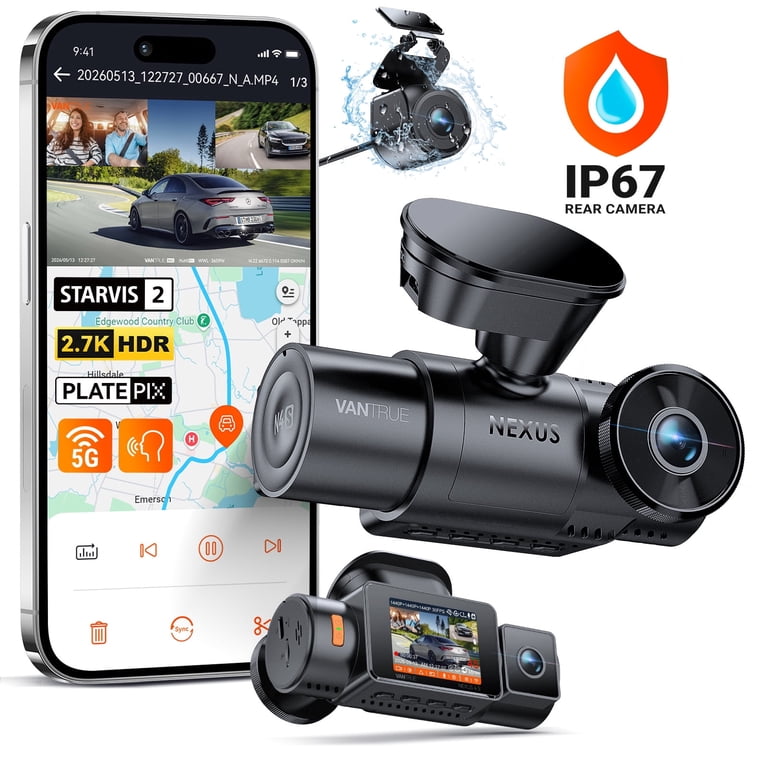
The Rexing V1P is usually easier for basic users. It has fewer cameras, fewer cables, and fewer files to manage. If you want to install a camera and forget about it, this simpler setup can be appealing.
The Vantrue N4 has more settings because it does more. You may need to adjust cabin exposure, infrared behavior, parking mode, and camera angles. That extra control rewards careful setup but may feel like too much for someone who wants a basic camera.
The N4 also creates more useful context. After a collision, a front view may show the road, the rear view may show the other vehicle, and the cabin camera may show what happened inside the car.
In my experience with dash cam comparisons, the most frequent buyer mistake is choosing a complex system without planning cable routing. The second mistake is failing to test the rear camera after installation. Always check every angle from the camera’s own screen before replacing trim panels.

Reliability and Common Limitations
No dash cam is perfect. Both the Rexing V1P and Vantrue N4 can face problems linked to heat, memory cards, power connections, firmware, and poor installation.
Common issues include:
• Recording stops because of a damaged memory card.
• The rear camera loses power because a cable is loose.
• Video becomes blurry when the lens or windshield is dirty.
• Parking mode fails because the hardwire kit is not installed correctly.
• The camera overheats when left in direct sun.
• Date and time settings reset after power loss.
Heat is a serious concern in parked vehicles. Use a camera and card designed for high temperatures. Keep the camera away from direct sunlight when possible, and do not place it behind a dark windshield film that blocks the lens.
The Rexing V1P has fewer recording channels, so it has fewer components that can fail. The N4 has more coverage, but its extra camera and cable add more points to inspect.
Neither model should replace safe driving. A dash cam is a witness, not a shield.
Rexing V1P vs Vantrue N4: Price and Value
The Rexing V1P is usually the better value for drivers who need front and rear recording at a lower cost. It may also be cheaper to install because it needs fewer cables and accessories.
The Vantrue N4 costs more in many packages, but it includes a third camera and stronger front video. For a rideshare driver, that extra coverage may pay for itself after one disputed passenger incident or parking lot collision.
Consider the full ownership cost, not just the camera price:
• Memory card
• Hardwire kit
• GPS mount
• Installation service
• Replacement card
• Optional CPL filter
A circular polarizing filter can reduce windshield reflections in bright conditions. It can improve image clarity, but it may also reduce light at night if used incorrectly. Remove or test it carefully after dark.
The best value depends on how much evidence you need. Buying a cheaper camera that misses an important angle is not always a true saving.
Which One Should You Buy?
Choose the Rexing V1P if:
• You want front and rear coverage.
• You prefer a simpler installation.
• You want to spend less.
• You do not need an interior camera.
• You prefer a basic dash cam setup.
Choose the Vantrue N4 if:
• You drive for Uber, Lyft, or another rideshare service.
• You want front, cabin, and rear recording.
• You need infrared interior video.
• You want higher front-camera resolution.
• You want broader parking coverage.
The Rexing V1P vs Vantrue N4 decision becomes easy when you start with your biggest risk. If your concern is a road collision, both can help. If your concern includes passengers, rear-seat activity, or vehicle security, the N4 is the stronger choice.
Check the exact generation before ordering. A Rexing V1P Pro is not the same as an older V1P, and the Vantrue N4 Pro is not the same as the original N4. Product pages may use similar names for cameras with different resolutions and features.
Frequently Asked Questions About Rexing V1P vs Vantrue N4
Is the Vantrue N4 better than the Rexing V1P?
The Vantrue N4 is better for coverage because it records the front, cabin, and rear views. The Rexing V1P is better for buyers who want a simpler and often less expensive two-camera system.
Does the Rexing V1P record inside the car?
Most Rexing V1P models do not include a dedicated cabin camera. They generally record the road ahead and the area behind the vehicle.
Does the Vantrue N4 record the rear camera at night?
Yes, the Vantrue N4 can record the rear view at night. Results depend on street lighting, rear window tint, camera placement, and windshield cleanliness.
Does the Vantrue N4 need a hardwire kit for parking mode?
A hardwire kit is usually needed for continuous parking mode when the vehicle is turned off. Without a constant power source, the camera may only monitor parking events for a limited time.
Can both cameras record while driving?
Yes, the Rexing V1P and Vantrue N4 are designed to record continuously while the vehicle is running. Loop recording normally saves new clips over the oldest unlocked clips when the memory card becomes full.
Which camera is better for Uber and Lyft drivers?
The Vantrue N4 is usually the better choice for rideshare drivers because it records the cabin as well as the road. Check local laws and company rules before recording passengers, since audio and video privacy laws vary by state.
What memory card should I use with either camera?
Use a reputable high-endurance microSD card within the capacity listed in the camera’s manual. Format it in the camera and replace it if you see recording errors or missing files.
Conclusion
The Rexing V1P vs Vantrue N4 comparison comes down to simplicity versus coverage. The Rexing V1P is a practical choice for front and rear recording, easy installation, and a lower overall cost. The Vantrue N4 offers better front detail, a useful infrared cabin camera, and three-channel protection for drivers who need more complete evidence.
Before buying, confirm the exact model generation, supported memory card size, parking mode requirements, and included accessories. Install the camera carefully, test every view, and save important clips as soon as possible.
Choose the camera that matches your real driving needs, then share your experience or explore more dash cam guides to build a safer setup.