How to Use a Treadmill
If you've ever looked at a treadmill and felt overwhelmed, you're not alone. Learning how to use a treadmill safely comes down to a few simple steps. Most accidents happen in the first session, not because the machine is complicated, but because people skip the basics.
Our research across manufacturer manuals and physical activity guidelines shows the same core principles every time: start slow, clip the safety key, and never step off a moving belt. As of 2026, nearly all treadmills share the same control layout and emergency features. Learn those once, and you'll feel comfortable on any machine in any gym.
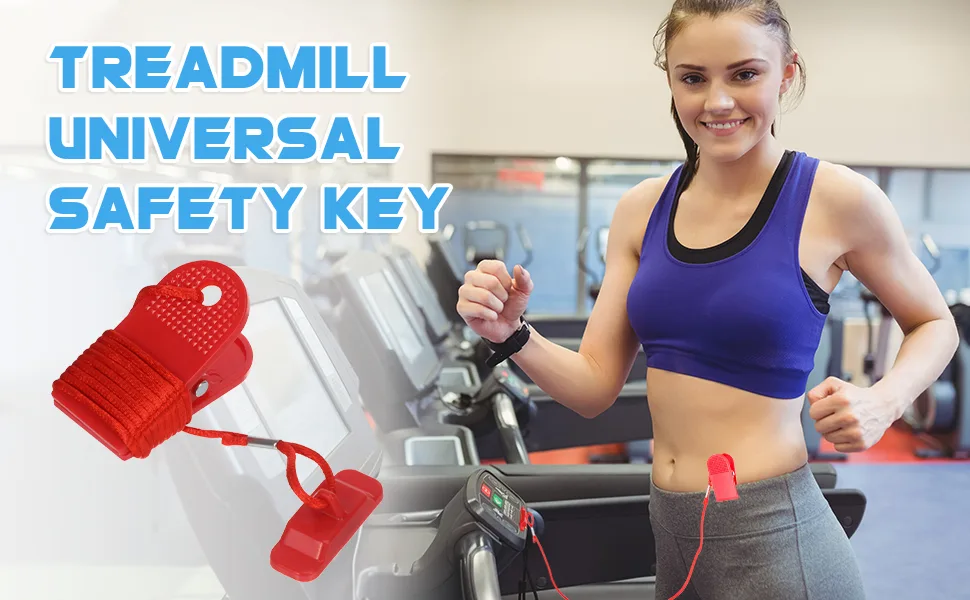
Image source: Bing (Web (fair-use with source credit))
Quick Answer
Clip the safety key to your clothing. Start the belt at 1-2 mph. Step on and walk to warm up.
Increase speed gradually. Cool down before stopping. Step off only after the belt fully stops.
Treadmill Basics: Console, Safety Key, and Emergency Stop Explained
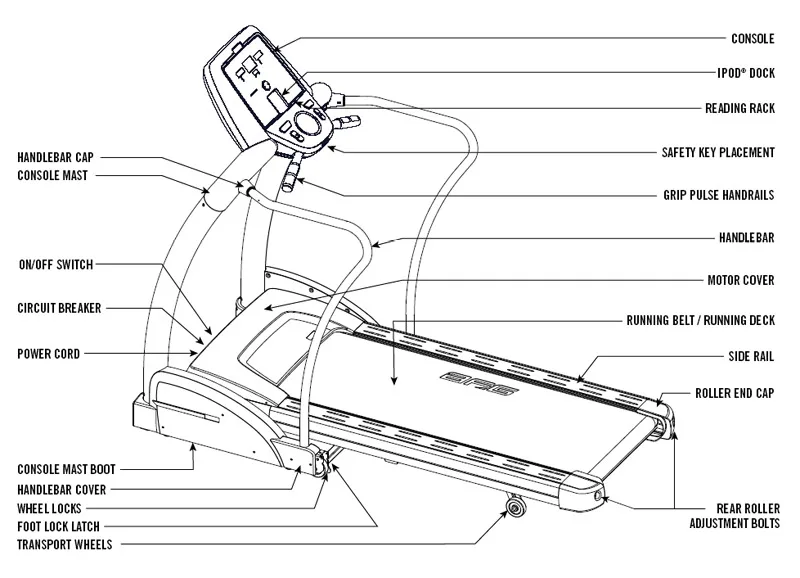
Image source: Bing (Web (fair-use with source credit))
Every treadmill has a few essential parts you'll use during every session. The layout varies by brand, but the fundamentals stay the same.
The console is your command center. It has speed and incline controls, a start/stop button, and a display tracking time, distance, and calories. Most machines include quick-speed keys and preset workout programs.
The display is a guide, not a judge. Don't obsess over the calorie number.
| Part | What It Does | Where to Find It |
|---|---|---|
| Start/Stop button | Starts and stops the belt | Center of the console |
| Speed controls | Adjusts belt speed in 0.1 mph increments | Buttons or touchscreen, right side |
| Incline controls | Changes the slope of the deck | Buttons or touchscreen, left side |
| Safety key / clip | Stops the belt when pulled from the console | Clip attached to a cord, bottom center |
| Emergency stop button | Immediately halts the belt | Red button, front center of console |
The safety key is the most critical safety feature. It's a small magnet connected to a cord with a clip. Attach that clip to your shirt before stepping on.
If you trip, the cord pulls the magnet from the console and the belt stops instantly. Never skip it.
The emergency stop button does the same job manually. It's usually a red button or pressure pad. If you feel dizzy, in pain, or can't catch your breath, press it.
There's no shame in stopping. Your health matters more than finishing a preset program.
Heart rate sensors on the handlebars give a rough estimate, not a medical-grade reading. Use them for trends, not perfection. The CDC recommends 150 minutes of moderate-intensity cardio per week, a solid baseline for most adults.
Step-by-Step: How to Start, Run, and Stop Safely
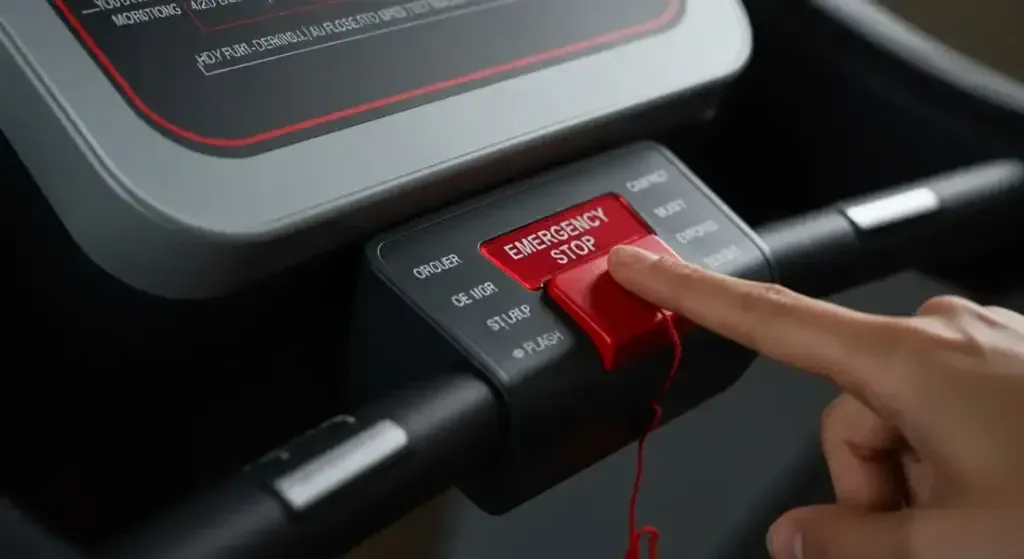
Image source: Bing (Web (fair-use with source credit))
Follow these steps in order, every single time.
| Step | Action | Key Detail |
|---|---|---|
| 1 | Clip the safety key | Attach to your shirt, not your shorts |
| 2 | Stand on the side rails | Keep feet off the belt while stopped |
| 3 | Press Start | Belt moves at 0.5-1 mph |
| 4 | Step onto the belt | Hold handrails briefly for balance |
| 5 | Increase speed gradually | Add 0.3-0.5 mph every minute |
| 6 | Adjust incline after warm-up | Wait 3-5 minutes before adding slope |
| 7 | Cool down | Drop to 2 mph for 2-3 minutes |
| 8 | Press Stop and wait | Step off only after the belt halts |
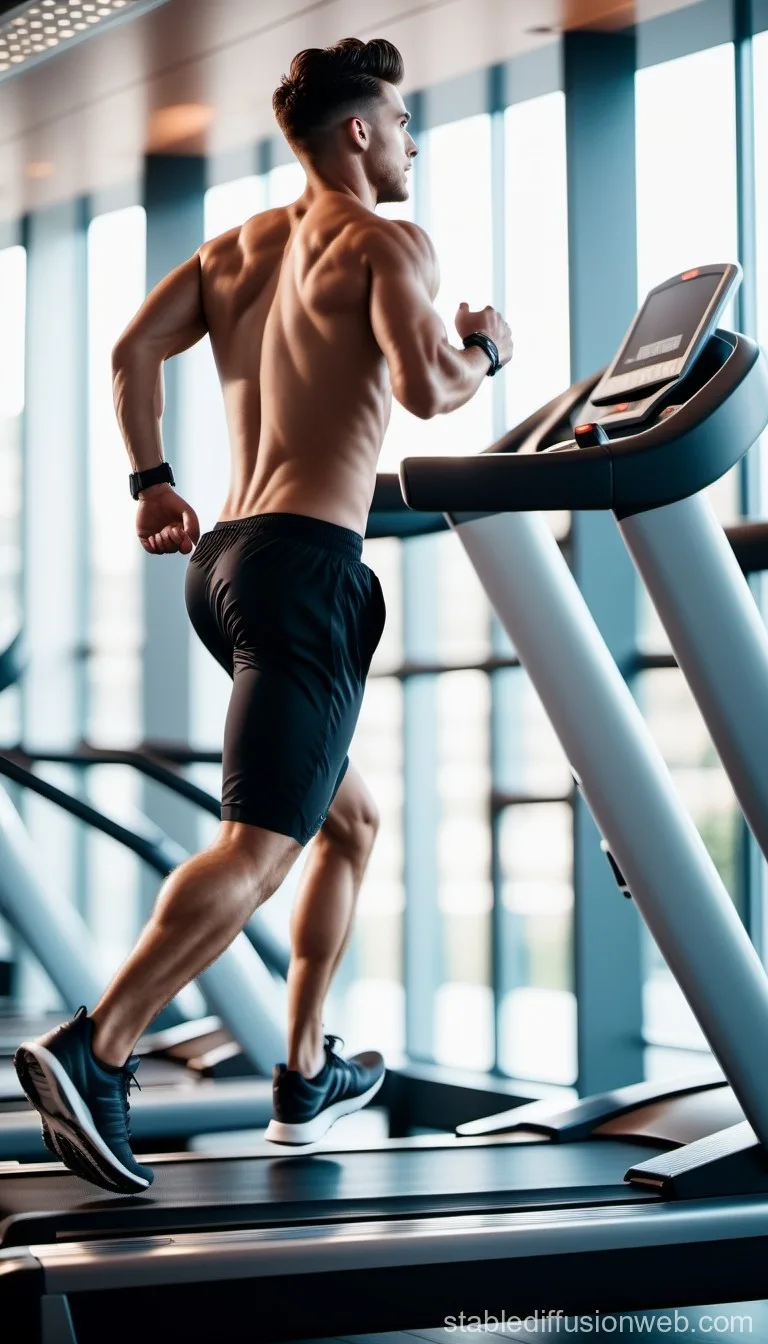
Your posture matters more than your pace. Keep your head up, shoulders relaxed, and gaze forward. Don't stare at your feet for more than a second.
That throws off your balance and strains your neck. Let your arms swing naturally, like they would during an outdoor walk.
Should you hold the handrails the whole time? No. Gripping them shifts your center of gravity and reduces the workout's effectiveness.
Use them only for the first few seconds or when you feel unsteady. If you need to hold on constantly, slow the belt down.
When you finish, always slow down before stopping. Abruptly halting at high speed can cause dizziness. That dizziness is why some people stumble during dismounts.
Give your body two minutes to adjust.
Common Treadmill Mistakes That Cause Injury or Wasted Workouts
The treadmill looks forgiving, but it quietly punishes bad habits. Here are the mistakes we see most often, and how to avoid them.
Holding the handrails the entire time. This reduces your calorie burn, ruins your posture, and makes your hips work unevenly. If you're gripping tight enough to support your weight, you're walking in a way your body won't recognize outdoors.
Starting too fast. Ego isn't a speed setting. Jumping to 6 mph without a warm-up is how calf pulls happen. Your muscles need a few minutes of easy walking before they're ready for effort.
Stopping abruptly. A sudden stop at high speed can cause nausea, lightheadedness, and falls. Always cool down for at least two minutes before pressing Stop.
Looking down at your feet or phone. Your neck doesn't like it, and your balance suffers. If you're reading, keep the screen at eye level. Better yet, focus on a point ten feet in front of you.
Skipping the safety key. Some people find it annoying to clip. It's not optional. Falling without a safety key means the belt keeps moving under you.
That's how serious floor burns and head injuries happen.
Overstriding. This means taking steps that land your foot well ahead of your body. The belt pulls your back foot faster than you expect, making this easy to do. Land with your foot closer to your body, under your center of mass.
Ignoring pain. A little burn in your muscles is fine. Sharp joint pain is not. If your knee, shin, or hip hurts, stop.
Walking through it can turn a minor strain into a long break from training.
Improper form also damages the machine. Dragging your feet increases friction and wears down the belt and deck. For a lower-impact alternative, the elliptical avoids that issue entirely, and it's worth considering if joint pain keeps appearing.
Treadmill Workouts for Walking, Running, and Weight Loss
Once you're comfortable with the basics, structure makes the difference between a boring session and a productive one. Here are three target workouts, each with a clear purpose.
| Workout | Format | Speed | Incline | Duration |
|---|---|---|---|---|
| Beginner Walk | Steady | 2-3 mph | 0-2% | 20-25 min |
| Interval Jog | Alternating | 3-6 mph | 1-3% | 25-30 min |
| 12-3-30 | Steady | 3 mph | 12% | 30 min |
Beginner Walk. Walk at 2 to 3 mph for 20 minutes. Set the incline to 1% to mimic outdoor walking. This is a great starting point if you're new to cardio or returning after a break.
It also works well as a warm-up for any workout.
Interval Jog. This burns more calories in less time. After a 5-minute warm-up walk, alternate 1 minute of jogging at 5 to 6 mph with 2 minutes of walking at 3 mph. Repeat that cycle 8 times.
It's tough but very effective for building endurance.
12-3-30. This viral workout actually holds up. Set the incline to 12%, the speed to 3 mph, and walk for 30 minutes. The steep incline keeps your heart rate up despite the modest speed.
You'll feel your glutes and calves firing within 10 minutes.
Want more variety? Every 5 minutes, bump the incline by 2%. Then lower it back down at the finish.
That works the same muscles differently and keeps the session mentally fresh.
Pair cardio with strength training for the best body composition results. Many people follow a treadmill session with a short dumbbell circuit. If you're curious about lifting frequency, our guide on how often to use dumbbells covers the essentials.
Track progress, but don't obsess over numbers. A treadmill's calorie estimate is based on weight and speed equations, and it can be off by 10 to 20 percent. Use the same machine and program to compare week over week, rather than treating any single number as fact.
Safety First: Warning Signs, When to Stop, and Injury Prevention
Your body sends signals. Knowing which ones to respect keeps you safe.
Stop exercising if you experience:
- Chest pain or pressure
- Severe shortness of breath that doesn't improve
- Dizziness or lightheadedness
- Nausea
- Sharp joint or muscle pain
- Vision changes
These warning signs require immediate attention. If chest pain or severe symptoms don't resolve quickly, seek medical help right away. According to the American College of Sports Medicine, exercise should never cause pain beyond normal muscle fatigue.
Cooling down properly. After your workout, reduce the speed gradually over 2 to 3 minutes. This lets your heart rate return to normal and prevents blood from pooling in your legs. Skip this and you risk feeling dizzy or faint after stepping off.
Hydration. Keep water nearby and sip through your workout. Dehydration mimics fatigue and increases injury risk. If you're working out hard, take small sips every 10 to 15 minutes rather than gulping at the end.
Footwear. Wear proper running shoes, not barefoot or fashion sneakers. Good shoes absorb impact and support your arch, reducing stress on your knees and hips. Replace them every 300 to 500 miles, depending on how often you run.
If you're new to exercise or managing a health condition, check with your healthcare provider before starting a treadmill routine. That's especially true if you have heart disease, high blood pressure, or joint issues.
Maintenance and Long-Term Optimization
A well-maintained treadmill runs smoother, lasts longer, and stays safer. You don't need a technician for most of it.
| Task | Frequency | What to Do |
|---|---|---|
| Wipe down console and belt | After every use | Use a damp cloth, no harsh chemicals |
| Clean under the deck | Monthly | Vacuum dust and debris |
| Lubricate the belt | Every 3-6 months | Check manufacturer spec, typically silicone |
| Check belt tension | Every 3 months | Tighten if it slips or drifts |
| Inspect safety features | Monthly | Test safety key and emergency stop |
Belt lubrication depends on your machine. Most home treadmills need silicone lubricant applied every few months based on usage. Commercial machines handle it automatically.
Always check the owner's manual for the exact product and schedule for your model.
A slipping belt is the most common issue. If the belt jerks or stops while you're walking, turn off the machine, unplug it, and check the tension. Most treadmills have adjustment bolts at the rear.
Tighten both sides equally, about a quarter-turn at a time.
Keep the treadmill on a stable, level surface. Uneven floors create rocking motion that stresses the frame and throws off your stride. A mat underneath catches sweat, protects flooring, and reduces noise.
It's worth the small investment.
If you notice a burning smell from the motor, stop using the machine immediately. That usually means excessive friction from an unlubricated belt. Running on it can damage the motor and void your warranty.
Similarly, a squeaky machine means something needs attention. Keeping the belt clean and lubricated prevents most issues, just like regular care on an elliptical keeps that machine running smoothly.
Frequently Asked Questions
How fast should a beginner walk on a treadmill?
Start at 2 mph for the first few minutes. That's a comfortable, conversational pace. Then increase to 2.5 or 3 mph as you warm up.
If you can't speak in complete sentences, slow down. Your first few sessions should feel easy, not exhausting.
How long should I use a treadmill?
Begin with 15 to 20 minutes per session. The CDC recommends 150 minutes of moderate-intensity cardio per week. That breaks down to about 30 minutes, five days a week.
Build up gradually. Adding 10 percent more time per week is a reasonable goal.
Is it bad to hold the treadmill handrails?
Holding the rails reduces the workout's effectiveness and changes your posture. It also places uneven stress on your hips. Use them only during the first few seconds or when climbing off.
If you need constant support, slow the treadmill down until you feel steady.
What does the safety key do if I fall?
The safety key stops the belt immediately when the cord is pulled. That prevents your body from moving backward while the belt continues. Always clip it to your clothing.
It's the single most important safety feature on the machine.
Is the treadmill calorie counter accurate?
No, it's an estimate, and it can be off by 10 to 20 percent. It calculates based on your input weight, speed, and incline. Use the same machine and preset program to track relative progress.
For accuracy, use a chest strap heart rate monitor instead.
Why do I feel dizzy after getting off a treadmill?
Your blood vessels dilate during exercise to pump more blood to your working muscles. When you stop suddenly, blood can pool in your legs, briefly reducing flow to your head. Preventing that is simple: cool down at a slow pace for 2 to 3 minutes before stopping entirely.