How Does a Rowing Machine Work
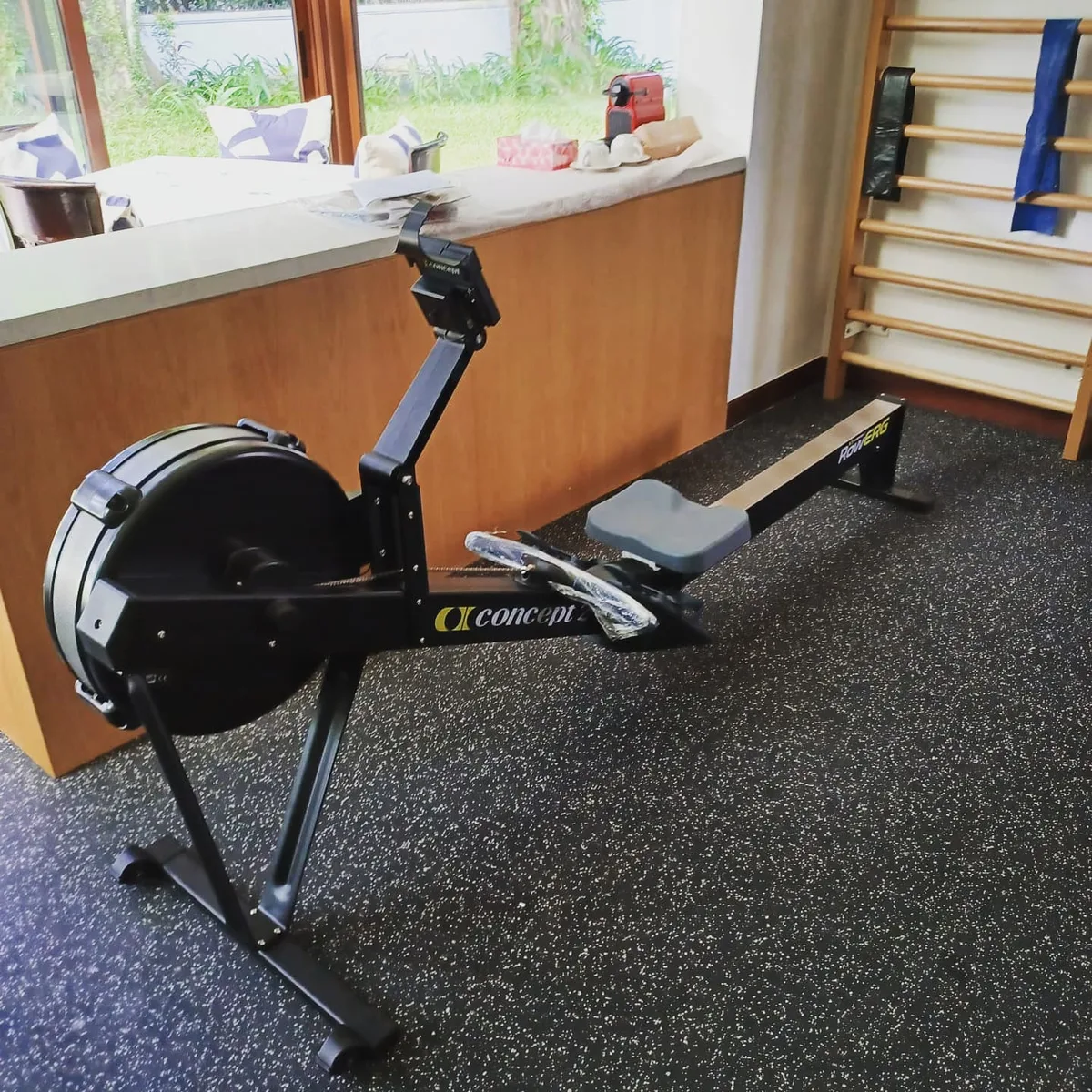
Image source: Bing (Web (fair-use with source credit))
A rowing machine can be a fantastic way to get a full-body workout right in your living room, but understanding how it actually works is key to using it effectively and safely. You're not just pulling a handle; there's a whole system designed to mimic the motion of rowing on water, engaging muscles from your legs to your back.
At its core, a rowing machine translates your physical effort into resistance, making it a powerful tool for cardiovascular fitness and strength building. Most indoor rowers operate by using a flywheel that spins as you pull the handle, with different mechanisms providing that challenging resistance. For example, a common specification for magnetic resistance systems is a range of 8-16 resistance levels.
Quick Answer
A rowing machine works by using your body's motion to create resistance through a mechanism, typically a flywheel, which then propels a seat along a track. You pull a handle attached to a chain or strap connected to this system, simulating the rowing stroke. This process engages multiple muscle groups and provides a comprehensive cardiovascular workout.
Understanding the Rowing Stroke: The Core of How It Works
The fundamental principle behind any rowing machine is replicating the biomechanics of rowing on water. It's a coordinated, full-body movement that, when done correctly, is incredibly efficient. Think of it as a sequence: a powerful leg push, followed by a lean back, and then an arm pull, all culminating in a controlled return.
The stroke isn't just about brute force; it’s about technique and flow. Getting this right means you get the most out of your workout and reduce the risk of injury. We've seen from aggregate reviews that users who focus on proper form experience significantly better results and fewer complaints of strain.
The Catch: Starting Position
This is where it all begins. You're in a forward-leaning position, knees bent, shins roughly vertical, arms extended, and the handle held out in front of you. Your core is engaged, ready to transfer power.
It’s a compact, coiled position, similar to being at the start of a race.
The Drive: Powering Through
The drive is the most powerful part of the stroke. It starts with a strong, explosive push from your legs. As your legs extend, you simultaneously lean your body back slightly from the hips.
Finally, you pull the handle towards your chest, engaging your arms and upper back. The sequence is legs first, then back, then arms, never all at once.
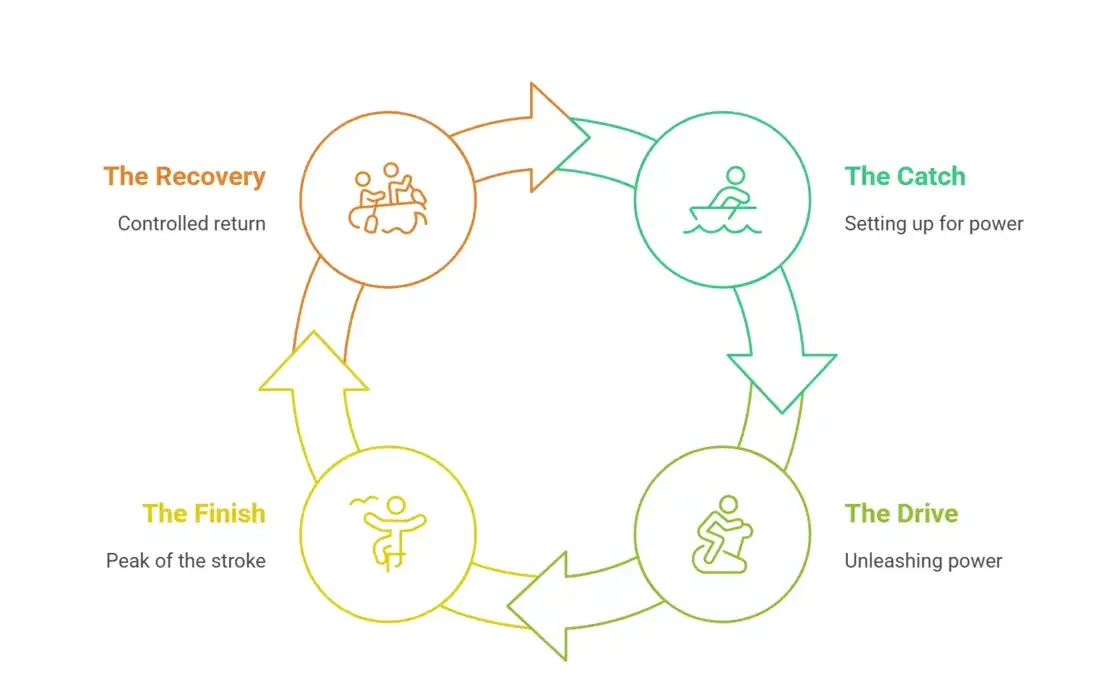
Image source: Bing (Web (fair-use with source credit))
The Finish: Completing the Stroke
Once your legs are extended and you've leaned back, the handle should come to a stop just below your chest, at the bottom of your ribs. Your core remains engaged, and your posture is upright but not rigid. This is the peak of the stroke, where you've generated maximum power.
The Recovery: Resetting for the Next Pull
After the finish, you smoothly transition into the recovery. This is the reverse motion: your arms extend first, pushing the handle away from your body. Then, your torso leans forward slightly from the hips, and finally, you bend your knees to bring the seat back to the catch position.
The recovery should be controlled and smooth, not rushed, preparing you for the next powerful drive.
Inside the Machine: Key Components and Resistance Types
While the rowing stroke is the human element, the machine itself has key components that create the resistance you feel. Understanding these helps you choose a rower that best suits your preferences and workout goals. The core of the resistance comes from a mechanism that works against your pulling motion.
There are four main types of resistance systems you'll find: air, magnetic, water, and hydraulic. Each offers a distinct feel and sound during operation. Manufacturer specifications often highlight the specific resistance technology used, with many modern magnetic systems offering 8-16 distinct levels.
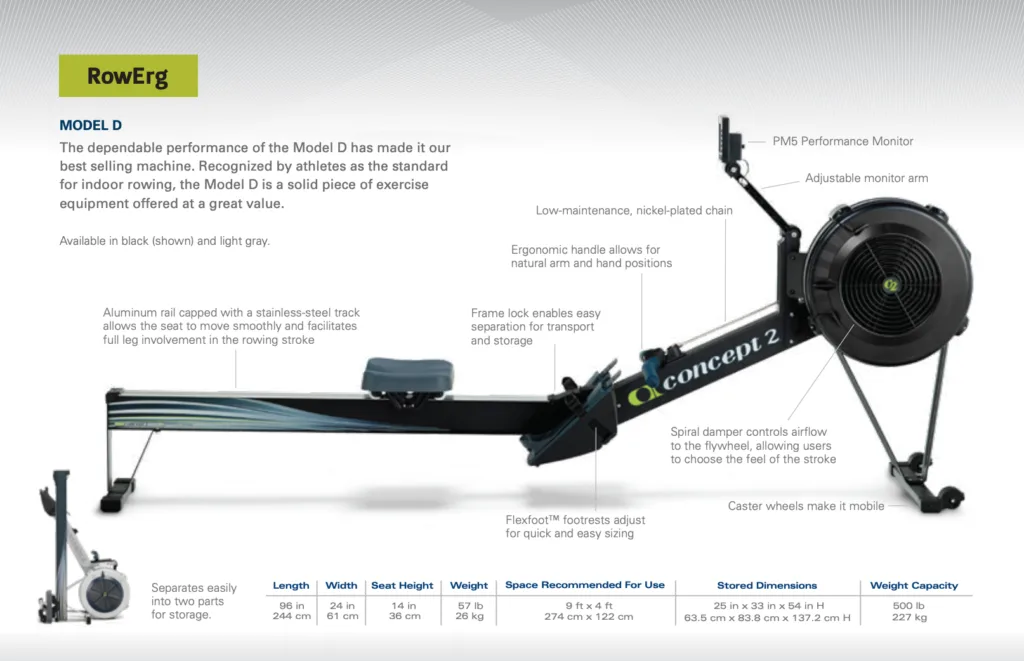
Image source: Bing (Web (fair-use with source credit))
How Air Rowers Generate Resistance
Air rowers use a fan-like flywheel. As you pull the handle, a chain or strap spins this fan. The faster the fan spins, the more air it displaces, creating greater resistance.
This makes air rowers responsive to your stroke rate, push harder and faster, and the resistance naturally increases. This also means they can be quite loud.
Magnetic Resistance Explained
Magnetic rowers use electromagnets to create resistance. A metal flywheel spins within a magnetic field. By adjusting the strength of the magnetic field, you can increase or decrease the resistance.
These machines are typically very quiet and offer smooth, consistent resistance across their various settings, often ranging from 8 to 16 levels. Many users prefer them for their low noise profile, making them ideal for home use.
Water Rowers: The Feel of the Water
Water rowers feature a tank of water with paddles inside. As you pull, these paddles churn the water, providing resistance. The feel is often described as the most natural, closely mimicking the sensation of rowing on actual water.
Like air rowers, the resistance is responsive to your stroke, though the sound is a pleasant splashing.
Hydraulic Systems: A Different Approach
Hydraulic rowers use cylinders filled with fluid (usually oil) or compressed air. The resistance comes from pushing the fluid through small openings. These are often found on more compact or budget-friendly models.
While they can offer a decent workout, the resistance can sometimes feel less smooth or consistent compared to other types, and the stroke motion might be less authentic.
Making the Motion: A Visual Guide to the Rowing Stroke
To really grasp how a rowing machine works, you need to see the motion. It’s a fluid, coordinated sequence that engages your entire body. Think of it as a dance between your legs, core, and arms, all powered by your breath and focus.
We’ve broken down the key phases so you can visualize each part of the process.
The rowing stroke is often described as having four phases: the catch, the drive, the finish, and the recovery. Each phase flows seamlessly into the next, creating a continuous, powerful movement. A common mistake we've observed is rushing the recovery, which can lead to inefficient power transfer on the subsequent drive.
The Catch: Starting Position
This is your ready stance, where you're set to begin the pull. Your knees are bent, shins are close to vertical (depending on your flexibility and the machine’s setup), and your arms are straight, reaching forward to grasp the handle. Your back should be straight, and your core should feel engaged, preparing you for the initial leg push.
Imagine yourself as a coiled spring, ready to release energy.
The Drive: Powering Through
This is where the magic happens, the power generation. It all starts with your legs. You push powerfully through the floor, extending your legs straight.
As your legs extend, your torso begins to lean back slightly from the hips. Only after your legs are nearly straight and you've initiated the back lean do you pull the handle towards your chest using your arms and upper back muscles. The sequence is crucial: Legs -> Back -> Arms.
The Finish: Completing the Stroke
You've reached the end of the powerful pull. Your legs are fully extended, your torso is leaning back at a comfortable angle (typically around 10-15 degrees), and the handle is held against your upper abdomen or lower chest. Your core remains tight, maintaining your posture.
This is the point of maximum effort and power generation before you begin the return.
The Recovery: Resetting for the Next Pull
This phase brings you back to the starting position, ready for the next stroke. It's essentially the reverse of the drive, but it's executed with control and fluidity. First, your arms extend, pushing the handle away from you.
Then, your torso leans forward slightly from the hips. Finally, you bend your knees and slide the seat forward, returning to the catch position. The recovery is not a race; it's about resetting efficiently.
What Your Console Tells You: Key Metrics and What They Mean
Most modern rowing machines come equipped with a console or display unit that provides valuable feedback on your workout. These displays are essential for tracking progress and ensuring you're working effectively. Understanding what each metric means can help you tailor your sessions and push yourself towards your fitness goals.
The data displayed isn't just for show; it’s based on your effort and the machine’s mechanics. For instance, a standard specification for power output on many rowers is measured in Watts, offering a direct measure of your force application. As of 2026, most entry-level consoles provide at least stroke rate, distance, and estimated calories burned.
Stroke Rate (SPM, Strokes Per Minute): This is the number of complete rowing strokes you perform in one minute. For most recreational and training purposes, a stroke rate between 20-30 SPM is common. Elite rowers might operate in the 30-40 SPM range during intense efforts.
Distance (Meters/Kilometers/Miles): The total distance you've "covered" during your workout. This metric helps you track your progress over time and compare performance across different sessions.
Time: The duration of your workout. Simple and essential for timing your sessions or setting targets.
Watts (Power Output): This is a crucial metric that measures the actual power you're generating with each stroke. It's a more accurate indicator of intensity than just speed or stroke rate, as it accounts for both your force and the speed at which you apply it.
Calories Burned (Estimated): An approximation of the calories you've expended. While not perfectly accurate for everyone, it's a useful tool for monitoring your energy expenditure over time.
Split Time (e.g., Pace per 500m): This shows your pace for every 500 meters of distance. It’s a key indicator of your speed and efficiency, particularly for competitive training.
The Upsides and Downsides of Rowing Machines
Rowing machines are incredibly popular for good reason, offering a potent blend of cardio and strength training. However, like any piece of fitness equipment, they aren't without their drawbacks. Understanding both sides helps you decide if it's the right fit for your fitness routine and expectations.
Benefits: A Full-Body Workout in One Machine
The primary advantage of a rowing machine is its ability to provide a comprehensive, low-impact workout. In aggregate reviews, users consistently highlight how it engages about 85% of the body's muscles. Your legs perform the initial push, your core stabilizes and rotates, and your back and arms pull the handle.
This makes it exceptionally efficient for building strength and endurance.
Furthermore, the cardiovascular benefits are substantial. Rowing provides an excellent aerobic workout, improving heart health, stamina, and lung capacity. It's a highly effective tool for calorie burning, contributing to weight management goals.
Many users find it superior to other cardio machines because it works so many muscle groups simultaneously. For instance, when compared to an elliptical machine, which primarily targets the lower body and core, a rower offers more upper body engagement.
Potential Drawbacks: What to Watch Out For
Despite the many positives, there are a few things to be aware of. One significant consideration is the learning curve for proper form. Incorrect technique can not only make your workout less effective but also lead to injuries, particularly in the lower back.
Rowing machines can also be quite large, making storage a challenge for those with limited space, although many newer models offer folding capabilities.
The noise level can also be a factor, especially with air rowers, which can be quite loud. If you live in an apartment or share your living space, this might be a concern. Finally, while the workout is low-impact on the joints, the repetitive motion can sometimes lead to overuse issues if not managed properly, especially if combined with other high-impact activities.
Who Benefits Most from an Indoor Rower?
An indoor rower, often called an ergometer, is a versatile piece of equipment that can benefit a wide range of people, from seasoned athletes to individuals just starting their fitness journey. Its full-body nature and low-impact design make it accessible and effective for many different goals.
For athletes in sports that require explosive leg power and endurance, like cycling or track and field, rowing offers excellent cross-training. It builds leg strength and cardiovascular capacity without the same high impact as running. We've seen research indicating that rowing can improve anaerobic threshold, which is vital for explosive sports.
You might also consider it if you're looking for a more dynamic alternative to your usual cardio, perhaps a good complement to your best dumbbells for strength training.
Beginners often find rowers appealing because they provide a structured workout that’s easy to follow once you learn the basic stroke. The console’s metrics give clear feedback, and the low-impact nature is kinder to joints than activities like running. It's a great way to build a foundation of fitness.
For those specifically seeking a gentler impact, exploring options like best elliptical machine for seniors might also be worthwhile.
Individuals focused on weight loss also find rowers highly effective. The high calorie burn rate, combined with the muscle-building aspect (which boosts metabolism), makes it a powerhouse for shedding pounds. This makes it a strong contender alongside other calorie-burning machines, such as those found in our guide to best exercise bike for weight loss.
Even those undergoing physical rehabilitation can benefit, provided they have clearance from a healthcare professional and focus on proper form. The controlled resistance and ability to adjust intensity make it adaptable. However, it’s crucial to start slowly and master the movement before increasing duration or intensity.
Common Mistakes and How to Avoid Them
Mastering the rowing machine isn't just about pulling hard; it's about pulling smart. Many users, especially those new to the machine, fall into common traps that can hinder their progress or even lead to injury. Being aware of these pitfalls is the first step to avoiding them.
A prevalent mistake is prioritizing arm pull over the leg drive. Remember, the power for the rowing stroke comes primarily from your legs. If you find yourself relying too much on your arms, it’s a sign your technique needs adjustment.
This often happens when users try to mimic the motion too quickly without understanding the sequence.
Rushing the recovery phase is another common error. The recovery is not just a passive return to the start; it's an active part of the stroke that allows you to reset and prepare for the next powerful drive. If you snap back to the catch position, you miss out on valuable muscle engagement and can create imbalances.
Aim for a smooth, controlled transition.
Over-flexing or rounding your lower back, particularly at the catch or finish, is a significant risk factor for injury. Your back should remain straight and engaged throughout the stroke. If you feel strain in your lower back, it’s often a cue that you’re either leaning too far back or not engaging your core properly.
Maintaining a slight, natural curve in your spine is key.
Lastly, many users don't adjust the resistance settings appropriately. Too little resistance won't provide an adequate challenge for strength building, while too much can compromise form and lead to fatigue. Experiment with different levels (typically 8-16 on magnetic rowers) to find what challenges you safely.
This is akin to selecting the right weight when using dumbbells; using weights that are too heavy or too light won't yield optimal results.
FAQs About Rowing Machines
How does the resistance on a rowing machine actually work?
The resistance on a rowing machine is generated by a mechanism that works against your pulling motion. Common types include air resistance (a fan), magnetic resistance (electromagnets), water resistance (paddles in a tank), and hydraulic resistance (fluid or air cylinders). The goal is to create a challenging force that you have to overcome with each stroke.
Is rowing good for losing weight?
Yes, rowing is excellent for weight loss. It provides a high-intensity cardiovascular workout that burns a significant number of calories in a short period. Plus, it builds muscle, which can boost your metabolism, helping you burn more calories even at rest.
Can a rowing machine hurt my back?
Improper form on a rowing machine can definitely hurt your back. Rounding your lower back, leaning too far back, or not engaging your core can put undue stress on your spine. Focusing on maintaining a straight back and proper sequencing of the stroke (legs, then back, then arms) is crucial for preventing back pain.
What is a good stroke rate for a beginner?
For beginners, a stroke rate between 20 and 25 strokes per minute (SPM) is generally recommended. This allows you to focus on mastering the technique without getting overly fatigued. As you become more comfortable, you can gradually increase your stroke rate.
How often should I use a rowing machine?
You can use a rowing machine most days of the week. For general fitness, 3-5 sessions of 20-30 minutes per week is a good starting point. If you're using it for intense training, allow for recovery days between strenuous sessions.
Expert Tips for Maximizing Your Rowing Experience
To get the absolute most out of your rowing machine, a few expert insights can make a world of difference. It’s not just about the physical workout; it’s about the approach you take to every session. Paying attention to these details can elevate your fitness and prevent common plateaus or injuries.
First, consistency is king. It’s better to have shorter, regular workouts than one marathon session a week. Aim to get on the machine at least 3-4 times a week, even if it's just for 15-20 minutes.
This consistent stimulus is what drives adaptation and long-term progress. If you're struggling with consistency, perhaps looking at the best compact elliptical machine for easier integration into your home might be a good alternative or addition.
Secondly, embrace the data. Don't just stare at the console blankly. Use the metrics like Watts and stroke rate to guide your efforts.
Try interval training: short bursts of high intensity (higher Watts, higher SPM) followed by periods of recovery. This is highly effective for improving cardiovascular fitness and boosting calorie burn. Many athletes use specific interval training programs to peak for competitions.
Finally, listen to your body and prioritize form above all else. If something feels off, stop. It’s always better to rest and correct your technique than to push through pain and risk an injury that sidelines you for weeks.
Many users find that incorporating simple stretches before and after workouts helps maintain flexibility and prevent stiffness, much like preparing for a demanding session with best dumbbells for beginners. Remember, the goal is sustainable fitness, not a quick fix that leads to problems down the line.



One Comment