Can An Obd2 Scanner Work On All Cars: Full Guide
Not all OBD2 scanners work on every car, because compatibility depends on model year, region, and protocol support.
If you have ever plugged in a scanner and gotten nothing but a blank screen, you already know how confusing this can be. An OBD2 scanner can feel like a magic key, but only if the car and the tool speak the same language. In this guide, I’ll break down exactly when an OBD2 scanner works on all cars, when it does not, and how to choose the right one without wasting money.

What an OBD2 scanner actually does
An OBD2 scanner reads data from your car’s onboard diagnostics system. It can pull trouble codes, show live data, and help you figure out why a check engine light is on. In plain English, it is a translator between your car’s computer and you.
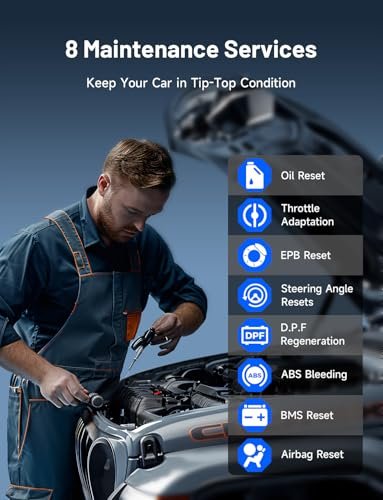
Most drivers use it for basic checks like engine codes, emissions issues, and sensor data. Some scanners also support special functions such as ABS, airbag, transmission, or battery system data. But those extra features are not universal.
A lot of people assume every scanner works on every car because the OBD2 standard is so common. That is close, but not fully true. The scanner may fit the port, yet still fail to communicate with the vehicle.

Can an OBD2 scanner work on all cars?
The short answer is no, not on all cars. An OBD2 scanner works on most gasoline vehicles made for the U.S. after 1996, but compatibility is not guaranteed across every car, truck, or scanner.
Here is the simple rule I use when helping people choose one:
• If the car is OBD2-compliant and the scanner supports the car’s protocol, it will usually work
• If the vehicle is older than the OBD2 rollout, or uses a different standard, it may not
• If the scanner is a basic code reader, it may only read engine codes and nothing else
I have seen people buy a cheap scanner and expect it to diagnose a European diesel, an older import, or a hybrid with full system access. That is usually where disappointment starts. The port may look the same, but the support behind it can be very different.
Which cars are OBD2 compatible?
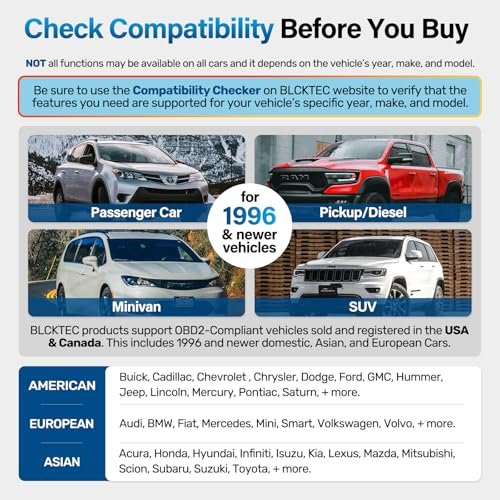
In the U.S., most cars and light trucks sold after 1996 are OBD2 compliant. That includes many gasoline vehicles from major brands like Ford, Toyota, Honda, Chevrolet, Nissan, and Hyundai.
There are some important exceptions and gray areas:
• Pre-1996 vehicles usually do not use OBD2
• Some 1994 and 1995 models may have partial OBD2 support, but not always full access
• Heavy-duty trucks often use different diagnostic systems
• Some motorcycles, boats, and off-road machines are not OBD2 compliant
Outside the U.S., the cutoff year can be different. In Europe, many gasoline cars became OBD2-compliant around 2001 and diesel cars around 2004. In other regions, the rollout followed different timelines.
Why an OBD2 scanner may not work on a car
Compatibility issues usually come down to one of a few reasons. The biggest one is protocol mismatch. A scanner must understand the communication style used by the vehicle.
Common causes include:
• The car is too old and does not support OBD2
• The scanner does not support the vehicle’s protocol
• The car is OBD2-compliant, but only for basic emissions codes
• The scanner is missing support for advanced systems like ABS or SRS
• The vehicle uses a manufacturer-specific system for some functions
From real-world experience, the most common mistake is buying a scanner based only on the plug shape. The connector may match, but that does not mean the scanner can read the car correctly. It is a little like plugging in a phone charger that fits, but delivers the wrong voltage.
OBD2 vs. OBD1: why the difference matters
OBD1 and OBD2 are not the same thing. OBD1 was an earlier generation of onboard diagnostics, and it varied a lot by manufacturer. OBD2 brought a more standardized system, which made scanning much easier.
This matters because an OBD2 scanner is made for OBD2 systems. If your car is OBD1, the scanner may not work unless you use a special adapter or a brand-specific tool. That is why many older cars need a different diagnostic approach.
If you are not sure which system your vehicle uses, check:
• The owner’s manual
• The under-hood emissions label
• The year and market where the car was sold
• The shape and location of the diagnostic port
Do all OBD2 scanners work on all OBD2 cars?
No, even among OBD2 cars, not every scanner does the same job. A basic scanner may read generic engine codes, but it may not access manufacturer-specific data or other systems.
Here is how scanner types differ:
• Basic code readers: read and clear check engine codes
• Mid-range scanners: show live data and some advanced codes
• Professional scanners: access ABS, SRS, transmission, and special functions
• Bluetooth app-based scanners: useful for daily checks, but feature quality varies
I have used entry-level scanners that worked perfectly for a simple P0420 catalyst code. But on another vehicle, they could not read the ABS module at all. That is not a defect in every case. It often just means the scanner was never designed for that level of access.
What your car needs for an OBD2 scanner to work
To get good results, both the vehicle and scanner need to line up. Think of it like a lock and key. If one side is off, the scan may fail or show limited data.
You usually need:
• A vehicle with an OBD2 system
• A scanner that supports the correct protocol
• A working 16-pin diagnostic port
• A charged battery and stable power
• In some cases, ignition on or engine running
A weak car battery can also cause communication problems. I have seen people think their scanner was broken when the real issue was low voltage. Once the battery was charged, the scanner connected right away.
Common OBD2 protocols you should know
OBD2 is a standard, but there are still several communication protocols underneath it. Most modern scanners support the common ones automatically, but older or low-cost tools may not.
The main protocols include:
• ISO 9141-2
• ISO 14230-4 KWP2000
• ISO 15765-4 CAN
• SAE J1850 PWM
• SAE J1850 VPW
You do not need to memorize these. What matters is knowing that a scanner must support the protocol used by your vehicle. Most reputable universal scanners list compatibility clearly on the box or product page.
Signs your OBD2 scanner is compatible
A compatible scanner usually gives you a smooth connection and useful data. If it is working well, you should see quick communication and accurate code reads.
Look for these signs:
• The scanner powers on through the OBD2 port
• It identifies the vehicle correctly
• It reads and clears codes without errors
• Live data updates in real time
• The check engine light resets after repair, if allowed by the car
If the tool says “link error,” “protocol error,” or “no communication,” compatibility may be the problem. It could also be a blown fuse, damaged port, or ignition issue. Always check the basics first before blaming the scanner.
Cars where OBD2 scanners often have limits
Some vehicles need more than a basic OBD2 tool. This is where many buyers get frustrated because the scanner works, but only partly.
Common examples include:
• European cars with advanced manufacturer systems
• Luxury vehicles that hide many functions behind brand software
• Diesel vehicles that need diesel-specific support
• Hybrids and EVs with specialized systems
• Older imports that use unique diagnostic setups
A basic scanner may still read engine faults on these vehicles, but it may not see airbag, ABS, or service reset data. If you own one of these vehicles, it is smart to choose a scanner made for broader coverage.
How to check compatibility before buying
Before you buy an OBD2 scanner, take a minute to check the details. This saves money and avoids a lot of returns.
Use this quick process:
- Confirm your car’s model year and market
- Check whether it is OBD2-compliant
- Look up the scanner’s supported protocols
- Make sure it supports your car brand if you want advanced features
- Verify whether you need engine-only, or full-system diagnostics
One mistake I made early on was assuming “universal” meant “fully universal.” It usually does not. Universal often means it works for basic engine codes on most cars, not every module on every vehicle.
Benefits of using an OBD2 scanner
Even with limits, an OBD2 scanner is still one of the most useful tools a driver can own. It can save time, money, and stress when the check engine light comes on.
Main benefits include:
• Faster diagnosis of engine issues
• Less guesswork before visiting a mechanic
• Ability to clear simple codes after repairs
• Live data for sensors like oxygen, coolant temp, and fuel trims
• Better maintenance awareness
For many drivers, the biggest benefit is confidence. Instead of guessing, you can see what the car is telling you. That alone can stop unnecessary repairs and bad advice.
Limitations to keep in mind
An OBD2 scanner is helpful, but it is not a full replacement for professional diagnostics. It cannot magically fix the car, and it may not uncover every problem.
Key limits include:
• It may not read all control modules
• It may not diagnose mechanical problems directly
• It may not work on pre-OBD2 vehicles
• It may not support every manufacturer-specific feature
• It may not provide repair certainty without testing
Think of it like a thermometer, not a doctor. It tells you something is wrong, and sometimes what area is wrong, but it does not always tell the whole story.
Best practices for using an OBD2 scanner
Using the tool the right way makes a big difference. A few simple habits can prevent false readings and wasted time.
• Turn the ignition to the correct position before scanning
• Read the code before clearing it
• Record freeze frame data if available
• Check live data, not just the code number
• Verify repairs by rescanning after fixing the issue
I always tell people not to clear a code too fast. Once the code is gone, useful clues may disappear too. That is like wiping a whiteboard before you read the answer.
Frequently Asked Questions
Does an OBD2 scanner work on all cars after 1996?
Most U.S. cars and light trucks built after 1996 are OBD2-compliant, so a scanner will usually work for basic engine codes. Still, some vehicles have limited support for advanced systems, and some scanners only read generic data.
Can I use an OBD2 scanner on a car with no check engine light?
Yes, you can often still read stored or pending codes even if the light is off. Many scanners also show live data, which can help you catch small problems before they trigger a warning light.
Will a cheap OBD2 scanner work as well as an expensive one?
A cheap scanner can work fine for basic engine codes, but it may not support ABS, airbag, or special functions. More expensive scanners usually offer wider coverage, better software, and stronger compatibility.
Why does my scanner say no connection?
That can happen if the vehicle is not OBD2-compliant, the fuse for the diagnostic port is blown, the ignition is not in the right position, or the scanner does not support the car’s protocol. A weak battery can also cause connection problems.
Can an OBD2 scanner clear all fault codes?
No, not always. It can usually clear generic engine codes, but codes in ABS, SRS, transmission, or manufacturer-specific systems may need a more advanced tool.
Do OBD2 scanners work on diesel cars?
Some do, but compatibility depends on the model year, region, and scanner features. Many modern diesel vehicles use OBD2, but some require diesel-specific support or more advanced diagnostics.
Conclusion
An OBD2 scanner does not work on all cars, but it does work on most OBD2-compliant vehicles for basic engine diagnostics. The real key is matching the scanner to the car’s year, protocol, and feature needs. Once you understand that, choosing the right tool gets much easier.
If you are shopping for one, focus on compatibility first, then features, then price. That simple order can save you time, money, and a lot of frustration. Take a few minutes to check your vehicle details, compare scanner support, and pick a tool that fits your real needs.
If this guide helped, explore more diagnostic tips, share it with another car owner, or leave a comment with your vehicle and scanner model.