How To Use A Snow Brush: Easy Winter Tips
A snow brush works best when you clear loose snow first, then scrape ice gently with controlled, overlapping strokes.
Using a snow brush the right way can save time, protect your car’s paint, and make winter mornings a lot less stressful. I’ve spent enough cold starts scraping windshields to know that technique matters just as much as the tool itself. In this guide, I’ll walk you through how to use a snow brush safely, efficiently, and without making the common mistakes that can scratch glass or leave dangerous snow behind.
What a snow brush is and why it matters
A snow brush is a simple winter tool made to remove snow, slush, and light ice from your vehicle. Most snow brushes have two parts: soft bristles on one side and an ice scraper on the other. That combo makes it one of the most useful winter car accessories you can keep in your trunk or back seat.
The reason it matters is simple. Snow and ice can block your view, add weight to your car, and fly off while driving. In many places, driving with snow on your roof is not just careless; it can also be unsafe for other drivers.
From experience, the biggest mistake people make is rushing. They scrape one small patch of glass, hop in, and drive off. That leaves snow on mirrors, the hood, the roof, and the rear window, which can turn into a mess the moment you hit the road.
How to use a snow brush the right way
Using a snow brush is easy once you learn the order. The goal is not just to move snow around. The goal is to fully clear the parts of your vehicle that affect visibility and safety.
Follow these steps:
-
Start the car and let the defroster warm the glass
Turn on your front and rear defrosters before you begin brushing. This helps loosen ice and makes scraping easier. If your car has heated mirrors or a heated windshield setting, use those too. -
Brush off loose snow from the top down
Begin on the roof, then move to the hood, trunk, windows, mirrors, and lights. I always start at the top because snow naturally falls downward. If you clear the bottom first, you may end up redoing your work. -
Use the bristle side for soft snow
Sweep the snow in long, smooth strokes. Try not to jab or grind the bristles into the paint. A light touch works better and is less likely to trap grit that can scratch the surface. -
Switch to the scraper for ice
Use the ice scraper edge on windshields, side windows, and mirrors where ice is stuck. Hold it at a slight angle and work slowly. If the ice is thick, let the defroster do part of the work rather than forcing it. -
Clear around wipers and lights
Lift snow away from the wiper blades and headlights. Frozen wipers can tear or bend, and blocked lights reduce visibility for everyone around you. -
Check for leftover snow on the roof and trunk
This step is easy to skip, but it matters a lot. Snow left on the roof can slide forward when you brake. Snow on the trunk can blow into traffic behind you.
A good snow brush works like a broom and chisel in one. The bristles sweep away the bulk, and the scraper handles the hard spots. When you use both parts in the right order, the job gets much easier.

Best way to clear different parts of your car
Not every part of the car needs the same approach. Glass, paint, plastic, and rubber all react differently in cold weather. Knowing the difference helps you use a snow brush without causing damage.
Windshield and rear window
Use the scraper side on ice, then the bristle side to remove loose snow. Work from the edges toward the center so the cleared area stays open longer. If visibility is still poor, keep the defroster running while you finish the rest of the car.
Side windows
Side windows often collect snow that gets packed by wind. A few quick brush strokes usually work well. If the window is icy, use the scraper lightly and avoid hitting rubber trim too hard.
Roof
The roof is one of the most important areas to clear. I learned this the hard way years ago when a sheet of roof snow slid forward at a stoplight and covered my windshield for a second. Since then, I never skip the roof because it is one of the easiest places to forget and one of the most dangerous to leave uncleared.
Hood and trunk
Brush these areas with gentle strokes. Snow on the hood can melt and refreeze near the windshield, while snow on the trunk can fly off and hit the car behind you. A few extra seconds here can make a big difference.
Mirrors and headlights
Use the corner of the brush or your hand in a glove to clear around mirrors and lights. Good visibility is not just about seeing out. It is also about being seen by other drivers.
Common mistakes to avoid when using a snow brush
Even a simple tool can cause problems if it is used the wrong way. I have seen people damage paint, scratch glass, and even break their brush by forcing it through heavy ice.
Avoid these mistakes:
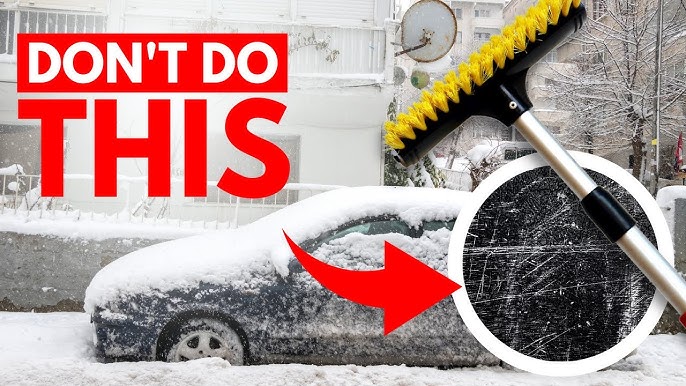
- Using too much pressure. Pressing hard can scratch dirt into the paint or bend the brush head.
- Brushing dry grit across the car. If the car is covered in road salt or sand, rinse or sweep carefully first when possible.
- Skipping the roof. Snow on the roof can slide down while driving and block your view.
- Using the scraper on paint. The scraper side should stay on glass or hard plastic surfaces, not painted panels.
- Forgetting the wipers. Frozen wipers can tear when turned on.
- Rushing thick ice. Thick ice may need defroster heat or de-icer spray before scraping.
A lot of winter damage happens because people are tired, cold, and in a hurry. That is normal. Still, a few extra minutes with the right method can save you from scratches, stress, and bad visibility.
How to choose the right snow brush
Not all snow brushes are built the same. The right one depends on your car, your climate, and how much snow you usually deal with. A better brush makes the whole job easier and safer.
Look for these features:
- Soft but firm bristles that won’t bend too easily
- A strong scraper edge for light to moderate ice
- A long handle if you drive an SUV, truck, or van
- A foam or padded grip for cold mornings
- A detachable design if you want easier storage
- A built-in pivot head for reaching wide surfaces
If you live where snow falls often, it is worth buying a sturdy brush instead of the cheapest one. In my experience, flimsy brushes snap at the worst time, usually right after the first real storm.
Safety tips for winter snow removal
Using a snow brush is not only about convenience. It is also about safety. Snow and ice can affect traction, visibility, and even the behavior of other drivers around you.
Keep these safety tips in mind:
- Never drive with snow piled on the roof or hood
- Clear all windows before moving the car
- Use gloves so your hands stay warm and protected
- Watch for ice chunks falling from mirrors or the roof
- Avoid metal tools on delicate surfaces unless they are designed for it
- Stand on solid ground and do not overreach on slippery surfaces
According to winter driving safety guidance from transportation and road safety agencies, full vehicle clearing improves visibility and reduces the chance of snow-related hazards. That advice matches what most experienced winter drivers already know from practice: if you can see better, you drive better.
Extra tips that make the job faster
Once you get used to using a snow brush, a few small habits can save time every morning. These are the tricks I wish I had learned earlier.
- Park with the windshield facing away from heavy wind if possible
- Put a brush in the car and another at home if you have two vehicles
- Keep a small bottle of de-icer spray nearby for icy mornings
- Lift wipers before a storm if your area allows it
- Clear snow soon after it falls, before it turns to ice
- Use short, smooth motions instead of frantic sweeping
Think of it like sweeping a kitchen floor. If you wait too long, the mess gets sticky and harder to move. Snow is the same way. Fresh snow is easy. Packed snow is work.
When a snow brush is not enough
A snow brush is great for snow and light ice, but it does have limits. If your car is covered in thick ice after freezing rain, the scraper alone may not be enough. In those cases, use the defroster, de-icer spray, or a windshield-safe ice remover first.
Very heavy snow may also require a snow shovel for the area around your car, especially if the wheels are buried. A snow brush is for the vehicle itself, not for clearing deep drifts around it. Knowing that limit helps you stay realistic and safe.
Frequently Asked Questions of How to use a snow brush
How do you use a snow brush on a car?
Start by turning on the defrosters, then brush loose snow from the roof, windows, hood, and trunk. Use the scraper side for ice on glass, but avoid scraping paint or rubber trim.
Should I brush snow off the roof first?
Yes, the roof should be cleared first because snow can slide down onto the windshield while you drive. It can also fall onto other drivers and create a hazard.
Can a snow brush scratch my car?
Yes, it can if the bristles are dirty, stiff, or used with too much pressure. To reduce the risk, brush gently and remove any grit or ice chunks before sweeping.
What side of the snow brush is for ice?
The scraper side is for ice, especially on windshields and side windows. The bristle side is for loose snow on the body and glass.
Is it safe to drive with snow on the hood?
No, it is not a good idea because snow can blow onto the windshield or block airflow and visibility. It is best to clear the hood completely before driving.
How do I keep my snow brush from freezing?
Store it inside the car or in a dry spot when possible. If it gets wet, shake off the moisture and let it dry before the next use.
Conclusion
Knowing how to use a snow brush the right way makes winter driving safer, faster, and less stressful. The key is simple: start with loose snow, use the scraper carefully, clear every window, and never forget the roof.
A few good habits can protect your car, improve visibility, and save you from a rough morning scramble. If winter is part of your routine, make snow removal a clean, steady process instead of a rushed chore. Keep your brush handy, use it well, and take a few extra minutes to drive off with a clear view.