How to Cook Oatmeal in a Rice Cooker
Figuring out how to cook oatmeal in a rice cooker usually starts with a small disaster. The oatmeal bubbles over, the lid locks shut, and you're left scraping a burnt crust off the bottom. It doesn't have to be that way.
With the right ratio and a little headspace, a rice cooker can make decent porridge with almost zero hands-on time.
The key is understanding what your cooker is actually designed to do. Most basic rice cookers run a simple heat-and-hold cycle that switches from cook to warm when the temperature rises past the boiling point of water. As of 2026, that same mechanism works fine for oats, as long as you treat the pot like a gentle slow steamer rather than a pressure cooker.
Overcooking remains the biggest risk, so timing matters more than most recipes admit.
Image source: Bing (Web (fair-use with source credit))
Quick Answer
Combine 1 cup rolled oats with 2 cups water and a pinch of salt. Use the white rice setting. When the cooker switches to warm, turn it off and stir.
For steel-cut oats, use 1 cup oats to 3 cups water and soak them overnight first. Expect 20 to 40 minutes total cooking time.
Oatmeal in a rice cooker: The honest, no-overflow answer
Yes, a rice cooker can cook oatmeal. It does a solid job with rolled oats, and it's genuinely great with steel-cut oats. Instant oats work, but they cook so fast that a microwave takes the same effort and finishes in two minutes.
So the real sweet spot is the slower oats.
The appeal is the hands-off feel. You add oats, water, and salt, press the switch, and walk away. The cooker's gentle heat does the rest.
That's a huge win for busy mornings, dorm rooms, or anyone who hates stirring a pot of oats. It also keeps breakfast warm while you get ready, which stovetop oatmeal never does.
What you shouldn't expect is a perfect porridge machine. Basic cookers run one cycle, and they don't know the difference between white rice, brown rice, and oats. Your results will vary by cooker size and brand.
That doesn't mean it's unreliable. It just means the water ratio matters more than the button you press.
There are two traps that cause 90% of failures. The first is using the 1:2 rice ratio for every oat type. Rolled oats handle 1:2 fine, but steel-cut oats need more water and more time.
The second is filling the pot too high. Oatmeal foams and boils over faster than rice, and the steam vent is not designed to handle a pot full of starch.
Keep the pot no more than one-third full. Use enough water for the oat type. And don't let the keep-warm setting run for hours, unless you want a surface like dried glue.
Avoid those three mistakes, and a rice cooker becomes a genuinely useful breakfast tool.
How a rice cooker cooks oats (and why it's not a perfect 1:2 ratio)
A basic rice cooker's cycle is built for rice, not oats. The heating plate runs at full power until the temperature inside the pot rises past the boiling point of water. At that moment, the thermostat decides the rice is done and drops to warm.
Rice absorbs water quickly, so the switch works. Oats absorb water slowly and steadily, which is why the same switch leaves them undercooked.
Then there's starch. Rolled oats release starch as they cook, which makes the liquid thicken. Thick liquid doesn't bubble the same way thin water does.
That throws off the temperature signal. So by the time the cooker clicks to warm, the oats have usually just started softening, especially if you used a 1:2 ratio for steel-cut oats.
The fix isn't complicated. Give the oats enough water to stay soupy until the end. For rolled oats, 1 part oats to 2 parts water is right.
For steel-cut oats, plan on 1 part oats to 3.5 or 4 parts water if you are not soaking. For soaked steel-cut oats, 1 part oats to 3 parts water works. That extra liquid keeps the pot from drying out before the oats hydrate.
A rice cooker with a porridge setting changes the game. It extends the cook phase and cycles the heat more gently, just like stirring a pot on the stove. If you have that setting, use it.
If you don't, the basic cook/warm switch is still fine. You just need to stir once or twice for steel-cut oats and keep the lid cracked if it starts to foam. If you prefer accuracy over guesswork, try weighing your oats before you add them.
The decision tree: Choosing the right oats and method for your cooker
Before you do anything, check what's in your pantry. The right method depends entirely on the oat cut and the type of cooker you own. Use the table below as your starting point.
| If you have… | Cooker type | Best ratio | Expected cook time |
|---|---|---|---|
| Rolled oats | Basic cook/warm | 1:2 (oats to water) | 15–20 minutes |
| Steel-cut, soaked overnight | Basic cook/warm | 1:3 | 25–30 minutes |
| Steel-cut, unsoaked | Basic cook/warm | 1:4 | 35–40 minutes |
| Any of the above | Porridge setting | Same ratio, but check early | Use the automatic cycle |
If you have rolled oats, use the white rice setting and no soak. That's the simplest starting point. If you have steel-cut oats, decide on soaking first.
Soak them overnight and you get a creamier result with less stirring. Skip the soak and you need a higher water ratio and a longer cook time.
If your cooker has a porridge setting, trust it. It's designed for long, slow cooking and handles both oat types without constant babysitting. Basic cookers still work, but you'll need to check the pot at the halfway mark.
Add a few extra tablespoons of water if it looks dry.
Weighing your oats once or twice makes the ratios easier to remember. A simple kitchen scale removes the guesswork, especially if you're scaling a recipe up or down. Run the numbers once, write them down, and you won't need to measure again.
Step-by-step: Rolled oats in a basic rice cooker
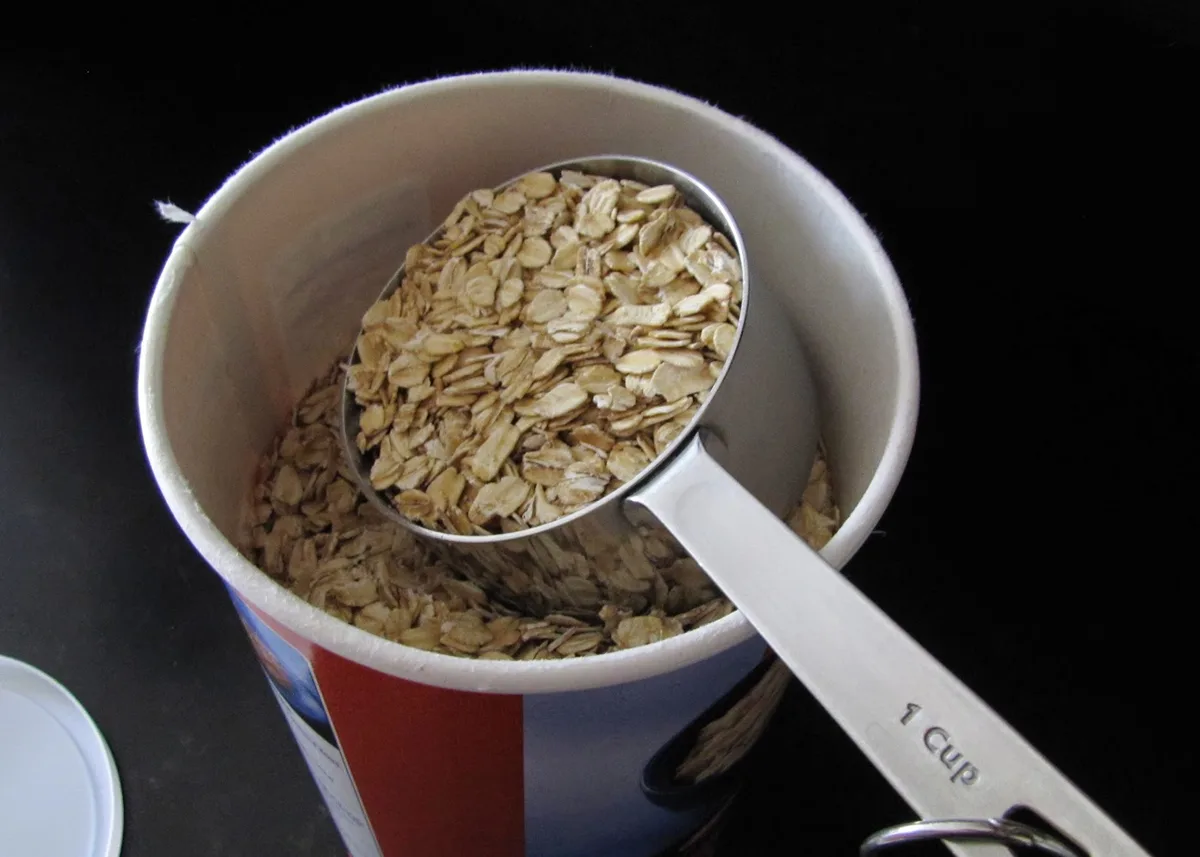
Image source: Bing (Web (fair-use with source credit))
This is the method most people should start with. It's fast, forgiving, and uses the same cycle as white rice. The rice cooker's measuring cup is designed for rice, not oats.
Use a standard dry measuring cup instead, or zero out the bowl and measure by weight if you want repeatable batches.
Ingredients
- 1 cup rolled oats (old-fashioned oats)
- 2 cups water
- Pinch of salt
- Optional: butter, milk, brown sugar, fruit after cooking
Steps
- Add the oats, water, and salt to the inner pot. Stir once.
- Close the lid and press the cook switch.
- Wait about 10 minutes. If you see foam rising toward the steam vent, crack the lid open with a wooden spoon. Leave it slightly ajar for a minute.
- Let the cycle finish. When the cooker switches to warm, press the switch off immediately. Oatmeal continues to thicken quickly, and a hot keep-warm cycle can turn it pasty.
- Let it rest for 5 minutes with the lid on. This sets the texture and lets the oats absorb any remaining liquid.
- Fluff with a spoon, then add your toppings.
Batch size matters. In a standard 5-cup rice cooker, keep it to 1.5 cups of dry oats or less. More than that and the foam has nowhere to go.
If you're cooking for a family, make two batches instead of one giant pot.
Step-by-step: Steel-cut oats in a rice cooker (soak or no-soak)
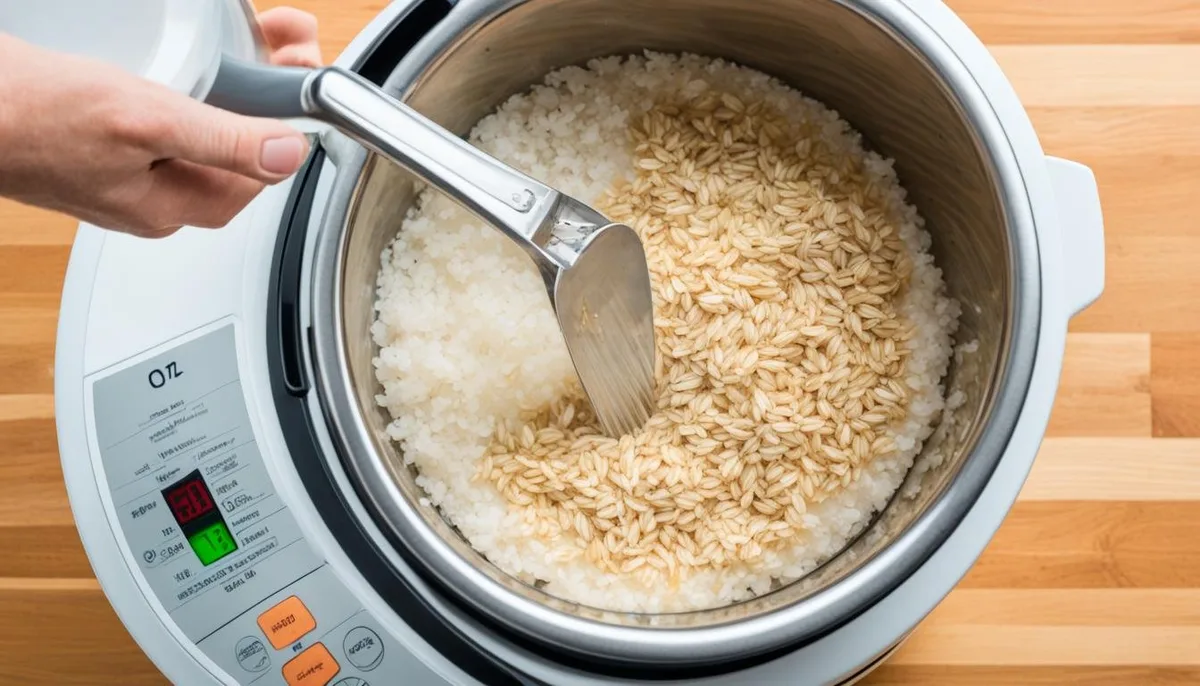
Image source: Bing (Web (fair-use with source credit))
Steel-cut oats are the reason a rice cooker earns its keep. They take 30 to 40 minutes on a stovetop and need frequent stirring. In a rice cooker, they mostly cook themselves.
The only big decision is whether to soak.
Soaked route (more consistent)
Combine 1 cup steel-cut oats and 3 cups water in the inner pot. Stir, cover, and let it sit overnight in the fridge. In our research, this method finished in about 25 to 30 minutes on a basic cook/warm cycle.
The result was creamy, with no crunchy centers and no burned bottom.
The soak changes the water math. Don't use a 1:4 ratio after soaking, or you'll end up with soup. A 1:3 ratio is enough because the oats have already absorbed water.
No-soak route (faster start)
Skip the soak and use 1 cup steel-cut oats with 4 cups water. Press cook. After 15 minutes, open the lid and stir.
Scrape the bottom well, because steel-cut oats love to settle and stick. Close the lid and let the cycle finish, then turn the cooker off right away.
This route adds about 10 minutes to the cook time. The texture is slightly rougher than soaked oats, but it still beats stovetop with far less babysitting. Add a pinch of salt either way, and keep toppings until after cooking, since milk and sugar can interfere with how the oats absorb water.
If you're making steel-cut oats regularly, picking a scale that fits your kitchen routine helps. It also helps to keep it clean and ready, so you're not fighting with a sticky measuring cup at 7 a.m. And when you cook a big batch, refrigerate leftovers within two hours according to USDA food safety guidelines.
Common mistakes and how to fix them
| Mistake | What happens | The fix |
|---|---|---|
| Using the rice cooker's measuring cup | Your ratios are off because the rice cup is about ¾ of a standard cup | Use a standard dry measuring cup or weigh your oats |
| Filling the pot too high | Foam reaches the vent and spills everywhere | Keep the pot no more than one-third full |
| Using a 1:2 ratio for steel-cut oats | Crunchy centers and a dry, stuck-on bottom | Add more water, or soak the oats overnight |
| Leaving it on warm too long | The top turns into a dry, gluey skin | Turn the cooker off as soon as the cycle finishes |
| Adding milk at the start | The milk can scorch and leave a burnt layer | Add milk after cooking, then stir |
These five issues cover nearly every failed batch. If you run into a specific problem, check your cooker's manual, since some models cycle longer than others.
FAQs: Rice cooker oatmeal questions people actually ask
Can I add milk instead of water?
Yes, but don't use all milk. Milk burns and foams more easily than water. Use about half milk and half water, or add milk after cooking.
For the creamiest result, cook with water only and stir in milk once it's off the heat.
Why did my oatmeal turn into soup?
You used too much water, or you left the cooker on warm for a long time. The oats need enough liquid to hydrate, but extra water has nowhere to go. Stick to the ratios in the table above, and turn the cooker off when it's done.
Can I reheat oatmeal in the same rice cooker?
Yes. Add a splash of water or milk, press cook, and stir after a few minutes. It won't be as smooth as fresh oats, but it works.
For best results, reheat on the stovetop or microwave and only use the rice cooker for fresh batches.
Is a rice cooker better than cooking oatmeal on the stove?
It depends on your routine. A rice cooker is hands-off and keeps oats warm, which is great for busy mornings. The stovetop gives you more control and faster results.
If you want a set-it-and-forget-it breakfast, the rice cooker wins.
Can I cook quick oats in a rice cooker?
You can, but it's rarely worth it. Quick oats cook in about two minutes in a microwave. In a rice cooker, they can turn mushy before the cycle finishes.
If you only have quick oats, keep the water ratio at 1:2 and check them early.
Final verdict: Is a rice cooker a good way to cook oatmeal?
Yes, for the right person. If you like steel-cut oats but hate stirring a pot for half an hour, a rice cooker is a genuine upgrade. It's also a great choice for dorm rooms, small kitchens, or anyone who wants breakfast waiting when they get out of the shower.
For rolled oats, the rice cooker is convenient but not life-changing. The stovetop takes about the same time and gives you more texture control. For instant oats, just use the microwave.
The bottom line: use the right oat type, keep the ratios honest, and don't overfill the pot. Do that, and your rice cooker becomes one of the easiest breakfast tools you own. Honestly, the only thing you'll miss is the excuse to stand over the stove.