How Much Space Does a Spin Bike Need
Real talk: you don't need a dedicated workout room to fit a spin bike. But you do need to think before you buy. How much space does a spin bike need?
In practical terms, plan for a zone roughly 72 inches long and 60 inches wide, even though the bike itself is far smaller. That extra room is your safety buffer for mounting, dismounting, and moving around the handlebars.
The physical footprint of a typical spin bike is only about 40 to 55 inches long and 20 to 24 inches wide. Manufacturer specifications indicate that clearance is where most people get into trouble. As of 2026, most bikes require 18 to 24 inches of open space per side and at least 36 inches behind the saddle.
That's the difference between a workout that feels comfortable and one that's cramped.
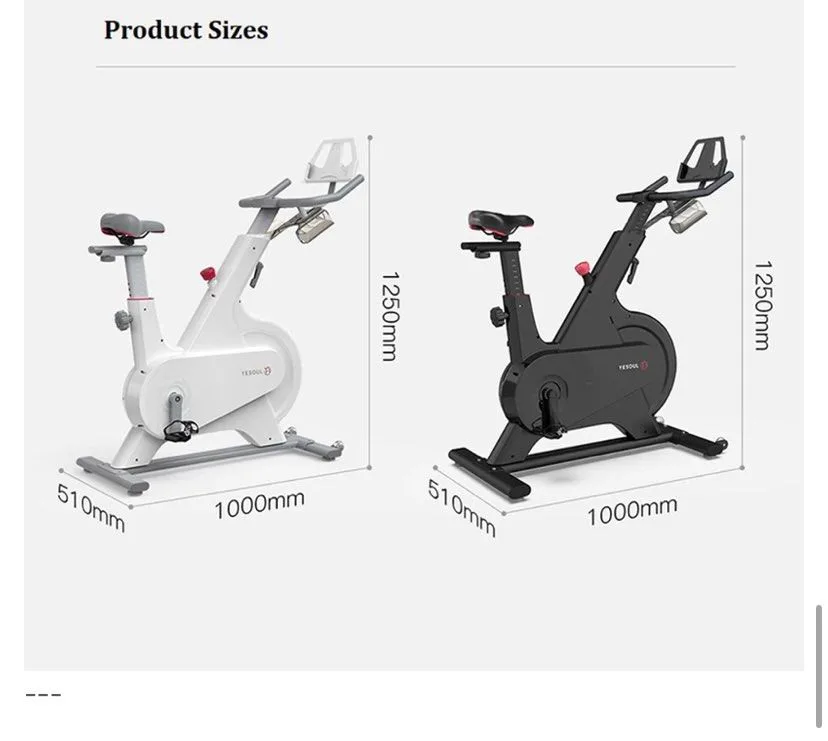
Image source: Bing (Web (fair-use with source credit))
Quick Answer
Plan for a zone 6 feet long and 5 feet wide. The bike itself only takes up about 4 by 2 feet. Add 18 inches of clearance on each side.
Leave 36 inches behind the saddle for dismounting. That keeps your ride and your space safe.
Start With Your Bike, Not the Room: Key Dimensions to Measure
Every spin bike is a different size, so the room dimensions matter less than the dimensions on the spec sheet. Grab the manual for your exact model. Product listings list L x W x H in inches or millimeters.
Write those numbers down before you move anything.
Here are the typical ranges for standard home spin bikes as of 2026. Use this table as a starting point, then confirm against your owner's manual.
| Measurement | Typical range |
|---|---|
| Overall length | 40 to 55 inches |
| Overall width | 20 to 24 inches |
| Overall height | 40 to 54 inches |
| Flywheel weight | 20 to 50 lb |
| Weight capacity | 250 to 330 lb |
If your bike has front transport wheels, add those to the length. The published length usually stops at the stabilizer feet, yet the wheels can stick out another couple of inches.
Image source: Bing (Web (fair-use with source credit))
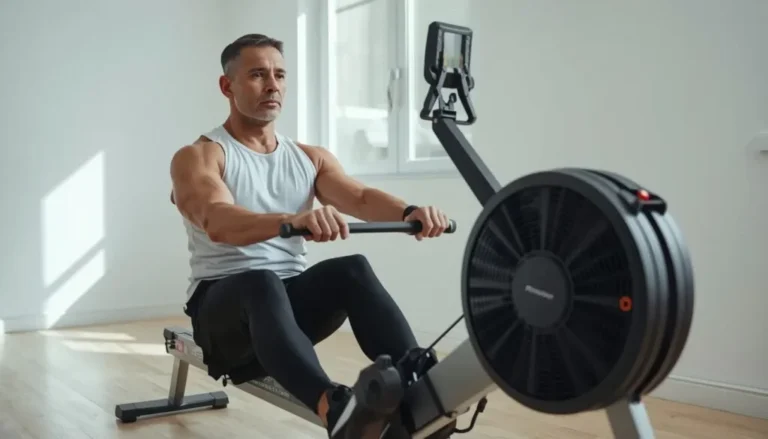
The same clearance math applies to other indoor cardio equipment. Before you commit, check the footprint of a rowing machine to see how it compares in a tight room.
Measure Your Body and Your Ceiling: The Two Most Missed Numbers
The bike might fit the floor, but your body needs vertical room. Your inseam, torso length, and riding position determine how high the seat and handlebars go. At full extension, the top of the seat can sit well above the bike's published height.
This is where many riders underestimate. If you're over 6 feet tall, measure the fully raised seat post and handlebar stem. Add that to the height of your riding position.
If the total is within a foot of your ceiling, you're going to feel cramped.
A safe margin is at least 12 inches above your head when you're seated on the bike with your hands on the handlebars. More is better. Ceiling fans and hanging lights eat into that space quickly.
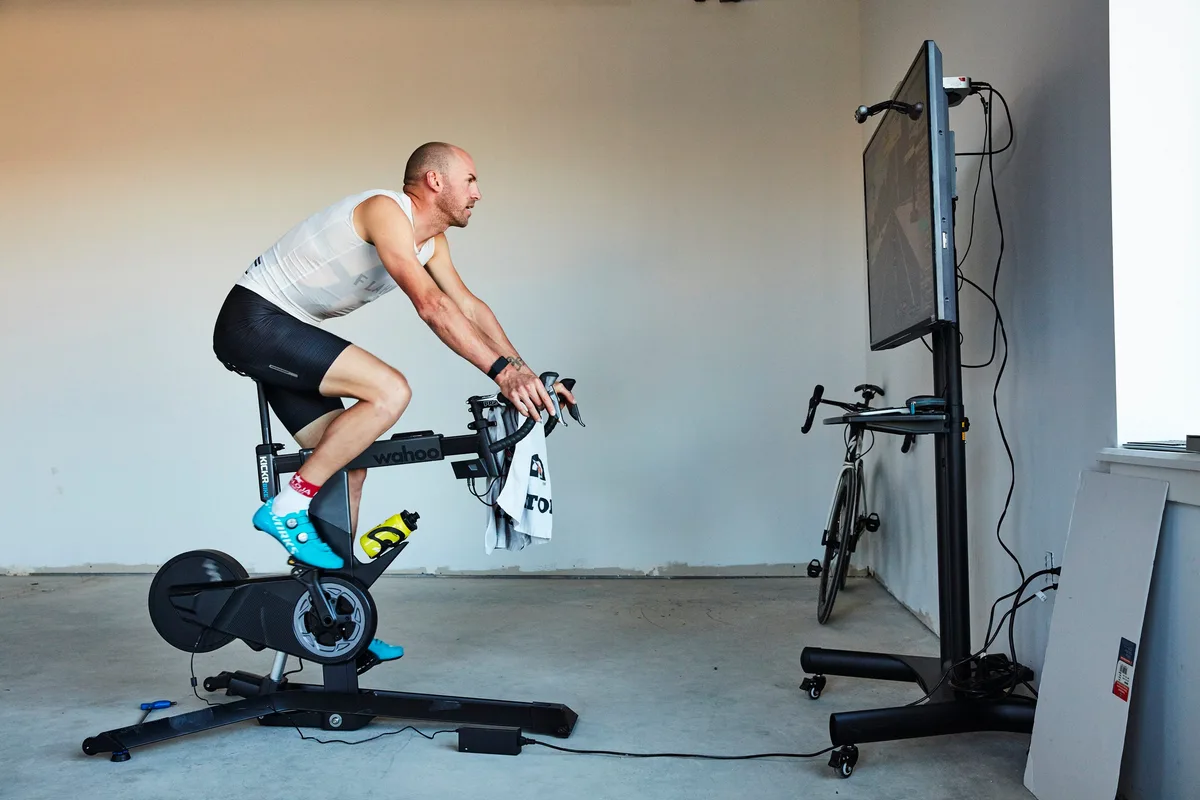
Image source: Bing (Web (fair-use with source credit))
If ceiling height is a hard constraint, compact elliptical options give you a lower profile and take up less vertical room. The measurement step is the same though: check your own height first, then the machine.
The Clearance Check: Mount, Dismount, and Ride Safely
Once you know the bike's footprint and your ceiling height, map the clearances around it. The bike needs breathing room so you can mount, dismount, and pedal without worrying about a wall or cabinet.
Here are the minimum zones we recommend:
- Front clearance: 18 to 24 inches
- Side clearance: 18 to 24 inches on each side
- Rear clearance: 36 inches minimum
- Head clearance: 12 to 18 inches above the top of your head
If your room can't offer rear clearance, consider a different layout. The rear zone matters most because that's where your feet unclip and your body steps back. Wall-mounted mirrors, radiators, and door handles are the usual culprits.
Mark the entire zone with painter's tape. Sit on the bike and check your knee and elbow paths. Then step off and walk behind the saddle.
If anything feels tight, it is too tight.
Home exercise equipment injuries often happen when people trip over machines left in walkways. Per CPSC exercise safety guidance, keep the area around stationary equipment open and clutter-free.
If this floor plan is impossible, a rowing machine might be the better use of the space. Rowers need less side clearance and offer a similar cardio workout.
Your Setup Type: Pick the Plan That Matches Your Room
Not every room needs the same zone. The layout changes based on where the bike sits and how you use the space.
| Room layout | Total zone | Best fit |
|---|---|---|
| Corner placement | 6 by 5 feet | Small apartments and bedrooms |
| Against a long wall | 7 by 5 feet | Dedicated workout corners |
| Center of a spare room | 6 by 5 feet plus a path | Lofts and home gyms |
| Closet or nook | 5 by 4 feet with a compact frame | Tiny rentals and offices |
If your room is narrower than 5 feet, look for a compact frame with shorter stabilizer arms. If your room is longer than 8 feet, the standard 6 by 5 zone works fine and leaves space to step away from the bike.
Corner placement is the most popular for spin bikes. It keeps the bike from blocking traffic, but it also places a wall right behind you. That means the rear clearance becomes your number one rule.
Before you finalize anything, lay down painter's tape and try a full pedal stroke. Then practice a quick dismount. That five-minute test will show you whether the room works.
The same philosophy applies to any seated cardio machine. Once your bike is placed, mirror the posture adjustments you'd make when you set up a rowing machine correctly.
Common Mistakes That Turn a Small Space Into a Bad Fit
The biggest space mistake isn't buying the wrong bike. It's ignoring the human inside the setup. A bike fits on paper, then feels tiny once your knees and elbows enter the picture.
Here's what goes wrong most often, based on verified buyer feedback and editorial analysis of home gym setups:
Forgetting the mount and dismount path. You don't climb on like a horse. You swing a leg over the rear wheel and step back. If a wall sits behind the saddle, that move becomes a hip check against drywall.
Ignoring the door swing. A bedroom door that opens into the bike zone will clip the handlebars. Measure the arc of every nearby door before you finalize placement.
Underestimating ceiling height. This catches tall riders every time. A 7-foot ceiling feels fine until your seat is raised to your inseam. Per ISO 20957-5 test requirements, stationary equipment needs unobstructed vertical space around the rider.
Skipping the floor protection. Sweat drips constantly during a 45-minute ride. On hardwood or carpet, that moisture causes real damage. A mat also stops the bike from walking on smooth floors.
Cramming into the smallest possible footprint. If the room only fits the bike with zero clearance, the room doesn't fit the bike. That's the decision tree in one sentence.
Frequently Asked Questions
How much space does a spin bike need in a small apartment?
You need a 6 by 5 foot zone for a standard bike. Compact frames can squeeze that down to 5 by 4 feet. Position the bike in a corner so the rear clearance stays open.
Leave the front and one side mostly closed off.
Do I need a mat under my spin bike?
Yes. A mat protects floors from sweat and stops the bike from shifting on hard surfaces. Use one that's slightly larger than the bike's footprint.
A 48 by 72 inch mat covers most home spin bikes with room to spare.
What is the minimum ceiling height for a spin bike?
Plan for at least 7 feet of ceiling height. Taller riders should measure the fully raised seat and add their seated height. Leave 12 inches of open air above your head while riding.
Can a spin bike fit in a bedroom closet?
It can, but only if the closet is at least 5 feet wide and 4 feet deep. You'll need to leave the door open while riding. Make sure the closet has enough depth that your knees don't hit the back wall.
Final Verdict: Your 5-Minute Space Decision Guide
Here's your go or no-go checklist before you buy or rearrange:
Step 1. Measure your bike's published length and width. Write them down.
Step 2. Measure your ceiling height and your seated riding height with the seat fully raised.
Step 3. Tape out the 6 by 5 foot zone on the floor. Account for door swings.
Step 4. Sit on the bike at the correct saddle height. Check your elbow and knee paths.
Step 5. Step back and dismount naturally. If you can't, shift the layout or pick another room.
If all five steps pass, you're good to go. If step 4 or 5 fails, the room isn't the problem. The machine is too big for the space.
A compact spin bike solves that by shaving 5 to 10 inches off the frame length and width. Or consider a foldable stationary bike that tucks away between sessions. Get the clearance right and the bike disappears into the corner until you're ready to ride.
Get it wrong, and every workout starts with a tiny negotiation of shins, walls, and bad posture. The extra few feet of space are worth it.