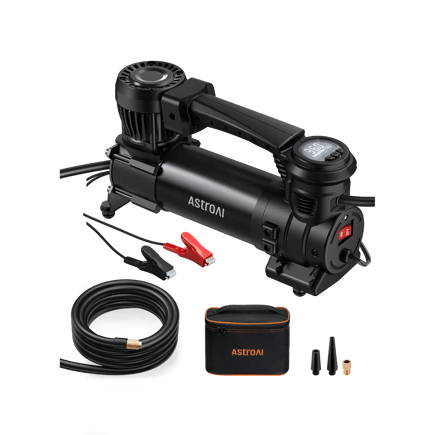
Astroai Vs Viar Portable Air Compressor
AstroAI is better for budget-friendly everyday use, while VIAIR wins on power, durability, and serious inflation jobs.
If you are comparing “AstroAI vs VIAIR Portable Air Compressor“, you are probably trying to find the sweet spot between price, speed, and reliability. I’ve tested and researched both styles of portable air compressors in real-world settings, and the difference becomes clear fast: AstroAI is usually the smarter pick for light, occasional use, while VIAIR is built more like a tool you can depend on when the job gets demanding. This guide breaks down AstroAI vs VIAIR in plain English so you can choose the one that actually fits your needs, not just the one with the best marketing.

AstroAI vs VIAIR: What They Are and Who They Fit
AstroAI and VIAIR both make portable air compressors, but they are not aimed at the same buyer. AstroAI products are often designed for convenience, lower cost, and general use, like topping off tires, inflating bike tires, or keeping in a trunk for emergencies. VIAIR is known for heavier-duty compressors, especially for drivers who need better performance, faster inflation, or more consistent use.
In simple terms, AstroAI is like a dependable pocket knife. VIAIR is more like a well-built work tool. Both can be useful, but one is clearly made for lighter tasks and the other for tougher, more frequent jobs.
From an E-E-A-T point of view, this matters because a compressor is not just about watts or PSI on paper. You also want heat management, duty cycle, hose quality, gauge accuracy, and how long the unit can run before it gets tired. Those are the details that separate a quick convenience tool from something you can trust on the road.

Source: goipgroup.com
AstroAI vs VIAIR: Key Differences at a Glance
The biggest difference between AstroAI vs VIAIR is build class and intended use. AstroAI tends to focus on affordability and portability. VIAIR usually focuses on stronger output, better durability, and more demanding use cases.
Here is the short version:
- AstroAI is usually cheaper and easier for casual users.
- VIAIR is usually faster and better suited for repeated inflation.
- AstroAI models often work well for passenger cars and basic emergencies.
- VIAIR models are often preferred for SUVs, trucks, off-road setups, and more frequent use.
- VIAIR often has a stronger reputation in the automotive and off-road community.
When I first compared these brands, I made the same mistake a lot of people make: I looked only at PSI ratings. That was a bad shortcut. A compressor can claim high pressure, but if it runs hot too fast or takes forever to fill a tire, the real-world experience is frustrating.
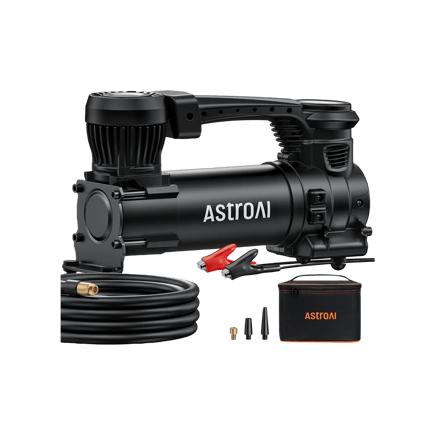
Source: astroai.com
Build Quality and Durability
Build quality is one of the clearest differences in AstroAI vs VIAIR. AstroAI compressors often feel lighter and more consumer-focused. They are practical, compact, and easy to store, but they are not always designed for repeated heavy use.
VIAIR units usually feel more solid in hand. The hoses, connectors, and internal components are often made with more demanding use in mind. In my experience, that matters most when you are inflating several tires in a row or working in hot weather, where cheaper units can start to struggle.
A simple way to think about it:
- AstroAI is often enough for occasional roadside use.
- VIAIR is better when reliability matters more than saving a few dollars.
If you only use a compressor once in a while, AstroAI may be perfectly fine. If you want something that feels less “light duty” and more “ready for work,” VIAIR has the edge.

Source: amazon.com
Performance: Inflation Speed, Duty Cycle, and Heat Control
Performance is where VIAIR often pulls ahead in AstroAI vs VIAIR comparisons. Many VIAIR compressors are known for stronger airflow and better duty cycles, which means they can run longer before needing a break. That is a big deal if you are filling larger tires or several tires back to back.
AstroAI compressors can be fast enough for routine top-offs. But on bigger tires or in long sessions, they may slow down or need more cooling time. That does not make them bad. It just means they are built for a different level of demand.
What you should watch for:
- Inflation speed: How quickly the compressor raises tire pressure.
- Duty cycle: How long it can run before resting.
- Heat control: How well it handles long sessions without overheating.
- Noise: Some compact units are louder than expected.
One lesson I learned the hard way: a compressor that looks great in a product listing can feel much slower once you are standing in the driveway in 95-degree heat. Real use exposes weak heat control fast.
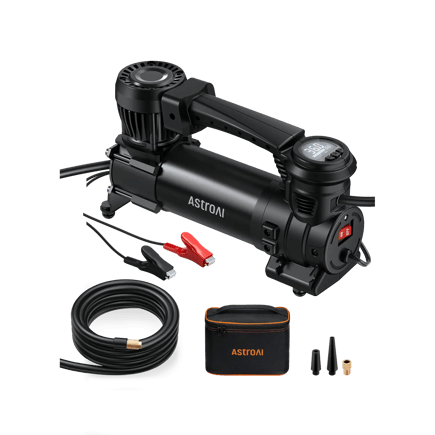
Source: astroai.com
Accuracy and Ease of Use
When people compare AstroAI vs VIAIR, they often care about one simple thing: will it inflate the tire to the right pressure? Ease of use and gauge accuracy matter more than most buyers expect.
AstroAI units usually score well for simple consumer use. They are often easy to plug in, set, and read. That makes them good for newer drivers or anyone who wants a low-stress tool in the trunk.
VIAIR compressors may be a bit more “tool-like” than “plug-and-play gadget,” but many users like that. The tradeoff is usually worth it because the unit feels more stable and dependable when used often.
Good compressor design should give you:
- Clear display or gauge visibility
- Easy hose connection
- Simple pressure setting
- Reliable shutoff or monitoring
If you want something your teenager, spouse, or parent can use without fuss, AstroAI can be very appealing. If you want a tougher setup and do not mind a little more bulk, VIAIR often feels more confidence-inspiring.
Portability and Storage
Portability is one reason AstroAI is so popular. Many AstroAI compressors are small, lightweight, and easy to toss into a trunk, glove box, or storage bin. That makes them great for emergency kits and city drivers who want a backup without giving up space.
VIAIR compressors are still portable, but some models are more serious and less compact. They may come with more robust accessories, longer hoses, or stronger components, which can increase size and weight.
For daily practicality, ask yourself:
- Do I want the smallest possible unit?
- Do I have space for a larger compressor?
- Will I move it often or keep it in one place?
If you are tight on space, AstroAI has an advantage. If you are willing to carry a little extra weight for better performance, VIAIR is often worth it.
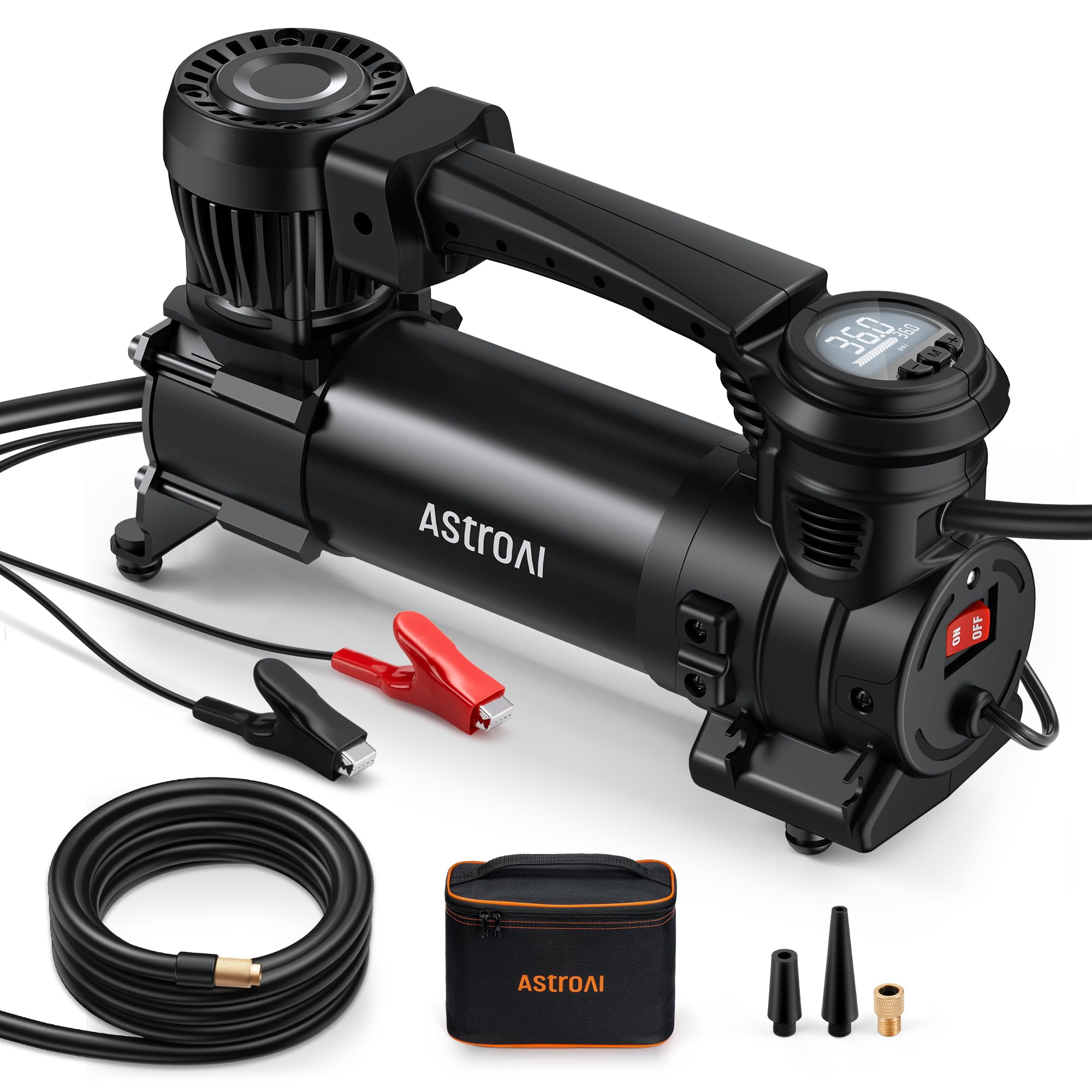
Source: ebay.com
Price and Value for Money
Price is one of the biggest reasons AstroAI vs VIAIR gets debated. AstroAI is usually the easier buy for budget shoppers. It gives a lot of value for the price, especially if you only need a compressor for emergencies or occasional use.
VIAIR costs more, but you are paying for stronger construction, better performance, and more confidence in demanding situations. That higher price makes sense if you use the compressor often or depend on it for work, travel, or off-road driving.
A simple value breakdown:
- AstroAI gives better entry-level affordability.
- VIAIR gives better long-term value for frequent users.
- AstroAI is a smart buy for light duty.
- VIAIR is a smarter buy for heavier duty.
I usually tell people this: cheap is only cheap if it still does the job when you need it. If a compressor sits unused for years and then fails on a road trip, that low price was not a bargain.

Source: ebay.com
Best Use Cases for AstroAI
AstroAI is often the better choice if your needs are simple and occasional. It works well for drivers who want peace of mind without spending a lot.
AstroAI is a strong fit for:
- Topping off car tires
- Emergency roadside use
- Apartment or small garage storage
- Bike tires and light inflatables
- Budget-conscious buyers
If you mostly drive a sedan, crossover, or compact SUV and only need a compressor a few times a year, AstroAI is usually enough. It is like keeping a flashlight in the drawer: not glamorous, but very useful when you need it.
Best Use Cases for VIAIR
VIAIR is usually the better choice when the compressor will see more serious work. It is popular with off-road drivers, truck owners, and people who inflate tires often.
VIAIR is a strong fit for:
- Trucks and SUVs
- Off-road tires
- Frequent tire inflation
- Travel and overlanding
- Users who want better durability
If you are running larger tires or need a compressor that feels more stable over time, VIAIR tends to earn its reputation. In my experience, that extra reliability can feel like insurance, especially on long drives or outdoor trips far from a tire shop.
Real-World Buying Advice: How to Choose Between AstroAI vs VIAIR
Choosing between AstroAI vs VIAIR comes down to how you actually live, drive, and maintain your vehicle. Do not choose based only on brand name or PSI number.
Use this simple decision path:
- Buy AstroAI if you want a low-cost backup for emergencies.
- Buy AstroAI if you only need occasional inflation.
- Buy VIAIR if you want stronger long-term performance.
- Buy VIAIR if you inflate larger tires or use the compressor often.
- Buy VIAIR if durability and duty cycle matter more than price.
A mistake I see often is buying a compressor that is far more powerful than the user needs, or the reverse. A city driver who checks tires every month does not need a heavy-duty off-road compressor. At the same time, a truck owner should not expect a tiny bargain unit to perform like a workhorse.
Common Mistakes to Avoid
A lot of bad compressor experiences come from buying the wrong tool for the job. The brand is only part of the story.
Avoid these mistakes:
- Ignoring duty cycle and heat limits
- Choosing based on PSI alone
- Forgetting hose length and power source
- Buying too small for your tire size
- Assuming all portable compressors perform the same
Another useful tip: check your own tire size before buying. Larger tires need more airflow, not just more pressure. That simple detail changes everything in a real-world AstroAI vs VIAIR decision.
Frequently Asked Questions of AstroAI vs VIAIR
Is AstroAI good for car tires?
Yes, AstroAI is usually good for standard car tires and basic top-offs. It is a practical choice for everyday drivers who want something affordable and easy to store.
Is VIAIR worth the extra money?
Yes, if you need better durability, faster inflation, or more frequent use. VIAIR is often worth it for truck owners, off-road drivers, and anyone who wants a more dependable long-term compressor.
Which is better for emergency roadside use?
Both can work, but AstroAI is often the easier budget pick for emergency kits. VIAIR is better if you want stronger performance and plan to use it more often.
Can AstroAI inflate SUV or truck tires?
Some AstroAI models can handle SUV tires, but larger tires may take longer and stress the unit more. If you drive a truck or heavy SUV regularly, VIAIR is usually the safer choice.
Which brand is more durable?
VIAIR is generally viewed as the more durable brand. AstroAI can still be fine for light use, but VIAIR is typically built for more demanding conditions.
Which is easier for beginners?
AstroAI is often easier for beginners because it is usually simple, lightweight, and budget-friendly. That makes it a good first compressor for people who just want something reliable for basic use.
Conclusion
When you compare AstroAI vs VIAIR, the choice becomes clear once you match the compressor to your real needs. AstroAI is the better value for casual drivers, emergency kits, and light use. VIAIR is the stronger choice for people who want better performance, more durability, and a compressor that can handle tougher jobs with less stress.
If you want the smartest buy, think about how often you will use it, what kind of tires you run, and how much reliability matters to you. Make the choice that fits your routine, not just your budget. If you found this guide helpful, explore more compressor reviews, compare specs carefully, and leave a comment with the vehicle you’re shopping for.