Stanley J5C09 Vs Clore Jump-N-Carry: Which Is Better?
Stanley J5C09 is lighter and more versatile, while Clore Jump-N-Carry offers stronger starting power and tougher shop use.
Choosing a portable jump starter is not just about the biggest number on the box. After comparing the Stanley J5C09 vs Clore Jump-N-Carry design, power, battery, cables, air compressor, and long-term use, the right pick depends on whether you want an affordable emergency tool or a serious service-grade booster.
The Stanley J5C09 is aimed at everyday drivers. The Clore Jump-N-Carry line is built more like professional garage equipment. This guide explains the key differences in plain language so you can spend your money wisely.
Stanley J5C09 vs Clore Jump-N-Carry: quick comparison
The name “Clore Jump-N-Carry” covers several models. The Clore JNC660 is the most common comparison for the Stanley J5C09, so this article uses it as the main reference.
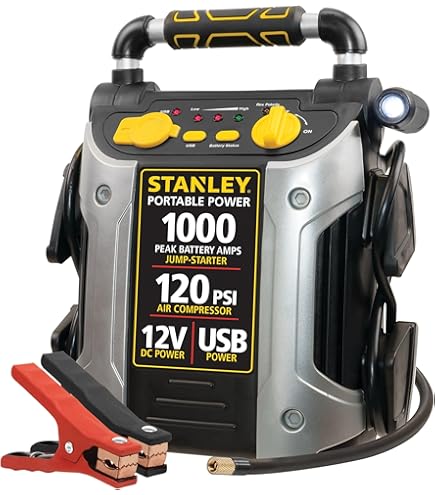
| Feature | Stanley J5C09 | Clore Jump-N-Carry JNC660 |
|---|---|---|
| Main use | Home, roadside, and emergency use | Workshop, fleet, and repeated jump starts |
| Rated peak current | Commonly listed at 1,000 peak amps | Commonly listed at 1,700 peak amps |
| Battery system | 12-volt portable battery | 12-volt commercial-grade battery |
| Air compressor | Built-in compressor, often rated up to 120 PSI | No built-in compressor |
| Cable reach | Shorter, compact design | Long cables, around 46 inches |
| Extra power | USB ports, 12-volt outlet, work light | 12-volt outlet and service-focused design |
| Portability | Easier to carry | Heavier but more rugged |
| Best for | Personal vehicles and occasional use | Large engines and frequent use |
These figures can vary by production year, package, and seller. Always check the label and current manual before buying, especially if the unit is sold as old stock or refurbished.
The main difference is simple. Stanley gives you more functions in one box, while Clore gives you more starting strength and a stronger professional design.
Power and starting performance
Peak amps are useful for marketing, but they do not tell the whole story. A jump starter must deliver enough current for long enough to turn the engine. Cable quality, battery condition, temperature, and connection quality also matter.
The Stanley J5C09 is commonly rated at 1,000 peak amps. That is enough for many cars, small trucks, motorcycles, and some light-duty SUVs when the vehicle battery is weak but not completely damaged.
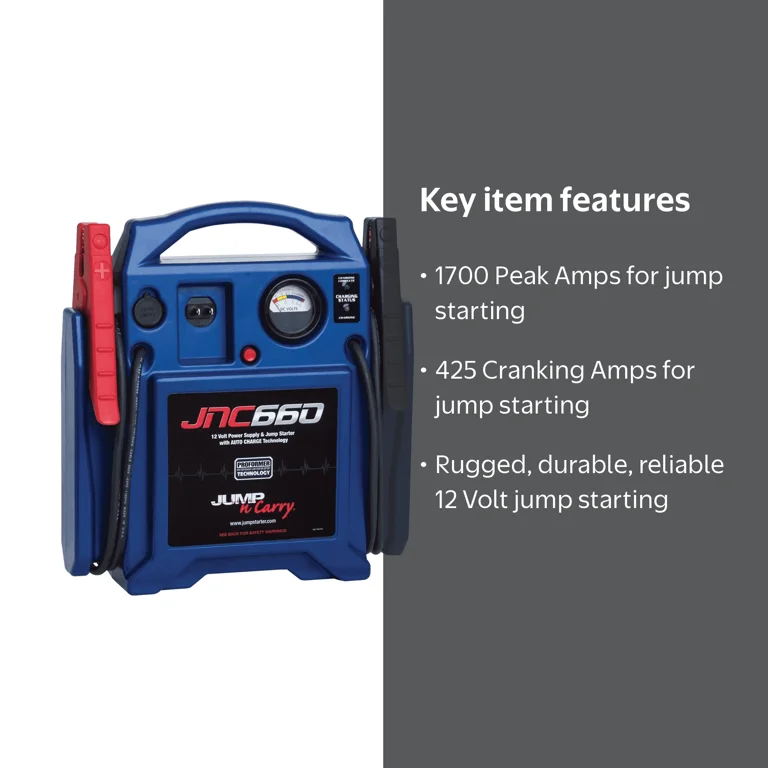
The Clore JNC660 is commonly rated at 1,700 peak amps. It also has a strong cranking-amp rating, which is more useful for judging real starting ability. Its higher output gives it an advantage with larger gasoline engines, diesel engines, cold weather, and repeated starts.
In practical terms:
• Choose the Stanley J5C09 for a four-cylinder sedan, compact SUV, small pickup, or motorcycle.
• Choose the Clore Jump-N-Carry for a full-size truck, work van, farm vehicle, fleet vehicle, or larger engine.
• For a completely dead, damaged, or frozen battery, neither device is a guaranteed fix.
A jump starter is like a helper pushing a stalled car. It can provide the extra force needed to get moving, but it cannot repair a failed fuel pump, bad starter, broken cable, or dead battery cell.

Battery capacity and recharge needs
The Stanley J5C09 uses an internal sealed lead-acid battery. It stores energy for jump starts, USB charging, a work light, and the air compressor. Its battery makes the unit useful during road trips, camping, power outages, and minor roadside problems.
The Clore JNC660 also uses a sealed lead-acid battery. Its larger service-oriented design is better suited to repeated jump starts, but it is not maintenance-free in the sense of needing no care. Both units need regular charging to stay ready.
For best results:
-
Charge the unit soon after each jump start.
-
Recharge it at least every 30 days when stored.
-
Keep it indoors or in a moderate-temperature space.
-
Do not leave it in a hot vehicle for months.
-
Inspect the case, charger, clamps, and cables before use.
Lead-acid batteries lose performance in cold weather. Heat also shortens battery life. This is why a jump pack that worked last summer may struggle after sitting in a hot trunk or cold garage.
The Stanley J5C09 may be more convenient for casual use, but the Clore Jump-N-Carry is usually the better fit for people who need several jump starts in one day.
Built-in air compressor: Stanley’s biggest advantage
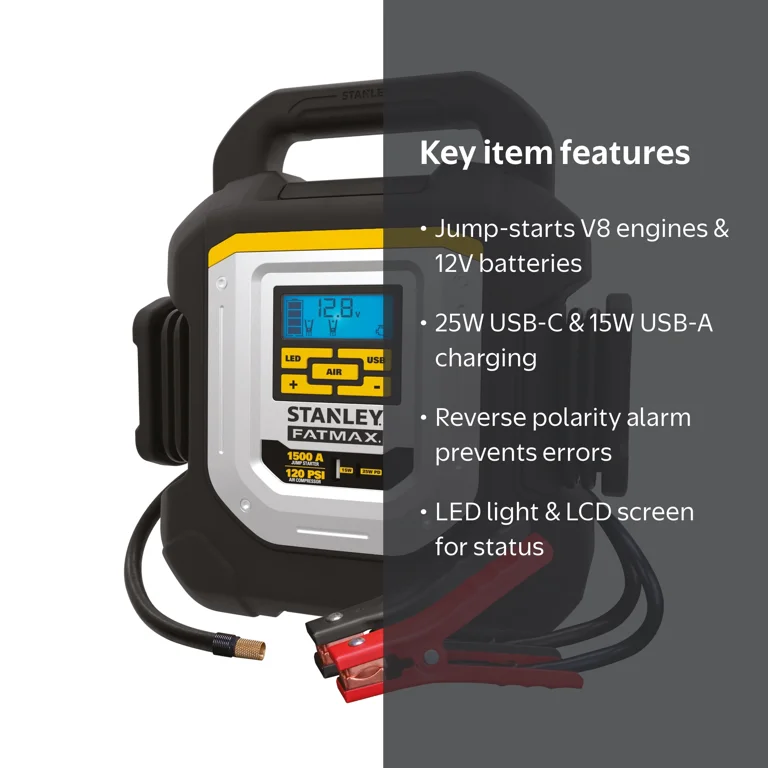
The built-in air compressor is the Stanley J5C09’s clearest advantage. It can help inflate a low tire, bicycle tire, sports ball, or other inflatable item. Many versions are listed with a compressor rated up to 120 PSI.
That rating does not mean the compressor fills a tire as quickly as a shop compressor. Small portable compressors need time, and large truck tires take longer than passenger-car tires.
The compressor works best for:
• Topping up a tire that is slightly low.
• Adding air during a road trip.
• Inflating sports equipment.
• Handling a slow leak until you reach a tire shop.
It is not a replacement for a full-size compressor. If a tire has a major puncture, the Stanley J5C09 cannot make the vehicle safe for continued driving. Check tire pressure with a reliable gauge and follow the pressure shown on the driver-door label.
The Clore Jump-N-Carry JNC660 does not focus on air inflation. If you already own a compressor, that may not matter. If you want one emergency tool for both battery and tire problems, Stanley has a clear edge.
Cables, clamps, and ease of use
Cable length can matter more than people expect. Short cables may force you to place the jump starter close to the battery. Long cables give you more freedom and reduce the chance of balancing a heavy unit on the engine bay.
The Clore JNC660 is known for long welding-style cables, often listed at about 46 inches. These cables are thick, flexible, and easier to position around large vehicles. The clamps also feel more suited to repeated workshop use.
The Stanley J5C09 has a more compact cable setup. It is easier to store, but the shorter reach may be less convenient when the battery is buried in a tight engine compartment.
Before connecting either device:
-
Turn off the vehicle and all accessories.
-
Confirm that the jump starter is switched off if the design requires it.
-
Attach the red clamp to the positive battery terminal.
-
Attach the black clamp to a clean engine ground or negative terminal, based on the manual.
-
Keep the clamps from touching each other.
-
Start the vehicle, then remove the clamps in reverse order.
Modern vehicles may have special jump points. Check the owner’s manual before connecting to a hybrid, luxury vehicle, or vehicle with a remote battery location.
 capacity and recharge needs”
style=”max-width: 100%; height: auto; border: 2px solid black; border-radius: 10px; display: block; margin: 0 auto;”
loading=”lazy”
/>
Portability and daily convenience
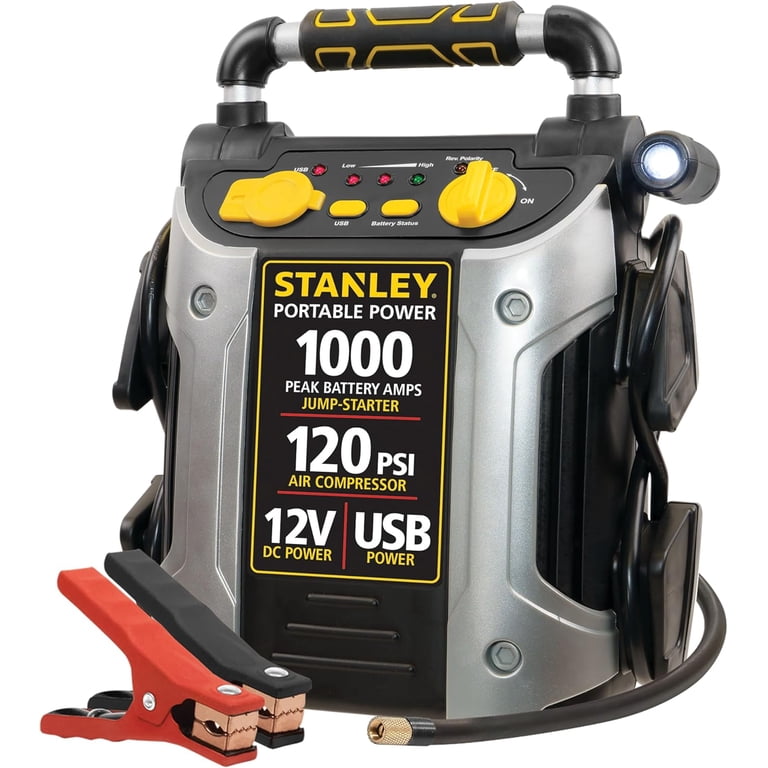
The Stanley J5C09 is easier to carry because it combines several features in a smaller package. Its work light, USB charging ports, 12-volt outlet, and air compressor make it useful beyond jump starting.
That flexibility is valuable for drivers who want one emergency device in the trunk. It can charge a phone, provide light at night, and add air to a soft tire.
The Clore Jump-N-Carry is heavier and less compact. That extra size is the trade-off for its larger battery, longer cables, stronger clamps, and higher starting output. It feels more at home in a garage, service truck, or fleet vehicle than in a small car trunk.
Think about how you will carry it:
• For occasional personal use, Stanley is easier to live with.
• For daily shop use, Clore’s weight is less important.
• For an older adult or anyone with limited lifting strength, Stanley may be more comfortable.
• For a large truck, Clore’s longer cables may be worth the added weight.
Durability and long-term value
The Stanley J5C09 offers good value when you need several functions at a reasonable price. Its compressor and charging ports add real value for emergency use. However, consumer-focused jump starters may not tolerate the same repeated workload as a commercial booster.
The Clore Jump-N-Carry generally has a stronger professional reputation. Its heavy cables, solid clamps, replaceable-style service parts on some models, and robust case make it better for frequent use. It is not indestructible, though. Poor charging habits and long storage without maintenance can damage its internal battery.
One common mistake is buying a powerful unit and never charging it. Another is storing it in the trunk through extreme heat. In my experience comparing roadside equipment, readiness matters more than peak-amp claims. A fully charged midrange unit is more useful than a powerful unit with a flat battery.
Both products also have a limitation: sealed lead-acid batteries age. After several years, runtime and starting power may drop. A unit that clicks but cannot crank an engine may need a battery replacement or retirement.

Stanley J5C09 vs Clore Jump-N-Carry for different vehicles
The best choice changes with the vehicle.
Small cars and motorcycles
The Stanley J5C09 is usually enough for many small gasoline engines. Its lighter body and extra tools make it a practical home emergency kit.
Motorcycle owners should check clamp size and connection points. Some motorcycle batteries are difficult to reach, so cable access matters.
SUVs and half-ton pickups
Both units may work well when the battery is only partly discharged. The Clore model gives you more reserve power and better cable reach, while Stanley gives you air inflation and phone charging.
Diesel trucks and vans
The Clore Jump-N-Carry is the safer choice between these two for larger diesel engines. Diesel starting systems often demand more current, especially in cold weather.
Even then, the battery must be in usable condition. A jump pack cannot overcome a failed starter motor or a battery with an internal short.
Fleet and commercial vehicles
Clore is the better fit for repeated service calls. Its design is made for more demanding work, and its long cables reduce setup time.
Stanley can still be useful as a backup unit. Its compressor and USB ports may help with minor roadside tasks, but repeated heavy jumps can wear it faster.
Safety tips that prevent costly mistakes
Incorrect jump-starting can damage electronics, cause sparks, or injure you. Read the vehicle and jump starter manuals before use.
Follow these safety rules:
• Never use a 12-volt jump starter on a 24-volt system.
• Do not jump a visibly cracked, leaking, or frozen battery.
• Keep flames and cigarettes away from the battery.
• Wear eye protection when working near a lead-acid battery.
• Do not allow metal tools to bridge the battery terminals.
• Stop if the cables become hot, smoke, or smell like burning plastic.
• Do not crank continuously for long periods.
• Let the jump starter rest between attempts.
If the vehicle does not start after a few controlled attempts, stop and find the cause. Repeated cranking can drain the jump pack and damage the starter.
Hybrid and electric vehicles need special care. A 12-volt jump pack may help the low-voltage system on some hybrids or EVs, but it will not charge the high-voltage traction battery. Follow the vehicle maker’s instructions.
Which one should you buy?
The Stanley J5C09 is the better choice when you want a multipurpose emergency tool. It is suitable for many personal vehicles and adds features that can help during a roadside problem.
Buy the Stanley J5C09 if:
• You want a built-in air compressor.
• You need USB and 12-volt charging.
• You prefer a lighter unit.
• You expect occasional use.
• You own a car, small SUV, or light pickup.
The Clore Jump-N-Carry is the better choice when starting power and durability come first.
Buy the Clore JNC660 if:
• You work with large vehicles.
• You need long cables.
• You expect frequent jump starts.
• You manage fleet or work vehicles.
• You want a more commercial-style booster.
The Stanley J5C09 vs Clore Jump-N-Carry decision becomes easy when you match the product to your workload. Stanley is the Swiss Army knife. Clore is the heavy wrench.
What I would choose in common situations
For a family car kept in the garage, I would choose the Stanley J5C09. The compressor, light, and phone charging ports make it useful even when the battery is fine.
For a repair shop or work truck, I would choose the Clore Jump-N-Carry. The stronger output and longer cables save frustration when helping different vehicles.
For a large diesel pickup, I would not rely on peak amps alone. I would check the actual cranking rating, battery condition, cable reach, temperature, and the manufacturer’s vehicle guidance before buying.
The biggest lesson is to plan for the problem you are most likely to face. A driver with a slow tire leak needs different equipment from a mechanic who starts several dead trucks each week.

Frequently Asked Questions of Stanley J5C09 vs Clore Jump-N-Carry
Is the Stanley J5C09 better than the Clore Jump-N-Carry?
The Stanley J5C09 is better for portability, tire inflation, and everyday convenience. The Clore Jump-N-Carry is better for higher starting power, longer cables, and repeated professional use.
Can the Stanley J5C09 start a truck?
It can start many small and midsize gasoline trucks when the battery is weak but still usable. For large engines or diesel trucks, a stronger Clore model is usually the safer choice.
Does the Clore Jump-N-Carry have an air compressor?
The commonly compared JNC660 does not include a built-in air compressor. The Stanley J5C09 has a compressor, which gives it an advantage for tire top-ups and roadside emergencies.
How often should I charge either jump starter?
Charge the unit after every use and check it about once a month during storage. Keeping a sealed lead-acid jump starter fully charged helps preserve battery life and ensures it is ready when needed.
Can a jump starter damage a car?
A jump starter can cause damage if the polarity is reversed, the voltage is wrong, or the clamps are connected carelessly. Use the correct 12-volt setting, follow the manual, and confirm positive and negative connections before starting.
Which is better for cold weather?
The Clore Jump-N-Carry generally has the advantage because it provides more starting reserve and stronger cables. Cold weather still reduces battery performance, so keeping the jump starter charged and warm improves your chances.
Conclusion
The Stanley J5C09 vs Clore Jump-N-Carry comparison comes down to convenience versus strength. Stanley offers a lighter, more versatile package with an air compressor, USB charging, a work light, and enough power for many personal vehicles. Clore offers stronger starting performance, longer cables, and a tougher design for shops, fleets, large trucks, and repeated use.
Choose the Stanley J5C09 for everyday roadside peace of mind. Choose the Clore Jump-N-Carry when reliable high-output starting power matters most. Whichever model you select, charge it monthly, store it away from extreme heat, and test it before an emergency. Share your vehicle type and typical use in the comments, and explore more vehicle safety guides before your next road trip.