Clore Jump-N-Carry Vs NOCO GB70: Which Wins?
Clore Jump-N-Carry offers rugged power and long cables, while NOCO GB70 wins on size, weight, and modern features.
Choosing between the Clore Jump-N-Carry vs NOCO GB70 is not just a matter of comparing peak amps. These jump starters use different battery designs and suit different drivers. Clore focuses on workshop-style strength and long cable reach, while NOCO delivers a compact lithium pack with USB power and a bright work light. This guide compares their real-world power, safety, charging, durability, and value so you can buy with confidence.

Clore Jump-N-Carry vs NOCO GB70: At a Glance
The Clore Jump-N-Carry line includes several models. The popular JNC660 and JNC770R use sealed lead-acid batteries, while the NOCO GB70 uses a lithium-ion battery. That difference affects weight, charging time, storage life, and how each unit handles repeated jump starts.
The table below compares the common JNC660 with the NOCO GB70. Always check the exact model number before buying because Clore specifications vary.
| Feature | Clore JNC660 | NOCO GB70 |
|---|---|---|
| Battery type | Sealed lead-acid | Lithium-ion |
| Peak current rating | Up to 1,700 amps | Up to 2,000 amps |
| Rated voltage | 12 volts | 12 volts |
| Cable length | About 46 inches | About 19 inches |
| Vehicle use | Cars, trucks, vans, equipment | Cars, trucks, boats, and equipment |
| Gas engine guidance | Large gasoline engines | Up to 8.0 liters |
| Diesel engine guidance | Large diesel engines, depending on condition | Up to 6.0 liters |
| USB charging | Limited or model-dependent | Yes |
| Work light | No built-in spotlight on many models | Yes |
| Approximate weight | About 18 pounds | About 5 pounds |
| Battery replacement | Often serviceable by a technician | Internal lithium battery |
The Clore unit is more like a small shop battery with handles. The GB70 is more like a powerful emergency power bank. Both can start a vehicle, but they feel very different when you carry, store, and use them.
Power and Starting Performance
Peak amps can look impressive on a product box, but they do not tell the entire story. A jump starter must deliver enough current for long enough to overcome a weak battery, thick engine oil, poor cable contact, and cold weather.
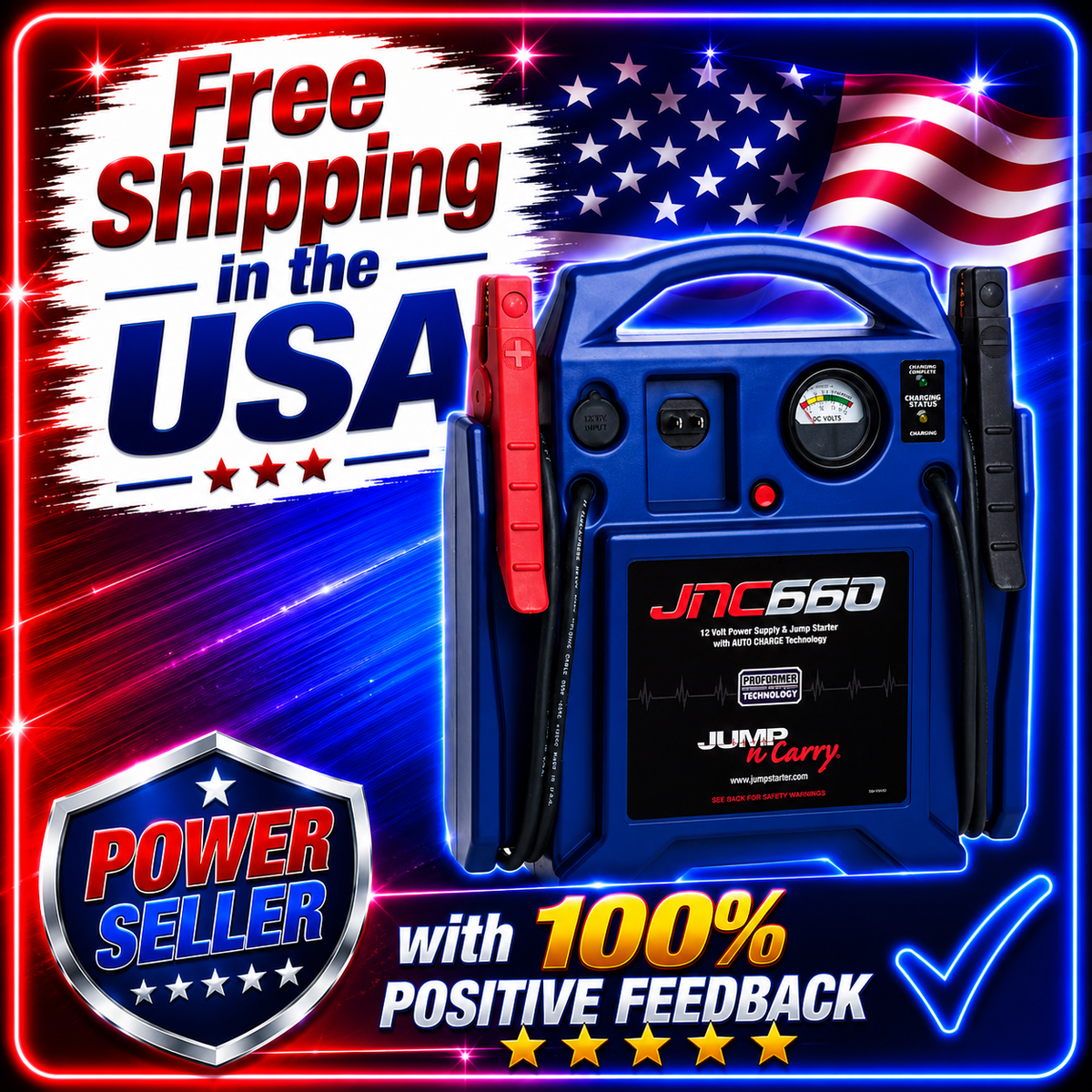
The Clore JNC660 has a strong 12-volt lead-acid battery. Its long cables help you reach battery terminals in large engine bays. This can matter on trucks, vans, and older vehicles where the battery sits far from the front edge of the hood.
The NOCO GB70 has a higher advertised peak current rating. Its lithium battery can deliver a strong burst of power from a much smaller case. However, a compact jump starter can lose performance if it is nearly empty, stored in extreme cold, or connected to dirty terminals.
In a simple comparison, the Clore Jump-N-Carry vs NOCO GB70 power contest is close. The GB70 has the higher published peak rating, but the Clore’s larger lead-acid battery and longer cables can make it feel more forgiving in workshop and fleet use.
Cold weather performance
Cold weather reduces the available power in all batteries. Lead-acid batteries can lose a large portion of their starting ability in low temperatures. Lithium units also lose output in the cold, although their small size makes them easy to keep inside a warm vehicle.
For winter use:
• Keep the GB70 in the passenger cabin, not in a freezing trunk.
• Store the Clore unit off the cold floor when possible.
• Remove snow, ice, and corrosion from the battery terminals.
• Let a frozen vehicle battery warm slightly before trying to start it.
• Do not keep cranking for long periods. Use short attempts with rest between them.
A jump starter is not a magic cure for a seized engine or a failed starter motor. It only supplies extra electrical power. If the engine does not turn over after a few careful attempts, stop and diagnose the problem.

Battery Type and Charging
Battery chemistry is one of the biggest differences in the Clore Jump-N-Carry vs NOCO GB70 comparison.
The Clore JNC660 uses a sealed lead-acid battery. This technology is proven and common in automotive service equipment. It is heavy, but that weight comes from a larger battery and sturdy internal parts.
The GB70 uses lithium-ion cells. Lithium stores more energy for its size, which explains why the GB70 weighs only a fraction of the Clore unit. It also makes the NOCO easier to keep in a glove box, tool bag, or small trunk compartment.
Advantages of the Clore battery
• It is well suited to repeated starting work.
• The heavy case stays stable on the ground.
• The battery design is familiar to many repair shops.
• Some Clore models allow battery service or replacement by a qualified technician.
• Long cables reduce the need to place the unit close to the battery.
Advantages of the NOCO battery
• It is much lighter to carry.
• It takes up less storage space.
• It can recharge phones, tablets, and other USB devices.
• It holds its charge well when stored correctly.
• It is convenient for roadside emergencies.
Charging habits matter with both units. Recharge the Clore after every use and check its charge at least once a month. Recharge the GB70 after use and top it up every few months if it sits in storage.
Do not use either jump starter as a permanent battery charger. A jump pack supplies starting power, but it does not replace a proper smart charger or battery maintainer.
Cable Length, Clamps, and Ease of Use
Cable reach is an overlooked feature. A jump starter may have high power, but short cables can make connection difficult when the battery is behind a wheel, under a seat, or in a crowded engine bay.
The JNC660 uses long, heavy cables. Its clamps are large and designed for firm contact on automotive battery posts. This design is useful for trucks, farm equipment, commercial vans, and older cars with awkward battery placement.
The GB70 has shorter cables and smaller clamps. They work well for most passenger cars and light trucks. The shorter setup keeps the pack compact, but you may need to place the unit close to the battery.
The Clore Jump-N-Carry vs NOCO GB70 usability choice often depends on your vehicle:
• Choose longer Clore cables for trucks, vans, and equipment.
• Choose the GB70 for normal cars and easy-to-reach battery terminals.
• Inspect the clamps before each use.
• Connect positive to positive and negative to negative, unless the vehicle manual gives another method.
• Keep the clamps away from moving belts, fans, and hot exhaust parts.
The Clore is heavier to move, but its physical design feels secure during repeated shop work. The NOCO is easier to grab quickly, especially when you are standing on the roadside in rain or snow.

Safety Features and Protection
A jump starter must protect both the user and the vehicle. Modern units may include reverse-polarity warnings, spark protection, overload protection, short-circuit protection, and automatic shutoff.
The NOCO GB70 has a clear control panel and electronic safety system. It normally prevents activation when the clamps are connected incorrectly. It also includes a manual override mode for special cases, such as very deeply discharged batteries.
Manual override needs care. It can bypass some normal safety protections. Use it only when you understand the connection and have checked the vehicle manual. Never assume a dead battery is connected correctly just because the clamps are attached.
The Clore JNC660 uses a simpler design. That simplicity can be useful, but it places more responsibility on the user. Check polarity carefully and make sure both clamps have solid contact before starting.
Follow these safe steps:
-
Turn off the vehicle and all electrical accessories.
-
Inspect the battery for cracks, leaks, swelling, or frozen fluid.
-
Do not jump a damaged or frozen battery.
-
Connect the red clamp to the positive terminal.
-
Connect the black clamp to the negative terminal or a clean engine ground.
-
Keep the jump starter away from belts and fans.
-
Try to start the vehicle for no more than a few seconds.
-
Disconnect the clamps in reverse order after the engine starts.
Neither jump starter should be used near gasoline vapors, open flames, or sparks. Wear eye protection when working around a damaged battery.
Extra Features: NOCO Has the Edge
The NOCO GB70 includes features that the older Clore JNC660 does not focus on. It has a built-in LED flashlight with emergency modes and USB ports for charging small electronics.
The light can help you find battery terminals at night. The USB output can recharge a phone when you are waiting for roadside help. These features do not improve engine cranking directly, but they make an emergency less stressful.
The Clore unit is more focused on one job: starting vehicles. Some models include a DC outlet or an alternator test function, but the exact equipment depends on the model. It is wise to confirm the product label instead of assuming every Jump-N-Carry pack has the same features.
In the Clore Jump-N-Carry vs NOCO GB70 feature comparison, NOCO is the clear choice for:
• Built-in lighting
• USB device charging
• Compact storage
• Electronic status indicators
• Modern portable design
Clore has the advantage when your priority is rugged workshop use, large clamps, long cables, and a heavy-duty feel.

Durability and Long-Term Ownership
A jump starter may sit unused for months and then need to work immediately. That makes storage life and maintenance more important than many buyers expect.
The Clore JNC660 has a tough case and a proven lead-acid battery. It can handle regular use in a garage or service vehicle. The main concern is battery aging. Lead-acid batteries can lose capacity if they remain discharged for a long time.
The GB70 has a durable outer case and a sealed lithium battery. It is easier to carry and less tiring to use. However, its internal battery is not normally a simple user-replaceable part. Once the battery reaches the end of its service life, repair may be less convenient.
From years of comparing tools and emergency equipment, one lesson stands out: storage habits matter more than advertised peak amps. Many “dead” jump packs were simply left empty after one use. A monthly charge check can prevent that disappointment.
Use this maintenance routine:
• Charge the pack after every jump.
• Inspect cables and clamps for cuts or corrosion.
• Store the unit in a dry place.
• Avoid leaving lithium packs in extreme heat.
• Do not store a lead-acid pack in a discharged state.
• Test the pack before a long road trip.
If you want a jump starter for occasional personal use, the GB70 is easy to maintain. If you expect frequent starts in a garage or fleet setting, the Clore’s service-oriented design may provide better practical value.
Which Jump Starter Works Best for Different Vehicles?
The best choice depends on the engine, battery location, climate, and frequency of use.
Daily commuter car
The NOCO GB70 is usually the better fit for a sedan, crossover, or small SUV. It is light, compact, and simple to keep in the trunk.
Large gasoline truck
Either unit may work, but the Clore JNC660 offers longer cables and a large clamp design. The GB70 is rated for gasoline engines up to 8.0 liters, but actual results depend on battery condition and temperature.
Diesel vehicle
Diesel engines need more starting power, especially in cold weather. The GB70 is commonly rated for diesel engines up to 6.0 liters. The Clore can also be suitable for diesel applications, but the exact engine size and model rating should be checked before purchase.
Work truck or service van
The Clore is often the better tool for repeated use. It is heavy, but that weight is less important when the unit stays in a service vehicle.
Boat or recreational vehicle
The GB70 is useful when storage space is limited and you need a light emergency pack. Keep it dry and protected from long periods of heat.
Farm and outdoor equipment
The Clore’s long cables and large clamps can be helpful around tractors and machinery. For very large equipment, verify the manufacturer’s starting requirements before relying on a portable jump pack.
The Clore Jump-N-Carry vs NOCO GB70 decision becomes easier when you match the tool to the task. A compact emergency pack is ideal for many drivers, while a heavy shop pack makes more sense for demanding work.
Price, Value, and Ownership Cost
Purchase price can change by retailer, model, and sales season. Instead of focusing only on the initial cost, consider the full ownership value.
The NOCO GB70 may cost more than a basic jump starter because it includes lithium technology, electronic protection, a flashlight, and USB charging. Its low weight also has value if you carry it often.
The Clore JNC660 may offer strong value for people who need a shop-grade design. Its lead-acid battery and sturdy parts make it suitable for frequent automotive work, but replacement or service costs should be considered over time.
Think about these questions:
• Will the pack stay in a trunk or a workshop?
• Do you need USB charging?
• Does your vehicle require long cables?
• Will you jump one car once a year or several vehicles each week?
• Can you comfortably lift an 18-pound unit?
• Are replacement parts available for your chosen model?
For many households, the GB70 offers better convenience per pound. For professionals and serious DIY users, the Clore can offer better working comfort and cable reach.
Common Mistakes to Avoid
Even the best jump starter can fail when used incorrectly. Most problems come from poor contact, low charge, or unrealistic expectations.
Avoid these mistakes:
• Buying based only on peak amps.
• Leaving the jump starter uncharged for months.
• Using a damaged battery with cracks or leaks.
• Connecting the clamps backward.
• Placing the pack near moving engine parts.
• Repeatedly cranking without rest.
• Jumping a vehicle with a mechanical engine problem.
• Storing the pack in extreme heat.
• Assuming a jump start repairs a failing vehicle battery.
A jump starter should be viewed as a bridge, not a permanent repair. Once your vehicle starts, drive to a safe place and test the battery and charging system. A weak alternator may drain the jump pack again within minutes.

Clore Jump-N-Carry vs NOCO GB70: Pros and Cons
Clore Jump-N-Carry pros
• Long, heavy-duty cables
• Large clamps
• Strong lead-acid starting battery
• Good fit for workshops and fleet vehicles
• Stable design that is difficult to knock over
Clore Jump-N-Carry cons
• Heavy and bulky
• Slower and less convenient to carry
• Fewer modern charging features
• Requires regular lead-acid battery maintenance
• Exact performance depends on the Clore model
NOCO GB70 pros
• Light and compact
• High published peak current
• USB charging ports
• Built-in LED flashlight
• Strong electronic safety protections
• Easy to store in most vehicles
NOCO GB70 cons
• Shorter cables
• Smaller clamps
• Less convenient for repeated heavy shop use
• Internal battery service may be difficult
• Cold temperatures can reduce lithium output
The Clore Jump-N-Carry vs NOCO GB70 comparison has no universal winner. Each product solves a different problem.

Best Overall Choice
For most drivers who want a portable emergency jump starter, the NOCO GB70 is the better overall choice. It is light, powerful, easy to store, and useful for charging a phone or lighting a dark engine bay.
For mechanics, fleet managers, truck owners, and people who regularly help others with dead batteries, the Clore Jump-N-Carry may be the stronger choice. Its long cables, large clamps, and heavy-duty design make it feel more like professional service equipment.
Choose the Clore if you value:
• Cable reach
• Repeated use
• A sturdy workshop design
• Large clamps
• Support for demanding automotive work
Choose the GB70 if you value:
• Low weight
• Compact storage
• USB charging
• A built-in flashlight
• Simple electronic safety features
The Clore Jump-N-Carry vs NOCO GB70 result depends less on which brand has the bigger number and more on where and how you plan to use the device.

Frequently Asked Questions About Clore Jump-N-Carry vs NOCO GB70
Is the NOCO GB70 more powerful than the Clore Jump-N-Carry?
The GB70 has a higher advertised peak current than the common JNC660. Real starting performance also depends on temperature, cable contact, vehicle size, battery condition, and the exact Clore model.
Can the NOCO GB70 start a diesel engine?
The GB70 is commonly rated for diesel engines up to 6.0 liters. A cold or badly damaged diesel may require more help, so keep the battery charged and confirm the vehicle’s needs before relying on it.
Is the Clore Jump-N-Carry better for trucks?
It can be better for trucks because many models have long cables and large clamps. The best choice still depends on engine size, battery location, and whether you need the unit for occasional emergencies or frequent work.
Which jump starter lasts longer, Clore or NOCO?
Both can last for years when stored and charged correctly. Clore’s lead-acid battery may be more serviceable, while NOCO’s lithium design is lighter but may be harder to repair when its internal battery reaches the end of its life.
Can I leave the NOCO GB70 in my car?
You can store it in a vehicle, but avoid extreme heat and freezing temperatures. A hot trunk can shorten lithium battery life, so bring the GB70 indoors during severe weather or long periods of high heat.
How often should I charge a Clore Jump-N-Carry?
Charge it after every use and check it about once a month. Keeping a lead-acid jump starter discharged for long periods can reduce battery capacity and shorten its service life.
Does the GB70 replace a battery charger?
No. It provides a short burst of starting power and can charge USB devices, but it is not a substitute for a smart battery charger or maintainer.
Conclusion
The Clore Jump-N-Carry vs NOCO GB70 comparison comes down to rugged working power versus lightweight convenience. Clore is a strong match for garages, trucks, fleets, and repeated use, while the GB70 is ideal for most drivers who want a compact and feature-rich emergency tool.
Before buying, check the exact Clore model, your engine size, cable reach, storage conditions, and charging needs. Keep the jump starter charged, practice the connection steps, and test it before an emergency. Choose the model that fits your real driving life, then explore your vehicle maker’s battery guidance and share your own experience in the comments.