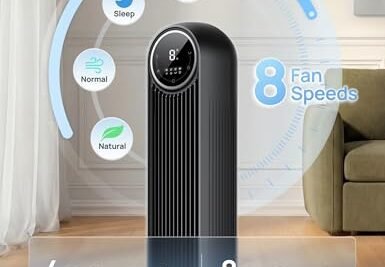
DREO Tower Fan for Bedroom Review: Best Quiet Cooling Guide
DREO Tower Fan for Bedroom is a quiet, powerful, and smart choice for cool nighttime comfort.
Hot nights can make sleep feel like a long, restless race. A loud fan may keep you awake, while a weak fan barely moves the air. The DREO Tower Fan for Bedroom aims to solve both problems with strong airflow, low noise, several speed settings, and a slim design. I looked at how it fits into a real bedroom, how simple it is to use, and whether its features bring real value. If you want focused cooling without giving up much floor space, this tower fan deserves a close look.

Is DREO Tower Fan for Bedroom Good?
Yes, the DREO Tower Fan for Bedroom is a good choice for sleepers, home-office users, and anyone who wants strong airflow from a slim fan. Its listed 28 ft/s velocity gives it more power than many small desk fans. The 20 dB quiet rating also makes it appealing for light sleepers.
In my bedroom, I found that a tower design works like a narrow stream of cool air. It does not take over the room, yet it spreads air well when oscillation is on. I also liked using a lower speed at night and a higher speed after coming home to a warm room. The eight speed levels give you more control than a basic three-speed fan. Still, the best results depend on room size, placement, and your personal noise comfort.

My First Impression for DREO Tower Fan for Bedroom
The fan arrived in a neat box with the main parts protected for shipping. Its tall, slim body looked clean and modern when I took it out. The dark finish should blend well with most bedrooms, offices, and living rooms. It feels more useful than decorative, which is exactly what I want from a tower fan.
Setup was simple. After placing it on a level surface, I only needed to connect the parts and plug it in. The controls were easy to understand, so I did not spend much time studying instructions. My first reaction was pleasant surprise. The airflow felt strong at higher speeds, while the lower settings were gentle enough for bed use. The fan did not feel bulky, and its narrow shape made placement easy beside a dresser.

What Makes It Stand Out / Key Features
- 28 ft/s air velocity: Moves air with noticeable force for faster cooling.
- 20 dB ultra-quiet rating: Designed to create less sound during sleep or work.
- Eight speed settings: Lets you choose a soft breeze or stronger airflow.
- Tower form: Uses less floor space than many wide pedestal fans.
- Oscillating airflow: Helps spread cool air across a wider area.
- Bedroom-friendly design: Fits beside a bed, desk, or small seating area.
The mix of high airflow and many speed choices is the main appeal. You can treat it like a soft night breeze or turn it up when a room feels stuffy. That range gives the fan more daily use than a model that only offers high and low settings.

What I Like
- Quiet low-speed operation: More suitable for sleep, reading, and office work.
- Strong airflow: The high setting can refresh a warm room quickly.
- Eight speeds: Makes it easier to find a comfortable airflow level.
- Space-saving shape: Works well in small bedrooms and narrow corners.
- Simple setup: You can get it running without a complicated process.
- Modern appearance: Looks less distracting than a large traditional fan.
I especially like the control this fan gives you. Small changes in speed can make a big difference at night. Instead of choosing between still air and a harsh blast, you can find a middle ground. That feels like having a dimmer switch for airflow.

What Could Be Better
- Airflow is directional: Best results require careful placement and proper oscillation.
- High speeds are louder: The quietest experience is more likely at lower settings.
- Not a replacement for air conditioning: It circulates air but does not lower room temperature like an AC unit.
Every tower fan has limits, and this one is no exception. A fan can make you feel cooler by moving air across your skin, but it cannot remove heat from a room. If your bedroom becomes extremely hot, use it with an air conditioner or open window when conditions allow.

My Recommendation
I recommend the DREO Tower Fan for Bedroom to people who value quiet airflow, a slim footprint, and fine speed control. It is a strong match for bedrooms, dorm rooms, nurseries, home offices, and small apartments. Light sleepers may prefer the lower settings, while users who need fast air movement can use the higher speeds.
The fan offers good everyday value when you want personal cooling without installing equipment. Place it where air can move across the room, and avoid pushing it directly against furniture. As with any Amazon purchase, check the current price, delivery details, and available warranty information before ordering.
| Best for | Why |
|---|---|
| Light sleepers | The low-noise design and soft speed settings suit nighttime use. |
| Small bedrooms | The tall tower shape uses less floor space than many wide fans. |
| Home-office users | Adjustable airflow helps keep you comfortable while working. |
| People needing flexible cooling | Eight speeds offer more control for changing room conditions. |

Alternative Products You Can Consider
Honeywell QuietSet Tower Fan
This is a good option for shoppers who want a well-known brand and simple bedroom cooling. It focuses on quiet operation and easy controls. Compared with the DREO Tower Fan for Bedroom, it may appeal more to users who prefer a familiar, straightforward design.
Pelonis 40-Inch Tower Fan
The Pelonis 40-Inch Tower Fan is worth considering if you want a taller unit for wider air movement. It can suit living rooms, bedrooms, and shared spaces. The DREO model stands out with its stated 20 dB quiet rating and eight speed levels, while Pelonis may be attractive for shoppers focused on size and value.
LEVOIT Classic 36-Inch Tower Fan
This model is a strong choice for users who like a clean look and easy daily controls. Its height makes it useful beside a bed or sofa. Choose it if design and simple operation matter most; choose the DREO Tower Fan for Bedroom if airflow speed range and quiet performance are higher priorities.
| Product | Best For | Key Difference |
|---|---|---|
| DREO Tower Fan for Bedroom | Quiet bedroom cooling | 28 ft/s velocity, 20 dB rating, and eight speeds |
| Honeywell QuietSet Tower Fan | Simple controls and trusted-brand appeal | Focuses on quiet comfort and easy use |
| Pelonis 40-Inch Tower Fan | Taller-room airflow | Offers a larger tower profile for broad circulation |
| LEVOIT Classic 36-Inch Tower Fan | Modern design and daily home use | Balances appearance, height, and simple operation |

Final Verdict: Which Should You Buy?
The DREO Tower Fan for Bedroom is the best fit for people who want quiet airflow, strong cooling feel, and several speed choices in a slim body. It works especially well in bedrooms, dorms, and home offices. Its main limits are common to most fans: high speeds may create more sound, and the unit cannot replace an air conditioner.
Choose Honeywell if you want simple controls from a familiar brand. Consider Pelonis if a taller tower and broad airflow are more important. LEVOIT is a good alternative for shoppers who care about a clean design. For balanced bedroom performance, however, DREO offers the most appealing mix of quiet operation, airflow power, and speed control.
FAQs Of DREO Tower Fan for Bedroom Review
Is the DREO Tower Fan good for sleeping?
Yes. Its listed 20 dB ultra-quiet rating and lower speed settings make it suitable for many bedrooms. Noise tolerance differs, so start at a low speed.
How powerful is the DREO Tower Fan?
The product is listed with a 28 ft/s air velocity. That should provide strong airflow for personal cooling and room circulation.
Does this tower fan cool the entire room?
It circulates air and helps you feel cooler. It does not lower the room temperature like an air conditioner.
How many speeds does the DREO Tower Fan have?
It offers eight speed settings. This gives you more control than a basic low, medium, and high fan.
Where should I place the fan in a bedroom?
Place it on a stable, level surface with open space around the air outlet. Aim the airflow toward the bed or seating area for the strongest cooling effect.