Thule Motion XT L Vs XL: Which Roof Box Wins?
Thule Motion XT L suits most families, while the XL adds length and storage for larger loads.
Choosing between the Thule Motion XT L vs XL is not only about cargo volume. The right roof box must fit your car, roof bars, garage, driving needs, and packing style. After comparing the published Thule specifications, fit rules, loading limits, and real-world use cases, this guide will help you make a safe and practical choice.
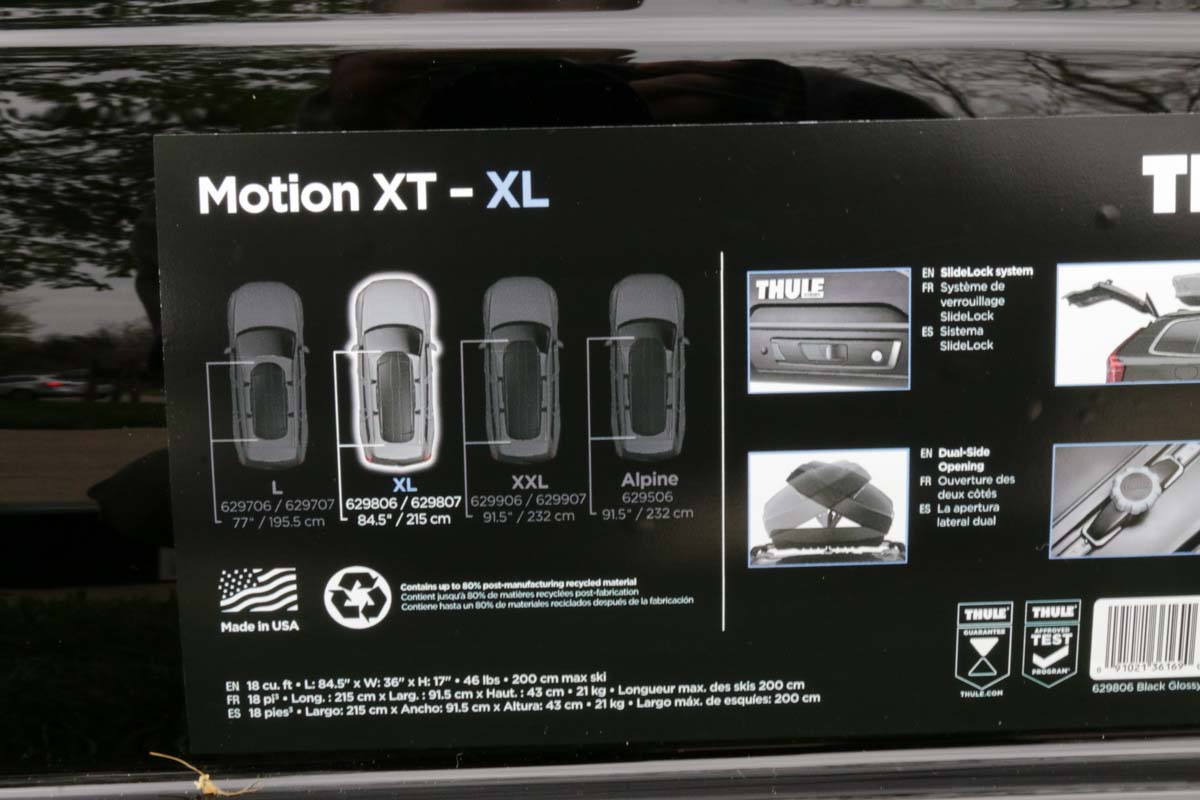
Thule Motion XT L vs XL: Quick Comparison
The Thule Motion XT L and XL share the same basic design. Both are hard-shell rooftop cargo boxes with dual-side opening, central locking, quick-mount hardware, and a low, aerodynamic shape.
The main difference is length and capacity. The L is shorter and easier to fit on smaller vehicles. The XL gives you more room for long items, large suitcases, and bulky family gear.
| Feature | Thule Motion XT L | Thule Motion XT XL |
|---|---|---|
| Approximate volume | 16 cubic feet, or 450 liters | 18 cubic feet, or 500 liters |
| Approximate outside length | 69 inches, or 175 cm | 86 inches, or 218 cm |
| Approximate width | 34 inches, or 86 cm | 34 inches, or 87 cm |
| Approximate height | 18 inches, or 46 cm | 18 inches, or 46 cm |
| Best for | Small and midsize vehicles | Larger vehicles and long gear |
| Typical use | Luggage, strollers, camping bags | Luggage, skis, snowboards, large family loads |
| Main advantage | Easier fit and handling | More length and storage |
| Main concern | Less room for long items | More overhang and parking difficulty |
Exact measurements can vary by region, production year, and product version. Always compare the box label with your vehicle’s roof limits and the current Thule fit guide before buying.
Thule Motion XT L vs XL: Main Differences
The Thule Motion XT L vs XL decision becomes easier when you separate capacity from shape. The XL does not simply add a little more space. It adds a large amount of length, which changes how the box fits and how you use it.
Size and storage capacity
The Motion XT L offers about 16 cubic feet of space. That is enough for several soft travel bags, coats, shoes, camping items, or a folded stroller.
The Motion XT XL offers about 18 cubic feet. The two extra cubic feet may sound small, but the longer shell gives you more useful space for skis, snowboards, golf gear, and large bags.
The L works well when you need extra room but do not want a giant roof box. The XL makes more sense for a family of four or five, long road trips, and winter sports.
Length and vehicle fit
The biggest physical difference is length. The L is about 69 inches long. The XL is about 86 inches long.
That extra length can create three fit issues:
• The front of the XL may sit close to the windshield or liftgate.
• The rear of the XL may extend beyond the roof.
• The box may make a small vehicle feel less balanced.
A longer box is not automatically unsafe. The key is correct placement, enough clearance, and compliance with the vehicle and rack maker’s instructions. The box should not block the hatch, interfere with a sunroof, or sit too far forward.
Weight and loading
Both boxes have a maximum load rating commonly listed around 165 pounds, or 75 kilograms. However, the real limit is the lowest rating among the cargo box, roof rack, and vehicle roof.
For example, if your vehicle roof allows 165 pounds but your crossbars allow 150 pounds, you must use 150 pounds as the total moving load. That total includes:
• The cargo box
• The crossbars
• Mounting hardware
• All items inside the box
A box that weighs about 40 to 50 pounds can use a large part of the available roof capacity. This is why weight matters more than volume for some vehicles.

Which Thule Motion XT Is Better for Your Vehicle?
The best model depends on your vehicle’s roof length, crossbar spacing, hatch movement, and daily parking needs.
Best choice for small cars
The Motion XT L is usually the better choice for compact cars and smaller crossovers. Its shorter shell is easier to position without touching the windshield or extending too far past the rear roof edge.
It also creates less visual bulk. That matters when you park in a small garage or use a narrow parking space.
The XL can fit some compact vehicles, but fit depends on the exact crossbar position. Never assume that a box will fit just because the roof looks long enough.
Best choice for midsize SUVs
A midsize SUV can often handle either model. The better choice depends on your cargo.
Choose the L if you mainly carry:
• Suitcases and duffel bags
• Strollers and child gear
• Light camping equipment
• Extra coats and shoes
Choose the XL if you often carry:
• Skis or snowboards
• Long camping items
• Several large suitcases
• Gear for many passengers
The XL may give a midsize SUV more useful space, but check rear hatch clearance before purchase.
Best choice for full-size SUVs and wagons
The XL is often the stronger match for a full-size SUV, wagon, or long-roof vehicle. These vehicles usually provide more roof length and a stronger roof rack system.
Even then, inspect the vehicle’s roof weight limit. A large SUV does not always have a high dynamic roof rating, and some panoramic roof systems have special restrictions.
Thule Motion XT L vs XL for Skis and Snowboards
Winter sports are one of the clearest reasons to choose the XL. A long cargo box can carry skis and snowboards inside the shell, where they stay protected from road salt, rain, and wind.
The Motion XT L can carry many skis and boards, but the usable length depends on the equipment and how it is packed. Shorter skis and children’s equipment are easier to fit.
The XL gives you more length for adult skis and longer boards. It also leaves more room beside the gear for boots, helmets, gloves, and soft bags.
Before buying, measure your longest equipment. Do not rely only on the box’s outside length. The inside space is shorter because of the shell shape, front taper, rear taper, and mounting hardware.
A useful packing method is:
-
Put skis or boards in soft sleeves.
-
Place them near the center of the box.
-
Add boots and helmets around them.
-
Keep heavy items low and near the crossbars.
-
Use soft bags instead of hard suitcases when possible.
Thule Motion XT L vs XL for Family Travel
For family travel, both boxes can remove a great deal of stress. Moving coats, pillows, diapers, toys, and luggage to the roof can free the cabin for people.
The L is often enough for a couple or a small family. It is also a good choice when the vehicle already has a large trunk.
The XL is more useful when every seat is occupied and the trunk holds a stroller, cooler, or pet carrier. Its extra space can prevent the common road trip problem of forcing bags between passengers.
Still, more space can encourage overpacking. A full XL may weigh more than expected, and heavy items can affect handling. Pack by weight first, then by shape.
Example: weekend family trip
A family with two adults and two children may place these items in an XL:
• Two soft suitcases
• Two weekend bags
• Winter coats
• Pillows and blankets
• A stroller
• Small outdoor equipment
The same load may fit in an L if the bags are soft and the stroller folds flat. If the trunk is already full, the XL provides more breathing room.

Thule Motion XT L vs XL: Aerodynamics and Fuel Use
A rooftop box adds wind resistance. The exact fuel effect depends on speed, wind, vehicle shape, box position, tire pressure, and driving style.
The XL has a longer body, but length alone does not determine fuel use. Both models are shaped to reduce drag, yet either box can lower fuel economy compared with an empty roof.
The most effective ways to limit fuel use are simple:
• Remove the box when you do not need it.
• Keep the box level and centered.
• Avoid carrying unnecessary weight.
• Close every latch before driving.
• Keep tires inflated to the vehicle maker’s recommended pressure.
At highway speed, smooth driving helps as much as box choice. Sudden acceleration and high speed can cost more fuel than the small difference between the L and XL.
Thule Motion XT L vs XL: Installation and Daily Use
Both models use a tool-free mounting system designed to make installation easier. The mounting clamps attach to compatible crossbars and tighten from inside the box.
The box opens from either side. This is useful when loading from a curb or when one side of the vehicle is blocked.
The central locking system is designed to lock only when the box is fully closed. That feature helps prevent a partially latched lid, but you should still check each latch before driving.
Installation checklist
Use this process each time you install the box:
-
Confirm that the crossbars are compatible.
-
Check the bar spacing against the Thule fit instructions.
-
Center the box from side to side.
-
Position it so the hatch opens without contact.
-
Tighten each mounting point evenly.
-
Open and close the lid from both sides.
-
Test the lock before loading cargo.
-
Drive a short distance, then inspect the mounts again.
A common mistake is installing the box too far forward. This may improve rear hatch clearance but can reduce windshield or sunroof clearance. Move the box until you have safe space at both ends.
How to Pack the Thule Motion XT L or XL
Good packing improves safety, handling, and storage efficiency. A roof box is not a second trunk that can be filled without a plan.
Place dense items near the crossbars. Keep light items toward the ends. Soft bags are better than rigid cases because they use the curved space more efficiently.
Do not allow cargo to press hard against the lid. The lid should close without force. If you need to push it down, remove an item or rearrange the load.
Better packing rules
• Put heavy items low and near the center.
• Use straps or bags to stop movement.
• Keep sharp edges covered.
• Leave room for the lid to close normally.
• Stay below the lower weight limit.
• Check the load after the first drive.
In practical roof-box fitting, one lesson appears again and again: volume is less useful when the cargo has a poor shape. A 16-cubic-foot box filled with soft bags may hold more usable gear than an 18-cubic-foot box filled with rigid cases.

Safety and Compatibility Checks
Before using either model, confirm the full roof system. The box, bars, vehicle, and cargo must work together.
Check the vehicle owner’s manual for:
• Maximum dynamic roof load
• Roof rail restrictions
• Panoramic roof rules
• Hatch and antenna clearance
• Speed guidance
Check the crossbar instructions for:
• Maximum load
• Minimum and maximum bar spacing
• Approved bar shape
• Mounting limits
• Required torque
Do not place the box on factory rails without crossbars unless the manufacturer specifically approves that setup. Side rails alone are not usually designed to support a cargo box.
Also check local rules. Some states and parking facilities may have height limits that matter when a roof box is installed.
Pros and Cons of the Thule Motion XT L
The Motion XT L is a balanced option for drivers who need extra storage without a very long roof box.
Advantages
• Easier fit on compact and midsize vehicles
• Lower overall visual bulk
• Good capacity for luggage and family gear
• Easier to store and handle than the XL
• Less likely to create rear overhang issues
Limitations
• Less room for long skis and boards
• May require careful packing for large families
• Cannot match the XL’s total capacity
• Still adds height and wind resistance
The L is the sensible choice when your main need is general cargo space. It avoids paying for length you may not use.
Pros and Cons of the Thule Motion XT XL
The Motion XT XL is aimed at drivers who need maximum rooftop storage and more usable length.
Advantages
• More room for family luggage
• Better fit for long skis and snowboards
• More space for bulky camping equipment
• Useful when the passenger cabin and trunk are full
• Strong option for large SUVs and wagons
Limitations
• Harder to fit on short roofs
• More difficult to store at home
• Greater chance of hatch or windshield interference
• May feel oversized for one or two travelers
• More weight can be added by mistake
The XL is best when you will regularly use its extra length. If you only need a small amount of extra storage twice a year, the L may offer better value.
Thule Motion XT L vs XL: Price and Value
Prices change by retailer, season, color, and availability. The XL usually costs more because it is larger, but the price gap is only part of the value question.
Consider the full ownership cost:
• Crossbars, if you do not already have them
• Locks or replacement keys
• Storage equipment
• Installation time
• Fuel use
• Potential garage storage needs
A larger box is not a bargain if it does not fit your vehicle well. A smaller box is not a bargain if you later need to rent a second carrier for skis or family trips.
For occasional use, compare the purchase cost with rental prices in your area. For frequent road trips, the box may pay for itself through convenience, comfort, and reduced cabin clutter.
Common Mistakes to Avoid
Many roof-box problems come from fit and loading mistakes, not from the box design.
Avoid these errors:
• Choosing by volume alone
• Ignoring the vehicle roof rating
• Forgetting the weight of the crossbars and box
• Failing to test the rear hatch
• Packing hard cases near the lid
• Leaving the box installed all year
• Driving before checking the mounts
• Using the box as a place for heavy tools
A second mistake is buying the XL for a small car without measuring. The extra length can make the vehicle harder to park and may create clearance problems that are difficult to solve later.
Which One Should You Buy?
Choose the Thule Motion XT L if:
• You drive a compact car or midsize crossover.
• You mainly carry luggage, clothing, and family items.
• You want a simpler fit.
• You have limited garage space.
• You rarely carry long sports gear.
Choose the Thule Motion XT XL if:
• You drive a wagon, large crossover, or SUV.
• You travel with several passengers.
• You carry adult skis or snowboards.
• You need more room for camping equipment.
• Your vehicle has enough roof length and load capacity.
The simplest rule is this: choose the L for balanced everyday storage, and choose the XL for long or bulky cargo. The Thule Motion XT L vs XL choice should follow your vehicle and cargo, not the biggest number on the product page.

Frequently Asked Questions of Thule Motion XT L vs XL
Is the Thule Motion XT XL better than the L?
The XL is better when you need extra length and capacity for large family loads, skis, snowboards, or camping gear. The L is better for smaller vehicles and everyday luggage because it is easier to fit and manage.
What is the size difference between the Thule Motion XT L and XL?
The Motion XT L is about 69 inches long and holds roughly 16 cubic feet. The Motion XT XL is about 86 inches long and holds roughly 18 cubic feet, although exact specifications can vary by market and model year.
Can the Thule Motion XT L carry skis?
Yes, the L can carry many skis, but the usable length depends on the ski size and the box interior shape. Measure your longest skis before purchase, especially if you use adult equipment.
Can the Thule Motion XT XL fit a small SUV?
It may fit a small SUV if the crossbars can be positioned correctly and the rear hatch and windshield have enough clearance. Check the vehicle-specific fit information rather than relying on the SUV’s exterior size.
Does the Thule Motion XT XL use more fuel than the L?
Both boxes can reduce fuel economy because they increase wind resistance. The difference between the L and XL depends on speed, vehicle shape, load, placement, and driving conditions, so no single fuel-use figure applies to every car.
What is the maximum load for the Thule Motion XT L and XL?
The commonly listed maximum cargo load is about 165 pounds, or 75 kilograms, but the vehicle and crossbars may have lower limits. Always use the lowest approved rating in the complete roof system.
Can I open the Thule Motion XT from both sides?
Yes, the Motion XT design allows access from both sides. This makes loading safer and easier when the vehicle is parked near a curb or another object.
Should I remove the roof box when I am not using it?
Removing it when not needed can reduce wind noise, fuel use, and exposure to weather. It also lowers the chance of forgetting the added vehicle height in a garage or parking structure.
Conclusion
The Thule Motion XT L vs XL comparison comes down to fit, cargo shape, and how often you need extra space. The L offers strong everyday utility with easier vehicle compatibility, while the XL gives families and winter sports users more length and storage.
Measure your roof, check every load rating, test hatch clearance, and think about your real packing habits. If you mostly carry bags, choose the L; if you regularly carry long gear or travel with a full vehicle, choose the XL. Explore the current fit guide before ordering, and share your vehicle and cargo needs in the comments to help others make the right choice.