Ryobi Vs Greenworks Pressure Washer: Best Pick 2026
Ryobi is usually the better pick for value, while Greenworks often wins on power and cordless convenience.
If you are comparing a Ryobi vs Greenworks pressure washer, you are probably trying to solve a real job fast: cleaning a driveway, patio, car, fence, or siding without wasting money. I have looked at both brands closely over the years, and the difference usually comes down to how much cleaning power you need, whether you want corded or battery use, and how often you will actually use the machine. In this guide, I will walk you through the Ryobi vs Greenworks pressure washer debate in a clear, practical way so you can choose the right one with confidence.
Ryobi vs Greenworks Pressure Washer: What Really Matters
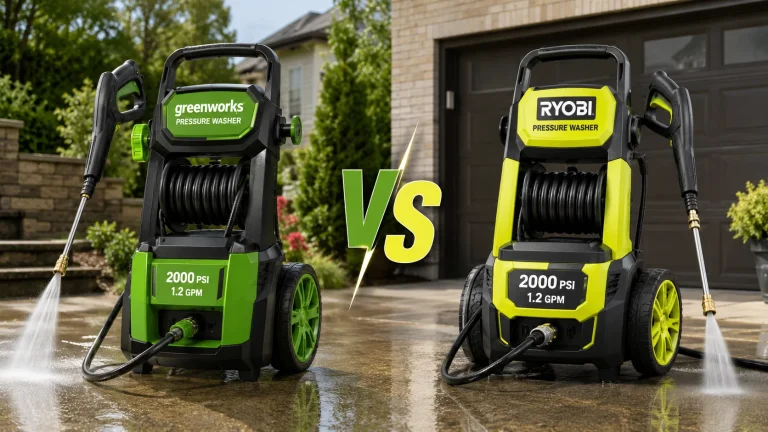
When people compare Ryobi vs Greenworks pressure washer models, they often focus on PSI first. That helps, but it is not the whole story. The real choice is about cleaning performance, portability, durability, nozzle setup, hose length, and whether electric or battery power fits your routine.
Ryobi is well known for offering a wide range of affordable tools at big-box stores. Greenworks has built a strong reputation in cordless outdoor power gear, especially for homeowners who want easy startup and lower maintenance. Both brands make pressure washers for home use, but they tend to serve slightly different shoppers.
Here is the simple way I look at it:
- Ryobi often gives you strong value and plenty of corded options
- Greenworks often feels more modern and user-friendly, especially in cordless form
- Ryobi can be the smarter pick for budget-focused buyers
- Greenworks can be the better pick if you want portability and cleaner storage
In my experience, the best pressure washer is the one you will actually pull out and use. That sounds obvious, but it matters. A machine that is too heavy, too loud, or too annoying to set up often sits in the garage and collects dust.

Brand Overview: Ryobi and Greenworks at a Glance
Ryobi is a household name for DIYers. It is popular because it gives homeowners decent performance at a fair price. Many Ryobi pressure washers are electric, and some are built for simple tasks like washing cars, decks, patio furniture, and light concrete grime.
Greenworks is also aimed at homeowners, but it leans harder into battery-powered outdoor tools. If you already own Greenworks batteries, a pressure washer from the same ecosystem can make a lot of sense. The brand is especially appealing to people who want less fuss and fewer cords.
A few general brand traits stand out:
- Ryobi is usually easy to find in stores and online
- Greenworks often emphasizes cordless convenience and cleaner design
- Both brands target homeowners rather than heavy industrial users
- Neither brand is usually the first choice for large commercial fleets or nonstop daily use
From a practical standpoint, both brands can do a solid job for home cleaning. The trick is matching the tool to the job.
Pressure Washer Basics You Should Know
Before comparing Ryobi vs Greenworks pressure washer models, it helps to understand the main terms. A lot of buyers look at PSI only, but that can be misleading.
Here are the key specs that matter:
- PSI means pounds per square inch. It shows water pressure.
- GPM means gallons per minute. It shows water flow.
- Cleaning units are often a mix of PSI and GPM.
- Higher PSI helps with stuck-on grime.
- Higher GPM helps rinse dirt away faster.
A lower PSI washer with good flow can sometimes clean better than a high PSI model with weak flow. That is why comparing only the pressure number can lead to the wrong choice.
For most home use:
- 1,300 to 1,900 PSI works well for cars, patio furniture, and light dirt
- 2,000 to 2,500 PSI is better for driveways, siding, and tougher stains
- Above that is usually more than many homeowners need
I have seen people buy too much machine for the job. That often leads to wasted money and more risk of damage to paint, wood, or soft surfaces.
Ryobi vs Greenworks Pressure Washer: Performance Comparison
This is where the Ryobi vs Greenworks pressure washer debate gets interesting. Both brands offer models that can handle common household jobs, but the feel is a little different.
Ryobi pressure washers often stand out for solid all-around cleaning and simple controls. Many users like the familiar setup and the wide accessory support. Greenworks often feels smoother for cordless use, and some of its higher-end models offer a very polished experience for light to medium-duty work.
Here is how performance usually breaks down:
- Ryobi is often strong for general cleaning and driveway touch-ups
- Greenworks is often better for easy handling and cordless freedom
- Ryobi corded models can deliver dependable power for the price
- Greenworks battery models are easier to move around but may trade runtime for convenience
In real use, the surface matters a lot. On a dirty driveway, the pressure washer needs enough water flow and the right nozzle to lift grime. On a car, you want gentler pressure and better control. On siding, too much force can push water where it should not go.
A mistake I see often is using a narrow spray too close to the surface. That can strip paint, etch concrete, or leave marks on wood. I always tell people to start wider, test a small area, and move closer only if needed.
Corded vs Cordless: Which One Fits Your Life?
One of the biggest differences in Ryobi vs Greenworks pressure washer options is power source. Ryobi offers more traditional corded electric models, while Greenworks is very strong in cordless pressure washers. Both have benefits, but they suit different users.
Corded pressure washers are good when:
- You have easy access to an outdoor outlet
- You want consistent runtime
- You do bigger cleaning jobs around the house
- You want lower cost and less battery worry
Cordless pressure washers are good when:
- You need more mobility
- You do not want to drag cords around
- You clean in places without easy power access
- You already own compatible batteries
Greenworks has a strong appeal here because the cordless setup feels very convenient. I have found that cordless washers are great for quick jobs, like rinsing a muddy bike or cleaning patio chairs. They are not always the best choice for long driveway sessions unless you have enough batteries ready.
Ryobi’s corded side often gives you a more predictable cleaning session. No battery anxiety. No waiting for a recharge. Just plug in and work.
Build Quality and Ease of Use
When I compare Ryobi vs Greenworks pressure washer models, I also look at the little things. These details matter more than people think.
Things that affect daily use include:
- Hose length
- Cord length
- Wheel design
- Trigger comfort
- Wand storage
- Nozzle switching
- Detergent tank setup
Ryobi models often feel straightforward and familiar. They usually do not overcomplicate things, which is nice if you just want to get started. Greenworks models often feel tidy and compact, especially in cordless form, which makes storage easier.
My personal rule is simple: if a pressure washer is annoying to roll, carry, or set up, I will use it less. That is why weight and balance matter almost as much as raw power. A lighter washer can be a big win for older homeowners, renters, or anyone with limited storage.
Which One Is Better for Cars, Driveways, and Siding?
Different jobs need different tools. This is where the Ryobi vs Greenworks pressure washer choice becomes very practical.
For cars:
- Greenworks cordless models can be very convenient for quick washes
- Ryobi electric models can also work well if you want steady power
- Use a wide spray and low pressure to protect paint
For driveways:
- Ryobi often has the edge for long, corded sessions
- Greenworks can do the job, but battery runtime may be a factor
- Surface cleaner attachments can help a lot here
For siding:
- Both brands can work if you use the right tip and pressure
– Never blast siding too close - Test a small spot first
For decks and fences:
- Moderate pressure is best
- Too much force can damage wood fibers
- A fan nozzle is safer than a narrow jet
I have learned the hard way that surface type matters more than brand loyalty. A good washer used badly can cause damage fast. A modest washer used the right way can clean beautifully.
Accessories and Attachments
Accessories can change the whole experience. In the Ryobi vs Greenworks pressure washer comparison, the available nozzles, spray tips, foam cannons, and surface cleaners can influence value a lot.
Useful add-ons include:
- 15-degree nozzle for tougher dirt
- 25-degree nozzle for general washing
- 40-degree nozzle for delicate surfaces
- Soap nozzle for detergent application
- Surface cleaner for driveways and patios
- Foam cannon for cars
Ryobi often benefits from broad accessory availability. Greenworks also offers useful attachments, especially in its ecosystem. If you plan to clean more than one type of surface, accessories can make the machine feel much more capable.
A good pressure washer without the right nozzle is like a kitchen knife with the wrong blade. It still works, but it is not nearly as effective.
Maintenance, Storage, and Longevity
Maintenance is usually easy with both brands, but it still matters. Pressure washers last longer when you treat them well. That means draining water after use, storing them indoors, and checking hoses and connections regularly.
Good habits include:
- Run clean water through the washer after using soap
- Drain leftover water before storage
- Keep the pump from freezing
- Inspect seals and fittings for leaks
- Use the right extension cord if the manual allows one
Ryobi and Greenworks both make homeowner-grade products, so they are not built like industrial machines. That does not mean they are weak. It just means they perform best when used with care and within their limits.
In my experience, many “bad” pressure washer reviews come from poor storage, not bad design. Leaving water in the pump through winter can shorten the life of almost any electric washer.
Price and Value: Which Brand Gives More for the Money?
Price is often the deciding factor in Ryobi vs Greenworks pressure washer shopping. Ryobi often comes across as the better budget pick, especially if you want a basic electric model that works well for common jobs. Greenworks sometimes costs more, but you may be paying for cordless convenience, battery compatibility, or a cleaner overall design.
Think about value like this:
- If you want the lowest cost for decent cleaning, Ryobi is often attractive
- If you want portability and battery sharing, Greenworks can justify the price
- If you only clean a few times a year, budget matters more than premium features
- If you clean often, convenience can matter more than the sticker price
The best deal is not always the cheapest one. A washer that saves time and frustration may be worth more over a year than a cheaper unit that feels clunky.
My Real-World Take: What I Would Choose
If I were choosing between Ryobi vs Greenworks pressure washer models for a typical suburban home, I would start with the job list.
I would lean Ryobi if:
- I had easy outdoor power access
- I wanted the best budget value
- I needed a washer mainly for driveway, patio, and siding cleaning
I would lean Greenworks if:
- I wanted cordless convenience
- I already owned Greenworks batteries
- I cared most about portability and fast setup
That is the honest answer. There is no perfect winner for everyone. The better brand depends on how you live, what you clean, and how much hassle you are willing to accept.
One lesson I learned over time is that convenience often beats raw specs. People remember the machine that feels easy, not the one with the best number on the box.
Frequently Asked Questions of Ryobi vs Greenworks Pressure Washer
Is Ryobi or Greenworks better for home use?
Both are strong choices for home use, but Ryobi often wins on value and Greenworks often wins on cordless convenience. If you want a simple electric washer for routine outdoor cleaning, either brand can work well.
Which pressure washer has better battery options?
Greenworks usually has the stronger cordless lineup. If battery freedom is important, Greenworks is often the better fit because it focuses heavily on portable outdoor tools.
Can either brand clean a driveway?
Yes, both can clean a driveway if the PSI, GPM, and nozzle setup are right. For larger driveways, a corded Ryobi or a stronger Greenworks model with enough runtime is usually easier to manage.
Are Ryobi pressure washers reliable?
Ryobi pressure washers are generally reliable for homeowner use when maintained properly. They are best suited for light to medium cleaning tasks and regular seasonal use.
Do Greenworks pressure washers have enough power?
Many Greenworks models have enough power for cars, patios, furniture, and light to medium outdoor cleaning. For heavy driveway stains, choose a model with stronger PSI and good water flow.
Conclusion
When comparing Ryobi vs Greenworks pressure washer models, the smartest choice comes down to your cleaning needs, power preference, and budget. Ryobi usually offers strong value and dependable corded performance, while Greenworks often shines with cordless ease and portable convenience.
If you want a straightforward washer for common home jobs, either brand can serve you well. Think about where you will use it, how often you will use it, and whether you value low cost or easy mobility more. Make the choice that fits your routine, and you will get far more satisfaction from the machine.
If this guide helped, take a closer look at the model specs, compare accessories, and choose the washer that matches your real-life needs.